

The tools the environmental justice movement spent decades building are being pulled apart. The Biden administration’s Justice40 initiative—meant to steer 40 percent of the benefits of federal climate spending toward “disadvantaged” communities—has been unwound, and the Trump administration has moved to terminate environmental justice grants, some mid-project.
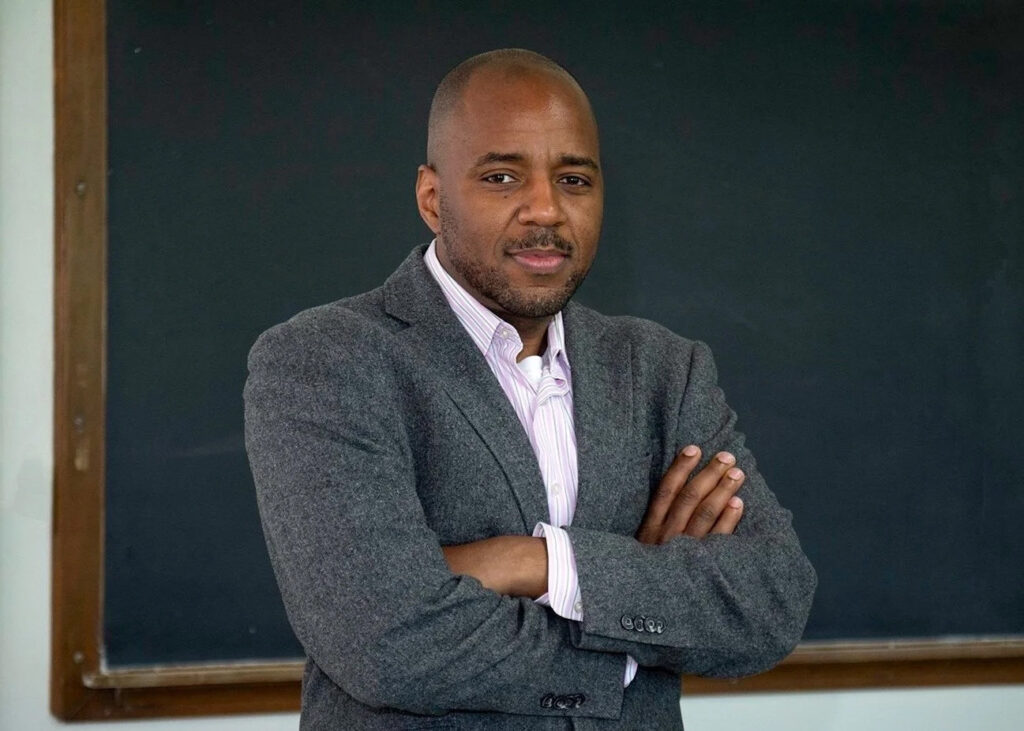
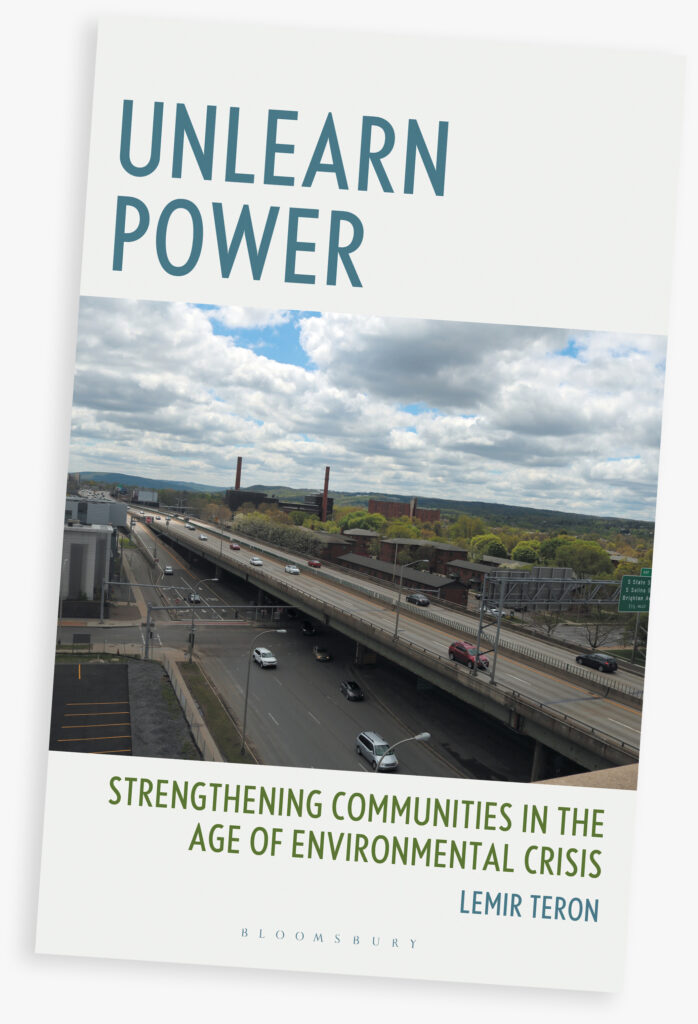
Lemir Teron’s timing could hardly be sharper. In his new book, “Unlearn Power: Strengthening Communities in the Age of Environmental Crisis,” the Howard University associate professor argues that the race-neutral “disadvantaged communities” language at the center of those programs was always a compromise worth abandoning because it flattened distinct injuries into a single category and crowded out a blunter term he refuses to drop: environmental racism.
Teron was the inaugural hire in Howard’s new Department of Earth, Environment and Equity. He came to this argument over roughly 20 years and an unusual path: a National Oceanic and Atmospheric Administration-funded postdoc at Florida A&M University, where he also taught at the College of Law and developed a framework for how storms mobilize toxic contamination; then seven years on the faculty at the SUNY College of Environmental Science and Forestry in Syracuse, New York, the Rust Belt city that anchors much of the book.
This interview has been edited for length and clarity.
KATE WAXMAN: The title works on two levels. What are the two kinds of power you want readers to unlearn?
LEMIR TERON: Reform is not enough. The book interrogates two kinds of power. One is literal power: energy. We have to reimagine and reconfigure our energy systems as we make the renewable transition. The other is political power, reconfiguring how we engage the political and economic mechanisms that perpetuate the ecological and socioeconomic conditions undermining the planet and its inhabitants.
WAXMAN: A formative moment came while you were working with the Onondaga Nation on the Interstate 81 project. Tell me about it.
TERON: I was looking at how that interstate project would impact the nation. Depending on the community, your entrée is different—with this one, it ran through matrilineal lines. And the point a woman there made wasn’t that one specific highway causes one specific harm. It was broader: Anytime you have these large infrastructure projects, they’re at the forefront of this community’s mind because of what they mean for local women. She’d just come back from pipeline activism, and the pattern is that large infrastructure brings compromising, dangerous situations for Indigenous women—missing, murdered, assaulted.
WAXMAN: In the book you call it one of the most consequential moments of your career. What did it make you see that your environmental-impact lens had missed?
TERON: It was formational—there’s a before and an after. My work had always been a justice-minded critique, and intellectually I knew women and girls experience environmental harm differently, whether that’s body burden or vocation. But this wasn’t about different exposures to particulate matter or fish consumption. This was a very real, visceral social impact rooted in an environmental and economic-development challenge. You can’t look at the work the same after that.
WAXMAN: Your sharpest critique is the shift from “environmental racism” to race-neutral “disadvantaged communities.” You call it a framing that dilutes the fight. But that broad framing is arguably what let those laws pass. Is the coalition version not worth having?
TERON: No, we need coalitions. But within them we need vivid, stark language, and we have to accept that there are dichotomies inside a coalition. You won’t change anything structurally by making monolithic stands. What I object to is the stew; putting Indigenous issues, urban Black issues and rural issues in the same pot as if they’re one set of problems. Even within a single community you’ll see stark differences in how people experience these challenges. Language that homogenizes them does everybody a disservice.
WAXMAN: You finished the book as Justice40 was dismantled and federal environmental justice grants were terminated. The race-neutral compromise you criticized didn’t survive either. Does that vindicate your argument, or complicate it?
TERON: Think about the last couple of summers: thousands of people punished by extreme heat. Those temperatures aren’t felt equally. Two weeks ago was the hottest day of the year in Washington, where I work. Imagine you’re unhoused, with no access to a cooling center, sitting on 120-degree pavement—that’s a completely different environmental experience than it is for someone with means.
In the U.S., race and ethnicity are strongly associated with who lives in places replete with environmental inequality. If we’re not thinking about the lived conditions on the ground, where race and economics shape people’s livelihoods, we won’t have a serious movement. This is the time to double down, not run away.
WAXMAN: You champion community self-determination, but you also say community-led strategies may not be enough against climate impacts—and that leaning on government is a Hobson’s choice after Hurricane Katrina. If communities can’t do it alone and can’t fully trust the state, what’s the mechanism?
TERON: You position communities to develop their own locally appropriate prioritization strategies where possible; around an urban forestry regime, say, or custody of a water system. But be real: Even the richest cities can’t make comprehensive climate policy alone. When you’re talking about enforcement, about the dollars to get large-scale projects done, you need a mechanism with enforcement capacity—you don’t want renegades enforcing. The whole purpose of government is to do what communities and individuals can’t do for themselves.
So it’s a marriage: strong governments at multiple scales for enforcement, and communities setting priorities. But states don’t enforce out of the goodness of their heart. You need people on the ground putting pressure on elected officials and bureaucrats to actually do the business of climate justice.
“If we’re not thinking about the lived conditions on the ground, where race and economics shape people’s livelihoods, we won’t have a serious movement. This is the time to double down, not run away.”
WAXMAN: In the final chapter you warn against the “re-ification” of jargon—rethink, reimagine—and insist on tactility. Make it tactile for me. What does unlearning power look like in an ordinary week?
TERON: Take urban forestry. In Syracuse, I worked with a great organization, the Onondaga Earth Corps, that gives people a whole suite of forestry skills. It’s not about planting a tree on day one and hoping 90 percent of the canopy survives in five years, it’s the maintenance and engineering skills that keep it alive.
Same with the energy transition. We’re good at saying we want certain carbon goals by 2050. Let’s talk about the jobs in that transition—and not just the dollars and cents, but training people to actually install solar, to understand the engineering behind geothermal or wind. It can’t be a tech fix alone. Tactility is putting hands-on skills in people’s hands to further their own livelihoods and their communities.
WAXMAN: You name reparations directly and say the “disadvantaged” framing crowds them out. What would environmental reparations actually consist of: who pays, who receives?
TERON: It goes back to homogeneity; reparations depend on the specific damage done to a specific community. What restorative justice looks like for an Indigenous community in the northern U.S. is not what it looks like for a community next to a Gulf Coast refinery.
Who pays? Wrongdoers. Environmental lawyers—and I was at FAMU’s law school—are very good at tracking a timeline of offenses and ownership, so the injured party is compensated by those responsible. And at the government level we’ve had a framework for more than 40 years: Superfund, where those making dangerous societal investments pay into a system, the way you’d carry insurance.
You can critique how the rug’s been pulled out from under Superfund over the last couple of decades, but there are established ways to go about the business of reparations.
This story is funded by readers like you.
Our nonprofit newsroom provides award-winning climate coverage free of charge and advertising. We rely on donations from readers like you to keep going. Please donate now to support our work.
Donate NowWAXMAN: The farmworker “intermezzo”—dairy workers drowning in manure pits, immigration agents waiting in a Walmart parking lot—sits deliberately between your urban and forestry chapters. Why did food and immigrant labor have to be in a book about energy and forests?
TERON: How could it not be? You might not live in a city, so urban forestry may not resonate. You might be off the grid, so energy justice may not land. The nearest interstate might be 40 miles away. But the thing that connects all of us is the food system.
The people most consequential to feeding us are at the margins—because of documentation status, because of economics and because of the dangerous chemicals and working conditions they’re exposed to. That’s not the precipice of environmental justice thinking; that’s the core of it. I didn’t want a whole chapter on food, maybe that’s book two or three, but that narrative had to be injected.
WAXMAN: You built the Toxics Mobility Inventory during your NOAA postdoc at FAMU: the idea that floods and storms mobilize toxics out of Superfund sites, concentrated animal feeding operations (CAFOs), brownfields. For readers in hurricane country, what should they understand about what a storm surge actually moves?
TERON: Even before the storm surge, be conscious of proximity to hazardous sites—the brownfield, the Superfund site, the animal feeding operation. And it’s not always two blocks away: If there’s lead-based paint debris in your own front yard, that’s a closer exposure.
Then, depending on the specific toxin, some of these things are easily mobilized—not just by flooding but by wind and other so-called natural events. So think about proximity in combination with storms getting more extreme, with flooding and sea-level rise.
That’s what makes millions of people vulnerable not just to the front-line hit of the storm, but to secondary and tertiary exposures after it.
WAXMAN: Chapter one opens with an FBI call about a Black man supposedly photographing a Delaware refinery, an episode you believe was fabricated to intimidate you. What did it teach you about the stakes for people whose work is a bigger threat to the fossil fuel industry than yours was?
TERON: I didn’t take the agent’s role as malicious, he was following a lead. But it was a classic intimidation canard. I’d never taken a picture of that facility. I was doing a scientific evaluation of the refinery’s petrochemical exposures to local and upstream populations.
And the lesson is: If you can get the FBI to put heat on a guy writing a 15- or 20-page report, imagine what happens to people whose work is existentially damaging to a multibillion, if not trillion, dollar industry.
I’m not calling myself an activist, but think about frontline activists around the globe. People have been jailed. People have literally been erased. If your work is a threat to the status quo, economic or otherwise, you can end up at that far end.
WAXMAN: I don’t want to flatten the whole book into one thing, but what’s the main takeaway you want readers to leave with?
TERON: It’s time to fight. It’s time to resist. Policy alone won’t get it done. Street action alone won’t get it done. Another peer-reviewed article won’t get it done. But whatever your skill set, we have to use all means necessary to restore ecological sanity and dignity for the human and non-human inhabitants of this planet. It’s time to engage. It’s time to resist—by all means, be responsible when [resistance is] necessary.
About This Story
Perhaps you noticed: This story, like all the news we publish, is free to read. That’s because Inside Climate News is a 501c3 nonprofit organization. We do not charge a subscription fee, lock our news behind a paywall, or clutter our website with ads. We make our news on climate and the environment freely available to you and anyone who wants it.
That’s not all. We also share our news for free with scores of other media organizations around the country. Many of them can’t afford to do environmental journalism of their own. We’ve built bureaus from coast to coast to report local stories, collaborate with local newsrooms and co-publish articles so that this vital work is shared as widely as possible.
Two of us launched ICN in 2007. Six years later we earned a Pulitzer Prize for National Reporting, and now we run the oldest and largest dedicated climate newsroom in the nation. We tell the story in all its complexity. We hold polluters accountable. We expose environmental injustice. We debunk misinformation. We scrutinize solutions and inspire action.
Donations from readers like you fund every aspect of what we do. If you don’t already, will you support our ongoing work, our reporting on the biggest crisis facing our planet, and help us reach even more readers in more places?
Please take a moment to make a tax-deductible donation. Every one of them makes a difference.
Thank you,

Kate Waxman
Fellow
Kate Waxman is a Florida-based Outrider fellow at Inside Climate News, where she covers climate injustice across the state. She earned her M.S. in journalism from Columbia Journalism School and her B.A. in environmental science from Barnard, with reporting focused on coral reefs, climate science, and the communities closest to the water.