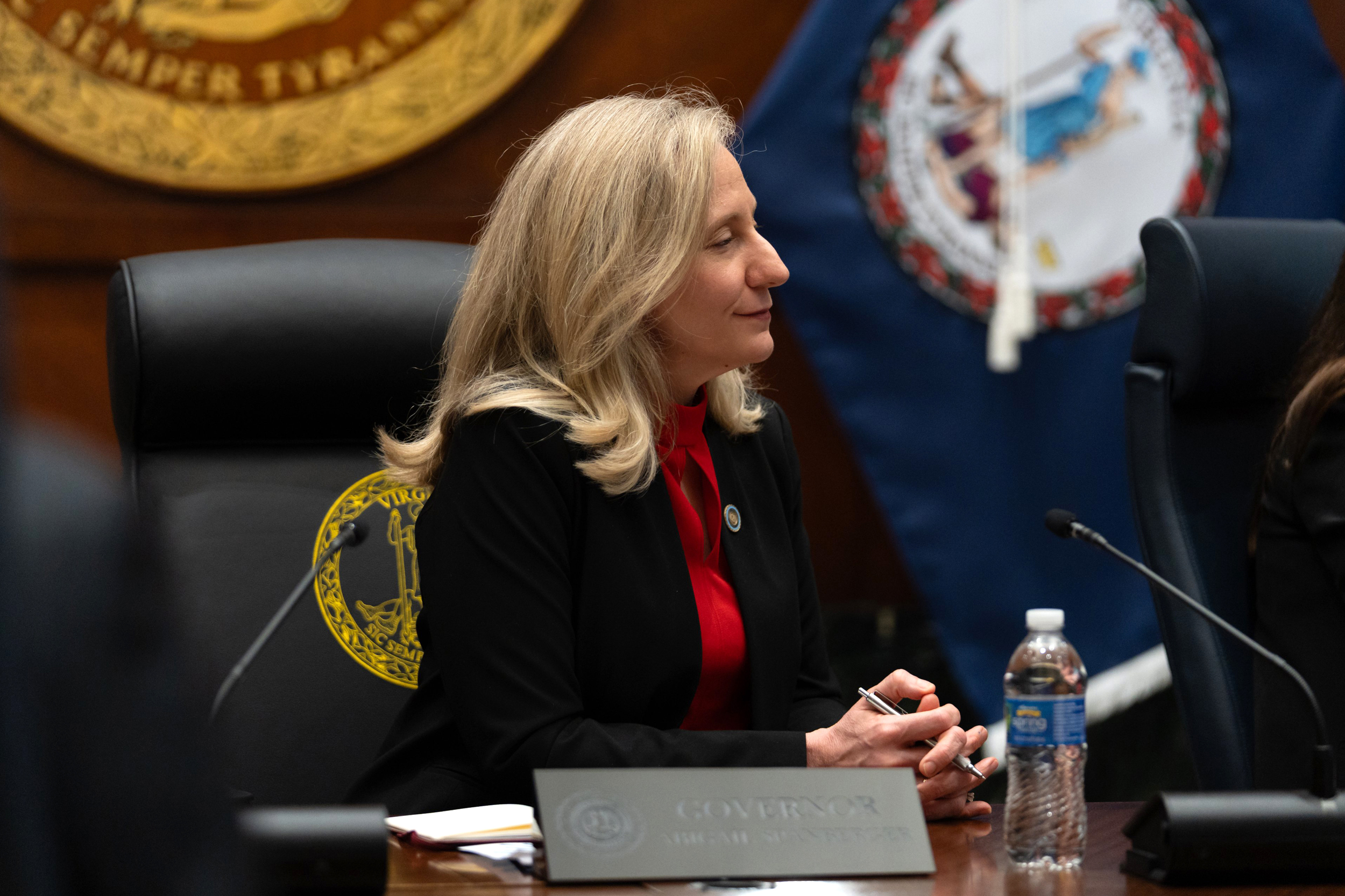


Virginia Gov. Abigail Spanberger, through a filing submitted by her newly appointed chief energy officer, is urging regulators at the State Corporation Commission to assign costs of transmission projects driven by data center needs to those facilities.
The governor’s involvement in an electricity utility case is unusual. Agencies under the purview of the governor, including the Virginia Department of Environmental Quality, are regularly involved with cases, but it’s rare for the governor to get involved directly.
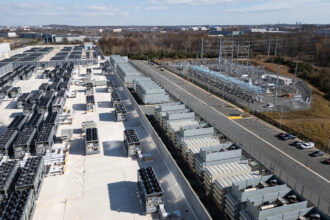
Transmission lines are the costly steel cables strung together through towering structures to deliver electricity across vast distances. Because of data centers’ high energy demands, they’re behind a majority of the billions in costs of new transmission lines needed to deliver power throughout Northern Virginia, considered the data center capital of the world.
There are different kinds of lines, including larger ones like the Valley Link approved by PJM Interconnection, the regional grid operator for Virginia, 12 other states and the District of Columbia. There are also smaller, or supplemental, lines that connect different substations to each other and the larger grid directly to data centers.
The filing marks one of the clearest stances taken on data centers by Spanberger, a moderate Democrat who approved a budget that failed to add clean-energy requirements to a tax exemption. The budget approved a new, separate consumption tax for data centers, and she modified a bill to ensure regulators take “all steps necessary” to protect residential customers from paying transmission and generation costs to serve data centers.
“It is a core policy of the Administration of Governor Abigail Spanberger… to foster an affordable, reliable and clean energy system,” Josephus Allmond, the chief energy officer, wrote in the filing. “This includes strong support for proactive, right sized, and cost-effective transmission development.”
The case is known as “Rider T-1,” because of the label on a customer bill that lists the costs of transmission projects Dominion Energy can spend and recover outside of base rates. RiderT-1 is currently set at $11.79 a month for a typical residential customer. Dominion is now seeking to recover $1.58 billion in costs that would lead to an initially estimated increase of $2.90 for a typical residential customer.
After the SCC approved a new rate class for data centers to cover more of their costs, the Rider T-1 case is the latest opportunity to shield residential ratepayers from rising costs.
In the case, Dominion acknowledges that using the new rate class will lower the increase to $0.94. The utility wants to use the rate class before making further changes.
“It would be prudent for the Commission to allow these mechanisms to mature before directing any further substantial changes to the transmission cost recovery framework,” Robert Hines, director of regulation for customer rates at Dominion, said in his testimony.
When Dominion builds transmission lines, it can also recover a guaranteed return on equity, or profit, from customers to attract investors for construction and pay shareholders. Dominion’s return on equity is currently set at 11.4 percent for transmission. Dominion receives a 9.8 percent rate of return on its base rates.
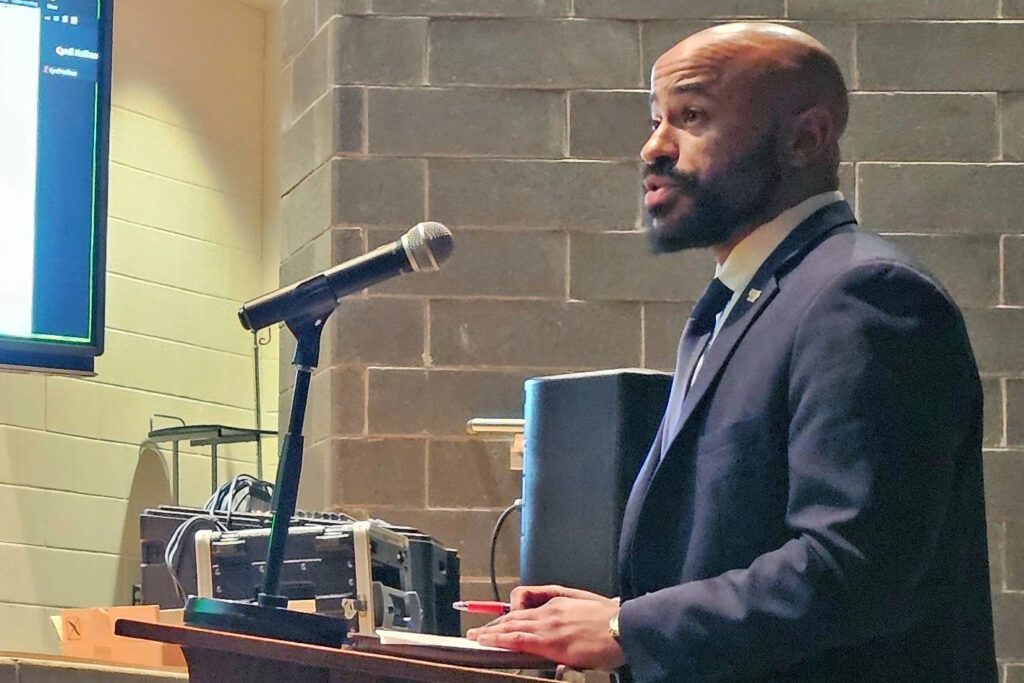
“The Commission’s role in ensuring just and prudent investment is a foundational counterbalance to protect against capital biases that prioritize shareholder profits over Virginia’s ratepayers,” Allmond wrote.
Spanberger’s administration wants to apply a “but for” standard that would require data centers to pay the costs of transmission lines and substations that their projects require.
The issue has come up in several cases, including a Fairfax County project where commissioners approved a new transmission line while deferring the decision on who would cover the cost.
It’s not immediately clear what the impact of the “but for” principle would be. Dominion said in testimony during a case on its 2024 long-term planning document it had estimated an additional $7.59 billion in investment for transmission lines to come online through 2031. Of that, 68 percent were needed for data centers, either exclusively or alongside other customers, with 32 percent not driven by data centers.
This story is funded by readers like you.
Our nonprofit newsroom provides award-winning climate coverage free of charge and advertising. We rely on donations from readers like you to keep going. Please donate now to support our work.
Donate Now“This aligns with the approaches of other states,” Allmond wrote, referencing a decision out of Pennsylvania in May. Old Dominion Electric Cooperative, which supplies power to local co-ops, and the Piedmont Environmental Council, concerned with protecting Virginia’s countryside, also support the “but for” idea.
Other requests from the governor include requiring Contributions in Aid of Construction payments, which would allow data centers to pay upfront for transmission and substations they need and shield residential customers from those costs, similar to legislation for co-ops that passed this year. Larger data centers, like those owned by Google, have previously argued the payments could lead to more realistic projects coming online, which would reduce the massive growth forecasts Dominion uses to justify the construction of new transmission lines and new gas plants.
Along with changes to transmission planning, Spanberger supports transitioning from the current cost-allocation methodology to what’s called a Summer and Winter Peaking Average, that factors in average energy consumption rather than relying on peak demand periods. Consumer advocates criticize the use of peaking methods in the age of data centers because those facilities, which consume electricity more consistently throughout the day, won’t take on more of the costs from residential customers.
Testimony from the Piedmont Environmental Council found that changing the methodology would reduce the monthly bill increase for the average residential ratepayer from $2.90 to $1.14.
In a brief interview, Michael Barber, senior energy infrastructure policy analyst at the Piedmont Environmental Council, said Spanberger’s involvement is “powerful.”
“That’s the direction that we want to see this go,” Barber said. “PEC appreciates that the administration is paying attention to this and trying to align cost allocation in a way that protects the wider body of ratepayers.”
About This Story
Perhaps you noticed: This story, like all the news we publish, is free to read. That’s because Inside Climate News is a 501c3 nonprofit organization. We do not charge a subscription fee, lock our news behind a paywall, or clutter our website with ads. We make our news on climate and the environment freely available to you and anyone who wants it.
That’s not all. We also share our news for free with scores of other media organizations around the country. Many of them can’t afford to do environmental journalism of their own. We’ve built bureaus from coast to coast to report local stories, collaborate with local newsrooms and co-publish articles so that this vital work is shared as widely as possible.
Two of us launched ICN in 2007. Six years later we earned a Pulitzer Prize for National Reporting, and now we run the oldest and largest dedicated climate newsroom in the nation. We tell the story in all its complexity. We hold polluters accountable. We expose environmental injustice. We debunk misinformation. We scrutinize solutions and inspire action.
Donations from readers like you fund every aspect of what we do. If you don’t already, will you support our ongoing work, our reporting on the biggest crisis facing our planet, and help us reach even more readers in more places?
Please take a moment to make a tax-deductible donation. Every one of them makes a difference.
Thank you,

Charles Paullin
Charles Paullin is a Richmond, Virginia-based reporter focusing on energy and environment issues. He’s won several awards for his previous work covering state policy with the Virginia Mercury and local news with the Northern Virginia Daily in the Northern Shenandoah Valley. His first reporting gig was with the New Britain Herald in Connecticut, a couple years after attending the University of Hartford, where he first studied sports journalism.