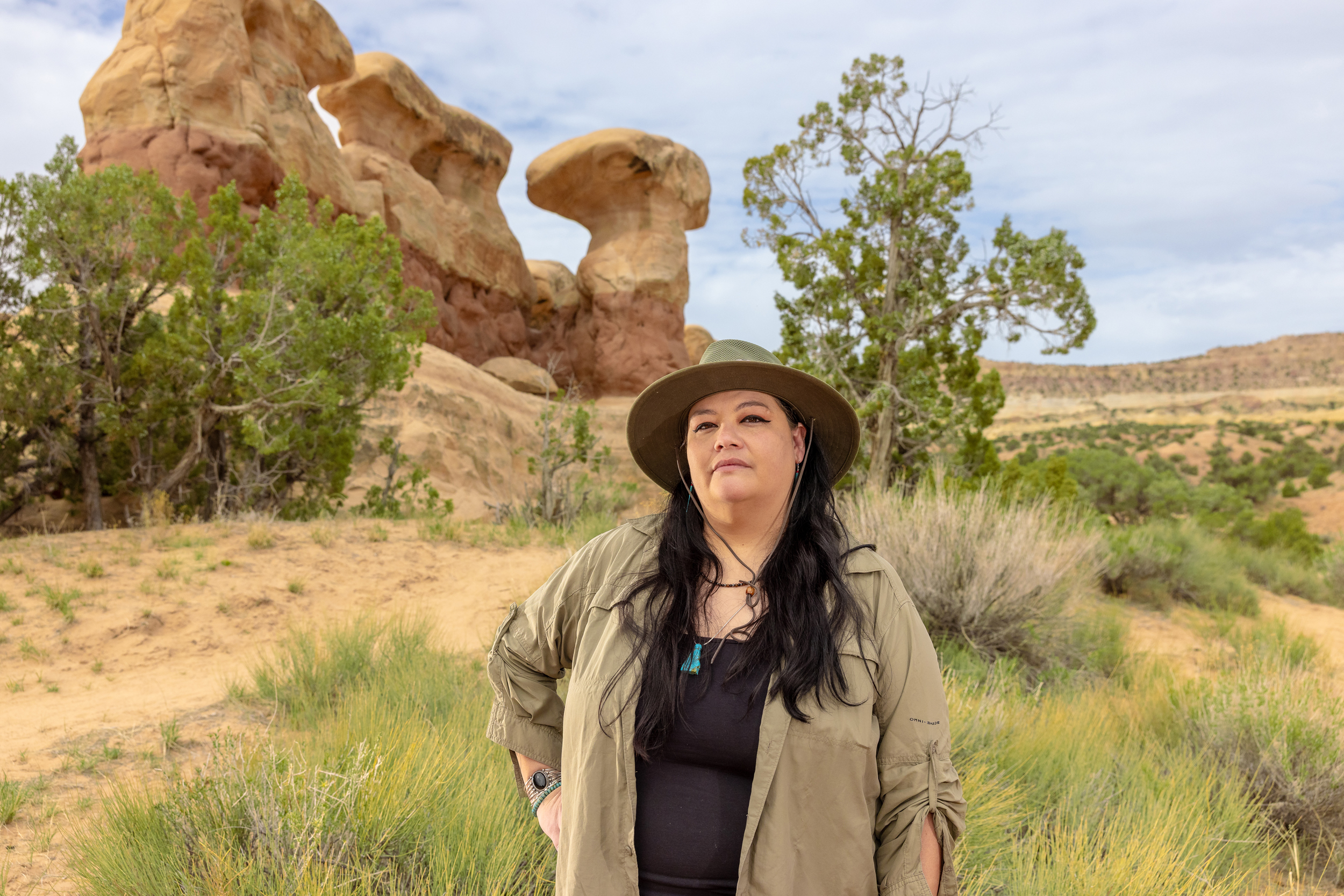


GRAND STAIRCASE-ESCALANTE NATIONAL MONUMENT, Utah—When Autumn Gillard first visited this national monument in southern Utah’s red rock country, she hiked to the top of a plateau. Her heart was broken there.
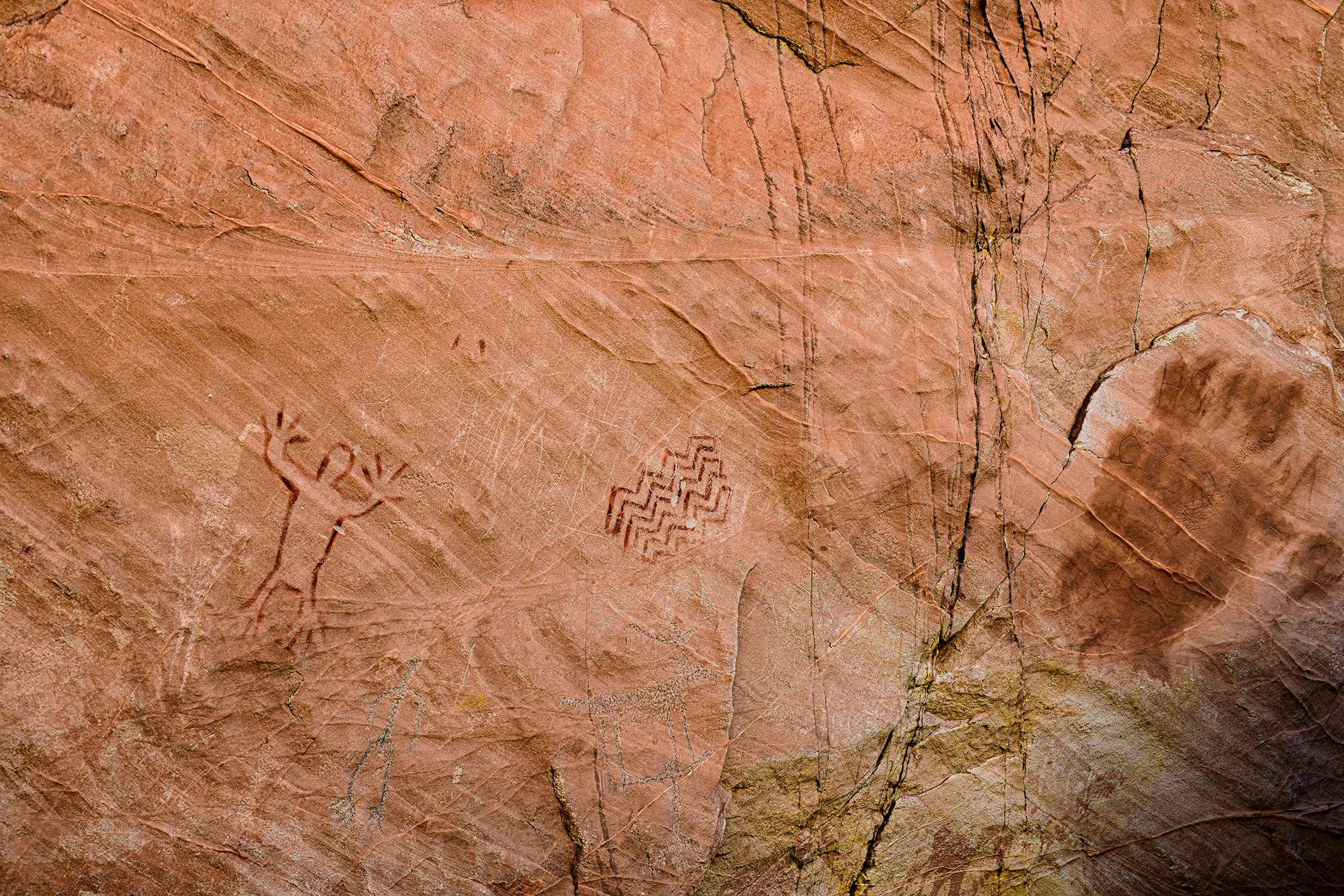
For her people, the southern Paiute, the bighorn sheep is sacred. Ancient petroglyphs depicting the species that still calls Grand Staircase-Escalante home covered the cliff walls around Gillard’s perch.
But the years have been harsh to the panel of petroglyphs. Graffiti lined the walls. The Cut Sheep Panel was even named for the big square sliced into the stone around it, evidence that someone tried to steal one of the petroglyphs from the site.
“All I could think was, ‘I need to help, I have to help protect this,’” she recalled. “But I also thought of education, and that if we lose these places on the Colorado Plateau in the state of Utah, we’re going to [have] a large gap of education for people who visit these areas that want to learn more about history, culture and archeology in the area of the Southwest.”
Gillard, the cultural resource manager for the Paiute Indian Tribe of Utah and coordinator of the Grand Staircase-Escalante Inter-Tribal Coalition, has been fighting to protect this monument ever since that first visit in 2017. Last week, the coalition she leads and its partners notched a win in their efforts to fend off Congressional efforts to overturn the management plan put in place for the monument during the administration of President Joe Biden. Rescinding the plan enacted by the Bureau of Land Management would have allowed for more off-road vehicle use, more grazing and more “vegetation management” with timber harvests and chaining operations in which bulldozers drag chains strung between them across miles of the desert landscape to rip up native vegetation and clear the land for cattle.
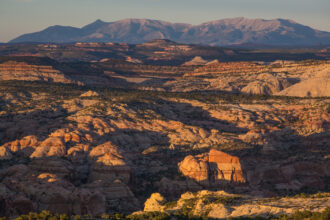
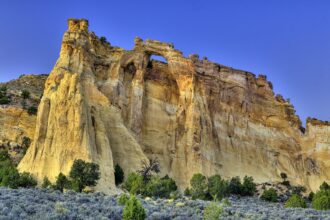
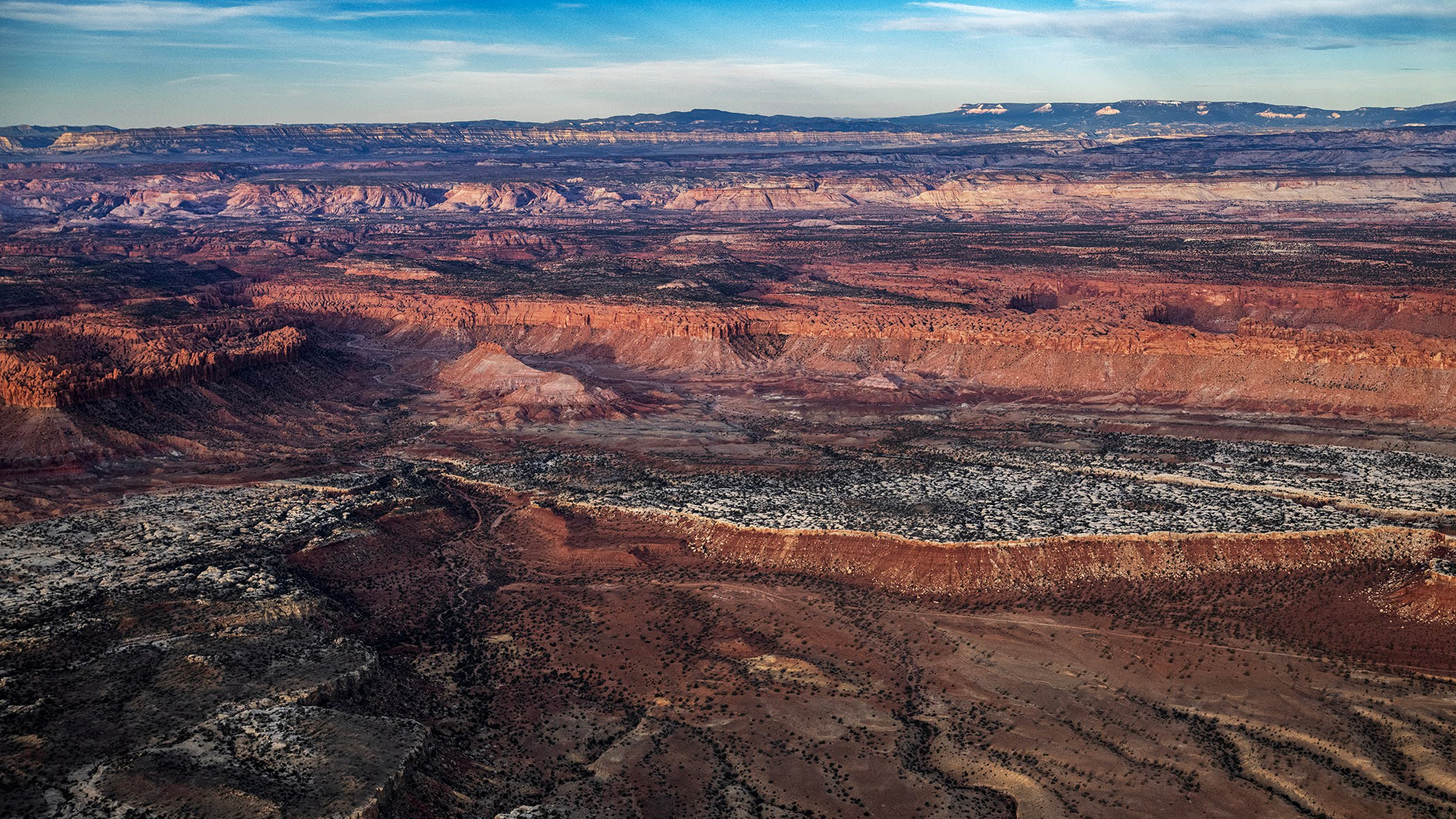
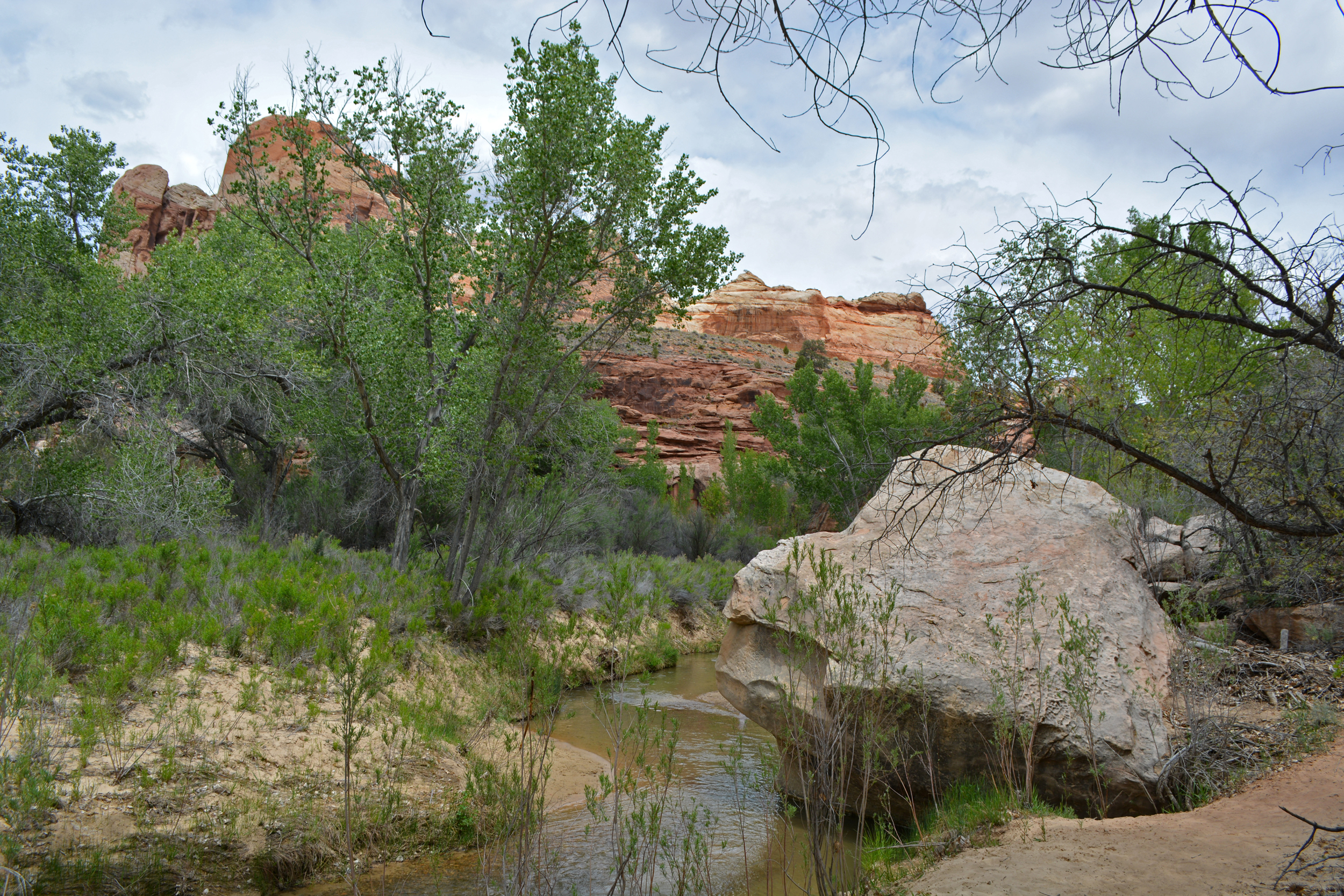
Designated by President Bill Clinton in 1996 and spanning 1.87 million acres of public land, Grand Staircase-Escalante protects scores of archeological resources and sacred sites for local tribes, along with a plethora of wildlife. With its orange-and-red-colored rock formations and canyons, old-growth pinyon and juniper forests and its namesake river carving a path to the Colorado River, it is one of the more remote landscapes in the lower 48.
“When [people] make the journey and pilgrimage to this monument, they get to be enveloped in some of America’s most untouched land,” Gillard said. “They get to see what this country looks like without mass development.”
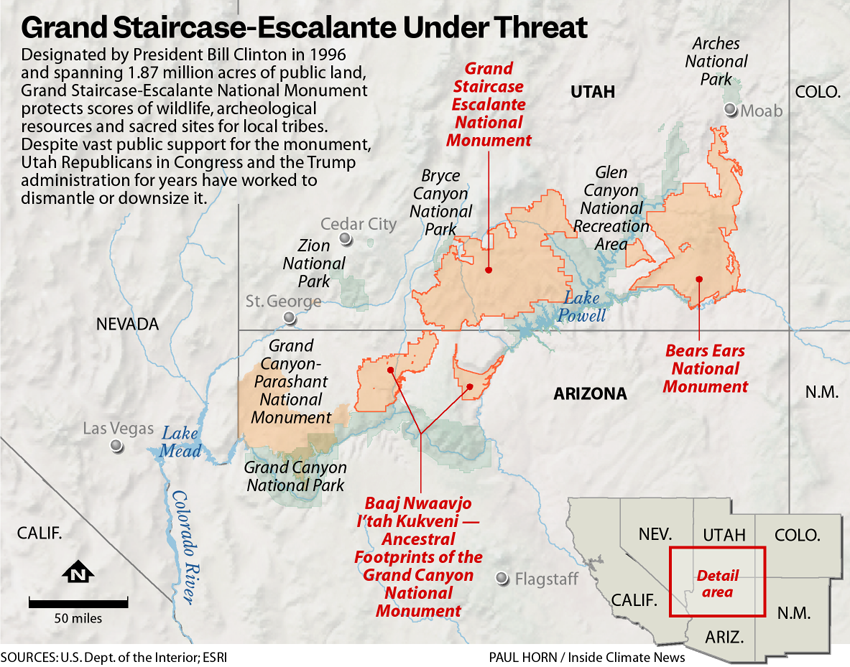
Despite vast public support for the monument, Utah Republicans and both Trump administrations have worked for years to dismantle and downsize it, with the first Trump administration cutting 900,000 acres from the monument before the Biden administration restored it to its original size. This year, Utah Republicans in Congress introduced a “joint resolution of disapproval” that would prompt a vote to use the Congressional Review Act (CRA) to revoke the monument’s current resource management plan.
The CRA is a 1996 law that Congress enacted to overturn certain federal agency actions through a special review process. Congressional Republicans have implemented it a record number of times over the past year, using it to overturn management plans for lands managed by the Bureau of Land Management, and most notably overturning the protections from mining the Biden administration implemented in Minnesota’s Boundary Waters Canoe Area Wilderness, an unprecedented move to rescind an executive mineral withdrawal to allow a mine to be permitted in the area.
In January, at the request of Utah Rep. Celeste Maloy, one of the monument’s leading critics, the Government Accountability Office issued an opinion that the monument’s management plan is subject to review by Congress. That decision, opponents said, was a remarkable escalation of CRA use and presented a potential threat to other monuments.
“If critics believe parts of the Grand Staircase plan should be changed, they should say which parts and why,” said Erik Stanfield, an anthropologist with the Navajo Nation Historic Preservation Department. “They should make that case in public. They should not pretend the process never happened. They should not use an obscure Congressional procedure to erase years of work because the final compromise did not tilt far enough in their favor.”
After the joint resolution of disapproval, the CRA allowed 60 days in which a simple majority could vote out the current management plan, which was implemented in January 2025, and the monument would have been regulated under the less-restrictive 2020 plan. That plan only covered about half of the monument, as it was done after Trump shrunk the monument during his first term and before its boundaries were restored. The other half of the monument would have been stuck in limbo until a new plan was created, and any new plan would have been required to be substantially different from one overturned using the CRA.
This story is funded by readers like you.
Our nonprofit newsroom provides award-winning climate coverage free of charge and advertising. We rely on donations from readers like you to keep going. Please donate now to support our work.
Donate Now“If they were successful, the CRA would have eliminated the tribal co-stewardship framework found in the 2025 plan,” said Tim Peterson, the cultural landscapes director for the Grand Canyon Trust, a nonprofit focused on protecting the Four Corners region. “Because of the way CRA says you can’t issue a rule or a plan that is substantially the same in the future, does this mean that this is the end of tribal co-stewardship at Grand Staircase? That was a major, major, major concern.”
Fending off the legislation from Utah Sen. Mike Lee and Rep. Maloy required a months-long “all-hands on deck” approach, Peterson said, including multiple visits to Washington from local stakeholders and coalition members to lobby members of Congress to vote against the resolution.
In the end, the U.S. Senate failed to vote on the resolution within the 60 days allowed by the CRA for it to pass with a simple majority. The resolution could still move forward, but would need 60 votes to do so.
There’s also the possibility new, more palatable legislation could emerge targeting the monument. One example: Last year Sen. Lee proposed an amendment to the budget reconciliation megabill that would mandate the sell-off of 2 million to 3 million acres of U.S. public lands, but public outcry led to its stripping from the bill.
Gillard said the public needs to keep up the pressure. This was not the first time the monument has been targeted, and almost surely will not be the last.
“Today is a day of celebration, but we still need to advocate for places like Boundary Waters,” she said. “There still needs to be protection for other spaces. There are other tribes that are connected to these other landscapes, and so citizens really need to keep sending comments back to D.C., raising that red flag, saying we need to stop using the Congressional Review Act to dismantle these sacred landscapes.”
About This Story
Perhaps you noticed: This story, like all the news we publish, is free to read. That’s because Inside Climate News is a 501c3 nonprofit organization. We do not charge a subscription fee, lock our news behind a paywall, or clutter our website with ads. We make our news on climate and the environment freely available to you and anyone who wants it.
That’s not all. We also share our news for free with scores of other media organizations around the country. Many of them can’t afford to do environmental journalism of their own. We’ve built bureaus from coast to coast to report local stories, collaborate with local newsrooms and co-publish articles so that this vital work is shared as widely as possible.
Two of us launched ICN in 2007. Six years later we earned a Pulitzer Prize for National Reporting, and now we run the oldest and largest dedicated climate newsroom in the nation. We tell the story in all its complexity. We hold polluters accountable. We expose environmental injustice. We debunk misinformation. We scrutinize solutions and inspire action.
Donations from readers like you fund every aspect of what we do. If you don’t already, will you support our ongoing work, our reporting on the biggest crisis facing our planet, and help us reach even more readers in more places?
Please take a moment to make a tax-deductible donation. Every one of them makes a difference.
Thank you,

Wyatt Myskow
Reporter, Phoenix
Wyatt Myskow covers drought, biodiversity and the renewable energy transition throughout the Western U.S. Based in Phoenix, he previously reported for The Arizona Republic and The Chronicle of Higher Education. Wyatt has lived in the Southwest since birth and graduated from Arizona State University with his bachelor’s degree in journalism.