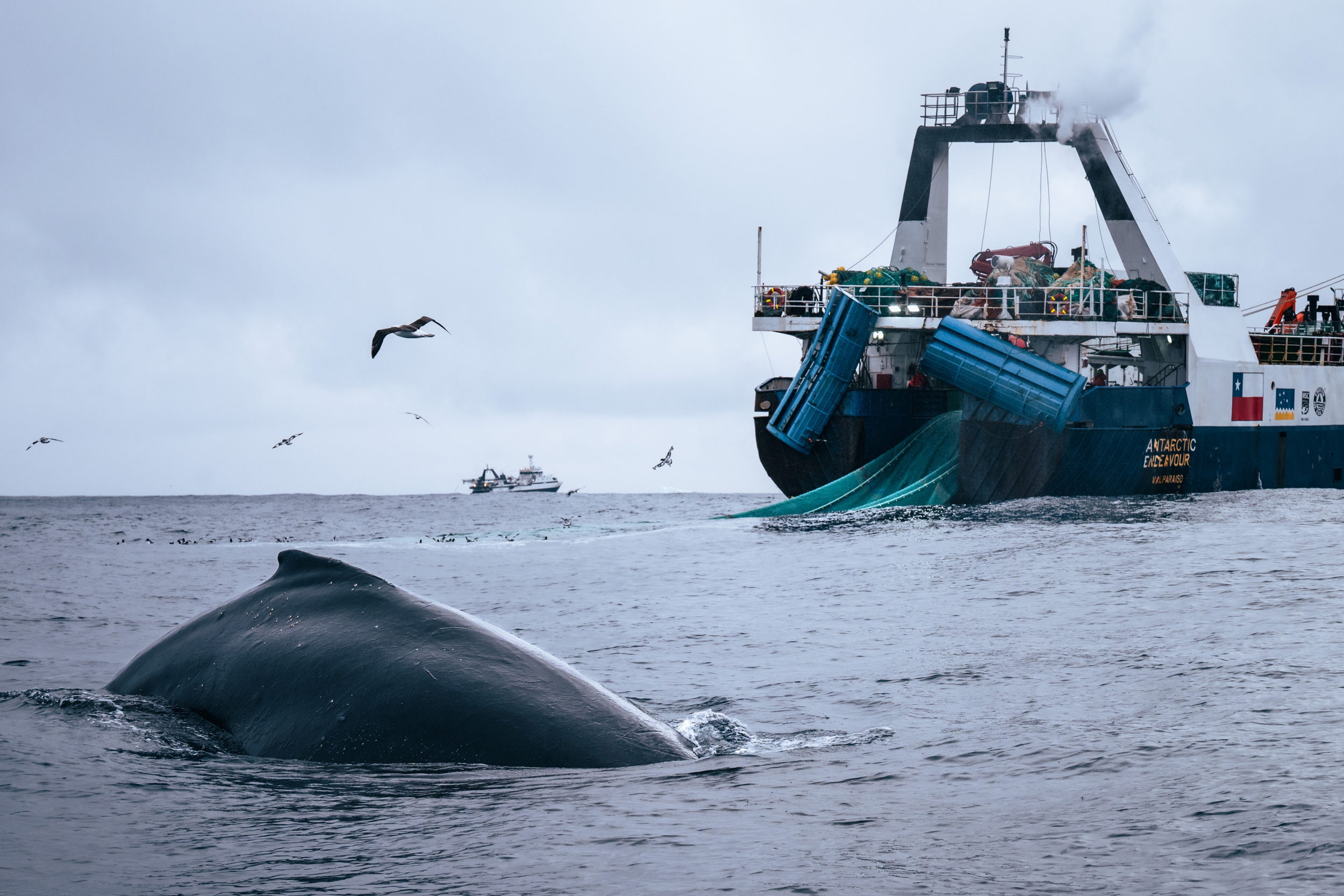


For the second year in a row, Antarctica’s industrial krill fishing fleet halted operations ahead of schedule after reaching its seasonal catch limit.
The vessels had been harvesting the tiny shrimp-like crustaceans from waters around the Antarctic Peninsula and the South Orkney Islands, located about 400 miles north of the peninsula. Under current rules, the fleet must stop fishing once it collectively harvests 620,000 tons of krill.
The precautionary threshold is intended to support the fishery’s long-term sustainability and was established in the 1990s by the Commission for the Conservation of Antarctic Marine Living Resources, which manages commercial fishing activity in the Southern Ocean.
But many scientists and marine advocates say more data is needed on whale populations to ensure that fishing in Antarctic waters does not deprive the marine mammals of their primary prey.
Whales are the largest consumers of krill in the Southern Ocean. Yet, to date, the conservation commission has not taken them into account in its fisheries management plan. When the commission was founded in the 1980s, it didn’t have to. Decades of commercial whaling had left few, if any, whales alive in Antarctica. Most whale species had been driven to the brink of extinction.
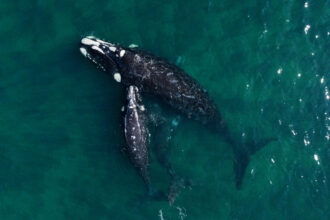
Over the last few decades, some whale populations have made a remarkable comeback after the International Whaling Commission adopted a global ban on commercial whaling in the early 1980s.
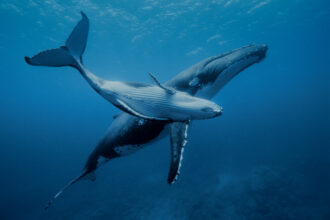
“Humpback whales have largely recovered,” said Peter Hammarstedt, chief campaigns officer for Sea Shepherd Global, an international marine conservation organization based in Amsterdam. Other species like fin whales and blue whales are experiencing a much slower recovery, but are still regularly documented in the region, he said.
“So now we have a growing number of whales down in the Southern Ocean. We have an expanding krill fishery, and these two bodies—the whales and the ships—are competing for a decreasing number of krill,” he said.
Until last year, the krill fishing fleet never reached its 620,000-ton limit, primarily due to a former conservation measure that required the catch to be distributed across vast ocean areas. Since that measure expired in 2024, however, the fishing industry has been able to make its catch easier.
“The krill fleet is able to take an increasingly large number of the catch in an increasingly smaller area, and the area that they focus on is the area where the krill is most highly concentrated, which is also the area where you see the highest concentrations of whales, penguins and seals,” Hammarstedt said.
To better understand this increasing overlap and potential conflict, Sea Shepherd recently partnered with independent scientists from the Hopkins Marine Lab at Stanford University and the University of California, Santa Cruz, to gather data about whale populations feeding near the South Orkney Islands.
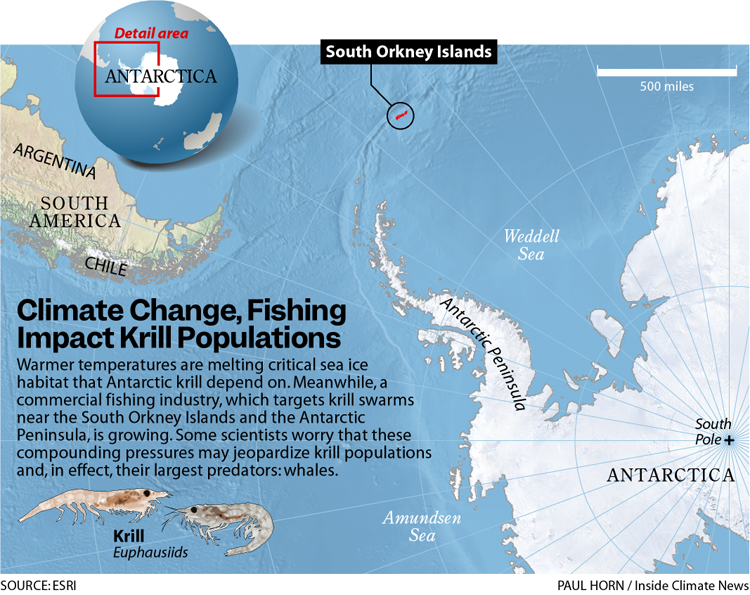
Hammarstedt said their findings could help inform decision-makers next month when delegates representing the commission’s 26 member countries, plus the European Union, will meet for their annual meeting in Hobart, Australia, to negotiate fishing rules and proposed measures to protect the Southern Ocean ecosystem.
Hopefully, he said, the new information will “force this international body to consider the impact of the fishery on whales.”
The krill fishing industry is growing, and demand for products made from the crustaceans continues. “What’s really driving this krill fishery is krill oil supplements for Omega-3, for which there are plant-based alternatives,” Hammarstedt said.
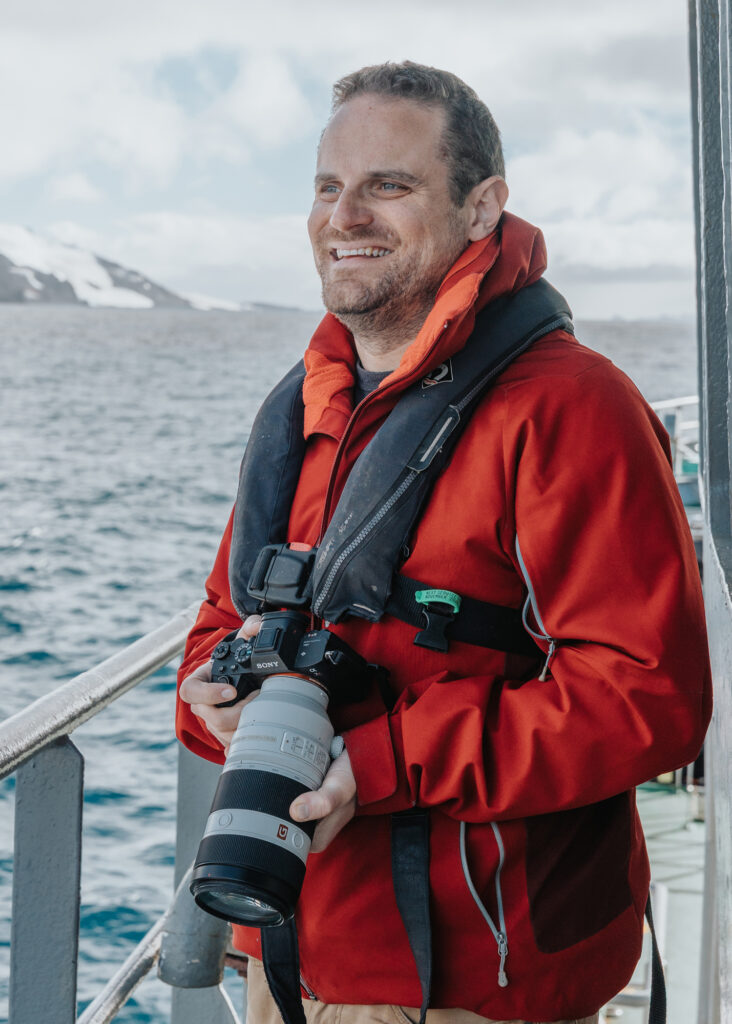
One of the scientists Sea Shepherd has partnered with is Matthew Savoca, a research scientist with the Hopkins Marine Station of Stanford University and a principal investigator with the California Marine Sanctuary Foundation. Savoca accompanied the advocacy group on a month-long voyage in the South Orkney Islands earlier this year. Inside Climate News spoke with him to learn more about his research and what he observed.
This interview has been edited for length and clarity.
TERESA TOMASSONI: How did you first become involved with Sea Shepherd’s Antarctica campaign?
MATTHEW SAVOCA: In 2022, a colleague and friend, Conor Ryan, shared some photos of this huge whale aggregation he saw near the South Orkney Islands. There were around 1,000 whales. To this day, I think it’s the record holder for the largest group of whales ever seen post-industrial whaling. So this enormous pod of whales was noteworthy, scientifically. But there were also these krill trawlers, four of them, in and amongst this group of whales. I remember thinking to myself, we have to share this with the world, just to be able to have an honest conversation about what’s happening in Antarctica in regards to how the krill fishery is operating: Can we do this better? Should this be happening? Is there a way to not have direct overlap between a ton of whales and krill fishing boats going after the same food? In 2023, we published those observations. Peter Hammarstedt, from Sea Shepherd, got in touch with me after and invited me to go with their team to survey the waters around the South Orkney Islands in Antarctica. They realized that an effective campaign to raise awareness about what is happening there would require not only advocacy and a shift in public sentiment, but also science.
TOMASSONI: Tell me about the South Orkney Islands and why they are important.
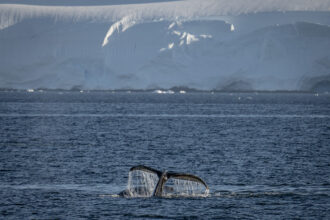
SAVOCA: This is one of the most productive ecosystems on our planet, like the Amazon or coral reefs, the wildebeest migration across the Serengeti. I mean, you have glaciers that are the size of skyscrapers, spilling off of mountains that are 2,000 feet tall, into the ocean. Tens of thousands of penguins and albatrosses are everywhere. Every day that we were out there and there was good weather, you’d see a group of at least 100 whales in one spot. And the next day you’re 20 miles from there and then there’s a different group of 200 whales. There’s very few places in the world where you can see that.
TOMASONI: What was your primary scientific objective?
SAVOCA: I went there with fundamental or foundational questions in mind. I wanted to know how many whales there are. How are they using the ecosystem? How much krill will be needed to support this many whales and a fishery? Answering those questions will ultimately help respond to those related to whether or not the region can sustainably support a krill fishery as whale populations continue to recover, and to what degree.
TOMASSONI: How did you conduct your research?
SAVOCA: When we’re motoring along, we follow a set track while using special binoculars and computer software to count the whales we see and determine how far they are from the ship. The idea is to create a map. Imagine a map showing the population of a state. What we’re doing is similar, but with whales across a big ocean area. When we come across one of these big groups, we basically shut the boat down, and we launch smaller boats. And from those smaller boats, we take biopsy samples from the whales to test for pregnancy status. We also take measurements of the whales using drones. And we do some recordings to capture the whales’ vocalizations. It’s honestly fairly basic, actually. But the thing is, there’s almost no information from this area, so this is all new stuff.
TOMASSONI: Tell me more about what you saw and what you learned.
SAVOCA: The whales are feeding like crazy in this area. One of the cool things about the Orkneys is that there’s these big krill swarms that exist there naturally, seemingly, which is why the fishery goes there too. The whales feed by lunging toward these swarms and opening their mouths to engulf large volumes of krill. We have these amazing videos, sometimes of up to six fin whales at a time, feeding in formation, like fighter jets. We’ve never seen these whales feed in this way before, which is to say, in big groups, cooperatively almost.
Fin whales and humpback whales are the most common. But it seems to be quite an important region for southern right whales as well, which are less talked about in this region. We didn’t see any Antarctic blue whales. They’re still very endangered. But there’s passive acoustic recorders—basically underwater microphones—that have recorded sounds made by blue whales there most of the summer, so it’s clearly an important place for multiple species of big whales, and there’s only about 14 species of big whales on the planet. In 2025, my colleagues who joined Sea Shepherd documented three species of whales—right whales, fin whales, and humpbacks—all feeding really close to each other. That’s never been filmed anywhere else on the planet.
TOMASSONI: Did you see krill trawlers while you were doing your research, and how would you describe their interactions like with whales, if any?
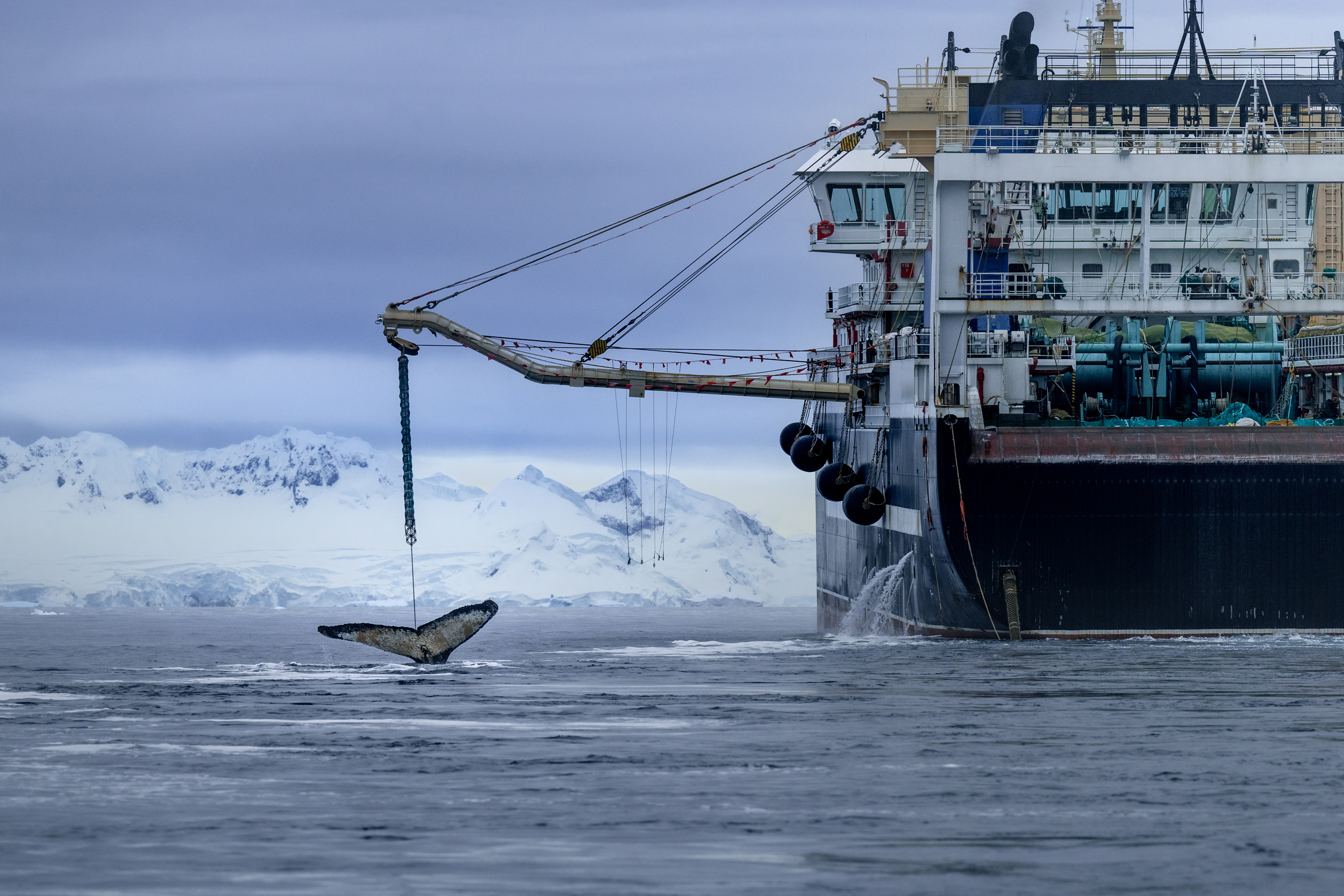
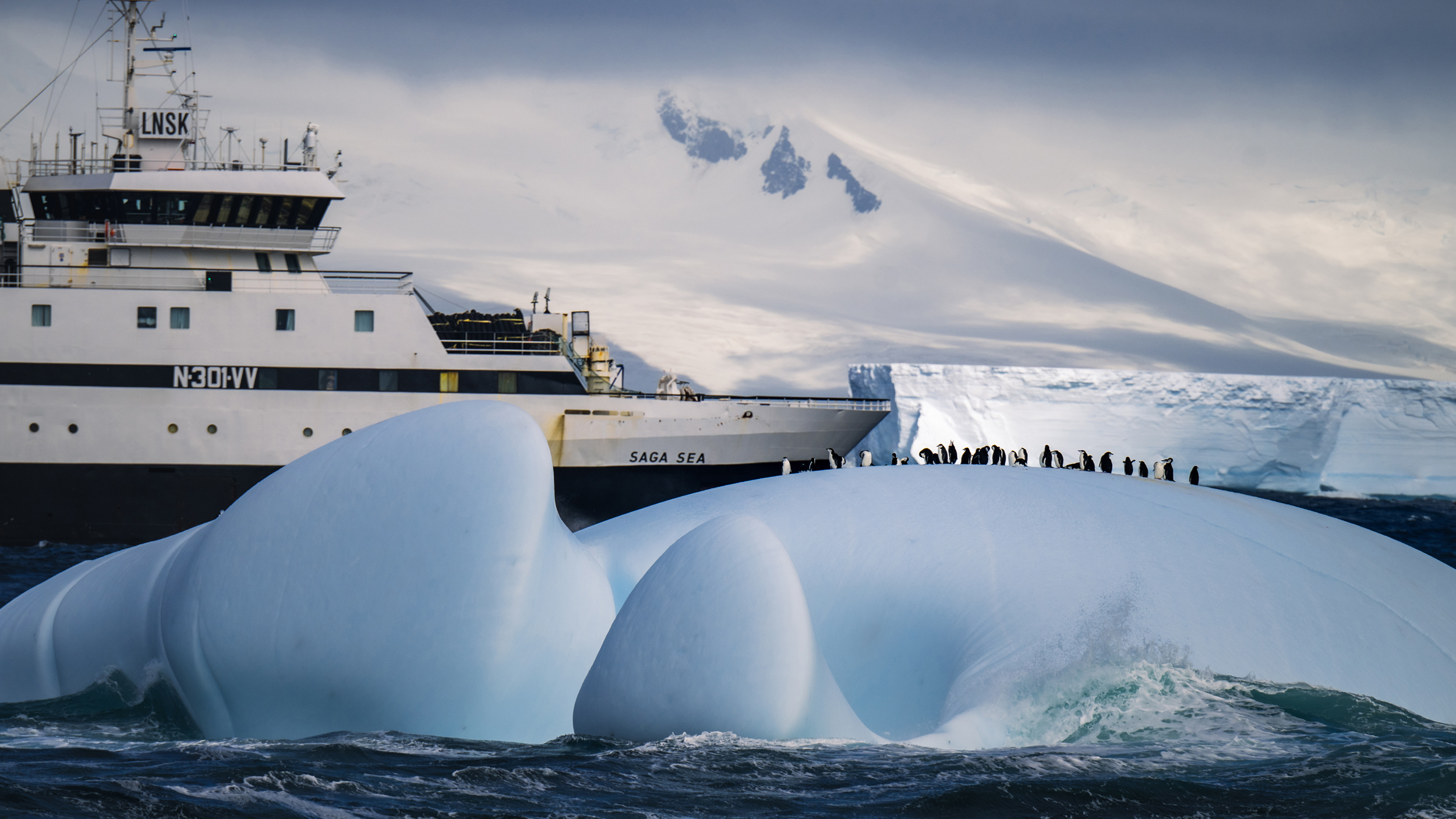
SAVOCA: Yes. We saw up to four boats at a time. It’s not like we saw a whale entangled (though multiple entanglements have been documented with krill trawlers in the last few years) or whales get run over or anything extreme like that. But they’re definitely near each other.
This story is funded by readers like you.
Our nonprofit newsroom provides award-winning climate coverage free of charge and advertising. We rely on donations from readers like you to keep going. Please donate now to support our work.
Donate NowTOMASSONI: What concerns you about the presence of krill fishing vessels where whales are feeding and the fact that this year the fishery closed its season early again?
SAVOCA: Each one of these boats is absolutely gigantic—400 to 500 feet long. There’s also other cargo ships that the trawlers offload their catch onto so they never have to go on land and ones that refuel the fishing vessels.There’s been some concern raised about the possibility of a fuel spill. There’s also a question of whether or not industrial krill fishing is affecting the whales’ food supply. Are krill fleets depleting that krill swarm to the point where that krill swarm is dissipating and no longer a food source for whales a week earlier than it would be because of that fishing pressure? That’s something that would be interesting to try to demonstrate. That’s why we’re going down there to try to get that type of information.
The fact that the fishery closed early is concerning because it demonstrates that our efficiency in being able to extract krill quickly is increasing. That’s happening because of reduced regulation. I think almost every scientist would say that is lacking. It’s also happening because of improved technology, as well as an increasing demand for products made from krill.
TOMASSONI: How does climate change factor into this conflict?
SAVOCA: The Southern Ocean actually takes up like three-quarters of our anthropogenic heat that we put into the atmosphere. That’s a planetary ecosystem service that the Southern Ocean provides that no one even thinks about, right? And as the ocean warns, sea ice is melting—sea ice krill rely on. As juveniles, they need ice to hide under from predators. They also feed on algae that grows on the sea ice. But as sea ice melts, there’s just fewer and fewer areas that are going to be really good krill habitat. So, if we go then to those areas where krill are still comfortable and we start rattling those areas by fishing, there’s not many other places left for them to go.
Ultimately, krill swarms, which whales depend on to survive, are becoming less predictable in time and space. Without those giant masses of krill, whales will go hungry. And those masses are also what the boats go after. I think the question is, since we know that we’re pushing this ecosystem to the brink, is it wise to also have industrial fishing there as an additional sort of footprint and additional pressure on this already stressed-out ecosystem?
TOMASSONI: What can be done to ensure this ecosystem is protected?
SAVOCA: At minimum, what we need is a fishery that’s regulated by science, by evidence, by data—one that takes whales into account, where areas of ocean are set aside where we don’t fish, like national parks. For decades, CCAMLR has functionally ignored whales because it was founded at a time when there were almost no whales. By then, after industrial whaling had nearly driven most whale populations to near extinction, you’d never see a whale in Antarctica.
Today, you can’t ignore whales anymore. They’re too abundant now, which is a great thing. To ignore them as you’re doing your fishery plan just makes no sense.
About This Story
Perhaps you noticed: This story, like all the news we publish, is free to read. That’s because Inside Climate News is a 501c3 nonprofit organization. We do not charge a subscription fee, lock our news behind a paywall, or clutter our website with ads. We make our news on climate and the environment freely available to you and anyone who wants it.
That’s not all. We also share our news for free with scores of other media organizations around the country. Many of them can’t afford to do environmental journalism of their own. We’ve built bureaus from coast to coast to report local stories, collaborate with local newsrooms and co-publish articles so that this vital work is shared as widely as possible.
Two of us launched ICN in 2007. Six years later we earned a Pulitzer Prize for National Reporting, and now we run the oldest and largest dedicated climate newsroom in the nation. We tell the story in all its complexity. We hold polluters accountable. We expose environmental injustice. We debunk misinformation. We scrutinize solutions and inspire action.
Donations from readers like you fund every aspect of what we do. If you don’t already, will you support our ongoing work, our reporting on the biggest crisis facing our planet, and help us reach even more readers in more places?
Please take a moment to make a tax-deductible donation. Every one of them makes a difference.
Thank you,

Teresa Tomassoni
Oceans Correspondent
Teresa Tomassoni is an environmental journalist covering the intersections between oceans, climate change, coastal communities and wildlife for Inside Climate News. Her previous work has appeared in The Washington Post, NPR, NBC Latino and the Smithsonian American Indian Magazine. Teresa holds a master’s degree in Journalism from the Craig Newmark Graduate School of Journalism at CUNY. She is also a recipient of the Stone & Holt Weeks Social Justice Reporting Fellowship. She has taught journalism for Long Island University and the School of the New York Times. She is an avid scuba diver and spends much of her free time underwater.