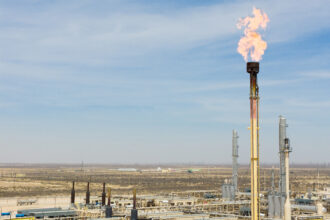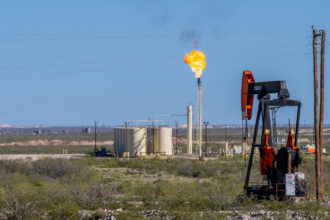


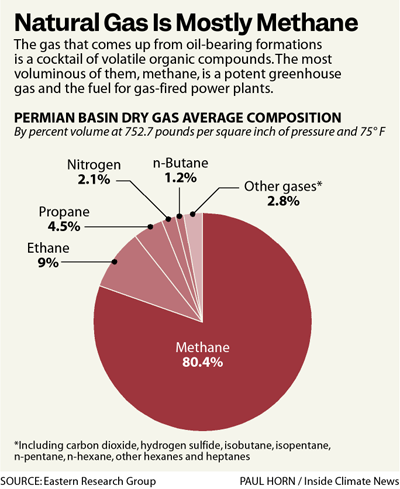
In the Permian Basin of West Texas, methane gas billows from oil wells. It blasts out of pressure valves on pipelines, wafts from sprawling gas processing plants and rises up in plumes when companies air out systems during routine maintenance in the nation’s largest oilfield.
More than a decade of efforts to bring these practices under control has yielded slim results. The Obama administration proposed methane standards in 2015, but the first Trump administration rolled them back. The Biden administration developed a detailed set of rules, which the second Trump administration blocked.
Now, the Trump administration plans to release its own proposed rules for methane this month, according to a recent announcement by Environmental Protection Agency Administrator Lee Zeldin.
Methane, a potent greenhouse gas, continues to flow freely from the Permian Basin and other U.S. oilfields, even as global temperatures break new records.
“Methane emissions are not slowing down,” said Sharon Wilson, an activist in Texas who has documented pollution from oil and gas for more than 20 years. “Nobody ever knows because it’s invisible.”
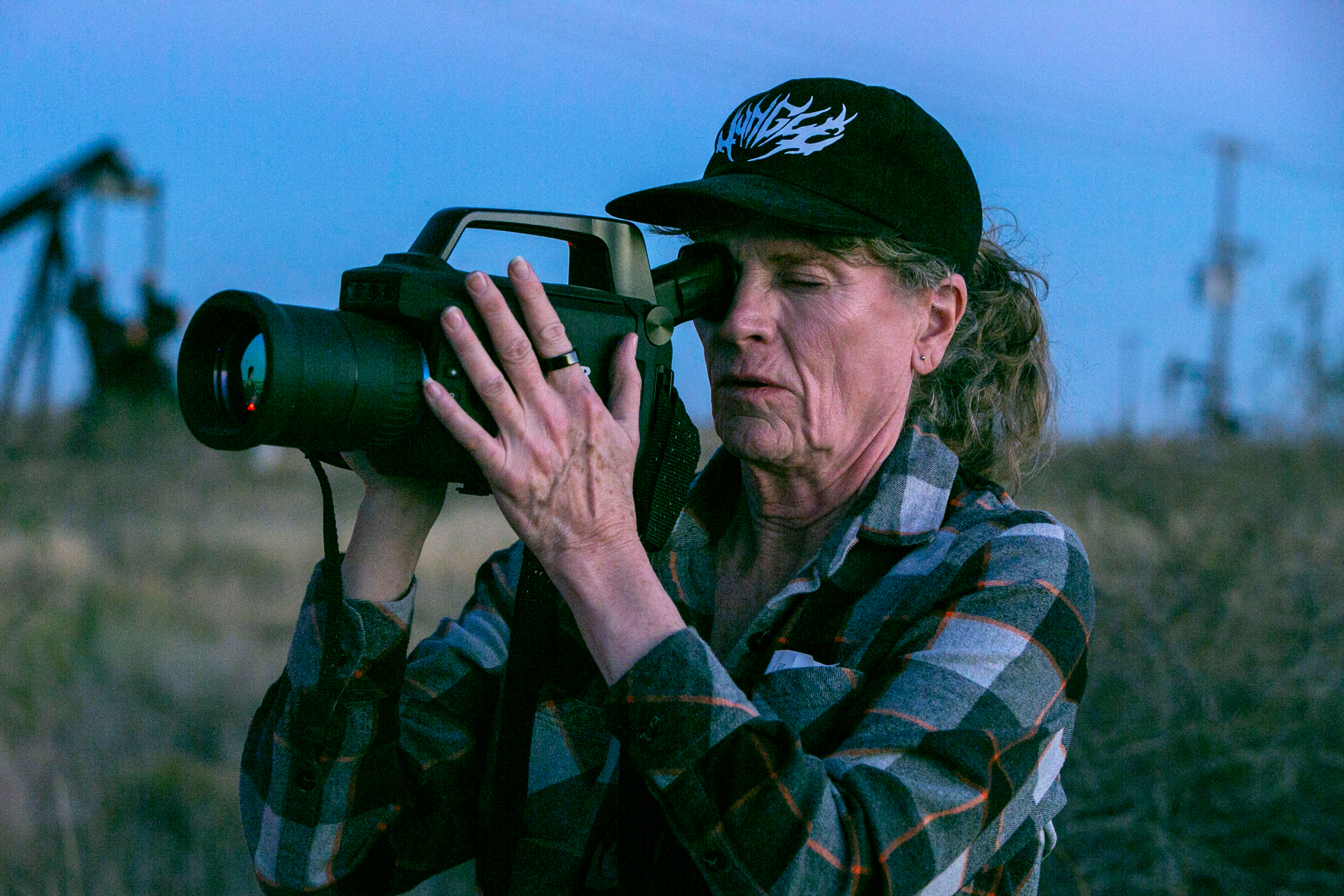
Wilson uses an optical gas imaging camera, a $50,000 piece of equipment, to visualize gases that the human eye cannot. Methane, the principal component of natural gas, occurs alongside oil underground and comes to the surface through wells. Much of it is captured to burn in power plants or to export overseas as LNG. Plenty, however, is simply released into the air as waste.
“People are totally unaware,” said Wilson, 72.
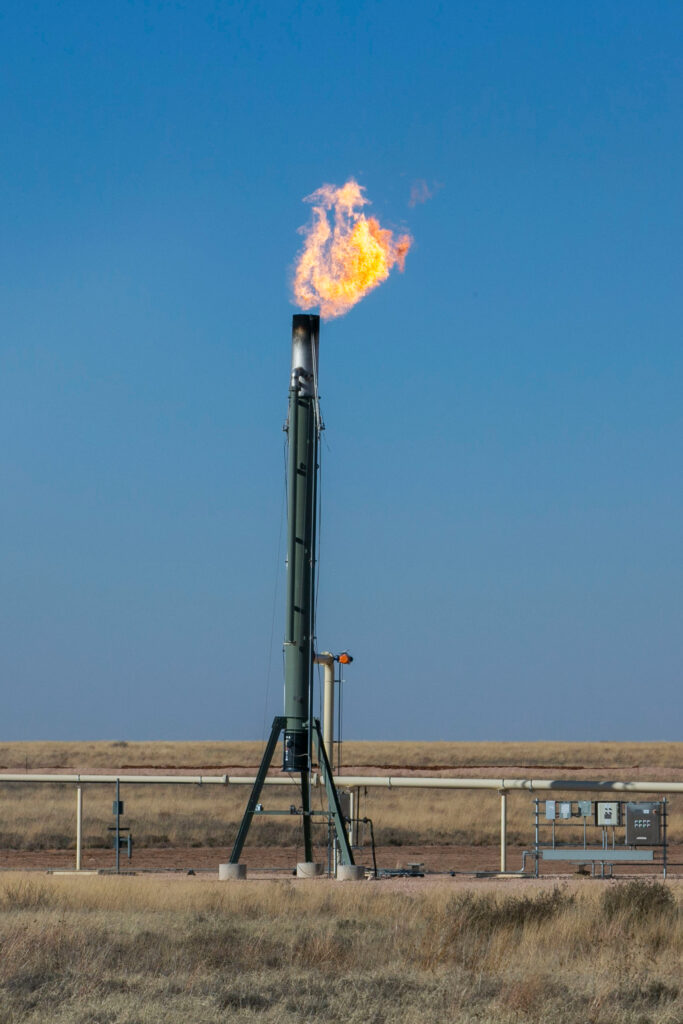
The founder of a group called Oilfield Witness, she travels the wide, rural expanses of Texas’ oilfields, recording gas releases from industry infrastructure. The largest releases follow blowouts at oil or gas wells, when equipment failures allow methane gas to erupt uncontrolled from the earth.
“There is still no sign that methane emissions from fossil fuel operations are falling, despite well-known and proven mitigation pathways,” said the International Energy Agency’s 2026 global methane tracker.
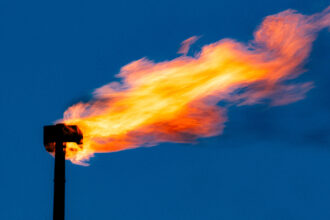
Wilson regularly records malfunctioning flares—chimneys meant to burn off gas for disposal—spewing invisible, unburned methane. She records tall plumes ejected from compressor stations to relieve pressure on backed-up pipelines. The emissions are almost never reported to state regulators or logged in official datasets.
Sometimes, during widespread disruptions like inclement weather, entire systems spanning hundreds of miles open emergency valves and hatches, letting untold volumes of methane escape—a practice known as venting.
Large methane releases occur constantly in the Permian Basin, said Gunnar Schade, an atmospheric scientist at Texas A&M University who has measured air quality in the area.
“There were methane plumes at all times of day from all directions,” he said. “The density of wells is so high in that area, you will probably not be able to assign that to any particular location.”
In a study published May 2026, Schade identified venting from oil and gas as the largest source of methane emissions.
A Potent Greenhouse Gas
Emissions of methane are the second-largest contributor to global warming, after carbon dioxide.
Methane absorbs more than 80 times as much heat as carbon dioxide on a pound for pound basis over a 20-year period, so relatively small amounts of methane can have outsize climate impacts.
That’s why scientists years ago identified methane as a priority target in efforts to reduce near-term warming of the Earth.
“Cutting methane is the strongest lever we have to slow climate change over the next 25 years,” said a press release from the U.N. Environment Program in 2021. “We need international cooperation to urgently reduce methane emissions as much as possible this decade.”
So far, that hasn’t happened. Instead, atmospheric concentrations of methane continue to hit record highs. So does global production of coal, oil and gas. Now 2026 appears on track to be the warmest year on Earth since records began.
The livestock industry and landfills make up the largest global source of methane, according to a Global Methane Budget published last year by the European Geosciences Union. Natural emissions from wetlands are the second-largest source.
Fossil fuels, the third largest, account for 20 percent of global methane emissions.
Another EGU study, published this year, evaluated six major oil and gas producing basins of the world, identifying the Permian Basin as the top methane emitter.
A 2026 study published in the journal Environmental Science & Technology estimated Permian Basin methane emissions at 5.1 million metric tons per year. That’s almost 1 percent of total global methane emissions, by some estimates.
In Texas, the vast majority of those releases are never reported to state regulators, according to a March 2026 study by RMI.
The state’s oilfield regulator, the Texas Railroad Commission, “does not rigorously enforce reporting and seems not to test the validity of the gas volumes that are reported,” the report said.
For some companies, releasing methane typically makes more financial sense than capturing it and piping it to markets for sale. When gas prices rise, gas releases fall, according to RMI data.
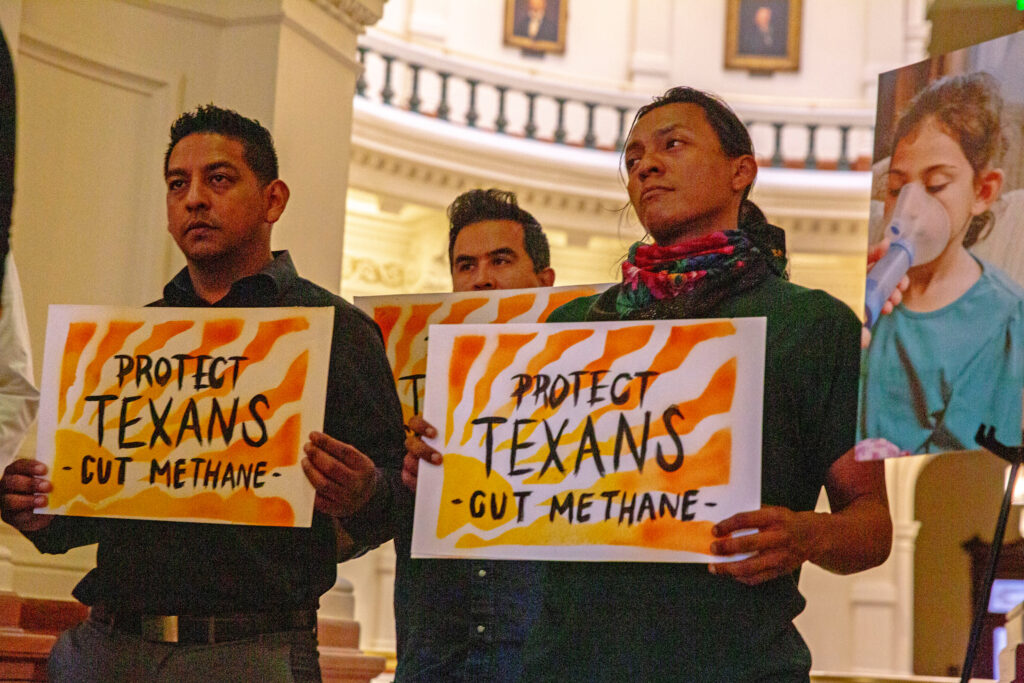
When gas prices exceed $4 per thermal unit (MMBtu), “it appears to be economically advantageous for operators to sell rather than waste their gas,” said Kevin Gauthier, a geoscience advisor at RMI.
Prices in West Texas have hoovered mostly below that point for the last 15 years, RMI data show.
“Reliable reporting alone is unlikely to change the behavior of operators who are wasting gas and emitting methane,” the RMI report said. “Given the weakness of inherent economic incentives, stringent rules will be required.”
Ten Years Making Rules
President Joe Biden, during his first week in office, launched an effort to develop stringent regulations with an executive order titled “Tackling the Climate Crisis at Home and Abroad.”Over subsequent years, the EPA under the Biden administration proposed a collection of detailed new regulations.
“These were a really hard set of rules to work on just in terms of the volume of technical information,” said Joseph Goffman, a former EPA assistant administrator who helped develop the rules.
This story is funded by readers like you.
Our nonprofit newsroom provides award-winning climate coverage free of charge and advertising. We rely on donations from readers like you to keep going. Please donate now to support our work.
Donate NowThey prohibited routine flaring or venting of gas, required monitoring for leaks, set standards for hardware and even imposed a fee for excessive methane emissions.
“The rules relied on cost-effective, commercially available technologies and were projected to prevent an estimated 58 million tons of methane emissions between 2024 and 2038,” wrote a coalition of Texas environmental groups in a statement this month.
But the second Trump administration blocked them all. A fee for methane emissions was scheduled to begin in 2025, but was delayed for 10 years in the One Big Beautiful Bill.
Zeldin laid out broad exemptions to a Biden-era prohibition on routine flaring of gas at new wells, one week before the rule took effect in May 2026.
The Trump administration has also proposed ending all requirements for companies to report greenhouse gas emissions, including methane.
Soon, the Trump administration will release its own proposed rules on methane from oil and gas, followed by a public comment period and, potentially, the publication of a final rule.
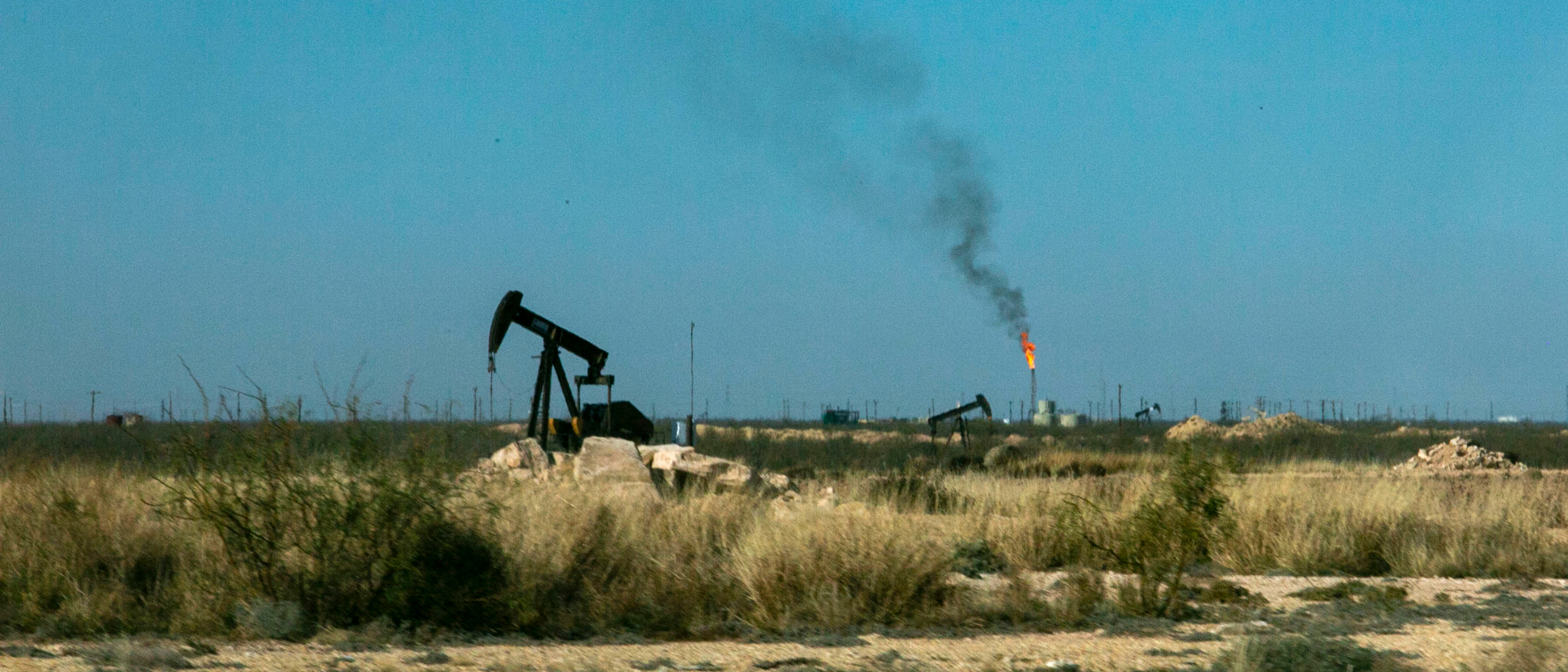
To Wilson, the activist who documents emissions, all the talk about rulemaking has little effect on the ground. The oilfields are so vast and sparsely populated, she said, that the rule of law hardly applies.
“Even if we had the best rules you could think of, we don’t have enough people to enforce those,” she said. “It would take an army.”
Unenforceable rules actually benefit the companies, said Julia Kane, a researcher at the oil and gas watchdog Fieldnotes and author of a recent report on industry campaigns against methane regulations. That’s why she said the administration probably won’t repeal methane regulation altogether.
“The companies want to be able to say that they’re well regulated,” Kane said. “They don’t actually want to be well regulated.”
Kane reviewed extensive records of company input in the rulemaking process for her recent report. Many prefer to keep the rules but carve out expansive loopholes, she said.
“They are trying to carve out huge loopholes to weaken the rules wherever they can,” Kane said. “They would like a very weak rule with very few teeth.”
About This Story
Perhaps you noticed: This story, like all the news we publish, is free to read. That’s because Inside Climate News is a 501c3 nonprofit organization. We do not charge a subscription fee, lock our news behind a paywall, or clutter our website with ads. We make our news on climate and the environment freely available to you and anyone who wants it.
That’s not all. We also share our news for free with scores of other media organizations around the country. Many of them can’t afford to do environmental journalism of their own. We’ve built bureaus from coast to coast to report local stories, collaborate with local newsrooms and co-publish articles so that this vital work is shared as widely as possible.
Two of us launched ICN in 2007. Six years later we earned a Pulitzer Prize for National Reporting, and now we run the oldest and largest dedicated climate newsroom in the nation. We tell the story in all its complexity. We hold polluters accountable. We expose environmental injustice. We debunk misinformation. We scrutinize solutions and inspire action.
Donations from readers like you fund every aspect of what we do. If you don’t already, will you support our ongoing work, our reporting on the biggest crisis facing our planet, and help us reach even more readers in more places?
Please take a moment to make a tax-deductible donation. Every one of them makes a difference.
Thank you,

Dylan Baddour
Reporter, Austin
Dylan Baddour covers the energy sector and environmental justice in Texas. Born in Houston, he’s worked the business desk at the Houston Chronicle, covered the U.S.-Mexico border for international outlets and reported for several years from Colombia for media like The Washington Post, BBC News and The Atlantic. He also spent two years investigating armed groups in Latin America for the global security department at Facebook before returning to Texas journalism. Baddour holds bachelor’s degrees in journalism and Latin American studies from the University of Texas at Austin. He has lived in Argentina, Kazakhstan and Colombia and speaks fluent Spanish.