

In what many environmental organizations are touting as a victory, a federal judge last week ruled that the Environmental Protection Agency violated the Clean Air Act by failing to meet its legal deadline to identify areas failing to meet its 2024 particulate matter standard.
Judge Haywood Gilliam Jr. of the U.S. District Court for the Northern District of California ruled to enforce a new deadline of Feb. 6, 2027, for the Environmental Protection Agency (EPA) to implement the reinforced 2024 National Ambient Air Quality Standard (NAAQS) for particulate matter, or PM2.5, otherwise known as soot.
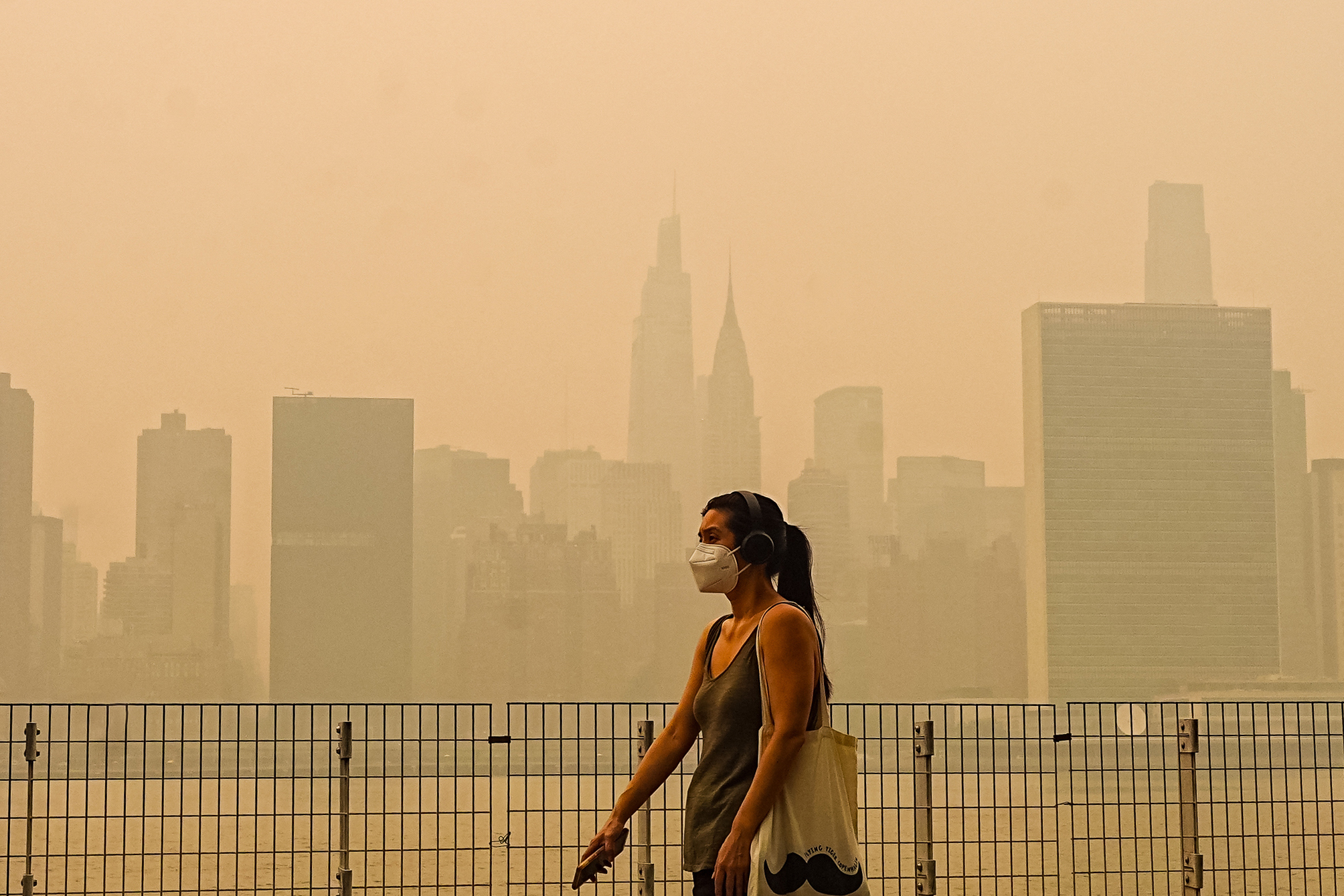
The ruling comes amid days of worsened air quality across the nation due to soot from wildfires in Canada and the Upper Midwest. It follows another ruling, made last month in the U.S. Court of Appeals for the D.C. Circuit, to uphold the 2024 soot standard despite the Trump administration’s efforts to eliminate it.
The soot standard was strengthened in 2024 under the Biden administration, and the Clean Air Act requires EPA to designate areas that violate it. By delineating these areas, EPA, in collaboration with state and federal partners, can start to invest in studies and actions to improve the air quality. The original deadline to designate these areas was Feb. 7, 2026, but the EPA failed to meet it.
After the agency did not respond to a notice letter from the group of 17 different organizations, the groups filed a suit in April against EPA for failure to implement and designate areas violating the standard by the legal deadline.
“You can push back a deadline, but you cannot give families back the days they spent breathing unhealthy air,” Kate Sinding Daly, senior vice president for law and policy at the Conservation Law Foundation, said in a press release. “Every day Trump’s EPA delays these protections is another day polluters avoid stronger clean air rules and another day families are left exposed to dangerous soot. Those are days communities can never get back.”
An EPA representative told Inside Climate News the agency is currently reviewing the decision. Only five days after the agency missed the deadline, they also rescinded the 2009 Greenhouse Gas Endangerment Finding, which served to regulate emissions from new motor vehicles.
Soot inhalation is linked to a slew of adverse health effects, including respiratory conditions, heart disease, Alzheimer’s disease and dementia. The NAAQS sets baseline national air quality measures for six harmful air pollutants: carbon monoxide, lead, nitrogen dioxide, ozone, sulfur dioxide and soot.
EPA estimated in 2024 that the new standard will prevent up to 4,500 premature deaths annually, avoid 800,000 cases of asthma symptoms and 2,000 emergency room visits, and yield up to $46 billion in net health benefits once implemented. The agency projected implementation would save 4,500 lives in 2032 alone.
“Based on EPA’s own analysis and the entire very lengthy and very scientific process to establish the rule, it was clear that there were going to be significant health benefits,” Sage Lincoln, an associate attorney at Earthjustice who worked on the case, said. “And all of our clients have members who live in areas with air pollution that violates the standards.”
Earthjustice represented eight of the 17 plaintiffs, including national health organizations like the American Lung Association.
In the leadup to the case, Lincoln said she spoke to many people who have pre-existing health conditions and notice it worsens on bad air pollution days, and to parents of children with asthma who won’t let them play outside on days with high air pollution.
Caroline Cress, a senior attorney with the Southern Environmental Law Center (SELC), described similar experiences in Georgia. SELC represented three other organizations in the case, and in collecting evidence, Cress learned the riverkeeper for the Savannah River had concerns over what the air pollution could be doing to her six kids, three of whom have asthma and love to play outdoors.
“That’s just a horrible decision to have to make for a mom,” Cress said. “You want your kids to have the best childhood possible—but you also don’t want to put them at risk.”
Seventy-three different counties across the U.S. have air pollution levels violating the EPA’s soot standard, from Fairbanks, Alaska to Pittsburgh, according to EPA data as of June.
EPA attempted to pause the California case because the soot standard was being challenged in the D.C. circuit court, according to Lincoln, and alternatively asserted that they needed 18 months to undergo the process to implement new standards. The agency also argued that the plaintiffs needed to demonstrate harm in every individual county across the country. The court held that it was EPA’s responsibility to make these nationwide determinations under the Clean Air Act and ruled to expedite the already missed deadline early next year.
This story is funded by readers like you.
Our nonprofit newsroom provides award-winning climate coverage free of charge and advertising. We rely on donations from readers like you to keep going. Please donate now to support our work.
Donate NowMost communities in the Southeast, especially low-income ones, stand to benefit from the designations, Cress said.
As was the case with EPA standards in the past, states across the nation need to make new air quality recommendations based on the previous years’ monitoring data, and from there they can help decide what areas should be labeled as “non-attainment,” or not complying with the standard.
It is only then that certain tools and mechanisms under the Clean Air Act can be deployed that could help communities reduce air pollution.
While states can still submit exceptional event demonstrations, like the Canadian wildfires, to be excluded from designated non-attainment areas, Cress said states want to be eligible for the investment and grants they can get to help expanded facilities get to their lowest achievable emissions rate.
“They want to protect the people that live there, and they just only have so many tools that they can use and so many pots of investment that they have access to before they get a non-attainment designation,” she said.
What Cress found unusual, however, was how EPA flipped its support for the standard in the first place. Before the court had a chance to rule on the merits of the standard in the D.C. Circuit Court case, Cress said the Trump administration asked to freeze the case as they were considering an appeal. EPA filed its motion and confessed an error, essentially saying it was no longer defending the validity of the rule and wanted to strike it down.
While Cress said she wasn’t necessarily optimistic EPA will comply because of the chance it appeals or tries to get out of the new deadline, she believes the federal court made a step in the right direction.
“There are at least some good folks still in the government and at the DOJ who know that it is really important to comply with a court order, and if they don’t, they could directly be held in contempt, and that’s a pretty big deal for the government,” she said.
About This Story
Perhaps you noticed: This story, like all the news we publish, is free to read. That’s because Inside Climate News is a 501c3 nonprofit organization. We do not charge a subscription fee, lock our news behind a paywall, or clutter our website with ads. We make our news on climate and the environment freely available to you and anyone who wants it.
That’s not all. We also share our news for free with scores of other media organizations around the country. Many of them can’t afford to do environmental journalism of their own. We’ve built bureaus from coast to coast to report local stories, collaborate with local newsrooms and co-publish articles so that this vital work is shared as widely as possible.
Two of us launched ICN in 2007. Six years later we earned a Pulitzer Prize for National Reporting, and now we run the oldest and largest dedicated climate newsroom in the nation. We tell the story in all its complexity. We hold polluters accountable. We expose environmental injustice. We debunk misinformation. We scrutinize solutions and inspire action.
Donations from readers like you fund every aspect of what we do. If you don’t already, will you support our ongoing work, our reporting on the biggest crisis facing our planet, and help us reach even more readers in more places?
Please take a moment to make a tax-deductible donation. Every one of them makes a difference.
Thank you,

Avril Silva
Fellow
Avril Silva is an award-winning journalist and an Outrider fellow at Inside Climate News. She has experience covering environmental and public health policy and is interested in pursuing investigative political journalism. She is currently pursuing a master’s at NYU’s Science, Health, and Environmental Reporting program. You can find more of her work on the New York Times, CBS News, POLITICO’s E&E News, and more.