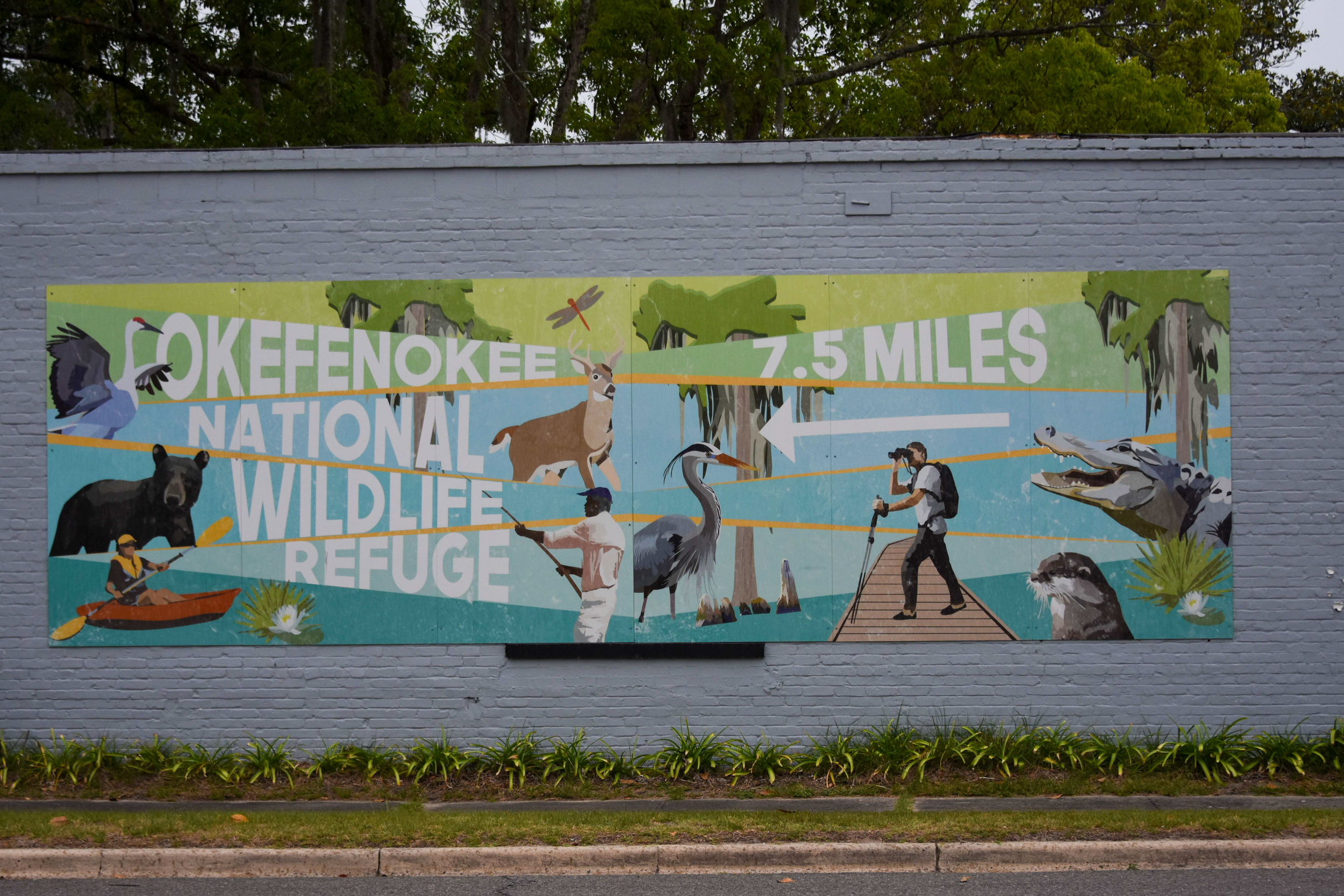


FOLKSTON, Ga.—This quiet town of about 4,800 people has a humble Southern charm. Its low-slung storefronts, historic buildings and broad, quiet streets give it the feel of a place where time moves a little slower. At a viewing platform beside railroad tracks that pass a few yards from Main Street, train enthusiasts gather to watch 60 freight trains a day rumble through Folkston, carrying the goods that keep the rural Southern economy moving.
But the trains are not what draws 800,000 visitors to this part of southern Georgia near the Florida state line every year.
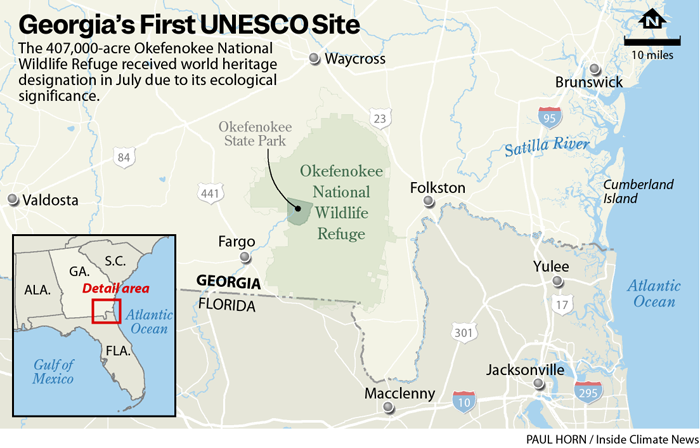
That would be the Okefenokee National Wildlife Refuge, the largest blackwater swamp in North America and a biodiverse wonderland, home to 15,000 alligators and all manner of threatened and endangered species.
Soon, the number of visitors could double, by some estimates, following the Okefenokee’s designation in July by the United Nations Educational, Scientific and Cultural Organization as a World Heritage site, the first natural site named in the U.S. in more than 30 years.
“The area has had many windows of opportunity open and close,” said Dixie McGurn, life-long resident, former mayor and owner of Whistlin Dixie, a cafe in Folkston, and Railside Lodging, featuring an old caboose tricked out for overnight stays. “I hope people will see this as another window, or even a door.”
Hers is a common refrain, but not everyone is thrilled. Across the three counties that border the refuge, some residents and local leaders have opposed the designation, raising concerns about what greater international attention could mean for the swamp and the communities around it.
Some opponents have framed UNESCO as an international body that could threaten local control, pointing to the involvement of countries including China and Russia.
For all the disagreement over the designation, there is common ground: Residents on both sides of the debate see the Okefenokee as a place of extraordinary beauty and ecological importance.
The designation recognizes the Okefenokee National Wildlife Refuge for its ecological significance, including its vast peatlands, distinctive wetland ecosystems and exceptional biodiversity.
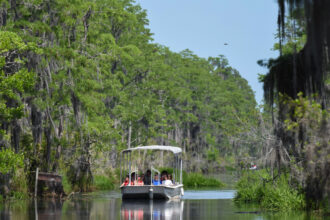
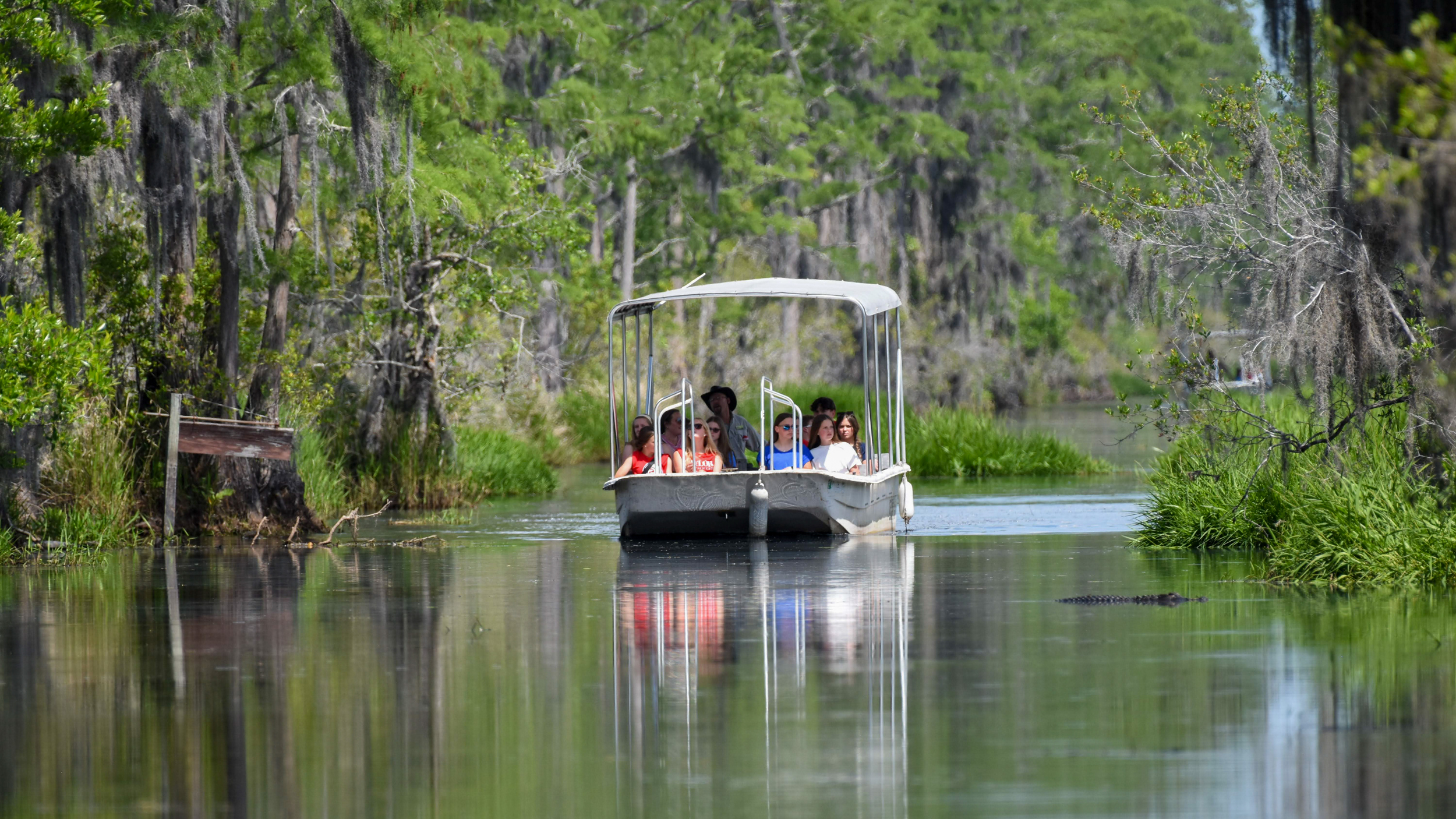
Floating down the swamp’s channels, walled by cypress trees draped in Spanish moss, visitors are greeted by alligators at nearly every turn. Some lounge on logs, while others barely peek above patches of lily pads. The plethora of dinosaur-like creatures inhabit the swamp’s murky waters, and aren’t afraid to approach flat-bottomed tour boats or kayakers brave enough to venture into their territory, as they are largely unfazed by visitors.
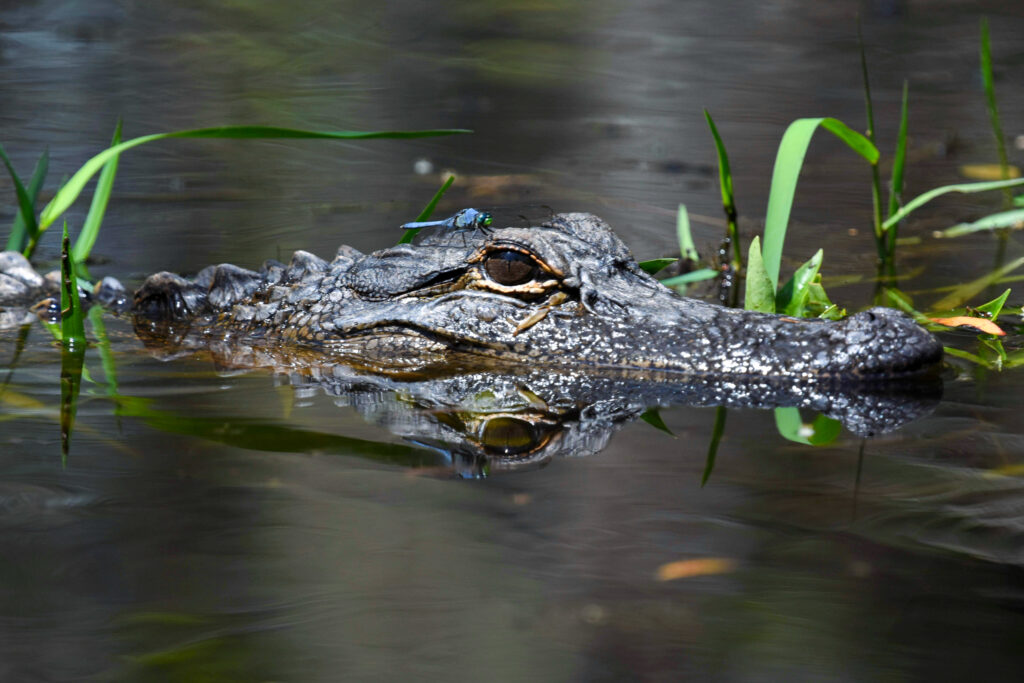
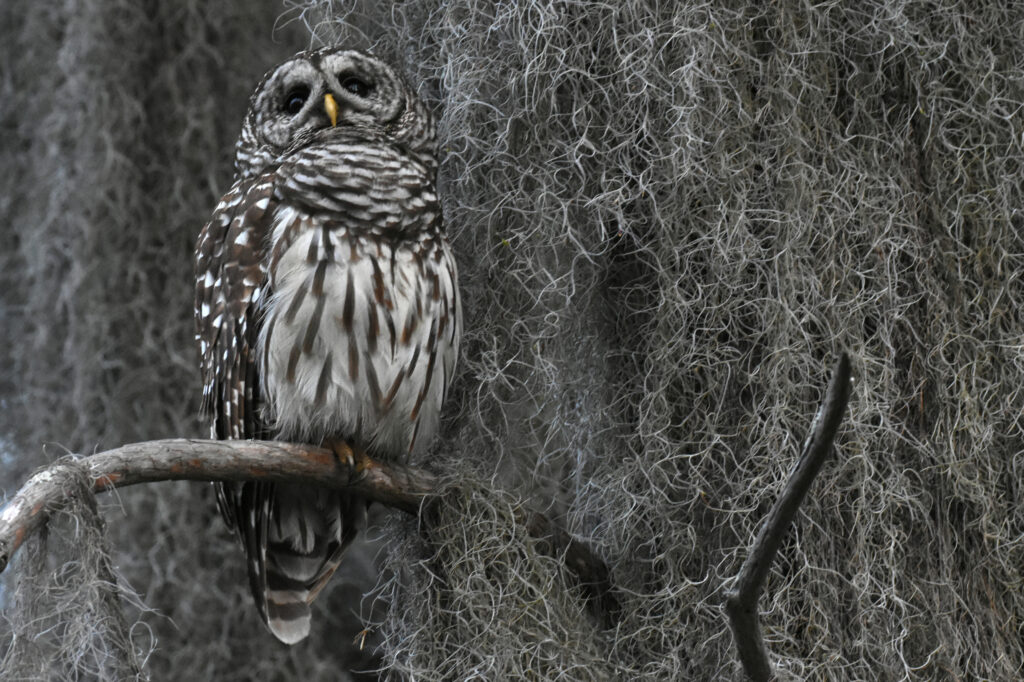
But the alligators are just one part of what makes the Okefenokee unique. It is home to endemic species such as the four-foot-tall carnivorous Okefenokee pitcher plant and an abundance of wildlife rivaled on the East Coast only by the Everglades.
The Okefenokee also contains one of the largest and most intact subtropical peatlands in the world, a carbon-rich layer of partially decomposed plant material that has accumulated over thousands of years.
The Power of World Heritage Sites
The region’s 800,000 visitors already contribute $91.5 million to the local counties, supporting 750 jobs and generating $11 million in annual tax revenue. Now as Georgia’s first UNESCO World Heritage site, the swamp stands to add even more economic growth.
According to a 2024 report from The Conservation Fund, the Okefenokee’s new designation could attract 600,000 to 800,000 additional visitors annually. UNESCO World Heritage sites, like national parks, can become destinations in their own right, attracting tourists who travel specifically to see them and, in some cases, keep a running checklist of the sites they have visited.
Opponents of the designation are skeptical that tourism will double. Travis Sanctuary, co-founder of Americans for the Okefenokee, a group that has led advocacy efforts against the designation, said his research found that other U.S. World Heritage sites saw only small increases in tourism, or none at all.
Even before the UNESCO bid, tourism in the region was growing by about 4 percent annually. According to the conservation fund, visits are expected to grow at roughly twice that rate.
Locals are already preparing for the influx. For decades, the region’s economy has relied heavily on industries such as timber and manufacturing. More recently, the area has received new jobs from corrections and U.S. Immigration and Customs Enforcement facilities. But sustainable tourism could bring new jobs and economic opportunities, giving communities a chance to benefit from the swamp’s growing international profile.
New Investment
Already, state and private investments are rolling in. The recently renamed Okefenokee State Park, formerly Stephen C. Foster State Park, is undergoing the largest infrastructure investment in its history. The park sits alongside the Okefenokee National Wildlife Refuge and is often visited as part of a trip to the swamp. The investment will fund a new visitor center, 10 cottages for overnight guests and the Okefenokee’s first Americans with Disabilities Act-accessible kayak launch.
“This is an exciting day for Georgia State Parks, and the timing could not be more significant,” said Angie Johnson, the Department of Natural Resources’s director of the Georgia State Parks Division, in a statement after the renaming on Sept. 1. “The designation of the Okefenokee National Wildlife Refuge as a UNESCO World Heritage Site is an incredible distinction and brings international attention to this remarkable natural resource.”
Okefenokee Swamp Park, a nonprofit-run visitor attraction and gateway to the swamp in Waycross, has received a $500,000 grant to restore a swamp-side boardwalk that has been closed since the 2007 Bugaboo Fire. Construction is expected to begin this fall. Millions of dollars are also being invested in a new nature center and a variety of other projects.
At the Okefenokee National Wildlife Refuge’s main entrance outside Folkston, where tour boats depart down the Suwannee Canal and kayakers set out on overnight trips, a new visitor center is also in the works, backed by federal funding and expected to open in early 2027.
“These are all multimillion-dollar investments that happened during the UNESCO process and immediately following the inscription,” said Kim Bednarek, executive director of the Okefenokee Swamp Park and a leader of the UNESCO designation proposal process.
And there’s plenty more opportunity for investment, according to Bednarek. Okefenokee State Park, while designated as an International Dark Sky Park, does not yet have an observatory.
And the rich cultural history of swampers, Indigenous people and Black communities after emancipation, Bednarek argues, deserves its own museum.
Those investments could also create opportunities beyond the swamp itself. The Okefenokee Partnership, which brings together the refuge and state park with local nonprofits and private businesses, has led to deeper conversations about how the gateway communities can benefit from the region’s growing profile.
“We really think a designation could lead to jobs and new opportunities for our towns,” Reilly Robbins, executive director of the Clinch County Chamber of Commerce and Development Authority, said in May, before the designation. “Conversations are already happening to see what room there is for expansion, whether it’s lodging or restaurants or more.”
Local chambers have also begun coordinating around a broader regional tourism strategy, looking at ways to connect attractions from the Georgia coast and St. Marys River to the Okefenokee itself. The goal is to encourage visitors to spend more time in the region rather than treating the swamp as a stop on the way to somewhere else.
In total, The Conservation Fund’s 2024 report projected that increased tourism following World Heritage designation could create up to 700 new jobs in the region.
“Conservation and ecotourism will absolutely rival timber in the area,” said Bednarek.
“Say No to CommUNism”
The prospect of new investment and tourism has not been welcomed by everyone.
On the drive from Folkston to the swamp’s easternmost entrance over the past year, signs adorned the side of the road with messages like, “Keep the U.N. Out of the Okefenokee.”
In deep-red South Georgia, it is the “America First” politics of the Trump era, along with concerns over national sovereignty and the United Nations, that have kept some locals from extending their Southern hospitality to the international organization. Their fear is that the designation is an international land grab, a move they argue would give countries such as Russia and China a say in the management of the swamp.
However, the designation does not give the United Nations or member countries authority over the Okefenokee. The U.S. Fish and Wildlife Service retains control of the refuge, which remains subject to U.S. law. UNESCO can monitor the site’s condition and raise concerns about threats to its ecological value, and its World Heritage Committee, of which China and Russia are not currently a part of, can recommend changes to its management. But it cannot dictate how the refuge is run.
A YouTube video released by the Committee For A Constructive Tomorrow, or CFACT, a nonprofit that advocates for free-market solutions and individual liberty in environmental policy, featured some of the most prominent voices in the opposition, including Americans for the Okefenokee and local county leaders.
“We’re talking about opening our doors to international bodies,” said Brooks Strickland in the video, wearing a shirt that read “Say No to CommUNism.” Strickland, Sanctuary’s partner, co-founded Americans for the Okefenokee after learning about plans for the designation.
Americans for the Okefenonkee did not respond to interview requests.
Among the group’s concerns are impacts on landowners bordering the site, as UNESCO sites can have buffer zones where development faces additional legal protections. The Okefenokee proposal did not include a buffer zone, but UNESCO encouraged the United States to establish one after the designation. UNESCO cannot create or enforce a buffer zone itself; the U.S. would have to establish it and determine what legal protections apply.
CFACT’s video also points to a nonbinding resolution question that appeared on the Republican primary ballot in Ware County in 2024.
The question asked voters whether they favored the designation, while framing UNESCO as part of a United Nations agenda that included “control of local school curricula, infrastructure plans, land use, transportation and housing” and saying that such policies would infringe on U.S. sovereignty.
This story is funded by readers like you.
Our nonprofit newsroom provides award-winning climate coverage free of charge and advertising. We rely on donations from readers like you to keep going. Please donate now to support our work.
Donate NowNinety-three percent of Republican primary voters who answered the question voted no.
Charles Bullock, an international affairs expert at the University of Georgia, told The Current that the question was leading. “Who in the world is going to vote for that,” he said.
Since the designation, signs have come down across the area. Among some locals, a sense of “what’s done is done” has begun to set in, according to Bednarek.
However, the Americans for the Okefenokee don’t see it that way. “The globalists and traitors have prevailed against the communities of the Okefenokee region, but we will not back down like they expect,” the group posted on Facebook on the day the Okefenokee received World Heritage status. “Now is when the battle really begins,” they added.
On Par With the Grand Canyon and Yellowstone
The Okefenokee’s many enthusiasts who supported the UNESCO designation scoff at such rhetoric, saying the international recognition is something Georgians will now oversee and exploit for the good of the region. It puts the Okefenokee on the same list as places like the Grand Canyon and Yellowstone National Park, Joshua Howard said while floating along the swamp in May.
On that day, he saw nearly 200 alligators, owl fledglings, hawks, herons and more. What he somewhat incredulously called an “above average” number of encounters was partly driven by drought conditions that pushed animals toward remaining water, though abundant wildlife sightings are far from unusual.
Howard, president of the Friends of Okefenokee National Wildlife Refuge, a nonprofit that helps raise money for its preservation, said the designation would not give the United Nations any control over the swamp. You don’t see United Nations forces parading across those sites, he added.
Like many other residents in the area, Howard uses the refuge for leisure, fishing its waters and camping beneath its dark skies. The designation won’t take away their access to the land, but they may have to share it with more tour groups and visitors. And they may have to share the economic benefits and increased tourism with communities across the Southeast.
The World Heritage designation has shed new light on the ecological importance of the Okefenokee, but the swamp is only one part of a much larger landscape. Across the Southeast, forests, wetlands, rivers and coastal ecosystems are connected, as are the communities that depend on them.
For those working to protect the region’s natural lands, the hope is that the attention surrounding the Okefenokee reaches past the swamp itself. The Southeast is home to more of the country’s biodiversity than any other region, yet it received just 9 percent of domestic environmental philanthropic funding in 2021, according to the Environmental Grantmakers Association.
“We need to catalyze conservation dollars into the Southeast as quickly as possible,” Bednarek said.
Biodiverse lands and natural resources across the region face threats from development and extractive industries. The Okefenokee itself faced one such threat during much of the yearslong World Heritage process, when a proposed mining operation near the swamp raised concerns about potential impacts to the refuge.
For Dixie McGurn, tourism offers a cleaner and more sustainable way to grow the local economy. “You also get to meet people from all over the world and learn about them and where they’re from,” she said. International tourism is not new to the region, but McGurn expects the number of visitors to grow as the Okefenokee gains more attention.
McGurn, who plans to eventually pass her railside lodge and cafe on to her daughter, is hopeful about Folkston’s future. They have no plans to expand either business at the moment but aren’t closing the door to the opportunity.
“We do not need to lose our identity as a quaint, friendly town,” McGurn said. “But there’s plenty to go around. Why not bring it to Georgia? Why not bring it to Charlton County?”
About This Story
Perhaps you noticed: This story, like all the news we publish, is free to read. That’s because Inside Climate News is a 501c3 nonprofit organization. We do not charge a subscription fee, lock our news behind a paywall, or clutter our website with ads. We make our news on climate and the environment freely available to you and anyone who wants it.
That’s not all. We also share our news for free with scores of other media organizations around the country. Many of them can’t afford to do environmental journalism of their own. We’ve built bureaus from coast to coast to report local stories, collaborate with local newsrooms and co-publish articles so that this vital work is shared as widely as possible.
Two of us launched ICN in 2007. Six years later we earned a Pulitzer Prize for National Reporting, and now we run the oldest and largest dedicated climate newsroom in the nation. We tell the story in all its complexity. We hold polluters accountable. We expose environmental injustice. We debunk misinformation. We scrutinize solutions and inspire action.
Donations from readers like you fund every aspect of what we do. If you don’t already, will you support our ongoing work, our reporting on the biggest crisis facing our planet, and help us reach even more readers in more places?
Please take a moment to make a tax-deductible donation. Every one of them makes a difference.
Thank you,