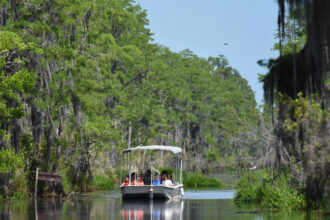


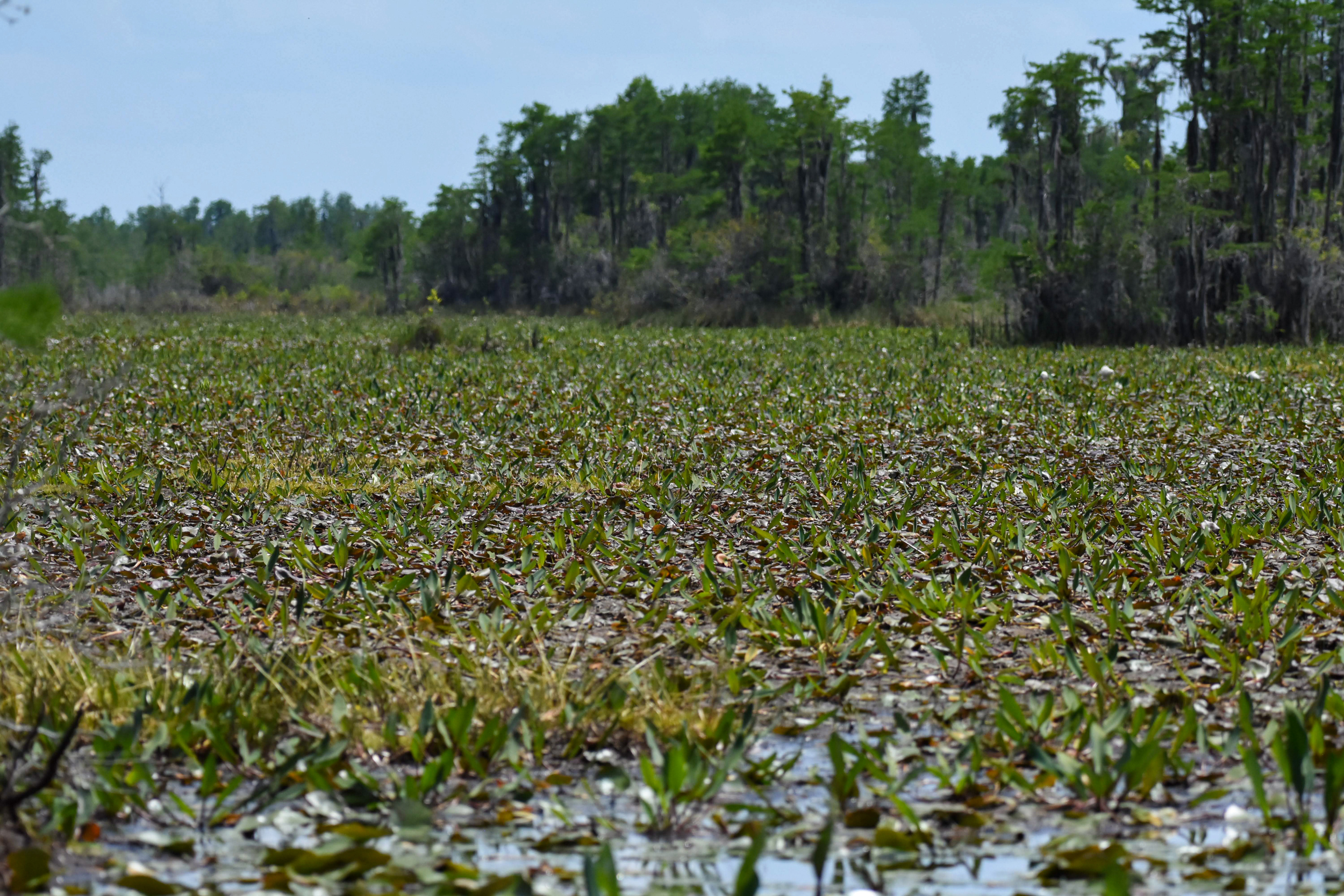
As Stacy Funderburke glided through the Okefenokee, lily pads crowded the edges of the narrow water trail while cypress trees rose from the blackwater around him.
“It’s funny,” he said. “I’m more of a mountain guy, but if someone asked me where they should go in Georgia, I’d tell them to go to the Okefenokee.”
As he spoke, his yellow paddle slipped into the tea-colored water, one stroke at a time, propelling his kayak forward. He maneuvered through the narrow channels with the confidence of someone who knows the swamp by memory.
Named a United Nations World Heritage site on Saturday by the United Nations Educational, Scientific and Cultural Organization, the Okefenokee has long been more than a remote wilderness site to Funderburke. It is where lifelong friendships were strengthened, where he later introduced his daughters to the swamp by kayak and where some of his most cherished memories were made. It is also a place that, until recently, many weren’t sure would be the same for future generations.
“This World Heritage Site recognition affirms what so many Georgians already know—the Okefenokee is a natural treasure,” Jennette Gayer, Environment Georgia’s state director, said in a statement. “We call on our leaders to ensure this special place, a wonder of the world, is protected from the threats of mining.”
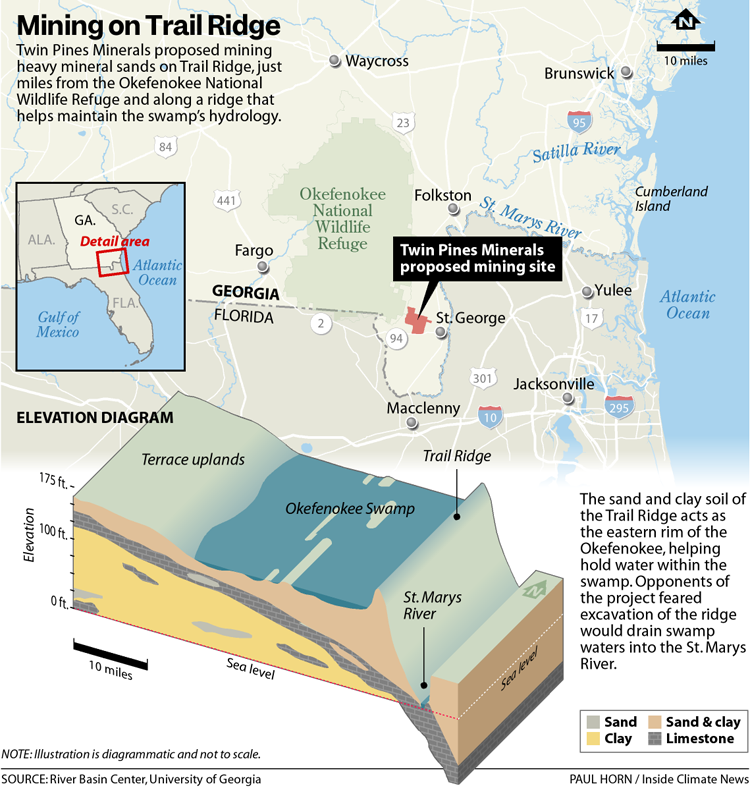
The Okefenokee, the largest blackwater swamp in North America, is a vast wilderness and national wildlife refuge on the Georgia-Florida border. Its more than 400,000 acres—roughly five times the size of Atlanta—began forming hundreds of thousands of years ago as the Atlantic coastline retreated. Left behind was Trail Ridge, a long, sandy ridge that stretches for more than 100 miles and rises roughly 100 to 150 feet above sea level. Acting much like the side of a bathtub, the ridge traps water in the shallow basin that became the Okefenokee.
But in 2019, that rim became the focus of a major mining proposal, one that activists and scientists warned could have significant impacts on the Okefenokee.
The sandy soils of Trail Ridge contain deposits of heavy minerals, including ilmenite and zircon, which are processed into titanium dioxide, a bright white pigment used in products ranging from paint and plastics to sunscreen.
Twin Pines Minerals, an Alabama-based company, hoped to extract those minerals from roughly 8,000 acres of land along the Trail Ridge on the southeastern edge of, and just outside, the Okefenokee National Wildlife Refuge.
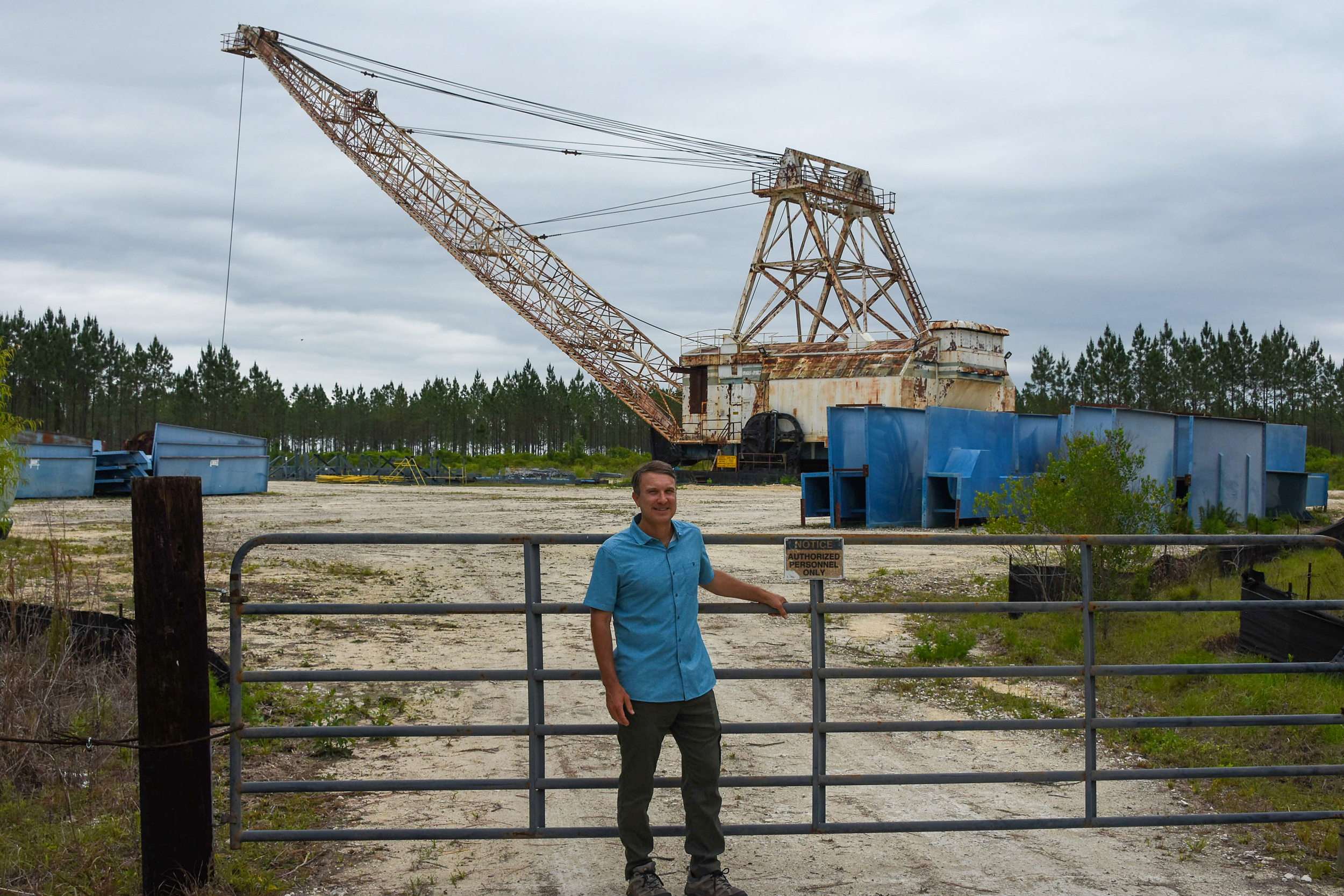
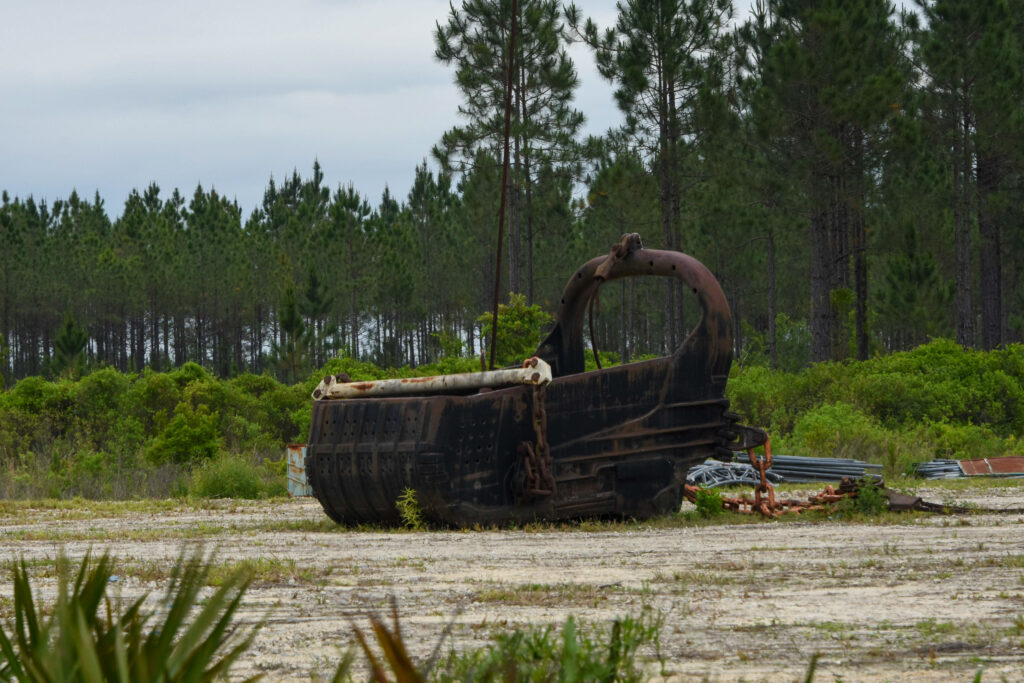
The company proposed using a dragline to pull a massive bucket through the sandy earth, removing the layers above the mineral-rich deposits. Water would then be added to create a slurry, allowing the heavier minerals to be separated from the surrounding sand. As mining advanced, the excavated areas would be backfilled and reshaped.
Twin Pines argued the project would create jobs and could be completed without harming the swamp. Opposition was swift. Scientists, environmental groups and many local residents warned that disturbing Trail Ridge could alter the Okefenokee’s delicate hydrology and threaten the ecosystem that depends on it.
Over the course of the permitting process, Georgia’s Environmental Protection Division received more than 200,000 comments opposing the project. Environmental groups said the volume of public feedback was the most for a permit application in state history.
Yet in 2024, the company received a draft permit from regulators. “That was the darkest day,” Funderburke said. While not a final approval, the decision signaled to opponents that the mine was moving closer to reality.
Long before draft permits were issued, Funderburke was looking for a way to protect the wilderness he cherished. He first visited the Okefenokee as a college student on a paddling trip with friends. The tradition continues. Every year, he returns to the swamp with many of those same friends, retracing familiar waterways beneath towering cypress trees and through prairies of sawgrass. As he grew older, he began bringing his daughters along, introducing them to the blackwater wilderness that had captivated him years earlier.
Funderburke serves as vice president and Central Southeast region director for The Conservation Fund, a nonprofit organization that purchases at-risk lands for permanent conservation. As the mining project grew closer to breaking ground, he and others at the organization began exploring a solution outside of state regulators’ offices.
Around 2022, Funderburke and The Conservation Fund initiated discussions with Twin Pines about purchasing the land and mineral rights. The talks unfolded as the company faced mounting financial and regulatory challenges, creating an opportunity for the conservation group to pursue a solution that had once seemed unlikely.
Between 2021 and 2022, Twin Pines was sued by two separate companies seeking roughly $15 million in unpaid debts. The company was also required to post a $2 million reclamation bond, a financial guarantee that the site would be restored if it failed to complete the required reclamation work itself. Posting that bond was among the final hurdles before the project could receive its permits.
By the third year of negotiations with The Conservation Fund, Twin Pines appeared closer than ever to breaking ground.
A few hundred feet down a sandy road off Georgia Route 94, a rust-streaked dragline excavator with a towering lattice boom loomed over a forest of longleaf pines, an ecosystem that has largely disappeared from the Southeast. By that point, Twin Pines had already moved equipment to the site in preparation for mining.
When Funderburke first saw this voracious resource-extracting machine, the mine no longer felt like a distant possibility debated in permit filings and conference rooms. The dragline was a reminder that the project was advancing and that time to reach a deal was running short.
But the project’s financial and permitting challenges persisted.
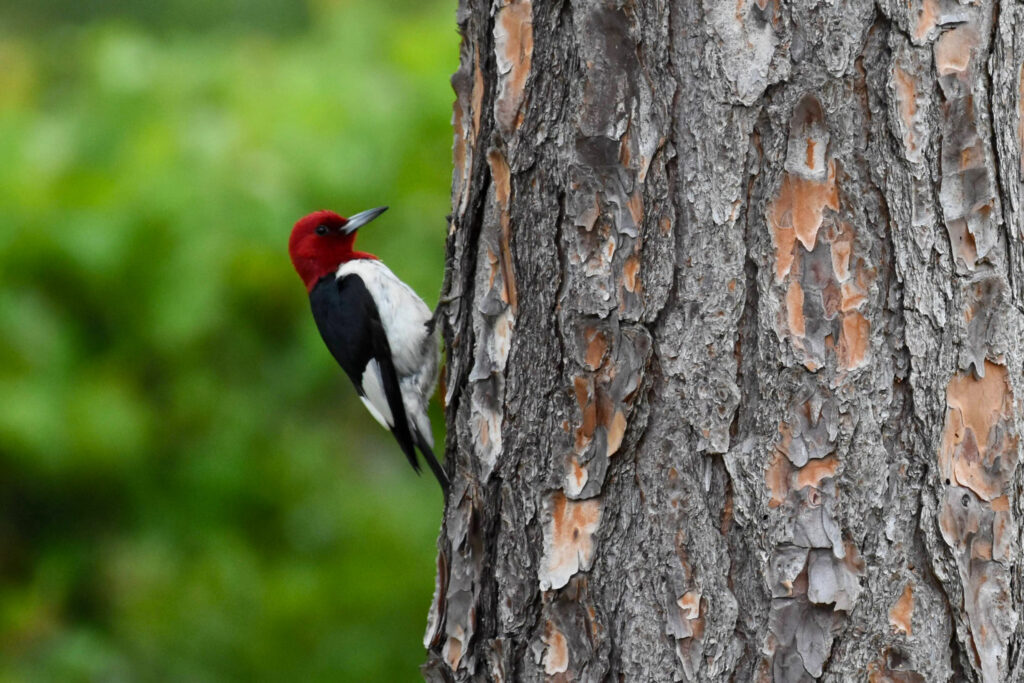
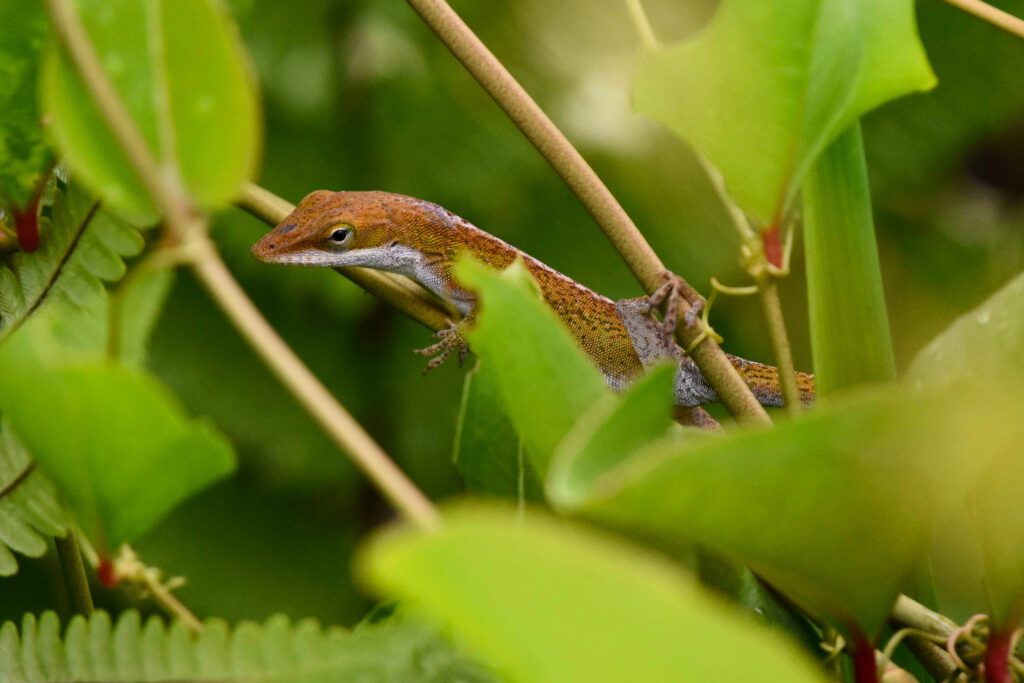
A red-headed woodpecker and a green anole inside the Okefenokee National Wildlife Refuge. Credit: Ryan Krugman/Inside Climate News
According to Funderburke, those financial pressures, combined with sustained public opposition, helped delay the project long enough for The Conservation Fund to reach a deal with the company.
Funderburke and The Conservation Fund knew it would take tens of millions of dollars to purchase the land and mineral rights and protect the area permanently. Over several years, he met with donors and foundations to discuss the importance of the Okefenokee and the financial needs to save the swamp.
The first major commitment came from the Holdfast Collective, the nonprofit that owns the outdoor clothing company Patagonia and directs the company’s profits toward environmental causes. Having partnered with The Conservation Fund on previous land acquisitions, the organization approached the nonprofit rather than waiting to be asked.
“It seemed obvious to me that this was a hugely valuable national wildlife refuge and wasn’t out of the reach for a conservation acquisition,” said Greg Curtis, the Holdfast Collective’s executive director.
This story is funded by readers like you.
Our nonprofit newsroom provides award-winning climate coverage free of charge and advertising. We rely on donations from readers like you to keep going. Please donate now to support our work.
Donate NowMore than a year before the purchase was completed, the organization committed $2 million to the effort. In the months that followed, Curtis spoke with other prospective funders about why Holdfast had invested and why they should join the campaign. According to Curtis, the campaign moved far more quickly than most conservation acquisitions, requiring donors to commit millions of dollars on an unusually compressed timeline.
What the Holdfast Collective and other donors soon realized was that time was running short—not only to stop the mine, but also to preserve the Okefenokee’s decades-long bid for UNESCO World Heritage status. Supporters believed the designation will attract more visitors and support for conservation, research and education. They also feared that if mining began before UNESCO rendered its decision, it could cast doubt on whether the refuge’s ecological integrity and long-term protection met the standards for inscription.
By 2025, fundraising efforts paid off. The Conservation Fund assembled a coalition of philanthropic backers willing to invest tens of millions of dollars to acquire the property and its mineral rights, setting the stage for a deal that would remove the immediate threat of mining from the edge of the swamp.
The purchase totaled roughly $60 million. The Conservation Fund put up about $30 million to secure the deal, while the rest is expected to come from state and federal conservation programs in coming years.
According to Funderburke and Georgia’s Department of Natural Resources, part of the purchased land will be transferred to the state for public use and another part will be added to the Okefenokee National Wildlife refuge.
“Under state ownership the primary objective will be to maintain high-quality wildlife habitat,” a DNR spokesperson told Inside Climate News.
In total, scientists estimate The Conservation Fund’s purchase protects 422 species, conserves 525 million gallons of water annually and safeguards the headwaters of two rivers that supply water to hundreds of thousands of people across Georgia and Florida.
But according to some scientists, the value of the acquisition goes beyond the numbers.
“They saved the largest and most intact subtropical peatland in the world and a mosaic of intact natural processes,” said Reed Noss, a conservation biologist and expert on Southeast ecology.
Peatlands are among the world’s most threatened ecosystems, with many degraded or destroyed by development, drainage and extraction. Peat is a carbon-rich layer of plant material built up over thousands of years. Because much of the Okefenokee remains inaccessible to humans, the purchase protects not only known species and habitats, but also ecological processes and discoveries that remain largely unknown.
Today, the property still bears signs of the mine that never was. Twin Pines’ staging grounds remain. But instead of serving as the starting point for a strip mine, the land is now slated for conservation, extending protections along the edge of one of North America’s largest intact freshwater wetlands.
The response to the purchase stretched far beyond southeast Georgia. Letters poured into The Conservation Fund’s offices from school children who had paddled the swamp, longtime visitors and onlookers from as far away as Idaho, all expressing gratitude that the Okefenokee had been spared.
Sitting beneath an overcast sky in the Okefenokee, the brim of a worn The Conservation Fund hat shading his eyes, Funderburke looked out across the blackwater.
“It’s truly a once-in-a-generation environmental win.”
About This Story
Perhaps you noticed: This story, like all the news we publish, is free to read. That’s because Inside Climate News is a 501c3 nonprofit organization. We do not charge a subscription fee, lock our news behind a paywall, or clutter our website with ads. We make our news on climate and the environment freely available to you and anyone who wants it.
That’s not all. We also share our news for free with scores of other media organizations around the country. Many of them can’t afford to do environmental journalism of their own. We’ve built bureaus from coast to coast to report local stories, collaborate with local newsrooms and co-publish articles so that this vital work is shared as widely as possible.
Two of us launched ICN in 2007. Six years later we earned a Pulitzer Prize for National Reporting, and now we run the oldest and largest dedicated climate newsroom in the nation. We tell the story in all its complexity. We hold polluters accountable. We expose environmental injustice. We debunk misinformation. We scrutinize solutions and inspire action.
Donations from readers like you fund every aspect of what we do. If you don’t already, will you support our ongoing work, our reporting on the biggest crisis facing our planet, and help us reach even more readers in more places?
Please take a moment to make a tax-deductible donation. Every one of them makes a difference.
Thank you,