

Municipal water system leaders and nonprofits gathered in Washington, D.C., to lobby Congress as part of Water Week 2026 focused on two priorities: securing funding to update aging water infrastructure and restoring a federal program that provides grants to low-income households for paying water and wastewater bills.
Water Week, an annual event organized by the National Association of Clean Water Agencies, brings together water utility professionals, engineers, policy advocates and anyone committed to advancing water infrastructure and sustainability to discuss the future of water policy. Besides panels and hearings, it features a conference with government officials, who provide a glimpse into their priorities regarding water infrastructure.
This year’s event proved less demoralizing for attendees. Last year’s conference took place a month after U.S. Environmental Protection Agency administrator Lee Zeldin canceled several grants dedicated to air and water quality improvement and extreme-weather resilience.
Jessica Dandridge-Smith, executive director of the Water Collaborative, a water advocacy nonprofit based in New Orleans, said the Trump administration was less willing to discuss collaboration and investment in water infrastructure last year.
“The climate movement has fought really hard over the last 50 years to provide people with clean, safe air, water, land,” she said. “The fact that in a few months they were able to completely dismantle everything that people have built … It was very sad.”
In contrast, Dandridge-Smith said Water Week 2026 was still sad, but offered “maybe an inkling or a glimmer of hope.”
On April 15, during a roundtable with water sector leaders, EPA assistant administrator for water Jessica Kramer announced efforts to revitalize the 2020 Water Workforce initiative—a program intended to coordinate resources across government and industry to support careers in the water sector. The administration aims to connect individuals to jobs in the drinking water and wastewater sectors, provide critical training and expand public awareness about the benefits of those careers.
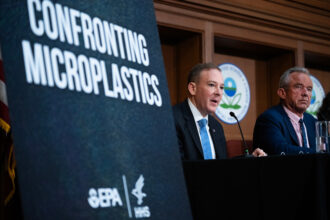
Dandridge-Smith said she was surprised to hear the administration was also taking a more active role in containing microplastics. Earlier this month, the EPA proposed for the first time to include microplastics and pharmaceuticals on a list of contaminants in drinking water.
But for her, the EPA’s proposals fell short, as the agency kept “talking about economy first over water quality” during the meetings. “It’s like you can’t do economy and climate, it’s like those two things tend to not coexist,” she said. “The administration is taking everything about the economy, and then our health, our safety, is put on the back burner.”
On April 16, Zeldin launched the Water Reuse Action Plan 2.0, aiming to clean wastewater for use in data centers and semiconductor manufacturing—critical infrastructure for AI. “The Trump EPA is proving every day that protecting the environment and growing the economy go hand in hand,” he said.
Zeldin did not mention the threat of data centers. According to a Cornell study, depending on how fast the AI industry expands, U.S. data centers could annually consume as much water as 10 million Americans and emit as much carbon dioxide as 10 million cars.
In a Water Week meeting hosted by members of the Water Agency Leaders Alliance (WALA), U.S. Rep. Eric Sorensen (D-Ill.) promised he will ensure the Low Income Household Water Assistance Program (LIHWAP) does not get pulled from the Department of Health and Human Services into the EPA, “where any administration can come and cut it out.”
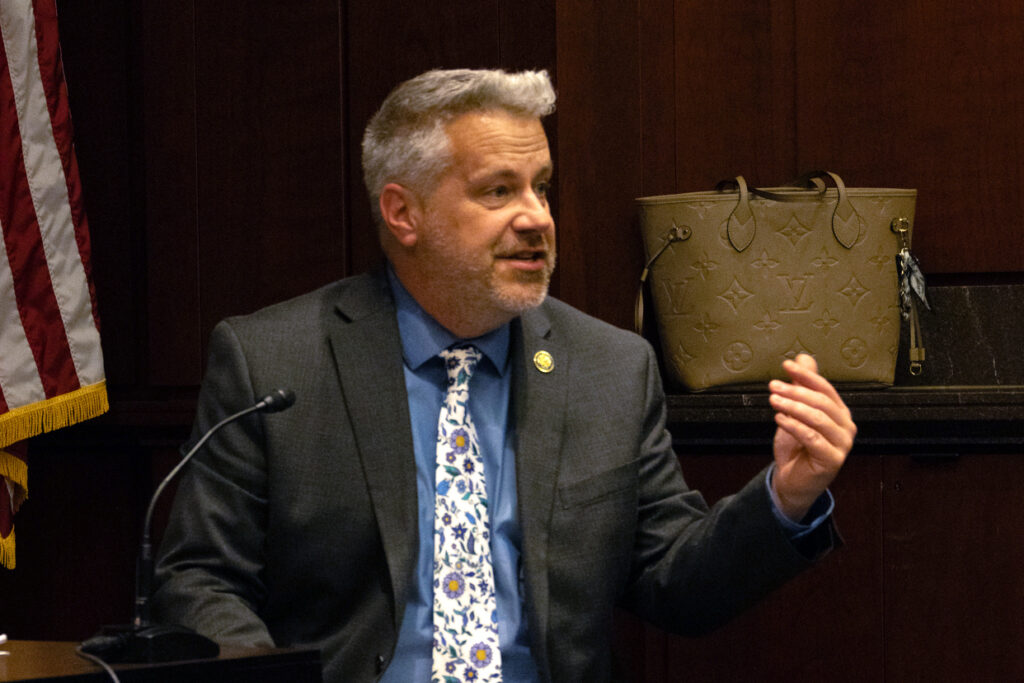
The program, launched in late 2020, provides money to assist low-income households with water and wastewater bills, but in 2022, funding ran out and Congress has since failed to appropriate new funding. Sorensen hopes to make LIHWAP permanent.
“The ask for you all is, in your conversations with other members of the House and the Senate: Please tell them how important it is that we get this across the finish line,” he told the crowd.
The Priorities
An issue several water leaders raised at Water Week was the aging infrastructure of their systems.
“We’re almost failing when it comes to the scorecard for infrastructure,” said Tony Parrott, executive director of the Metropolitan Sewer District of Louisville and Jefferson County, Kentucky. “Continuing to not fund infrastructure, continuing to not value the economic value of utilities, leads to catastrophic failures, whether it be floods, like we had in our city last year, whether it be sewer overflows just like we just had in the Potomac River here in D.C.”
Jordan Gosselin, communications and public relations manager at the New England Water Environment Association (NEWEA), said in a statement that their regional water infrastructure was in “dire need of increased federal support and streamlined biosolids-fertilizer regulations.” She said NEWEA is lobbying to stabilize and boost funding for their programs and support a permanent LIHWAP.
This story is funded by readers like you.
Our nonprofit newsroom provides award-winning climate coverage free of charge and advertising. We rely on donations from readers like you to keep going. Please donate now to support our work.
Donate NowDandridge-Smith said the city of New Orleans alone needs at least $2 billion to upgrade its water system. “A lot of our infrastructure was built in the early 1900s, 1920s and 1930s, and a lot of this infrastructure is now falling apart. You have climate change that’s putting additional pressure on the systems, and emerging contaminants.”
Making sure that the Trump administration does not completely dismantle the EPA was also a top priority for her. “At this point, things are so bad that we want to just hold the line.”
Even issues related to utility rate hikes resulting from emerging data centers were brought to the table. Kishia Powell, chief executive officer of the Maryland-based Washington Suburban Sanitary Commission, said data centers in Virginia are “sucking up” energy and driving up bills for water infrastructure facilities. “We depend on power,” she said. “It takes a lot to move water around a system of our size or any wastewater system.”
Powell also said now is the time for water utilities to demonstrate their importance. “What we are doing is using your money to invest in the infrastructure that is serving you.”
Water Infrastructure and Climate Change
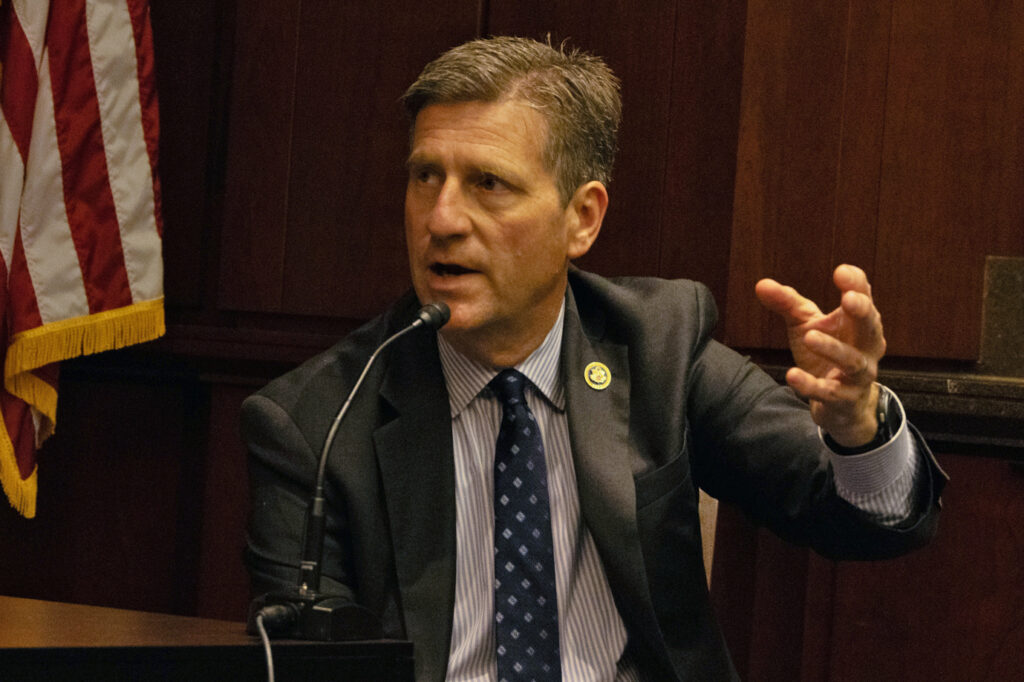
Addressing the WALA panel, U.S. Rep. Greg Stanton (D-Ariz.) said more than 70 percent of his state currently faces drought conditions.
He said public and water distribution policies need to be based upon the reality of “what’s happening on the ground.”
Federal officials recently ordered a massive emergency release of water from a major Upper Basin reservoir as the Colorado River system reels from one of the worst snowpack years on record.
The lower basin states of California, Arizona and Nevada are calling for mandatory water cuts in the upper basin states of Colorado, New Mexico, Wyoming and Utah. Leaders in those states have countered that they already enact water conservation measures during times of drought.
“I really feel like the [Colorado River] agreement just can’t be ‘whatever you did 100 years ago’ with the original agreement,” he said. “The world has changed.”
On the other hand, Dandridge-Smith said that for Louisiana—the second rainiest state in the nation—climate change has overwhelmed water infrastructure. “We’re facing considerable amounts of flooding and more than we used to.”
Her community directly faces issues related to saltwater intrusion and sea-level rise, with some areas likely to be underwater in 10 years or less.
“What we’re advocating for here, whether it’s affordability, climate justice or water quality, is that all of those things coexist in reality,” she said. “If we’re not prioritizing our communities, if we’re not prioritizing our environment, we can’t live in Louisiana anymore.”
About This Story
Perhaps you noticed: This story, like all the news we publish, is free to read. That’s because Inside Climate News is a 501c3 nonprofit organization. We do not charge a subscription fee, lock our news behind a paywall, or clutter our website with ads. We make our news on climate and the environment freely available to you and anyone who wants it.
That’s not all. We also share our news for free with scores of other media organizations around the country. Many of them can’t afford to do environmental journalism of their own. We’ve built bureaus from coast to coast to report local stories, collaborate with local newsrooms and co-publish articles so that this vital work is shared as widely as possible.
Two of us launched ICN in 2007. Six years later we earned a Pulitzer Prize for National Reporting, and now we run the oldest and largest dedicated climate newsroom in the nation. We tell the story in all its complexity. We hold polluters accountable. We expose environmental injustice. We debunk misinformation. We scrutinize solutions and inspire action.
Donations from readers like you fund every aspect of what we do. If you don’t already, will you support our ongoing work, our reporting on the biggest crisis facing our planet, and help us reach even more readers in more places?
Please take a moment to make a tax-deductible donation. Every one of them makes a difference.
Thank you,

Gabriel Matias Castilho
Fellow
Gabriel Matias Castilho is an Inside Climate News fellow reporting on the Washington, D.C. area. Previously, he worked for Capitol News Illinois, covering environmental policy, energy and utilities across the state. He is currently a master’s student at Northwestern University.