

A nearly 600-mile railway that would cut through the heart of the Amazon rainforest got one step closer to reality Thursday when the Brazilian Supreme Court ruled that a national park could be resized to accommodate its passage.
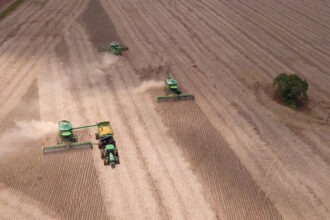
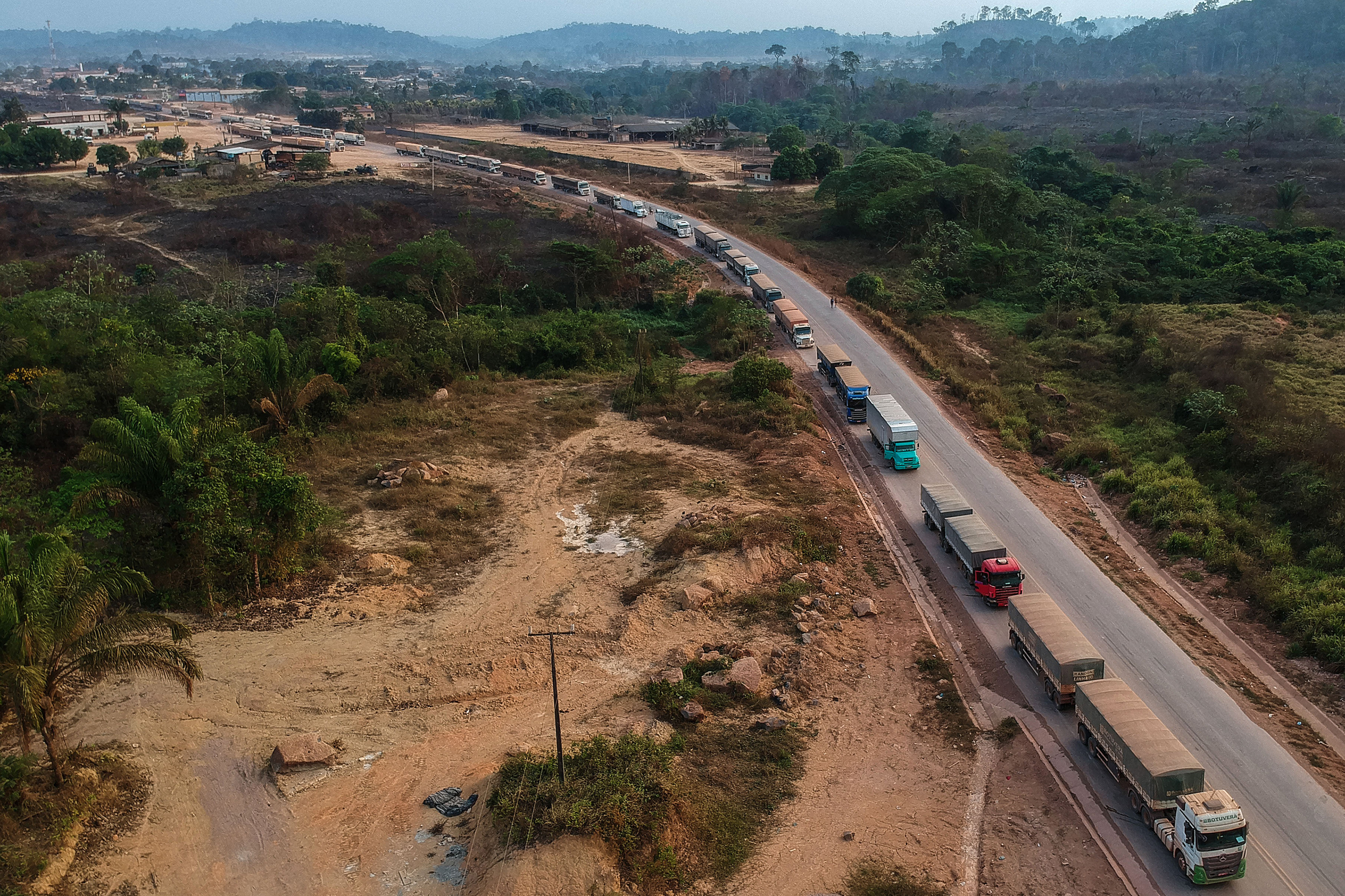
If approved, the Ferrogrão, or “grain train,” would run alongside a notoriously clogged and troubled road known as the “soy highway” that carries soybeans and corn from massive plantations to riverways in the Amazon basin—and from there to livestock feedlots across the world.
The project is supported in large part by major soy traders, including the American grain giant Cargill. Cargill and the Brazilian developers argue the railway is essential for economic growth in the region and is part of a broader effort in the northern Amazon to improve infrastructure and facilitate grain exports.
But Brazilian researchers have estimated the railway will directly lead to more than 1,500 square miles of deforestation, releasing 75 million tons of carbon, and that broader environmental impacts will affect an area of roughly 19,000 square miles, bigger than the state of Connecticut.
The Amazon rainforest is the world’s single largest reservoir of terrestrial carbon and essential to maintaining a stable atmosphere. The largest drivers of its loss are soy plantations and cattle ranching.
Indigenous and environmental activists have dubbed the proposed train route the “Railway of Death.”
Thursday’s ruling by the court rolls back a previous ruling that had prevented the alteration of the boundaries of the Jamanxim National Park, which sits adjacent to the existing “Soy Highway.” Earlier in the week, the lower house of the Brazilian Congress approved a plan to reduce the size of the nearby Jamanxim National Forest by 40 percent. Both the park and the forest were created to protect the area from the incursion of agribusiness and prevent deforestation adjacent to the soy route.
“The injunction had basically kept the project at bay for quite a number of years, in that it essentially blocked the ability of the project planners to ram forward this project,” said Christian Poirier, a program director with Amazon Watch, a rainforest watchdog group. “It’s a ticking time bomb of deforestation, rights abuses and climate impacts.”
In its ruling, the court clarified that altering the park’s boundaries doesn’t constitute an approval. The project still has to clear a number of hurdles, including with environmental regulators and the country’s Federal Court of Accounts.
Indigenous and environmental groups have pushed against the railway since it was first proposed by a consortium of agribusiness interests, including Cargill and two other American grain giants, Bunge and Archer Daniels Midland, along with Brazilian companies.
Cargill, in particular, has been a vocal proponent. The Brazilian CEO of the Minnesota-based corporation —the largest private American company—has said the “Ferrogrão makes sense and will happen” and that opposition to it is irresponsible.
Cargill did not respond to questions from Inside Climate News on Friday.
A group of 42 Brazilian and international social and environmental advocacy groups have banded together as the “Enough Soy Campaign” to oppose the project and the broader development of the “Northern Arc Logistics Corridor,” a plan to link up roads, railways and riverways across the Amazon region.
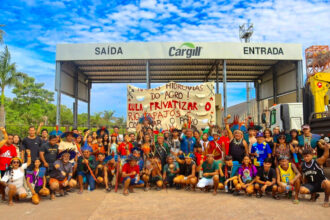
Earlier this year, Indigenous and environmental groups protested against a decree that would privatize river traffic along several Amazon tributaries, including the Tapajós, a major river artery leading to a huge Cargill-owned soybean terminal. The government revoked the decree in February.
But the broader push to expand infrastructure, largely for agribusiness, remains a priority for the Brazilian government, especially regional governments in soy- and corn-producing states in the Amazon basin.
“Brazil’s agribusiness sector within Congress basically runs the show. They do so with other interests, of course, but they’re the single most powerful block,” Poirier said. “We’ve seen how they wield their influence, and they want this project to move forward.”
About This Story
Perhaps you noticed: This story, like all the news we publish, is free to read. That’s because Inside Climate News is a 501c3 nonprofit organization. We do not charge a subscription fee, lock our news behind a paywall, or clutter our website with ads. We make our news on climate and the environment freely available to you and anyone who wants it.
That’s not all. We also share our news for free with scores of other media organizations around the country. Many of them can’t afford to do environmental journalism of their own. We’ve built bureaus from coast to coast to report local stories, collaborate with local newsrooms and co-publish articles so that this vital work is shared as widely as possible.
Two of us launched ICN in 2007. Six years later we earned a Pulitzer Prize for National Reporting, and now we run the oldest and largest dedicated climate newsroom in the nation. We tell the story in all its complexity. We hold polluters accountable. We expose environmental injustice. We debunk misinformation. We scrutinize solutions and inspire action.
Donations from readers like you fund every aspect of what we do. If you don’t already, will you support our ongoing work, our reporting on the biggest crisis facing our planet, and help us reach even more readers in more places?
Please take a moment to make a tax-deductible donation. Every one of them makes a difference.
Thank you,