

Two data centers in San Antonio face a looming legal challenge from environmental groups over their air pollution.
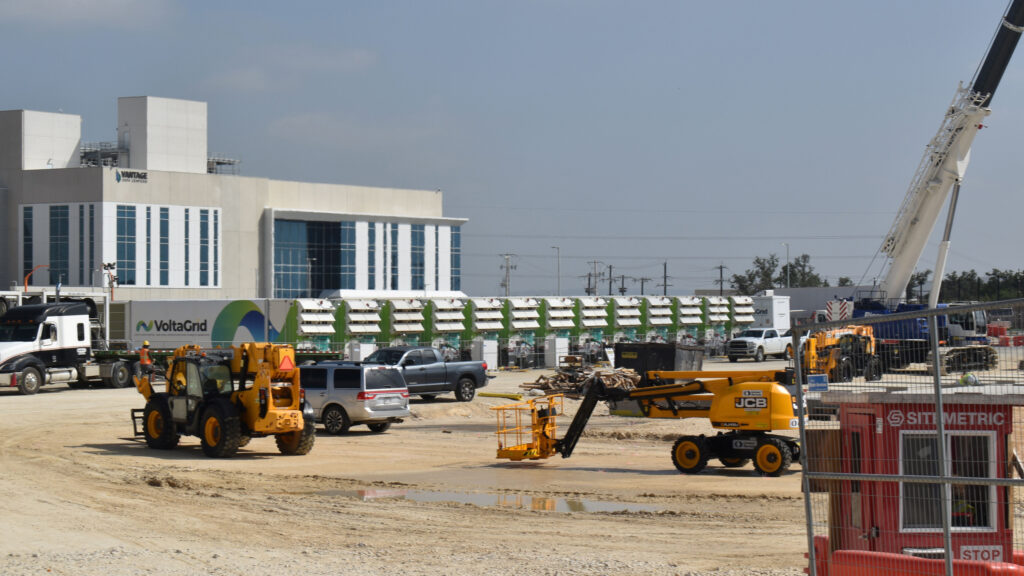
The nonprofits Environmental Integrity Project, Sierra Club and Public Citizen sent a notice that it intends to sue within 60 days to Vantage Data Centers and VoltaGrid LLC on Wednesday, claiming they are circumventing federal enforcement.
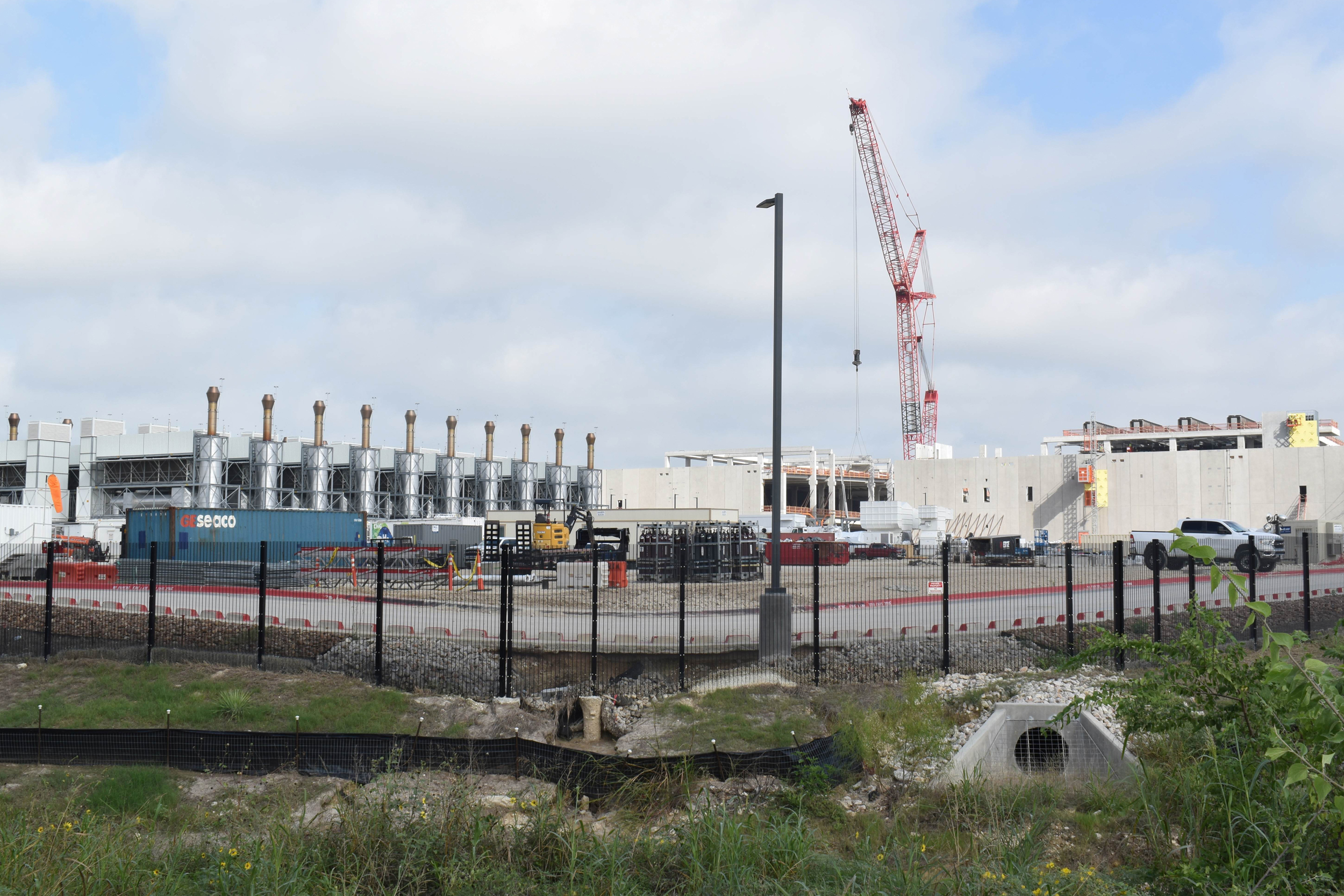
The letter alleged the companies built diesel generators and natural gas power plants without the proper permits. The groups said the data centers improperly registered as “minor” air polluters under the Clean Air Act, requiring less scrutiny than if they had applied for “major source” permits. The Environmental Integrity Project concluded in early July multiple data centers across the country have followed the same strategy.
Mary Greene, the group’s enforcement director, said the two Texas data centers are circumventing the Clean Air Act and threatening San Antonio residents’ health.
“There is no way that anyone could characterize this as a small project. These are massive projects,” said Greene, noting that they operate in residential areas. “They should have sought a permit that required pollution controls, that required other limits like hours of operation and monitoring and reporting to demonstrate compliance with those requirements.”
Before building a major source of new air pollution, companies typically have to obtain a major air permit, a process that includes public meetings, regulatory review and emission monitoring. But the data centers—on Omicron Drive and Rogers Road—obtained minor air permits, which are more typically used for stores like dry cleaners and small facilities. Those do not include enforcement mechanisms or an opportunity for the public to weigh in.
The data centers could collectively generate enough energy to power Richmond, Virginia, according to the letter.
Mark Freeman, a spokesman for Vantage Data Centers, acknowledged the notice and said the company aims to be a “responsible neighbor.”
“We take our environmental responsibilities seriously and are committed to operating in compliance with all applicable laws and regulations,” Freeman wrote in an email. “While we do not comment on pending legal matters, we have worked closely with the appropriate regulatory agencies throughout the development of these projects and will review the allegations set forth in the notice.”
VoltaGrid did not respond to multiple requests for comment.
Wayne D’Angelo, co-chair of the law firm Kelley Drye & Warren’s environmental law practice, said most data centers with power generation likely require major air permits.
“If they have a turbine, they’re making their own power,” said D’Angelo, who is not involved in the planned lawsuit. “And my understanding is that a lot of those would probably trigger as major.”
The 60-day notice of intent to sue is a prerequisite for filing a lawsuit under the Clean Air Act. In the notice, the groups accuse the data centers of taking a “piecemeal approach to Clean Air Act permitting to fast-track these projects.” The data centers applied for permits for the power generation and data centers separately, even though they are located on the same site.
“If they’re treating these individual units separately so that they don’t trigger that major-source threshold, I think the short answer is they can’t,” D’Angelo said. “I mean, there’ll be multiple generators at a facility, and those are all going to be part of the same project.”
This story is funded by readers like you.
Our nonprofit newsroom provides award-winning climate coverage free of charge and advertising. We rely on donations from readers like you to keep going. Please donate now to support our work.
Donate NowDavid Spence, chair in natural resources law at the University of Texas at Austin School of Law, said data centers with gas-powered turbines almost certainly meet the threshold for requiring major air permits.
“Unless it’s operating at a very low capacity factor, it’s probably going to be a major source,” said Spence, who is also not involved in the planned lawsuit. “I don’t know how you could piecemeal that.”
The environmental groups’ legal challenge comes a week after Floodlight, a nonprofit climate-focused newsroom, reported that Texas regulators have granted minor air pollution permits to dozens of data centers.
The Texas Commission on Environmental Quality told Floodlight: “TCEQ only issues air permits that comply with applicable state and federal air permitting rules and regulations including applicable public participation requirements.”
TCEQ did not respond to Inside Climate News’ requests for comment.
The U.S. Environmental Protection Agency did not comment beyond noting that it is not a party in the planned lawsuit. The Trump administration wants to accelerate data centers’ permitting processes, including through an executive order last summer.
Greene, with the Environmental Integrity Project, said the minor air permits are merely “permits on paper” because they lack enforceability.
“The permit requires no pollution controls,” Greene said. “They require no limits on the hours of operation. They do not require monitoring. They do not require reporting, and they provided no notice or opportunity to the public to be heard on their thoughts about these centers coming into their neighborhood and polluting the air that they breathe.”
According to the environmental groups’ letter, the data centers have the potential to release high amounts of lung-damaging nitrogen dioxide, the climate pollutant carbon dioxide and cancer-causing formaldehyde. The Clean Air Act considers emission potential when deciding permitting and enforcement measures.
For Millie White, who lives in a San Antonio suburb and is opposed to data centers, the risk of air pollution is concerning.
“We’re living in a big hazy mess that we just can’t see because it’s all invisible to our eyes, but I’m sure if we were to see everything that this was emitting, we would be appalled and want to shut it down immediately,” White said.
Spence, the University of Texas at Austin professor, said air pollution rules were designed to keep pollutants at safe levels—“safe enough to protect the public health.”
“Circumventing Clean Air Act rules, of course, poses the risk that that goal won’t be achieved, so I can understand why locals would be worried,” Spence said.
John Carroll III, an environmental compliance specialist whose clients include energy and fossil fuel companies, said as data centers have grown, the conversation surrounding their regulation has changed.
“These are getting so large, environmental groups are looking at them differently than they were five years ago,” Carroll said. “This is definitely going to become a larger, broader national argument over the next few years.”
This story was updated July 22, 2026, with a comment from the U.S. Environmental Protection Agency.
About This Story
Perhaps you noticed: This story, like all the news we publish, is free to read. That’s because Inside Climate News is a 501c3 nonprofit organization. We do not charge a subscription fee, lock our news behind a paywall, or clutter our website with ads. We make our news on climate and the environment freely available to you and anyone who wants it.
That’s not all. We also share our news for free with scores of other media organizations around the country. Many of them can’t afford to do environmental journalism of their own. We’ve built bureaus from coast to coast to report local stories, collaborate with local newsrooms and co-publish articles so that this vital work is shared as widely as possible.
Two of us launched ICN in 2007. Six years later we earned a Pulitzer Prize for National Reporting, and now we run the oldest and largest dedicated climate newsroom in the nation. We tell the story in all its complexity. We hold polluters accountable. We expose environmental injustice. We debunk misinformation. We scrutinize solutions and inspire action.
Donations from readers like you fund every aspect of what we do. If you don’t already, will you support our ongoing work, our reporting on the biggest crisis facing our planet, and help us reach even more readers in more places?
Please take a moment to make a tax-deductible donation. Every one of them makes a difference.
Thank you,

Ajani Stella
Fellow
Ajani Stella is a Dow Jones reporting fellow at Inside Climate News, based in New York City. Previously, he interned at amNewYork, covering politics, housing and crime. His reporting experience also includes immigration, labor and higher education policy issues. Ajani is currently a junior at Georgetown University, where he serves as executive editor of the student newspaper, The Hoya.