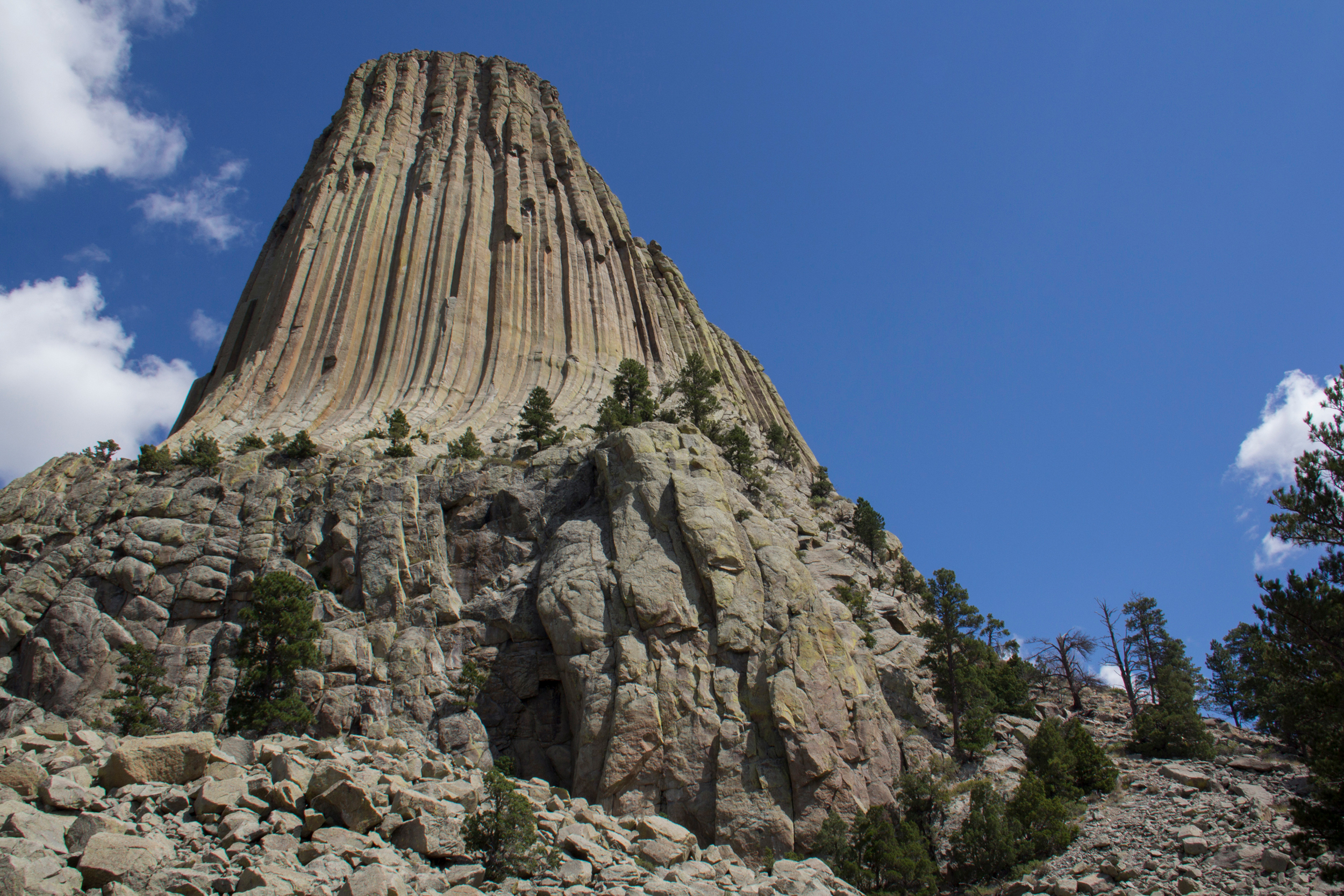


Zach Lentsch was leading a climbing trip on Devils Tower in Wyoming’s northeast corner on Aug. 18 when he got a text from a friend saying voter turnout in the state primary, held that day, was strong. The chairman of Protect Wyoming, the first and only political action committee in the Cowboy State focused on public lands and wildlife, Lentsch thought that might bode well for the candidates his group had supported.
He couldn’t have imagined what was waiting for him once he got off the rockface.
By 11 p.m., a few close races broke for candidates Protect Wyoming had endorsed, surprising Lentsch. Then, the next morning, he awoke to the news that all 33 candidates endorsed by Protect Wyoming had won their races.
“Those of us fighting to protect public lands and wildlife in the state have changed the conversation,” Lentsch said.
Moderate Republicans won office up and down the ballot in Wyoming—by some measures, the most conservative state in the U.S.—and a few defeated lawmakers from the Freedom Caucus, a far-right faction of Wyoming’s Republican Party. The results, according to Lentsch, who runs a climbing and outdoor guiding business, send a clear message: You can’t win elections at the state level in Wyoming without convincing voters you support public lands and science-based wildlife management.
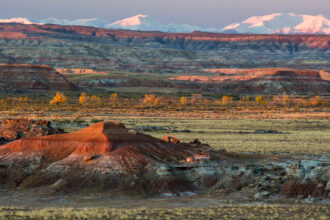
The country’s public lands, federally managed areas within a state’s borders, are concentrated primarily in the West. They are home to some of the nation’s only intact ecosystems, where biodiversity, scientists say, is essential to mitigate the harms of climate change. But the landscapes have also been crucial for the energy transition; under President Joe Biden, the Bureau of Land Management identified parcels of public land suitable for solar development.
Not long after President Trump returned to office in 2025, congressional Republicans across the West pushed to turn public lands over to states. Unable to manage public lands, transfer proponents argue, Western states are deprived of their sovereignty and revenue-generating opportunities.
“Those of us fighting to protect public lands and wildlife in the state have changed the conversation.”
— Zach Lentsch, Protect Wyoming
A few of the candidates who were defeated in this month’s primaries had supported or expressed interest in policies Lentsch described as detrimental to Wyoming’s cherished ecosystems, wildlife and recreation economy.
But Westerners have long opposed public land transfers, fearing these policies would cause states to sell off national monuments, national forests and other cherished landscapes, privatizing a public resource.
Polls consistently show public lands are popular across the political spectrum, and in Wyoming close to 91 percent of respondents to a recent poll indicated they supported keeping public lands under federal management.
Protect Wyoming used almost $50,000 in donations for this election cycle to support a slate of candidates running for statewide office in favor of maintaining federal control over public lands (it did not get involved in federal races). Its biggest strength may have been the number of people it reached.
With a little under 600,000 residents, Wyoming “is such a word-of-mouth state,” Lentsch said. “It’s all about talking to people and relationships and social connections.”
Across gatherings at breweries and canvassing drives in towns throughout Wyoming, Protect Wyoming built a network of volunteers and canvassers that may have proved pivotal in the group’s closest races.
“We had well over 400 individual donors, which is way more than any other PAC that I’m aware of in the state,” Lentsch said. “It wasn’t, you know, the big checks or dark money. It’s really because we built a network of volunteers, I think, that we had the impact that we did.”
Lentsch wanted to dig into county- and district-level voter data before declaring public lands the reason each candidate Protect Wyoming supported won their race. Still, he felt confident enough to say the issue will be a large part of whatever political takeaways emerge from this election.
This story is funded by readers like you.
Our nonprofit newsroom provides award-winning climate coverage free of charge and advertising. We rely on donations from readers like you to keep going. Please donate now to support our work.
Donate NowWith Cheyenne set to look much different at the start of the next legislative session in February, some environmental groups in Wyoming feel hopeful.
“There’s a move more toward the center, more toward common-sense, local-control governance,” said Auna Kaufmann, government relations manager at the Wyoming Outdoor Council. “I’m really looking forward to working on conservation policy moving forward with the new folks that are coming in.”
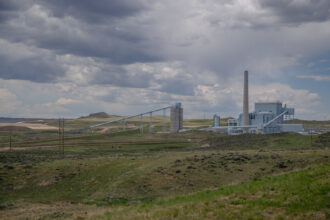
In the Powder River Basin, home to the nation’s largest coal deposit and mining companies that help power Wyoming’s economy, Donna Birkholz, executive director of the Powder River Basin Resource Council, would like to work with lawmakers on concerns over new data centers, the buildout of rooftop solar and ranching and agriculture issues.
She hopes the enthusiasm on display from Wyomingites—more than 150,000 people cast votes in the state, a turnout second only to the 2022 midterms—resonates with lawmakers. “People of Wyoming are paying attention and would like to be listened to,” Birkholz said.
It is unclear how a diminished Freedom Caucus may impact environmentalists’ legislative goals. At times, environmental groups found themselves forging unnatural alliances with far-right members; some had championed rooftop solar from a position of personal liberty and affordability, while others were skeptical of the state’s role in pushing carbon capture technologies because they did not believe fossil fuel emissions were driving climate change.
After the grind of the election, Lentsch is unsure about Protect Wyoming’s future. He hopes the political gains it helped deliver are durable, but, for now, he said he was looking forward to withdrawing into the mountains to decompress.
The first Friday after the election, Lentsch decamped to Forest Service lands by Clarks Fork of the Yellowstone River, near the Wyoming and Montana border. Earlier this year, he drew a bighorn sheep tag.
This “is a once-a-lifetime thing in Wyoming,” he said.
About This Story
Perhaps you noticed: This story, like all the news we publish, is free to read. That’s because Inside Climate News is a 501c3 nonprofit organization. We do not charge a subscription fee, lock our news behind a paywall, or clutter our website with ads. We make our news on climate and the environment freely available to you and anyone who wants it.
That’s not all. We also share our news for free with scores of other media organizations around the country. Many of them can’t afford to do environmental journalism of their own. We’ve built bureaus from coast to coast to report local stories, collaborate with local newsrooms and co-publish articles so that this vital work is shared as widely as possible.
Two of us launched ICN in 2007. Six years later we earned a Pulitzer Prize for National Reporting, and now we run the oldest and largest dedicated climate newsroom in the nation. We tell the story in all its complexity. We hold polluters accountable. We expose environmental injustice. We debunk misinformation. We scrutinize solutions and inspire action.
Donations from readers like you fund every aspect of what we do. If you don’t already, will you support our ongoing work, our reporting on the biggest crisis facing our planet, and help us reach even more readers in more places?
Please take a moment to make a tax-deductible donation. Every one of them makes a difference.
Thank you,

Jake Bolster
Reporter, Wyoming and the West
Jake Bolster reports on Wyoming and the West for Inside Climate News. Previously, he worked as a freelancer, covering climate change, energy, and the environment across the United States. He holds a Masters in Journalism from Columbia University.