

NY-17: Fourth in a series on the environmental stakes behind one of the nation’s most fiercely contested congressional races.
After the Democratic primary election in New York’s hotly contested 17th Congressional District this June, William Knox, a veteran and self-described “anti-MAGA Republican,” said he was impressed by the winning candidate, a combat veteran who deployed six times in Iraq and Afghanistan and later served on the National Security Council in the Biden administration.
“I am willing to cross party lines and vote for Cait Conley,” Knox, a resident of Dutchess County, said at the time.
Now, nine days away from the midterm elections, Knox is less convinced Conley is as qualified as he had initially hoped.
“I’m on the fence again,” he said.
For many voters, the election has become a referendum on President Donald Trump, whose approval rating stands at around 33 percent. A recent NBC News poll found that more voters than at any point in three decades viewed their vote as a way to signal opposition to the president.
Though still committed to curbing Donald Trump’s power, Knox is no longer convinced that voting for Mike Lawler, the Republican incumbent, necessarily amounts to voting for Trump.
“Mike seems to recognise that Trump’s coattails aren’t what they once were, and will be open to not voting the way Trump wants him to,” Knox said.
In this district, one of 21 races rated as toss-ups by the Cook Political Report, and one of only three represented by a Republican seeking re-election in a district Kamala Harris carried in 2024, winning over voters like Knox will prove key. As the campaigns have gathered steam, some voters have firmed up their views, while others have begun to waver.
Democrats need to win just four of the 21 toss-up races to secure a majority, assuming they also hold the seats rated as leaning or likely Democratic. Republicans, meanwhile, would need to win 18, in addition to the seats that lean in their favour.
Their final televised debate in mid-October saw Lawler and Conley double down on their campaign messages, again trading barbs over their records and allegiances.
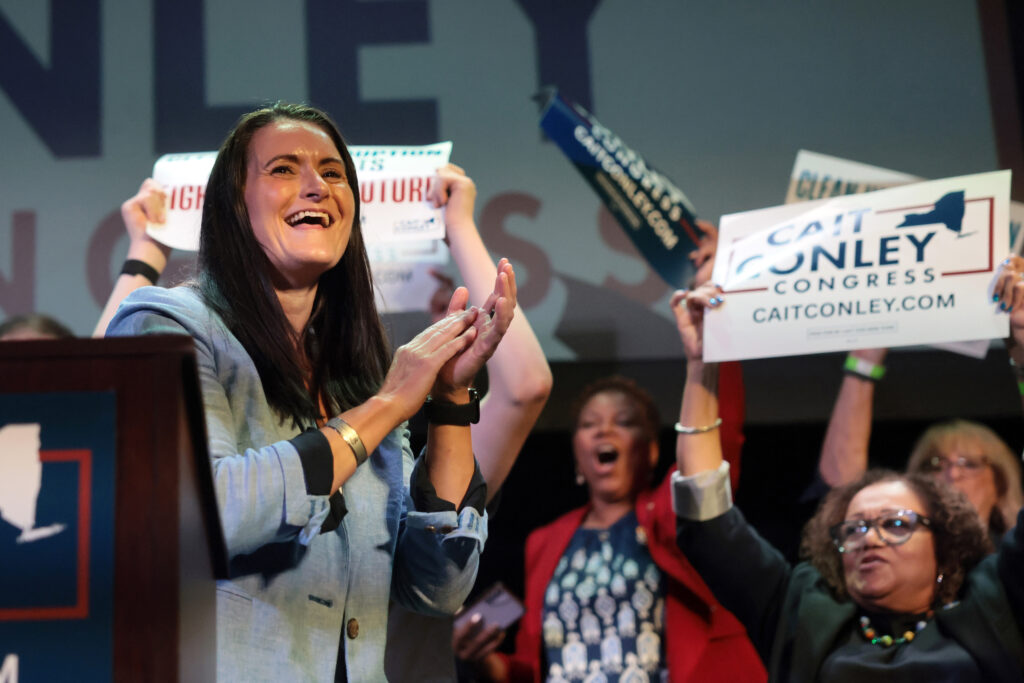
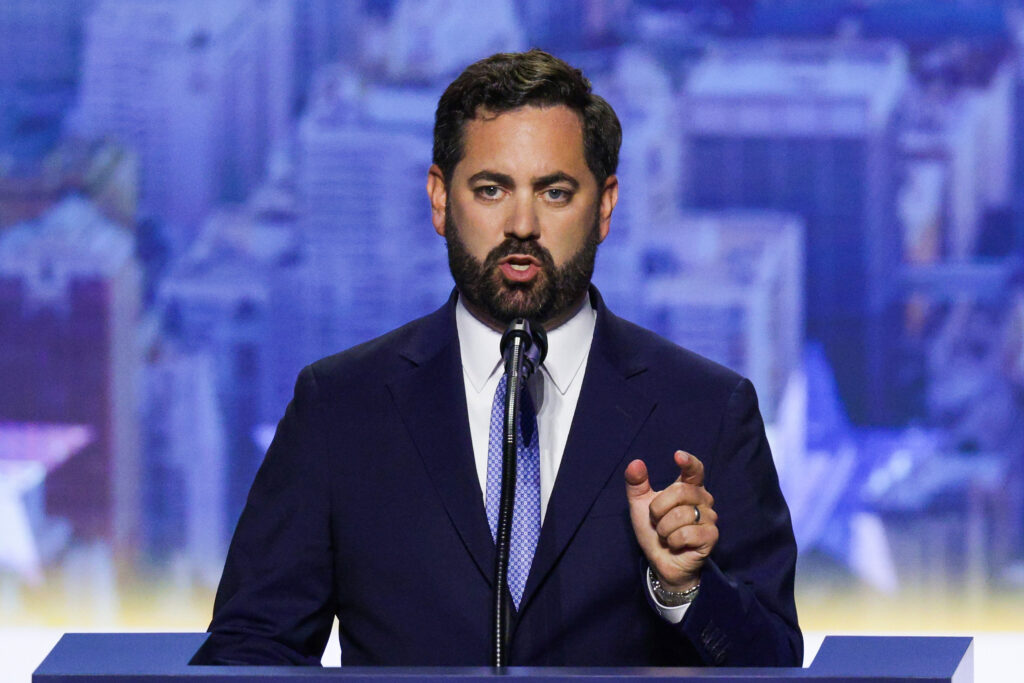
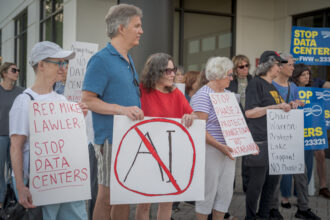
Artificial intelligence and data centers were the first subjects raised, reflecting their prominence in the race.
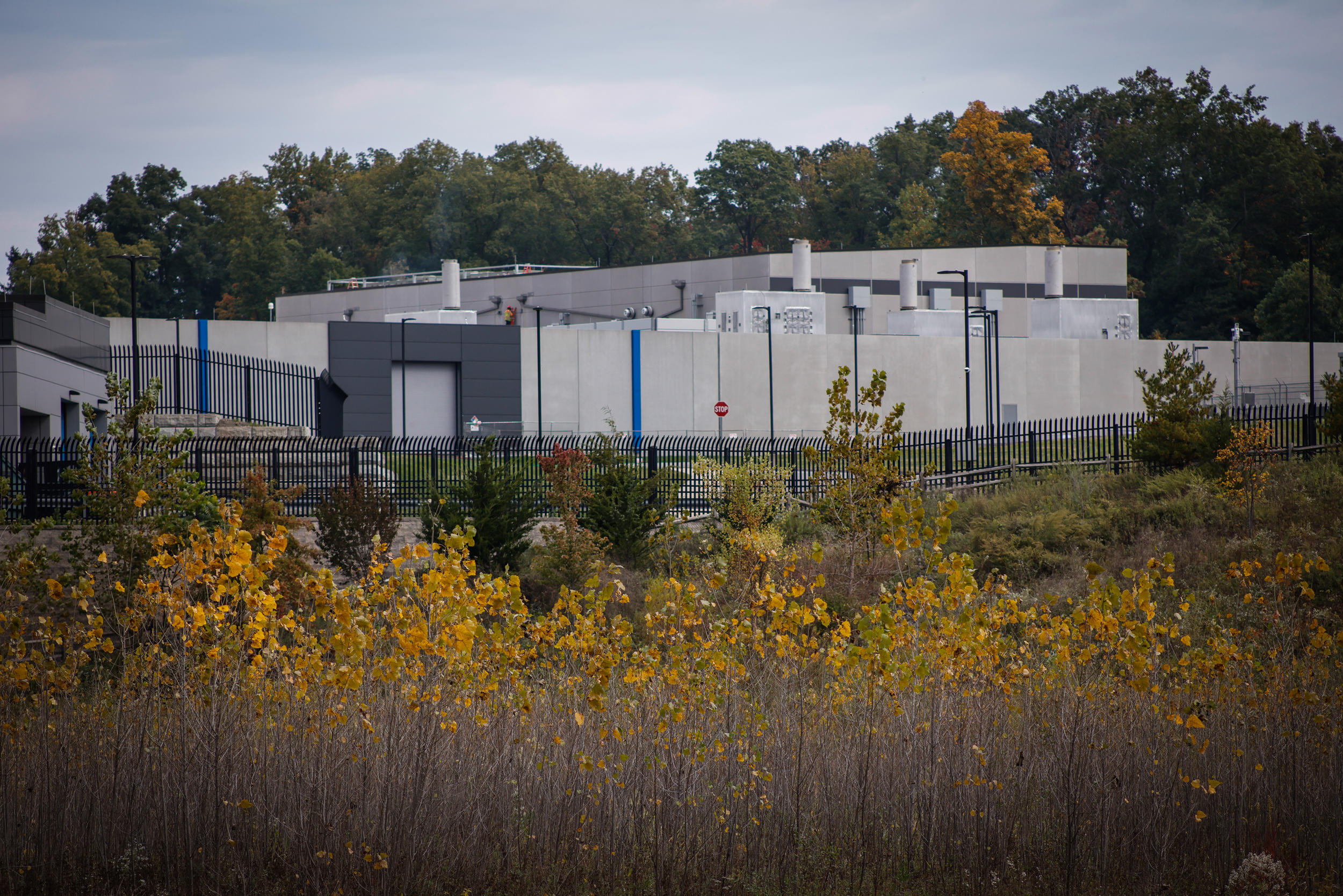
Jordan Turner, a voter from Rockland County who has followed both campaigns closely and remains firmly in Conley’s camp, said concerns over data centers extended beyond Orangeburg, a data center hotspot in the district that hosts five such facilities.
“It has become a national story,” he said. “When people see there’s a data center going up in Orangeburg, they go, ‘Oh my god, could there be a data center in Suffern or Katonah?’ They worry that everyone is going to be putting a data center on every corner.”
Recent polls suggest Americans’ views of data centers have grown more negative, with some finding that roughly two-thirds oppose new facilities in their communities. The issue has emerged as a rare point of convergence across the political divide.
Conley attacked Lawler’s support for President Trump’s One Big Beautiful Bill Act and his ties to wealthy donors. She called him “Elon Musk’s guy,” pointing to more than $1.7 million in contributions Musk made to Lawler’s 2024 campaign, which exceeded those of any other House member.
Lawler turned the accusation back on his opponent. He again called into question her financial ties to the industry, including $328,000 from Hidden Level and Primer AI, which she explained as defense contracts for drone detection systems.
“She is the AI candidate for the AI industry,” he said. “She is not paying taxes here, and wants to do the bidding of AI.”
This story is funded by readers like you.
Our nonprofit newsroom provides award-winning climate coverage free of charge and advertising. We rely on donations from readers like you to keep going. Please donate now to support our work.
Donate NowConley, who grew up in the Hudson Valley, moved from Virginia to the district last year.
Lawler defended local control over development and expressed support for local data-center moratoriums in Orangeburg and Fishkill, while arguing that Gov. Kathy Hochul’s statewide moratorium was not the answer. Conley, meanwhile, supports the moratorium but is not opposed to data centers outright, provided they are properly zoned and deliver a net benefit to the communities where they are built.
With gas prices up 43 percent since the war in Iran began, and diesel prices up 68 percent, energy affordability was also a central debate issue.
To lower energy prices, Lawler has advocated for the reopening of Indian Point, a nuclear power plant in the district that was shut down in 2021 and is presently being decommissioned. He has also called for permitting reform to boost domestic oil and gas production, including more extraction in the Southern Tier and expanded pipeline infrastructure.
When the U.S. Department of Energy recently announced to $42 million in Defense Production Act funding for the proposed 125-mile Constitution Pipeline, which would carry natural gas from Pennsylvania to New York, Lawler joined Energy Secretary Chris Wright and Interior Secretary Doug Burgum at a gas-fired power plant in New York’s 18th Congressional District.
He has consistently argued that Conley’s plans to phase out fossil fuels would leave consumers facing higher bills.
For Knox, energy costs are “top of mind.”
“My electricity bill has jumped precipitously. Nuclear is one of the most environmentally friendly ways we can get energy. I would have been happier if I had seen Cait Conley acknowledge that stopping the decommissioning of Indian Point would be a good thing for the district.”
Courtney Williams, a voter from Westchester County, welcomed some focus on environmental issues, including Indian Point and energy prices, but wished to hear more substantive proposals.
“I have warmed to Conley, but not so much on environmental issues,” she said. “There still isn’t a meaty plan for addressing existing problems in the absence of a functioning federal government or Environmental Protection Agency.”
Turner, meanwhile, didn’t see Indian Point as a major issue in the district. He worries that any low-information voters in the district, who see politics as a “dirty word”, may be convinced by Lawler’s bipartisan messaging.
“Lawler has painted himself as a moderate,” he said. “He has convinced enough people that he’s charming and bipartisan. Yes, he is charming. He is not bipartisan.”
President Trump’s Republican Midterm Convention in Dallas in September saw some Republicans stay away. The New York Times reported that Ken Paxton, one of the Republican Party’s leading Senate candidates in Texas, said “everybody’s numbers dropped” after the convention.
Turner said Lawler’s attendance had attracted little attention locally. “Him being there got almost no press. I didn’t see anything about it here. Nobody cared.”
Knox had not known Lawler attended the convention. Learning of it, he said, would influence his vote.
“I’m torn,” he said. “It does influence my vote to know that he went to a Trump rally, and others didn’t. I would have liked it if he hadn’t.”
Lawler has sought to portray Conley as insufficiently bipartisan by tying her to New York Mayor Zohran Mamdani and U.S. Rep. Alexandria Ocasio-Cortez, D-New York, both progressive Democratic Socialists. Turner questioned whether the attack still resonated with voters.
“Mamdani’s not such a boogeyman anymore,” he said. “People are going into New York City and going, ‘Where’s the hellhole we were promised?’”
Environmentalists in the district largely remain behind Conley. Peggy Kurtz, a voter from Rockland County who frequently campaigns in Haverstraw, a largely Latino community, said residents there had expressed dissatisfaction with the direction of the country under Trump.
“People are agreeing,” she said. “Will they come out to vote? I don’t know.”
With the election drawing closer, uncertainty remains. Some voters remain undecided about who will win their support; others are unsure which way the district will swing.
About This Story
Perhaps you noticed: This story, like all the news we publish, is free to read. That’s because Inside Climate News is a 501c3 nonprofit organization. We do not charge a subscription fee, lock our news behind a paywall, or clutter our website with ads. We make our news on climate and the environment freely available to you and anyone who wants it.
That’s not all. We also share our news for free with scores of other media organizations around the country. Many of them can’t afford to do environmental journalism of their own. We’ve built bureaus from coast to coast to report local stories, collaborate with local newsrooms and co-publish articles so that this vital work is shared as widely as possible.
Two of us launched ICN in 2007. Six years later we earned a Pulitzer Prize for National Reporting, and now we run the oldest and largest dedicated climate newsroom in the nation. We tell the story in all its complexity. We hold polluters accountable. We expose environmental injustice. We debunk misinformation. We scrutinize solutions and inspire action.
Donations from readers like you fund every aspect of what we do. If you don’t already, will you support our ongoing work, our reporting on the biggest crisis facing our planet, and help us reach even more readers in more places?
Please take a moment to make a tax-deductible donation. Every one of them makes a difference.
Thank you,
Leana Carbonez
Fellow
Leana Carbonez is a fellow at Inside Climate News. Born in London, she studied History at the University of Cambridge, and recently graduated from Columbia’s Graduate School of Journalism. She is interested in exploring Americans’ manifold understandings of ‘nature’ and the ways these perceptions are shaped by, and serve, political ideologies. She hopes to continue pursuing investigative projects while working across a variety of journalistic mediums.