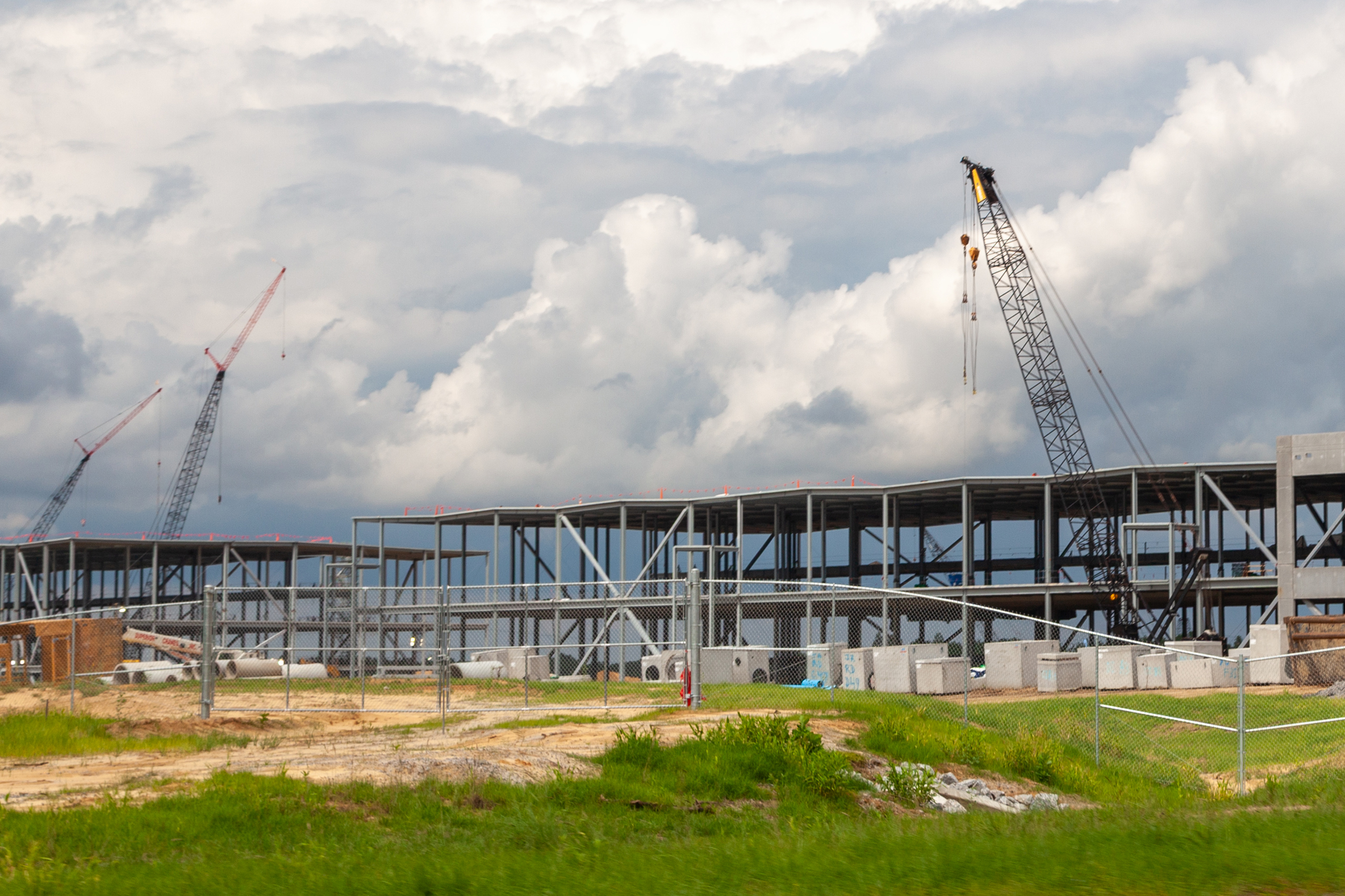


HAMLET, N.C.—Steel skeletons of two-story buildings jut from the landscape strewn with building supplies, the site of a $10 billion Amazon data center touted as the largest economic development project in state history.
Yet many residents vehemently oppose it. Richmond County officials secretly crafted the deal, which includes significant tax breaks for Amazon, then sprung it on an area already encumbered by pollution.
Sources in the county include two rock quarries, an asphalt plant, a company that processes wood pellets, a facility that turns railroad and landscaping ties into biochar, a poultry slaughterhouse and a natural gas power plant.
On top of that, there’s a Superfund site about five miles west of Hamlet where a company in the early 1980s discharged contaminants associated with antifreeze and oil into tributaries of the Pee Dee River, a drinking water supply.
“They’re in every corner and the center,” said Shaun Ingram, a Richmond County native. “You’ve got nowhere to run.”
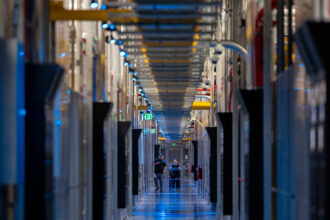
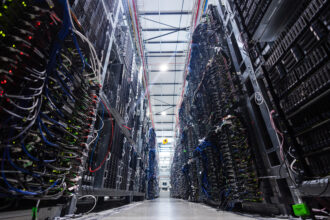
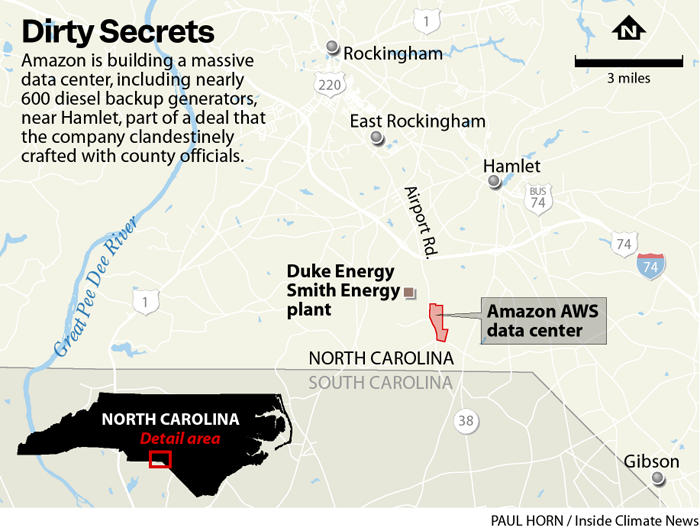
When the Amazon project is finished, it will include 21 buildings, each of them 200,000 square feet. Each will have its own 12,000-gallon bulk storage tank to hold low-sulfur diesel fuel to power 592 emergency generators that could emit hundreds of tons of pollution each year, according to Amazon’s draft air permit.
“We rely on the utility grid to power our data centers and serve our customers,” an Amazon spokesperson told Inside Climate News. “To ensure uninterrupted service for critical customers including hospitals, schools, and emergency services, our data centers include backup generators in case of rare power disruptions.”
Nationally, data centers’ diesel generators run more often than their emergency designation would imply, pumping significant pollution into neighboring communities, researchers have found.
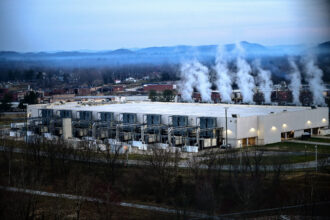
Duke Energy, the electric utility serving the Amazon site, has applied to the state to operate another 57 diesel generators that would temporarily power the data center until a transmission line is built. The utility’s generators could add several hundred tons of pollutants to the air, as well as 70,000 tons of greenhouse gases in one year.
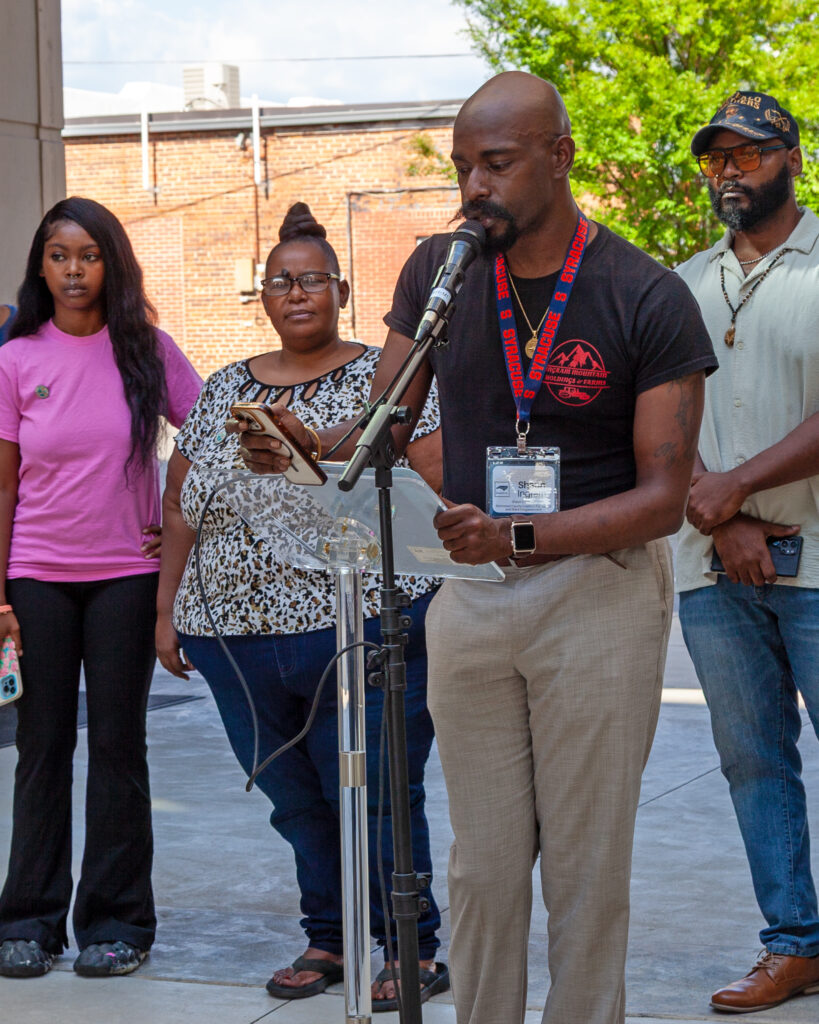
Shortly before the state’s recent public hearing on the proposed air permits, dozens of residents rallied in the cool breezeway of Richmond Community College’s business school in downtown Rockingham.
“It is shameful to sign away public trust while residents are left to ask basic questions about our energy, wells, water, wildlife and our health,” Ingram said.


Yolanda Steele, who lives near a quarry, said the Amazon data center is among the many burdens the community faces. “Richmond County has made this an industrial area,” Steele said. “There should be no permit for the AI center, not anything. The county commissioners did this without talking to the people who are paying the taxes.”
As the rally wound down, the day’s stock market news streamed on a digital ticker inside the school: “Amazon soars on booming cloud growth.”
A Secret Deal
The Amazon data center had a code name: Project Blue Marlin.
Many residents, even those living close to the site, say no one ever told them a data center would be their new neighbor. Lee Quick lives across the road from the southern part of the Amazon property. “I don’t recall any public hearing,” Quick told state environmental regulators at the recent meeting. “No one informed me that it was coming.”
Only a select few county officials, among them County Manager Bryan Land, knew the identity of the company behind Project Blue Marlin, which was named after a prized fish. Land did not return email and phone messages from Inside Climate News.
A review of the county commissioners’ meetings and minutes reveals how the deal unfolded, but only in vague terms.
Over three months in the spring of 2025, commissioners held the legally required public hearings on the rezoning and the land sales. No one from the public spoke. However, no public documents or commission discussions disclosed that the land would become a data center, so Richmond County residents would not have known what the commission was actually deliberating.
Public records show that county officials drafted a confidential purchase agreement with Project Blue Marlin on March 19, 2025, for a 646-acre forest and a moribund chicken farm owned by the county.
The terms of the agreement required the county to rezone the old chicken farm to heavy industrial. The commissioners did so two weeks later.
A confidential agreement dated April 3, 2025, detailed the incentives for Project Blue Marlin: a 50 percent property tax break on the buildings and a 65 percent reduction on machinery and equipment over 20 years.
The incentives were contingent upon the then-unnamed company spending $1 billion in capital investments and creating 50 full-time jobs, including contractors, by 2030. After the deal became public two months later, Amazon announced it would create 500 jobs once the site is fully built out.
Amazon would also receive state sales tax exemptions on certain equipment, the value of which can legally be kept secret. Energy and water usage would also be confidential.
In early May 2025, Richmond County Commissioners publicly voted to combine several county-owned parcels—the forest and the chicken farm—and sell them for $26 million to Project Blue Marlin for a heavy industrial development.
This story is funded by readers like you.
Our nonprofit newsroom provides award-winning climate coverage free of charge and advertising. We rely on donations from readers like you to keep going. Please donate now to support our work.
Donate NowThe next month, the commissioners unanimously approved generous property tax breaks for an unnamed company at a public hearing, but did not openly detail them.
The county manager was among the few who knew what the commissioners had done.
“You just approved [Project Blue Marlin] a few minutes ago,” Land told the commissioners at the June 4, 2025, public meeting. “Tomorrow, we will announce Project Blue Marlin and you’ll finally figure out who those guys are. It will transform our community in ways we can’t imagine.”
Adding to the Air Pollution Burden
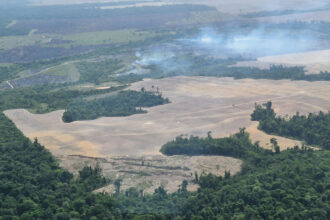
Tendrils of smoke streamed from tall piles of smoldering stumps, the last of the forest that once stood on property owned by Amazon. This was last fall, just a few months after Richmond County officials sold the tract to the tech giant, which then clear-cut the site to make way for the data center.
William and Shaun Ingram watched the stumps burn. The Ingrams are brothers who co-lead the Richmond County Coalition for Justice and Black Empowerment. They grew up in the county, as did generations of their extended family before them, Black and Indigenous people who passed down the history of the land and stories about discrimination and displacement but also reverence for nature.
“The resources are being extracted before any construction even begins. This was a natural habitat,” William Ingram, an Army veteran, said as he gazed over the scoured landscape.
“There has been no one else in our community to share this information and educate people on a level that relates and connects them back to the land, because that’s what we’re protecting here, land and water.”
Quick, who is among the neighbors of the data center site, told state environmental regulators at the public hearing that when Amazon burned the wood, ash fell on his property. “I had to buy covers for my two cars,” Quick said. “I couldn’t sit on my porch.”
Amazon tried to keep its air permit application confidential, N.C. Department of Environmental Quality records show. The agency’s Division of Air Quality then asked for “additional justification to support the confidentiality request” or a resubmittal with all of the emissions data disclosed.
Without the disclosure, the public wouldn’t have known the full extent of the estimated air emissions.
Two weeks after the division’s letter, Amazon resubmitted the application without a request for confidentiality.
The company said its request focused on proprietary equipment specifications and operational details that could have revealed competitive business information. All of the information relevant to air quality and public health is part of the public record, according to Amazon.
Amazon’s generators would use low-sulfur and renewable diesel fuel, which can be sourced from vegetable oils and waste fats. The company did not answer a question from Inside Climate News about whether plastic was among the sources for the renewable diesel.
Depending on fuel usage, operational time and engine specifications, the generators could emit up to 249.9 tons per year each of nitrogen oxides, carbon monoxide and volatile organic compounds. That figure is significant: At 250 tons, those pollutants would trigger additional environmental review.
Other air pollutants the company expects to emit include fine particulate matter, essentially soot that can burrow deep into the lungs and bloodstream, as well as hazardous air pollutants such as cancer-causing benzene and formaldehyde.
The company would install advanced pollution-control systems on the generators that “significantly reduce emissions below required levels to protect public health,” an Amazon spokesperson said. “We take air quality very seriously.”
Duke Energy says its generators would also have stringent emission controls.
Yet there has been no baseline monitoring to gauge how the generators could worsen air quality. The closest government air monitor is 30 miles from the Amazon site.
The neighborhoods near the data center are burdened with dozens of pollution sources, including landfills and hazardous waste sites. Census data shows that 55 to 70 percent of residents living in block groups abutting the data center property are people of color; about half are low income.
Rates of cancer, heart disease, stroke and child mortality in these areas are far higher than the state average, Department of Environmental Quality data shows. Richmond County ranks last in North Carolina in terms of air and water quality, housing and other aspects of the physical environment, according to the University of Wisconsin Population Health Institute.
Meech Carter of the N.C. League of Conservation Voters told state regulators that unlike Richmond County residents, employees of Amazon and Duke Energy won’t be affected by the additional pollution.
Nor will the data center. “Computers don’t breathe this air,” Carter said.
To determine whether a new source like Amazon’s data center is subject to additional review, state regulators must calculate the potential emissions from the entire facility. Duke’s leased generators would be on Amazon property, yet the state interpreted federal rules—erroneously, advocates say—to evaluate them separately.
Shawn Taylor, spokesman for the state’s Division of Air Quality, told Inside Climate News in an email that because the projects were not reviewed as a single source, “we cannot speculate what emissions or requirements would be associated with a hypothetical single-source permit.”
“It’s important to understand that these sources are not expected to operate simultaneously except during startup, maintenance and testing,” Taylor added. “Actual emissions from these projects are expected to be below the potential emissions calculated for permitting purposes.”
The Southern Environmental Law Center (SELC), Clean Water for North Carolina and other advocates told state regulators that evaluating the Duke and Amazon air permits separately downplays the magnitude of the pollution.
The SELC says the separate permits “artificially segregate” the diesel generators for the purpose of evading stricter air quality regulations. “The state should deny these permits,” said SELC attorney Jasmine Washington. “I’m deeply disturbed by what’s happening in Richmond County.”
About This Story
Perhaps you noticed: This story, like all the news we publish, is free to read. That’s because Inside Climate News is a 501c3 nonprofit organization. We do not charge a subscription fee, lock our news behind a paywall, or clutter our website with ads. We make our news on climate and the environment freely available to you and anyone who wants it.
That’s not all. We also share our news for free with scores of other media organizations around the country. Many of them can’t afford to do environmental journalism of their own. We’ve built bureaus from coast to coast to report local stories, collaborate with local newsrooms and co-publish articles so that this vital work is shared as widely as possible.
Two of us launched ICN in 2007. Six years later we earned a Pulitzer Prize for National Reporting, and now we run the oldest and largest dedicated climate newsroom in the nation. We tell the story in all its complexity. We hold polluters accountable. We expose environmental injustice. We debunk misinformation. We scrutinize solutions and inspire action.
Donations from readers like you fund every aspect of what we do. If you don’t already, will you support our ongoing work, our reporting on the biggest crisis facing our planet, and help us reach even more readers in more places?
Please take a moment to make a tax-deductible donation. Every one of them makes a difference.
Thank you,

Lisa Sorg
Reporter, North Carolina
Lisa Sorg is the North Carolina reporter for Inside Climate News. A journalist for 30 years, Sorg covers energy, climate environment and agriculture, as well as the social justice impacts of pollution and corporate malfeasance.
She has won dozens of awards for her news, public service and investigative reporting. In 2022, she received the Stokes Award from the National Press Foundation for her two-part story about the environmental damage from a former missile plant on a Black and Latinx neighborhood in Burlington. Sorg was previously an environmental investigative reporter at NC Newsline, a nonprofit media outlet based in Raleigh. She has also worked at alt-weeklies, dailies and magazines. Originally from rural Indiana, she lives in Durham, N.C.