

Feeding the Beast: Second in a series about lax regulation, corporate influence and the heavily polluting, yet nearly untouchable American meat industry.
Thousands of dead and bloated pigs floated down country roads, buoyed by floodwaters. Tens of millions of gallons of feces and urine spilled over the brims of lagoons and contaminated everything in their path, including rivers, streams and private drinking water wells.
It was September 1996, when Hurricane Fran pummeled eastern North Carolina and unleashed an environmental catastrophe, the first of several that would occur over the next two decades.
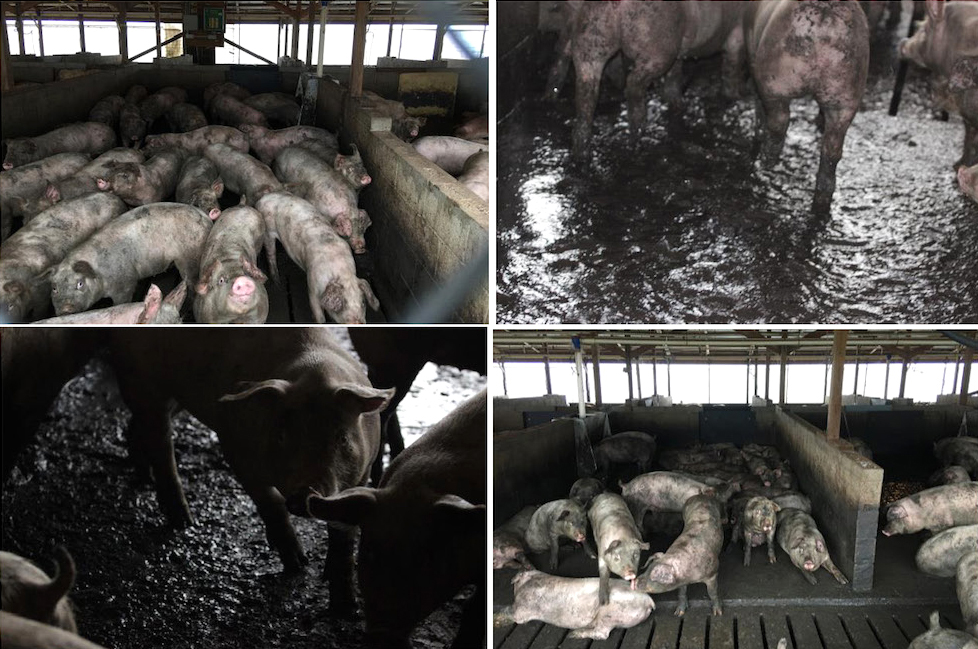
The resulting disasters stemmed from a primitive lagoon and sprayfield system, in which millions of gallons of hog waste are stored in open, unlined cesspools the size of a football field, then sprayed as fertilizer on nearby farm fields.
The hog industry has used this system for years on the state’s massive network of concentrated animal feeding operations, or CAFOs. It made economic sense to Smithfield Foods, the behemoth hog producer. But the cheap and outdated method of managing waste has inflicted decades of misery on thousands of residents, mostly Black or low-income, who live near the CAFOs.
Then-Attorney General Mike Easley, the state’s future governor, stepped into the fray. In 2000, he negotiated the Smithfield Agreement, a binding pact with the hog producer intended to permanently replace the lagoon and sprayfield system.

“I am here today to tell you that we have found a solution that will take us one giant step forward,” Easley proclaimed in a July 2000 press release. “Industry leaders have agreed to fund the development of new technology to replace current lagoon systems. More importantly, they have agreed to implement this technology on their farms immediately.”
Now, the Smithfield Agreement is winding down. As part of the deal, the company had to pay up to $2 million per year for 25 years towards environmental enhancement grants to nonprofits and local governments. It also paid $15 million for research toward the development of “environmentally superior technologies” (ESTs) to replace the lagoon and sprayfield system on corporate-owned farms. The company also pledged to assist its contract growers with their own conversion to ESTs if the technologies were economically feasible.
Smithfield decided they weren’t.
The result: The air near CAFOs still stinks. Every day a miasma of manure rises from the sprayfields. Thousands of lagoons teem with fetid waste. Communities near the CAFOs are at a higher risk of asthma, cardiovascular illness, infant mortality and overall death, multiple scientific studies have shown.
As part of the agreement, five representatives from the hog industry, including Smithfield, sat on an 11-member economic subcommittee to analyze the financial feasibility of environmentally superior technologies. The majority, which included renowned economists, agreed that yes, Smithfield could afford it.
In its dissenting report, issued in 2005, the industry representatives vehemently disagreed. “… Would any net increase in costs of a new technology be economically feasible? The short answer is no.”
Smithfield never backed any environmentally superior technologies—even though one was developed. And it never helped contract growers adopt the technology, either.
Michelle Nowlin, then an attorney with the Southern Environmental Law Center, served on the agreement’s technical advisory committee. Now co-director of the Duke University Environmental Law and Policy Clinic, she sees the folly in hindsight.
“We knew we’d been played.”
“You’re Going To Smell It”
The stench stuns like an uppercut.
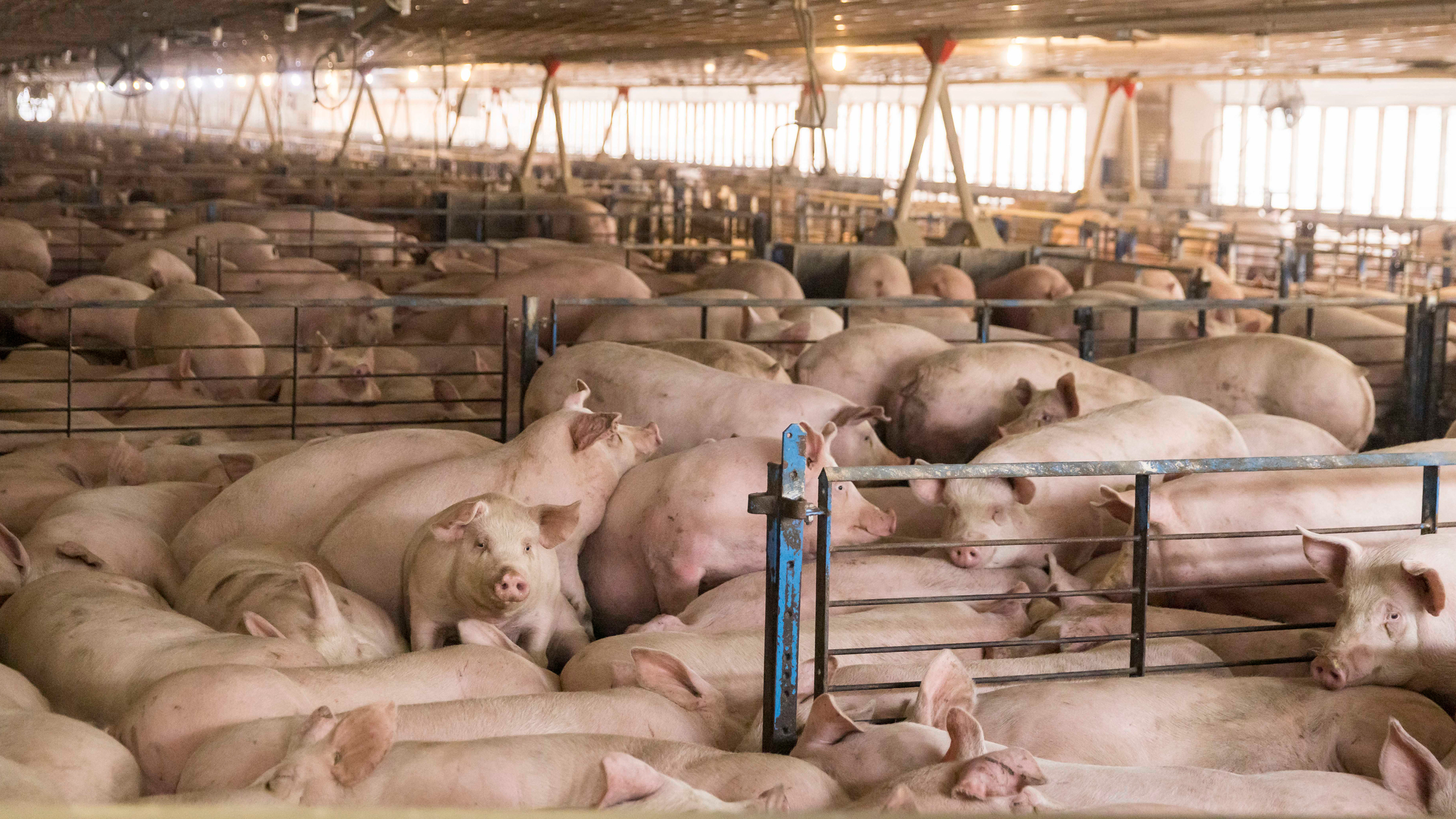
For six miles between Smith Chapel Church and the B&W Trailer Court on Veachs Mill Road, in Duplin County, North Carolina, as many as 44,280 hogs, plus an unknown number of chickens stuffed into poultry barns, live on eight farms.
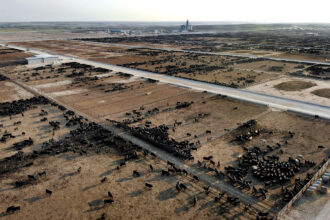
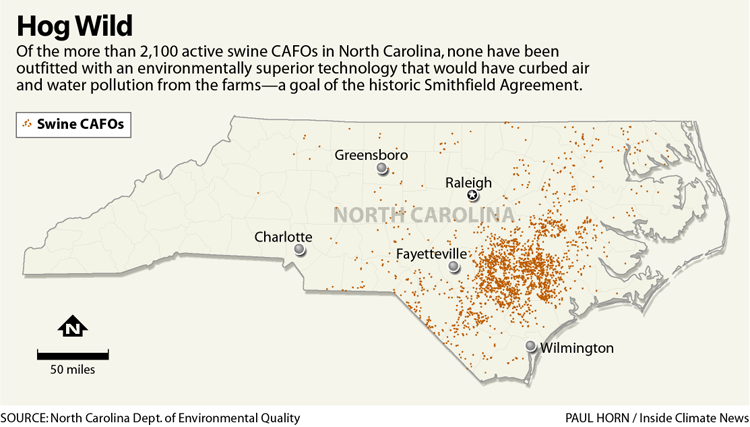
Duplin County ranks among the top hog-producing counties in the nation: 1.8 million hogs and 459 CAFOs, state records show. An untold number of poultry CAFOs add to the misery, residents say.
“Duplin County introduces itself,” joked Leroy Mitchell, a local and member of the Rural Empowerment Association for Community Help (REACH), a nonprofit group that has long fought the swine industry.
Mitchell, a middle-aged Black man with a commanding presence, had just delivered the invocation at a recent REACH meeting, held at its headquarters, a white modular home converted into an office and community meeting space a mile from Veachs Mill Road.
About 20 people attended to discuss community health impacts, including an air monitoring project with Johns Hopkins University.
“You’re going to smell it,” he said. “Or God forbid you get behind a dead truck”—which hauls hogs, often the weakest ones, that have been stomped or succumbed from other causes in the crowded barns.
Birthplace of the CAFO
With its broad floodplains, shallow water table and tendency to get hit by hurricanes, North Carolina’s Coastal Plain is, geographically speaking, an awful place to put a hog CAFO.
For hundreds of years, the region’s sandy loam soils supported tobacco. But after economic factors and litigation gutted that industry, farmers needed a replacement. Even if the hydrology was sub-optimal, barns could easily be built on the low, flat land, then stuffed with hogs. Dig a hole in the ground, line it with clay, build a brim, and you have a lagoon.
But when a hurricane hits, as happened in September 1996, the lagoons can unleash an environmental catastrophe.
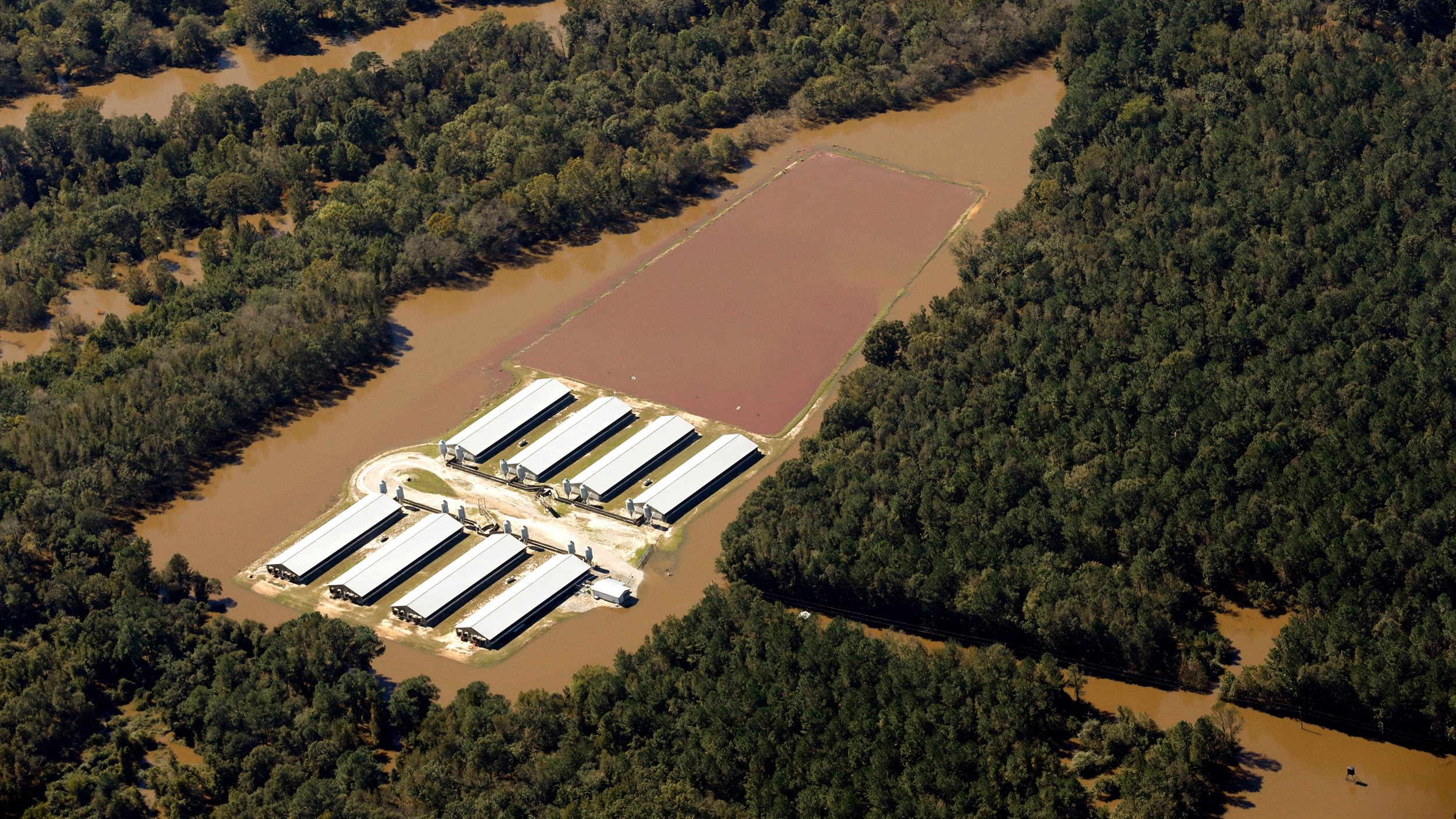
The storm lasted just one day, but the disaster started years before. Because of cheap grain, and changes in federal agricultural policy, in the late 1980s, the hog industry began consolidating the thousands of small farms into the hands of just a few corporations. The number of swine farms shrunk from 15,000 to 5,800. Thousands of small farmers went out of business. Meanwhile, the number of hogs in North Carolina outpaced the human population, state and federal records show, to 10 million.
The American CAFO was born.
By 2000, the need for a solution for controlling swine waste in North Carolina was dire. Lagoon spills, breaches and discharges were common. A year before Hurricane Fran, 25 million gallons of waste disgorged from a lagoon and into the New River, killing fish and coating farm fields in layers of feces. The farm owners, who lived out of state, attributed the breach to heavy rain, although they had also failed to maintain the lagoon.
The string of disasters compelled the governor and legislature to assemble a Blue Ribbon Commission on Agricultural Waste to study the problem. The commission recommended several improvements for permitting and inspections, many of which became part of a 1997 law.
That law, passed when Democrats held a majority in the state legislature, included a temporary moratorium—later made permanent—on new and expanded hog CAFOs that used a lagoon and sprayfield system.
Just two years later, in 1999, Hurricane Floyd ripped through the state, leaving more dead hogs. More breached lagoons. More waste polluting the drinking water supplies.
Community groups were considering filing a class-action lawsuit against Smithfield Foods, the dominant hog producer in the state. Easley, then the attorney general, threatened to sue Smithfield as well, Nowlin recalled. “He made it known that he was exploring some of these claims but wanted to bring people together to see if there was a way to avert legal action.”
Easley could not be reached for an interview.
Easley assembled scientists, economists, environmental engineers, lawyers, advocates and representatives from the hog industry to forge the Smithfield Agreement.
There was a catch: secrecy.
Committee members could not disclose their participation nor the existence of the negotiations until the agreement was announced, Nowlin said.
“In a move that I regret very deeply, to have a seat at the table, we were prohibited from talking with community groups about the settlement conversations,” she said. “I had a lot of misgivings about that. Ethically it was the wrong call. I think the community groups deserve to have their own seat at the table and not have an environmental organization serving as a proxy, regardless of how well intentioned.”
Before the Smithfield Agreement negotiations, Mike Williams was living a comparatively quiet academic life at N.C. State where he worked as a professor and the director of the university’s Animal and Poultry Waste Management Center.
After Hurricane Floyd, Easley designated Williams to wrangle teams of professionals to analyze the technical and economic aspects of replacing the lagoon and sprayfield system with something better—what, in the parlance of the Smithfield Agreement, became known as “environmentally superior technologies.”
“Everybody felt really comfortable having him as the designee,” Nowlin said. “He’s a person of not just tremendous intelligence, but tremendous integrity as well. He was very fair-minded and inclusive, and a no-drama kind of guy.”
Although it was a stressful endeavor, said Viney Aneja, an N.C. State scientist and professor who evaluated the ESTs, “Williams did not buckle under the pressure of the agricultural interests.”
Williams, who retired nearly 10 years ago, could not be reached for an interview.


Ryke Longest helped craft the Smithfield Agreement when he was a special deputy attorney general at the N.C. Department of Justice’s Division of Environmental Protection. He now co-directs the Duke University Environmental Law and Policy Clinic with Nowlin.
“The most impactful things were the environmental enhancement funds to put land into conservation and to close the abandoned lagoons,” Longest said. “And demonstrating there were environmentally superior technologies to the sprayfield and lagoon system. The lie had been that there was nothing better.”
Under the agreement, an EST would curb water and air pollution originating at the CAFOs, based on criteria established by the state legislature. That included eliminating the discharge of hog waste to surface water and groundwater, and “substantially eliminating” emissions of ammonia and other air pollutants, pathogens and odors beyond the CAFO property boundary.
The criteria also called for the substantial elimination of disease-carrying insects and airborne pathogens, as well as marked reductions in phosphorus, nitrogen and heavy metal contamination of soil and groundwater.
Scientists and engineers developed two ESTs that curbed odors, pathogens and air pollution by 99 percent. One, Super Soils, emerged as the top contender.

Aneja, now in his 70s, is a professor in the Department of Marine, Earth, and Atmospheric Sciences at N.C. State.
“We know that it’s possible to control these emissions,” said Aneja, who led the team that evaluated 18 potential ESTs.
Ammonia is key, Aneja said. Nearly half of the state’s annual ammonia emissions comes from swine waste. It irritates the eyes, nose and respiratory tract, and has been linked to childhood asthma.
Ammonia also forms very fine particulate matter, also known as PM 2.5, invisible particles that can enter the brain and burrow into the lungs and bloodstream. Chronic exposure to PM 2.5 can cause lung cancer and COPD, and increase the risk of dementia.
Scientists deployed the ESTs on working test farms owned by Smithfield, then compared results with a farm of similar size that used a traditional lagoon and sprayfield system.
After several iterations, Super Soils, later known as Terra Blue, was proven to be the most viable. Engineers at the U.S. Department of Agriculture invented the technology, which operates like a municipal wastewater treatment plant and separates the waste into solids and liquids.
Liquids are diverted to a tank where nitrogen and phosphorus are removed by adding lime, calcium hydroxide and special bacteria. This process also disinfects the liquid waste, 80 percent of which can be used to flush out the barns and the remainder to irrigate crop fields.
The solids are composted and can be sold as fertilizer.
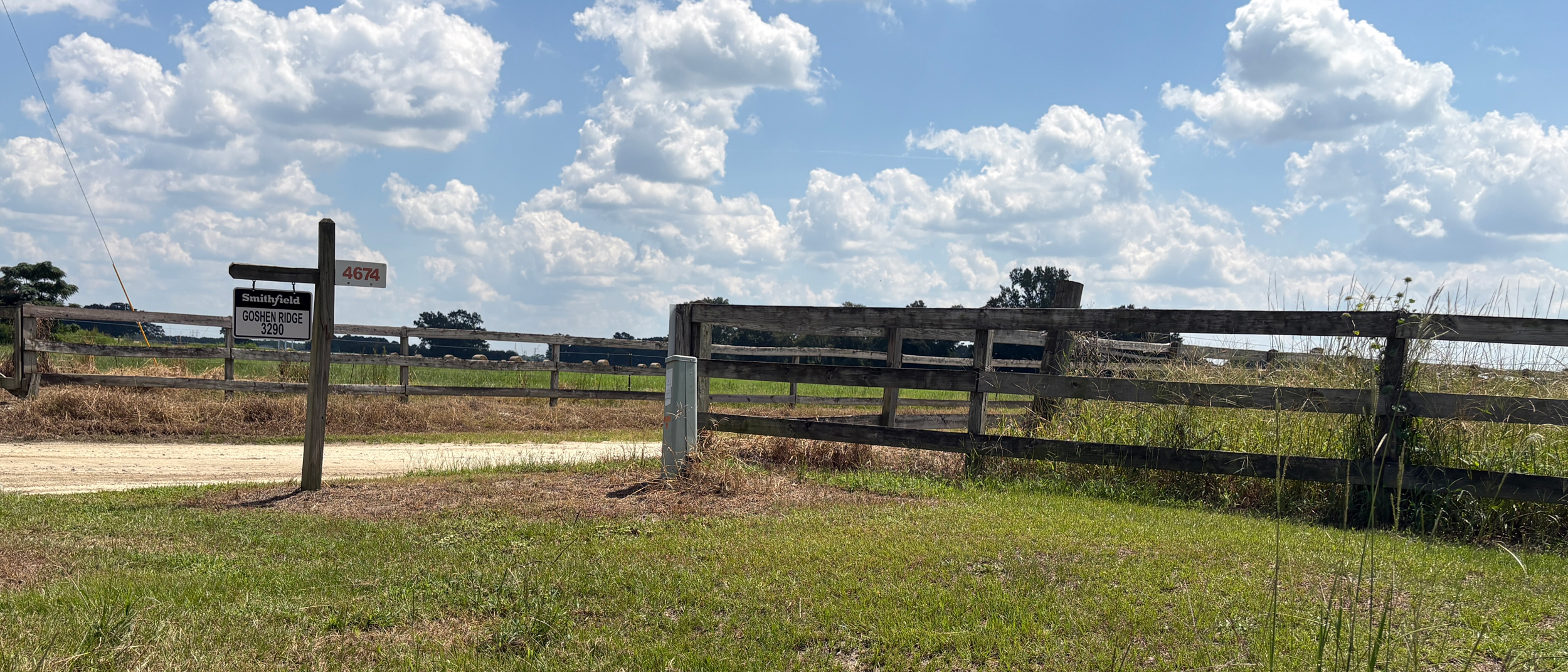
The first generation of Super Soils was installed at Goshen Ridge farm, a 4,360-head CAFO with six barns in Duplin County. The numbers were striking: ammonia was reduced by 94.7 to 99.9 percent, depending on the weather. Odors, pathogens, nitrogen, phosphorus, metals and greenhouse gases also fell by 90 to 99 percent.
The technology cost $400 per 1,000 pounds of live hog each year, nearly five times more than the cost of a traditional lagoon and sprayfield system.
Scientists tweaked it. By its third iteration, Super Soils was cheaper: $157 per 1,000 pounds of live hog, compared with $87 for a lagoon and sprayfield.
“We’re moving the needle,” Williams told Duke University students at a 2016 Environmental Health Scholars program. “The research has moved the needle to get the cost down to where it’s affordable.”
Smithfield never deployed it.
In his final report on the Smithfield Agreement, Williams found that while Super Soils met the environmental performance standards of an EST, it didn’t meet the economic feasibility criteria. “Dr. Williams decided that it was too close to call,” Nowlin said.
Smithfield wasn’t required to install Super Soils on existing farms. However, a state moratorium mandated new swine CAFOs to be outfitted with an EST. Instead, the company has opted not to build any new farms and stick with the lagoons and sprayfields.
“We had two environmentally superior technologies,” Aneja said. “But there’s no appetite in the hog industry to make it go commercial.”
Over the past quarter century, Smithfield has repeatedly asserted that the ESTs don’t meet the agreement’s criteria of “economic feasibility,” because compared to the existing lagoon and sprayfield system, the technologies are too expensive for the company to remain competitive.
Since then, the economic landscape has radically changed. “We have much better models for figuring out actual costs to public health,” Nowlin said. “We have much more robust models for being able to measure ecosystem services and to be able to incorporate those into cost benefit analysis.”
Smithfield has not only remained competitive since the agreement but also has cemented its market dominance in the global hog industry. The company bought its closest competitor, Premium Standard Farms, in 2007. It is now a subsidiary of a multi-billion dollar Chinese company, WH Group Limited, the world’s largest pork producer.
Smithfield reported $15 billion in sales last year, as well as a record $1.3 billion in operating profit, according to the company’s investor report.
This story is funded by readers like you.
Our nonprofit newsroom provides award-winning climate coverage free of charge and advertising. We rely on donations from readers like you to keep going. Please donate now to support our work.
Donate NowA company spokesman declined to discuss the successes and failures of the agreement, but released a list of contributions since 2023, including 5 million servings of meat to hunger relief organizations in eastern North Carolina and $1 million for food assistance, education and public safety.
Critics say those contributions disregard the plight of thousands of people who must endure the environmental and public health hazards of living near swine CAFOs.
“There seemed to be a narrow focus on the economics of implementing the technology without much consideration of the benefits on public health,” said Blakely Hildebrand, who works on agricultural issues as a senior attorney with the Southern Environmental Law Center. “It’s mind-boggling that in 2026, when we can get internet from satellites, the main way the hog industry stores and disposes of waste is a pit in the ground. I mean, that is just unacceptable at this stage.”
“Environmentally Superior,” Not “Economically Feasible”
The Super Soils died under the Smithfield Agreement, but lawyers resurrected the technology’s potential in several federal court cases filed against the pork producer.
In 2014, 540 plaintiffs, all neighbors of hog CAFOs in North Carolina, sued Smithfield in federal court for nuisance. They alleged the company’s lagoon and sprayfield system had degraded their property values and quality of life. Because of the putrid smell, they couldn’t go outside or open their windows. Feces and urine misted from the sprayguns onto their homes, cars, even their skin.
Smithfield could have phased out the method of waste disposal, the neighbors’ attorneys argued, and begun to install Super Soils on the farms. Instead, the company chose the cheaper way out: the lagoon and sprayfield system.
That turned out to be a very expensive choice.
The cases finally went to court in 2018. The company lost the first five, where jurors awarded the neighbors a total of $550 million in damages, later capped at $98 million under North Carolina law. After a federal judge at the Fourth Circuit Court of Appeals issued a scathing opinion against the company, Smithfield relented. In 2020, the company settled the remaining 21 cases out of court, for an undisclosed amount.
Based on initial construction and operational costs, for $98 million Smithfield could have upgraded the waste management systems with the first iteration of Super Soils, plus paid for the operations and maintenance of that EST for at least 17 corporate-owned farms—for 10 years.

Yet under the terms of Smithfield Agreement, a technology could be deemed environmentally superior only if it were also “economically feasible”—a nebulous term that the economics subcommittee, composed of economists, environmental advocates and pork industry representatives, debated.
To compare the cost difference, the majority of the committee advocated for evaluating any EST against what a farmer would pay to install new sprayfields and lagoons. The pork industry disagreed, arguing that the comparison should be based on the cost of the existing sprayfields and lagoons it had installed years earlier—which were much cheaper.
The upshot was that maintaining the existing structures, some of them more than 10 years old, was cheap. The cost gap between that system and an alternative technology could be deemed economically infeasible.
Missing from the economic equation was the value of the public health and environmental benefits, especially to neighbors of the CAFOs.
“That ended up being the real test point,” Nowlin said. “Smithfield and the industry succeeded in truncating the scope of that analysis. When all the data was in and the costs were totalled, the economic benefits to the community in terms of reduced health burdens and reduced environmental pollution were not adequately factored in.”
Richard Whisnant, then a distinguished professor of public law and government at the University of North Carolina, Chapel Hill, served as chairman of the Smithfield Agreement’s economic subcommittee. His charge was to herd the members to a consensus on how to interpret the term “competitiveness,” a term in the agreement that proved hard to pin down.
“I viewed my task as coming up with some way of explaining what competitiveness meant,” Whisnant said, “other than saying no net increase in cost, which was going to be the industry position.”
The subcommittee agreed that an EST could be more expensive than a lagoon and sprayfield system, as long as it didn’t harm the competitiveness of the North Carolina hog industry compared with other states.
But the subcommittee never accounted for Smithfield’s profitability in determining whether an EST was affordable; the calculation wasn’t required under the agreement.
At a Duke University Environmental Health Scholars program in 2016, Williams criticized the sprayfield and lagoon system. He told students that he had hoped a robust carbon trading and renewable energy program would have incentivized the pork industry to install ESTs.
“Had that occurred, some of these technologies would have met economic feasibility standards and we would be getting them onto farms,” he said. “This isn’t a technological issue, but an economic, community and policy issue.”
The lagoon and sprayfield method is not a sustainable model, he said. “We need a solution that can last for generations.”
Grants on Hold Since 2023
On the grant-making side of the ledger, the Smithfield Agreement showed more promise, even if the $2 million paid annually by the company from 2002 to 2023 was, in the minds of environmental advocates, a pittance.
That $43 million, paid first into an escrow fund overseen by the Attorney General’s Office, then later by the state treasury, supported 230 wide-ranging projects: stream and wetland restoration, forest preservation, floodplain buyouts, as well as agriculture-specific work.
The Nature Conservancy received $300,000 to acquire 1,789 acres of land in Bladen County, another leading hog-producing area. The City of Lumberton used a $250,000 grant to buy land for the Lumber River State Park. The N.C. Soil and Water Conservation Foundation received $6 million for the closure of 250 abandoned hog lagoons, accounting for 290 million gallons of waste.
Yet some projects were never completed. In 2022, East Carolina University was among 23 grant recipients that year. It was awarded $175,000 to collaborate with Waterkeepers Carolina and Butler Farms, an 8,000-head hog operation, to reduce nitrate in waterways in the Cape Fear River Basin.
The team was preparing to do remediation work when they received a stop-work order from the N.C. Department of Justice, said Guy Iverson, an associate professor in ECU’s College of Health and Human Sciences, who participated in the project.
“Unfortunately, we weren’t able to complete this grant work before the current lawsuit,” Iverson said in an email. As part of the stop-work order, “we could not spend any more money.”
Funding for all grantees has been on hold since 2023, with nearly half of that year’s $2.2 million allocation in limbo, according to a spokesperson for Jeff Jackson, the current attorney general.
The head of a conservative think tank and a private citizen have sued the attorney general’s office, under different administrations, over its disbursement of the grants. They have argued, so far unsuccessfully, that the money should instead go to public school districts, which under state law, are entitled to the proceeds from civil penalties.
The Smithfield Agreement contained no financial penalties, Longest, the former special deputy attorney general, said, in part because the attorney general can’t levy environmental fines. That’s the Department of Environmental Quality’s job. “But they didn’t sign the agreement,” Longest said. “We were aware of the law. And we were careful.”
Longest believes the lawsuits are politically motivated. De Luca, the first plaintiff who tried to halt the grants, was president of the Civitas Institute, a far-right organization funded by the Pope Foundation. Its board chairman, Art Pope, a multimillionaire heir to a chain of discount stores, served as deputy budget director under Republican Gov. Pat McCrory.
“I’m not surprised that people filed the lawsuits,” Longest said. “They’re disgruntled operatives who seek to restrict the powers of the attorney general.”
Carrying On
In 2014, the Rural Empowerment Association for Community Help (REACH), the Duplin County nonprofit that has long fought the swine industry, joined forces with the Waterkeeper Alliance and the NC Environmental Justice Network to file a successful civil rights complaint with the Environmental Protection Agency. The complaint alleged that the state’s permitting process for swine CAFOS disproportionately burdened communities of color.
Two years later, REACH filed a second complaint accusing the N.C. Department of Environmental Quality of coordinating with the pork industry to intimidate the groups during confidential mediation sessions.
Under the leadership of then-DEQ Secretary Donald van der Vaart, another McCrory appointee, agency officials apparently tipped NC Pork Council representatives to a mediation session.
Even though the Pork Council was not a party to the mediation, several representatives showed up, anyway. Given the tense history between the Pork Council, swine farmers and their neighbors, the complainants viewed the intrusion as an attempt to intimidate them.
When Michael Regan became DEQ secretary under Democratic Gov. Roy Cooper, the complainants, with EPA approval, engaged in alternative dispute resolution rather than pursue the retaliation complaint.
But like the Smithfield Agreement, the civil rights victory was fleeting. The settlement, finalized in 2018, required DEQ to implement a violation point system that would have further penalized farms that were chronic offenders.
DEQ completed a draft in 2020, but never presented it to the state Environmental Management Commission for consideration, according to meeting minutes. A DEQ spokesperson told Inside Climate News that because of agency turnover, “particular staff involved with that process and communicating with the EMC are no longer with the agency.”
In June 2026, the legislature repealed it as part of the Farm Act.
Under the settlement terms DEQ also had to conduct air and surface water monitoring for at least a year. That requirement has expired, as the Smithfield Agreement is about to do.
The Smithfield Agreement did not repair the hog industry’s ongoing environmental damage, so communities will be left, as REACH and its allies have done, to attack the problem themselves.
Now, REACH and Johns Hopkins University have launched their own air monitoring project.
This study, and others co-led by communities and scientists in eastern North Carolina, could build a legal foundation for future lawsuits against the EPA, which has exempted CAFOs from reporting toxic air emissions under the Clean Air Act.
A full generation has passed since the Smithfield Agreement. Yet it did not improve the lives of those living near the CAFOs, said Debbie Hall of REACH, as she greeted newcomers to the group’s meeting: “It failed miserably.”
About This Story
Perhaps you noticed: This story, like all the news we publish, is free to read. That’s because Inside Climate News is a 501c3 nonprofit organization. We do not charge a subscription fee, lock our news behind a paywall, or clutter our website with ads. We make our news on climate and the environment freely available to you and anyone who wants it.
That’s not all. We also share our news for free with scores of other media organizations around the country. Many of them can’t afford to do environmental journalism of their own. We’ve built bureaus from coast to coast to report local stories, collaborate with local newsrooms and co-publish articles so that this vital work is shared as widely as possible.
Two of us launched ICN in 2007. Six years later we earned a Pulitzer Prize for National Reporting, and now we run the oldest and largest dedicated climate newsroom in the nation. We tell the story in all its complexity. We hold polluters accountable. We expose environmental injustice. We debunk misinformation. We scrutinize solutions and inspire action.
Donations from readers like you fund every aspect of what we do. If you don’t already, will you support our ongoing work, our reporting on the biggest crisis facing our planet, and help us reach even more readers in more places?
Please take a moment to make a tax-deductible donation. Every one of them makes a difference.
Thank you,

Lisa Sorg
Reporter, North Carolina
Lisa Sorg is the North Carolina reporter for Inside Climate News. A journalist for 30 years, Sorg covers energy, climate environment and agriculture, as well as the social justice impacts of pollution and corporate malfeasance.
She has won dozens of awards for her news, public service and investigative reporting. In 2022, she received the Stokes Award from the National Press Foundation for her two-part story about the environmental damage from a former missile plant on a Black and Latinx neighborhood in Burlington. Sorg was previously an environmental investigative reporter at NC Newsline, a nonprofit media outlet based in Raleigh. She has also worked at alt-weeklies, dailies and magazines. Originally from rural Indiana, she lives in Durham, N.C.