Skip to content
  • Science
  • Politics
  • Justice & Health
  • Fossil Fuels
  • Clean Energy
  • ICN Local
  • Projects
  • Impact
  • About Us
Inside Climate News
Pulitzer Prize-winning, nonpartisan reporting on the biggest crisis facing our planet.
Donate
Trump 2.0: The Reckoning
Inside Climate News
Donate

Search

  • Science
  • Politics
  • Justice & Health
  • Fossil Fuels
  • Clean Energy
  • ICN Local
  • Projects
  • Impact
  • About Us
  • Newsletters
  • ICN Sunday Morning
  • Contact Us

Topics

  • A.I. & Data Centers
  • Activism
  • Arctic
  • Biodiversity & Conservation
  • Business & Finance
  • Climate Law & Liability
  • Climate Treaties
  • Denial & Misinformation
  • Environment & Health
  • Extreme Weather
  • Food & Agriculture
  • Fracking
  • Nuclear
  • Pipelines
  • Plastics
  • Public Lands
  • Regulation
  • Super-Pollutants
  • Water/Drought
  • Wildfires

Information

  • About
  • Job Openings
  • Reporting Network
  • Whistleblowers
  • Memberships
  • Ways to Give
  • Fellows & Fellowships

Publications

  • E-Books
  • Documents

Ocean

Malnourished Gray Whales of the Eastern North Pacific Are in ‘Serious Trouble’

The population has plummeted over the past seven years as climate change triggers mass starvation in warming Arctic waters.

By Blaine Harden

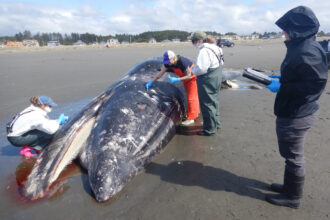
Researchers take samples from a male gray whale on a beach near Moclips, Wash., on April 11. Post-mortem showed cause of death as malnutrition and blunt force trauma, probably from colliding with a boat. Credit: Courtesy of Cascadia Research Collective
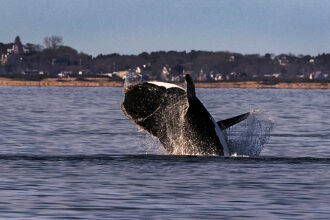
A North Atlantic right whale is seen in the waters of Cape Cod Bay, Mass. Credit: Stan Grossfeld/The Boston Globe via Getty Images

A Bit of Good News for Right Whales

Interview by Aynsley O’Neill, Living on Earth

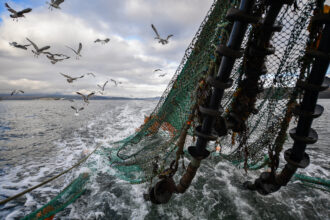
A fishing trawler drags its net through the waters near Greenock, Scotland, on March 5, 2019. Credit: Jeff J Mitchell/Getty Images

Federal Law Requires US Seafood Imports to Not Threaten Marine Mammals. A Lawsuit Is Pushing the Government to Finally Act.

By Georgina Gustin

Shark fins are set out to dry along a street in Hong Kong. Credit: Bertha Wang/AFP via Getty Images

China’s Shark Finning Could Lead to US Seafood Sanctions

By Johnny Sturgeon

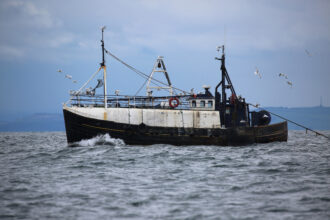
A bottom trawling boat is seen at sea. Credit: Open Seas/National Geographic Pristine Seas

Europe’s Trawlers Extract a Huge ‘Cost to Society’ in Bycatch and Carbon Dioxide

By Johnny Sturgeon

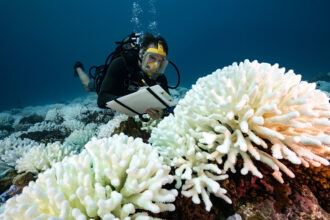
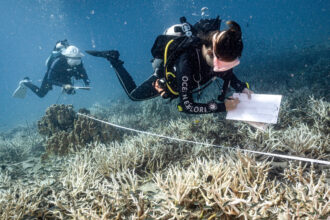
Researchers survey bleached corals around Koh Tao island in the southern Thai province of Surat Thani on June 14, 2024. Credit: Lillian Suwanrumpha/AFP via Getty Images

Sewage Is Threatening Coral Reefs Around the World, Even in Marine Protected Areas

By Teresa Tomassoni

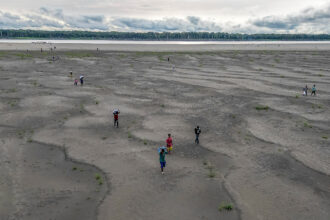
The 2024 El Niño in the Tropical Pacific, combined with human-caused warming, dried out vast tracts of the Amazon region, crushing livelihoods and displacing people, and also flipped some forests to release more carbon dioxide than they absorb and store, a “regime shift” in the Amazon carbon cycle. Credit: Luis Acosta/AFP via Getty Images

The Next El Niño Could Lock Earth Into a Hotter Climate

By Bob Berwyn

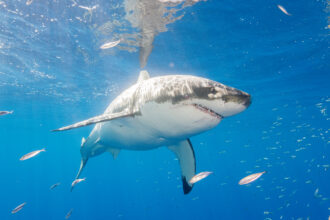
A great white shark is seen off the coast of Mexico’s Guadalupe Island. Credit: Dave J Hogan/Getty Images

Great White Sharks Are Overheating

By Johnny Sturgeon

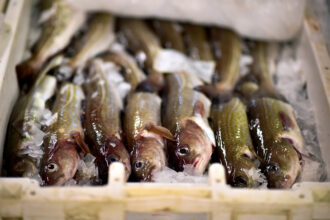
U.K. consumers have been warned to “completely avoid” all home-caught cod, a staple of the nation’s fish and chip shop industry. Credit: Jeff J. Mitchell/Getty Images

Britain’s Most Iconic Fish Nears Breaking Point

By Johnny Sturgeon

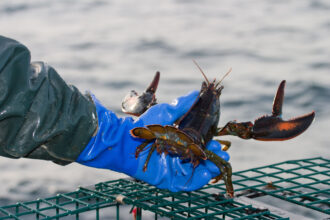
Researchers catch lobsters as part of long-term ecosystem survey in Maine. Credit: Gulf of Maine Research Institute (GMRI.org)

Warming Waters in the Gulf of Maine May Affect the Future of Lobsters

By Nicole Williams

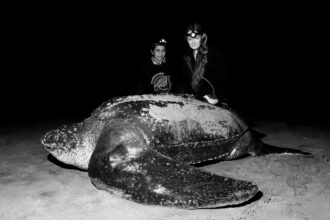
On March 20, a team of scientists from The Leatherback Project and Fundación Reina Laúd deployed the first satellite tag on an endangered leatherback sea turtle in Ecuador. Credit: Nikki Riddy (Photos taken with red light only under research permits from the Ministry of the Environment)

Scientists Deploy First Satellite Tag on a Leatherback Sea Turtle in Ecuador to Better Reveal Gaps in Ocean Protection

By Teresa Tomassoni

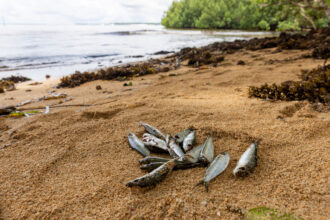
Thousands of dead fish have been washing ashore the eastern coast of New Ireland in Papua New Guinea since December after a toxic marine event. Credit: Sebastian Velasquez

Toxic Ocean Crisis in Papua New Guinea Sparks Mass Marine Die-Off and Public Health Emergency

By Teresa Tomassoni

The 24 new Amphipod species discovered in the Clarion-Clipperton Zone, a region the Trump administration is eyeing for deep-sea mining projects. Credit: National Oceanography Centre, Southampton

Scientists Discover a New Branch of Life in the Deep Sea

By Johnny Sturgeon

Native Hawaiian elder and activist, Solomon Pili Kahoʻohalahala, is calling for a ban on a prospective commercial deep sea mining industry. Credit: John Wolfsohn/Getty Images

‘We Live in One Ocean’: Native Hawaiian Activist Calls for Inclusion in Deep-Sea Mining Decisions

By Teresa Tomassoni

A commercial fishing crew member views their catch of pollock on March 7, 2021, in Newlyn, England. Credit: Hugh R Hastings/Getty Images

Warming Waters Threaten Seafood Supply

By Johnny Sturgeon

Polymetallic nodules found in the Pacific Ocean seabed are potato-sized, rock-like formations rich in metals such as manganese, nickel, cobalt and copper. Credit: William West/AFP via Getty Images

Trump Explores Deep Sea Mining in American Samoa

By Teresa Tomassoni

A worker removes sargassum from the shore of Playa del Carmen Beach in Quintana Roo, Mexico, on June 18, 2025. Credit: Elizabeth Ruiz/AFP via Getty Images

Why Beaches Are Swamped With Sargassum, the Stinky Seaweed Menace

Interview by Aynsley O’Neill, Living on Earth

A southern right whale swims with its calves in the waters of the South Atlantic Ocean on Oct. 5, 2022. Southern right whales are no longer reproducing at normal rates due to climate-induced changes in Antarctica. Credit: Luis Robayo/AFP via Getty Images

Southern Right Whales Are Having Fewer Calves; Scientists Say a Warming Ocean Is to Blame

By Teresa Tomassoni

Acropora corals stick out of the water during low tide on Nov. 27, 2021, in Tatakoto, French Polynesia. Credit: Alexis Rosenfeld/Getty Images

US Government Is Accelerating Coral Reef Collapse, Scientists Warn

By Johnny Sturgeon

Posts pagination

1 2 … 4 Next

Newsletters

We deliver climate news to your inbox like nobody else. Every day or once a week, our original stories and digest of the web's top headlines deliver the full story, for free.

Keep Environmental Journalism Alive

ICN provides award-winning climate coverage free of charge and advertising. We rely on donations from readers like you to keep going.

Donate Now
Inside Climate News
  • Science
  • Politics
  • Justice & Health
  • Fossil Fuels
  • Clean Energy
  • Home
  • About
  • Contact Us
  • Whistleblowers
  • Privacy Policy
  • Charity Navigator
Inside Climate News uses cookies. By continuing to use this site, you accept this policy. Learn More