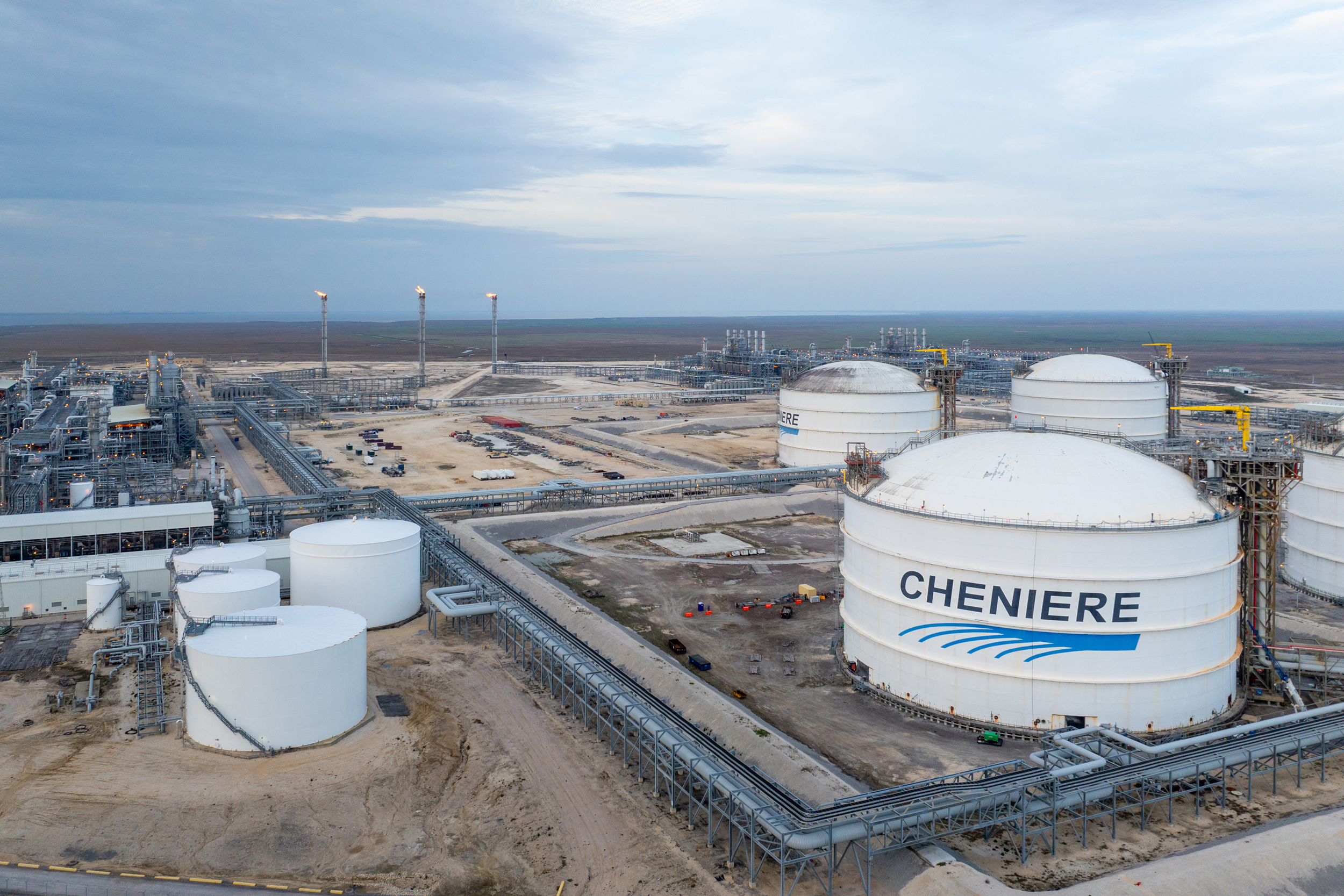


Cheniere Energy, the largest producer and exporter of U.S. liquefied natural gas, received $370 million from the IRS in the first quarter of 2026, a payout that shipping experts, tax specialists and a U.S. senator say the company never should have received.
The money, reported in the company’s recently released annual financial report, was the sum of alternative fuel tax credits from 2018 to 2024 that Cheniere claimed for using LNG to power its tankers.
“As part of our ongoing effort to mitigate our emissions from our shipping transport operations, we primarily utilize the LNG that we produce at our terminals as transport fuel in our shipping vessel operations, serving as a substitute for diesel and heavy fuel oils, which have higher emission factors,” the company stated in its financial report.
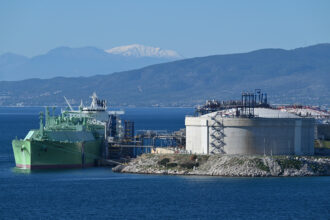
The company’s claim that LNG is an alternative fuel baffled shipping experts. Liquefied natural gas vessels or tankers are built to run on LNG that “boils off” or evaporates from their holds. If the boil-off gas wasn’t captured and used by the ships, it would have to be vented into the atmosphere, flared or re-liquefied back into LNG.
“It’s not an alternative fuel,” said Kirsten Sinclair Rosselot, an environmental performance analyst and consultant. Rosselot was the lead author of a 2023 study that assessed fuel use and emissions from LNG vessels. “It’s the fuel they’ve been using all along.”
President George W. Bush signed the alternative fuel excise tax credit into law in 2005. It incentivized the use of fuels other than gasoline and diesel for use in motor vehicles, but set no emissions requirements. The credit, which expired in 2024, applied to the use of LNG and other alternative fuels “in a motor vehicle or motorboat.”
The alternative fuel tax law doesn’t define what constitutes a motorboat; however, federal shipping regulations define it as a vessel no more than 65 feet long. LNG tankers typically extend nearly 1,000 feet.
“It just seems like a ridiculous argument. How the hell is a tanker a motorboat?” William Henck, a former IRS tax attorney, asked. “The IRS just gave away over $300 million for any or no reason and did it in the darkness,” Henck said. Cheniere Energy declined to comment for this article. The IRS did not respond to a request for comment.
Given the size of the refund, Henck said the IRS likely needed approval from the U.S. Congressional Joint Committee on Taxation. Committee staff declined to comment..
U.S. Sen. Jeff Merkley (D-Ore.), who is not a member of the committee, said the tax refund is an example of President Donald Trump rewarding the fossil fuel companies that bankrolled his re-election.
The payment is “the latest in a pattern of pay-to-play donations leading to favorable treatment by the Administration,” Merkley said in a written statement.
Cheniere Energy CEO Jack Fusco attended a private meeting at Mar-a-Lago in April 2024, when then-presidential candidate Donald Trump encouraged oil and gas executives to donate $1 billion to his campaign, a story first reported by the Washington Post. Trump said the money would more than pay for itself in saved taxes and reduced regulations, The Post reported.
Two months later, Fusco donated nearly $500,000 to a Trump-affiliated political action committee and the Republican National Committee, according to Federal Election Commission data.
Cheniere’s financial report disclosing the tax refund came the same day Merkley, as ranking member of the Senate Budget Committee, released a report that concluded fossil fuel companies will reap $3.5 billion in annual benefits from the One Big Beautiful Bill that Republicans passed in July.
“This is just another example of Republicans raiding the Treasury to reward billionaires at the expense of hardworking Americans,” Merkley said of Cheniere’s tax refund.
Lukas Shankar-Ross, deputy director of the climate and energy justice program at Friends of the Earth, who has been tracking Cheniere’s tax credit claim, said it seemed to be a clear case of repayment “based on a very tortured and dubious reading of tax law.”
“The Mar-a-Lago quid pro quo strikes again,” Ross said.
The White House declined a request for comment.
A 2025 Inside Climate News investigation calculated that the tax credit could be worth more than $140 million, or roughly double that figure, if Cheniere also claimed tax credits for fuel used during return voyages to LNG export terminals.
Ross said he worries that other LNG export companies may now file similar retroactive tax-credit claims or lobby to have the alternative-fuel tax credit reinstated.
“Other companies might want a taste now, too,” Ross said. “There’s a serious risk that this tax credit could be brought back from the dead.”
About This Story
Perhaps you noticed: This story, like all the news we publish, is free to read. That’s because Inside Climate News is a 501c3 nonprofit organization. We do not charge a subscription fee, lock our news behind a paywall, or clutter our website with ads. We make our news on climate and the environment freely available to you and anyone who wants it.
That’s not all. We also share our news for free with scores of other media organizations around the country. Many of them can’t afford to do environmental journalism of their own. We’ve built bureaus from coast to coast to report local stories, collaborate with local newsrooms and co-publish articles so that this vital work is shared as widely as possible.
Two of us launched ICN in 2007. Six years later we earned a Pulitzer Prize for National Reporting, and now we run the oldest and largest dedicated climate newsroom in the nation. We tell the story in all its complexity. We hold polluters accountable. We expose environmental injustice. We debunk misinformation. We scrutinize solutions and inspire action.
Donations from readers like you fund every aspect of what we do. If you don’t already, will you support our ongoing work, our reporting on the biggest crisis facing our planet, and help us reach even more readers in more places?
Please take a moment to make a tax-deductible donation. Every one of them makes a difference.
Thank you,

Phil McKenna
Reporter, Boston
Phil McKenna is a Boston-based reporter for Inside Climate News. Before joining ICN in 2016, he was a freelance writer covering energy and the environment for publications including The New York Times, Smithsonian, Audubon and WIRED. Uprising, a story he wrote about gas leaks under U.S. cities, won the AAAS Kavli Science Journalism Award and the 2014 NASW Science in Society Award. Phil has a master’s degree in science writing from the Massachusetts Institute of Technology and was an Environmental Journalism Fellow at Middlebury College.