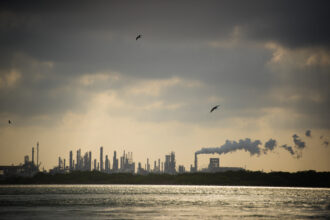


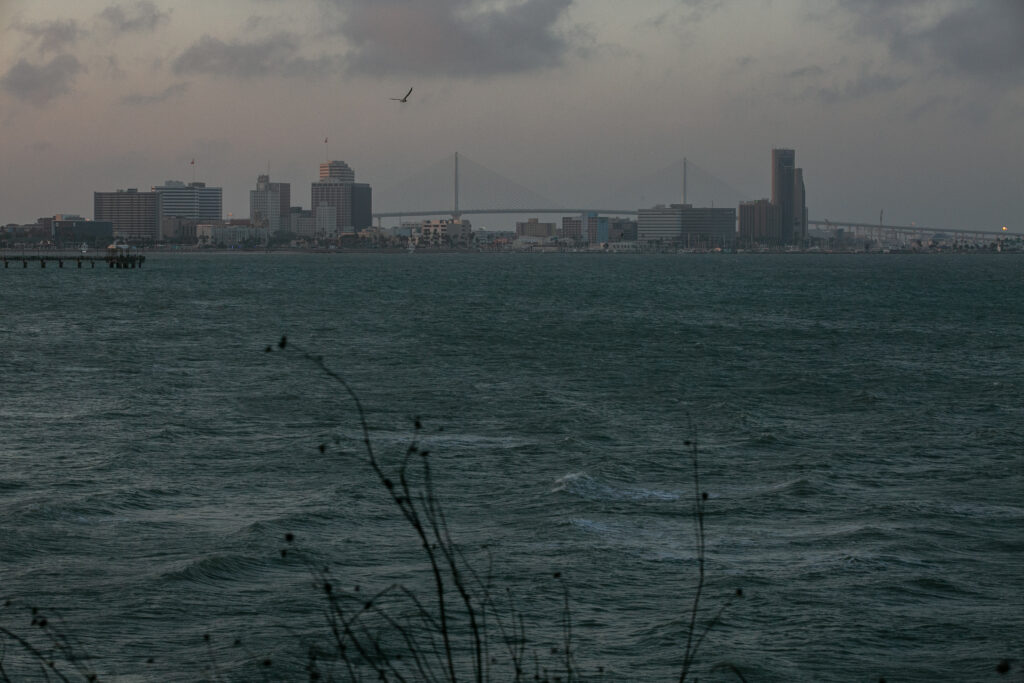
CORPUS CHRISTI, Texas—The imminent depletion of water supplies in Corpus Christi threatens to cut off the flow of jet fuel to Texas airports and other oil exports from one of the nation’s largest petroleum ports, triggering potential shockwaves through energy markets in Texas and beyond.
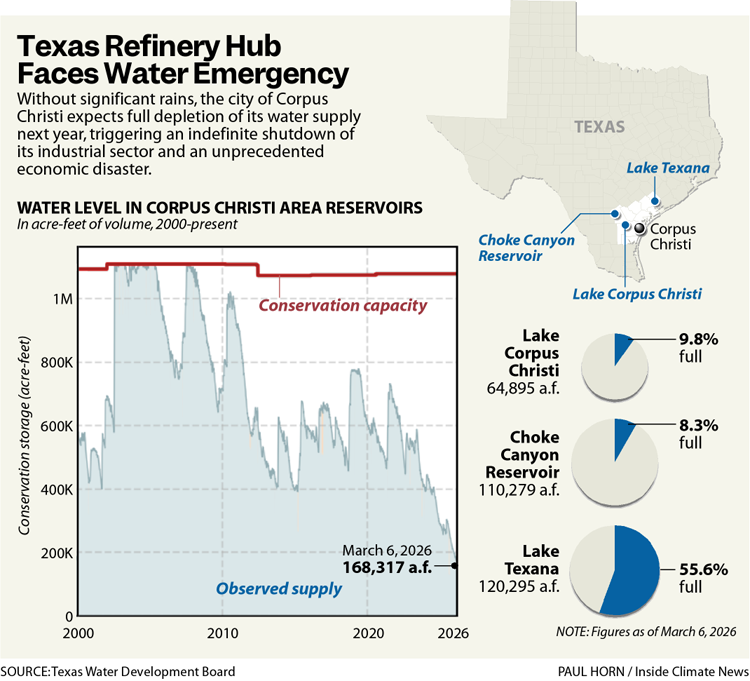
Without significant rainfall, Corpus Christi is headed for a “water emergency” within months and will reach a point next year where city supply can no longer meet demand, according to the city’s website. At that critical point, the city would be unable to deliver water to its customers—a potential catastrophe for Corpus Christi and beyond, experts and people knowledgable about the city’s water system say.
“The impacts are going to be felt tremendously through the state, if not internationally,” said Sean Strawbridge, former CEO of the Port of Corpus Christi Authority, the nation’s top port for crude oil exports, in a 40-minute interview Thursday. “This should be no surprise to anybody. We were talking about this over a decade ago.”
Other current and former officials, alarmed at what they call a lack of preparations, have suggested the potential for an economic crisis involving mass layoffs, disruption of fuel supplies and billions of dollars in emergency spending to avoid an evacuation of the city.
Strawbridge, who now lives in Houston, laid the blame on city leaders, citing “their lack of experience, their lack of knowledge, their lack of recognizing the risks” in a bumbling, decade-long endeavor to build a large seawater desalination plant that would veer the region off its clear course towards calamity.
“They’ve found themselves in quite a dire predicament as a result of those poor decisions,” Strawbridge said. “Time is up.”
A spokesperson for Corpus Christi Mayor Paulette Guajardo declined interview requests, citing “prior commitments,” and did not respond to follow-up questions. City manager Peter Zanoni also did not respond to questions. Instead, Corpus Christi public information manager Robert Gonzales provided an emailed statement.
“The water shortage in the Coastal Bend is the result of a historic five-year drought,” it said. “Currently, the City of Corpus Christi has $1 billion in City Council-approved and funded water projects underway to address our water needs. The City remains committed to ensuring water security for the more than 500,000 residents and our commercial and industrial customers.”
In an emailed statement on Monday, Gonzales called the story “an incomplete and alarmist narrative.”
Depletion of this region’s reservoirs would lead to “controlled depression” for the local economy, “mass unemployment” and “industrial total shutdown,” according to a two-page report by Don Roach, former assistant general manager of the San Patricio Municipal Water District, which supplies many of the region’s large industrial water users.
That includes refineries operated by Flint Hills Resources, Valero and Citgo that provide jet fuel to Texas airports and meet much of the state’s daily demand for gasoline.
“This waiting disaster is under the radar for the rest of the state,” said Roach, who worked 20 years at the water district and retired in 2014. “We hear nothing from the Texas politicians about the seriousness of the situation or any state plan to mitigate it.”
He no longer had access to current water data and contracts, he stressed, but produced the report based on his own knowledge. It said the costs of trucking in emergency water “would bankrupt many local small businesses and low-income households” while state emergency managers would need billions of dollars to “build emergency temporary pipelines or subsidize desalination barge rentals to prevent a total evacuation of the city.”
Strawbridge, a former director of the Port of Long Beach, said Roach’s assessment was “spot on.”
Kara Rivas, a spokesperson for Flint Hills Resources, which delivers jet fuel via pipeline from its Corpus Christi refinery to airports in Dallas and Austin, said, “We are doing everything we can to minimize our water use and diversify our water resources to avoid disrupting our operations.”
Flint Hills is developing a project to use treated effluent from a wastewater treatment plant to meet up to 15 percent of its water demand. The refinery consumes about 0.55 barrels of water per barrel of crude oil, Rivas said, a 29 percent reduction since 2010.
“We are focused on working with local authorities on finding ways to meet the region’s immediate and long-term water needs,” she said. “This is a challenge that requires leadership.”
“No Time to Panic”
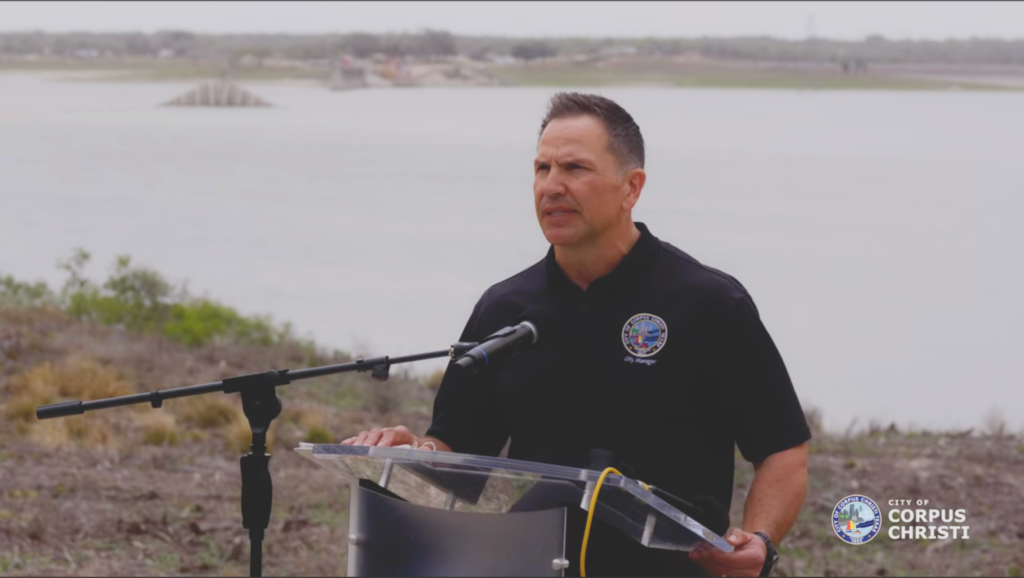
Zanoni, the city manager who has overseen Corpus Christi’s descent toward water depletion since 2019 and receives a $400,000 salary, rejected notions of imminent disaster during a press conference Thursday, when Lake Corpus Christi, one of the city’s main reservoirs, dropped below 10 percent. The press conference took place three days after Inside Climate News asked the city for comment about the impending water crisis.
“I think we are going to get through this,” he told TV cameras as he stood before the dwindling remnants of the lake. “We have confidence in what we’re doing. This is no time to panic.”
Zanoni, who holds a master’s of public administration from Florida State University, said the city had “worked tirelessly over the past months to bring everything that we humanly and possibly could to forego what could be this supply and demand issue.”
“Now we’re going to focus, with the City Council and the region, on being prepared in case supply doesn’t meet demand,” he said.
“The best-case scenario, that assumes some level of rain, has this lake here going to about the early fall,” said Zanoni, who indicated that the summer months would give the city enough time to boot up its portfolio of new groundwater water projects.”
James Dodson, a former director of Corpus Christi’s water department who retired this year as a private consultant and was involved in several of those projects, disagreed. He said residents and officials “are crazy not to be panicking.”
“It’s the very worst scenario that I’ve ever seen,” said Dodson, who oversaw a historic expansion of Corpus Christi’s water supply in the 1990s. “It’s going to be an economic disaster.”
For years, he said, the city dismissed repeated opportunities to develop groundwater import projects as it maintained a singular and fruitless focus on desalination. That includes projects that the city only recently scrambled to get started. Dodson doubted any will materialize in time.
“They’ve been kicking the can down the road for a long time and they’ve finally run out of road,” said a current regional water official who requested anonymity to preserve a working relationship with the city. “They’re looking at projects to do that they should have done five, six, seven years ago.”
The last hope to avert disaster, the official said, was a 20- to 30-inch rainfall.
“It would basically have to be a hurricane,” he said.
A spokesperson for Texas Gov. Greg Abbott, Andrew Mahaleris, didn’t address specific comments about an impending water catastrophe or disruption of the state economy. In an emailed statement, he said: “Corpus Christi is an important economic driver not only for Texas but also the nation. The State of Texas has made significant investments into ensuring the Corpus Christi area has the water resources it needs to serve citizens and industry alike.”
He added that the governor “will continue working with the legislature to ensure Texans have a safe, reliable water supply for the next fifty years.”
“I Wouldn’t Say That It’s a Disaster”
Mere months remain, according to Corpus Christi’s online water dashboard, until the city enters a “Level 1 Emergency,” which begins 180 days from projected depletion of water supplies. Functional failure of the water system, or “dead pool,” will occur before total depletion.
In a level one water emergency, the city’s plans call for an immediate 25 percent curtailment of water consumption. But city planners are only beginning to discuss what that would even look like and still haven’t determined how they would implement it.
“We can’t close and open everyone’s valves,” said Nick Winkelmann, interim chief operating officer of Corpus Christi Water, in an interview at City Hall last week. “One way to enact water restrictions is through pricing.”
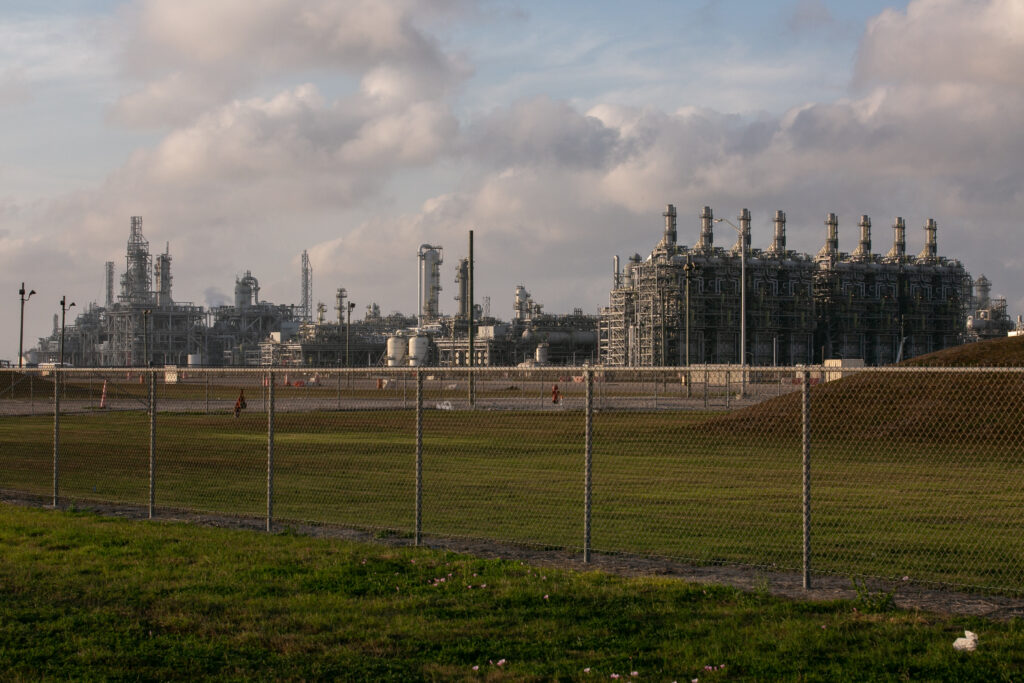
The region’s largest industrial users, which collectively consume the majority of the region’s water, remain exempt from emergency curtailment. These multi-billion-dollar refineries, petrochemical plants and liquified natural gas facilities are built to run at a steady rate and can’t simply throttle down production in accordance with water availability. They consume large volumes of water primarily in cooling towers to prevent excessive heating and explosions.
The city also may enact across-the-board, pro-rata curtailment at will, said Winkelmann, who assumed his role last September when the city’s former water director, Drew Molly, resigned days before the City Council pulled the plug on its long-running desalination project. “That will have an effect on all our customers.”
For years, local business leaders insisted desalination was Corpus Christi’s key to overcoming the water limitations that had historically plagued it on this semi-arid coastline. Massive desalination plants, the first of their kind in Texas, were supposed to kick off an era of abundant water, financial prosperity and limitless economic expansion.
Instead, the plan drove this region to the precipice of ruin.
“It has not gone as smoothly as it should have,” said Bob Paulison, the director of the Coastal Bend Industries Association and an architect of the desalination project. “There are a lot of reasons for why that happened.”
He said he worked on desalination for 12 years, but the projects got bogged down by political fights, administrative processes, the COVID pandemic and “a tug of war which has resulted in very slow progress.”
“I wouldn’t say that it’s a disaster,” he said of the current situation, expressing faith that the city would complete new water projects before supplies run out. It was “too early” to assess when that could happen, he said.
Presented with Roach’s report, Paulison expressed a longstanding respect for the veteran water manager, but said, “It looks like it’s very dire, more dire than we’ve been looking at.”
“We’re relying on the model that the city has put together,” Paulison said.
Regarding a potential shutdown of the entire refining and petrochemical complex, he said, “that could certainly shut down at some point, but we don’t see that happening in the early stages.”
Asked about plans to develop alternative jet fuel supplies for Texas airports in the case of a shutdown, Paulison said, “I’m sure that someone somewhere is working on that.”
Charles McConnell, a former assistant energy secretary with the Obama administration, wondered why concrete plans hadn’t been prepared.
“Did it take them all the way to yesterday to figure out they’re going to run out by the end of the year?” he said. “That’s pretty pathetic.”
McConnell, who now teaches at the University of Houston, doubted that a shut down of Corpus Christi’s industrial sector would have acute or long-lasting impacts beyond Texas. New producers would fill the gap, while new pipelines and supply chains would bypass the city.
“It’s a surprise to me that none of those refineries and industries down there have their own desal plants,” said McConnell, who worked 31 years for the chemical manufacturer Praxair in Houston. “They’re using municipal water, for Christ’s sake!”
Rapid Expansion Followed the Shale Boom
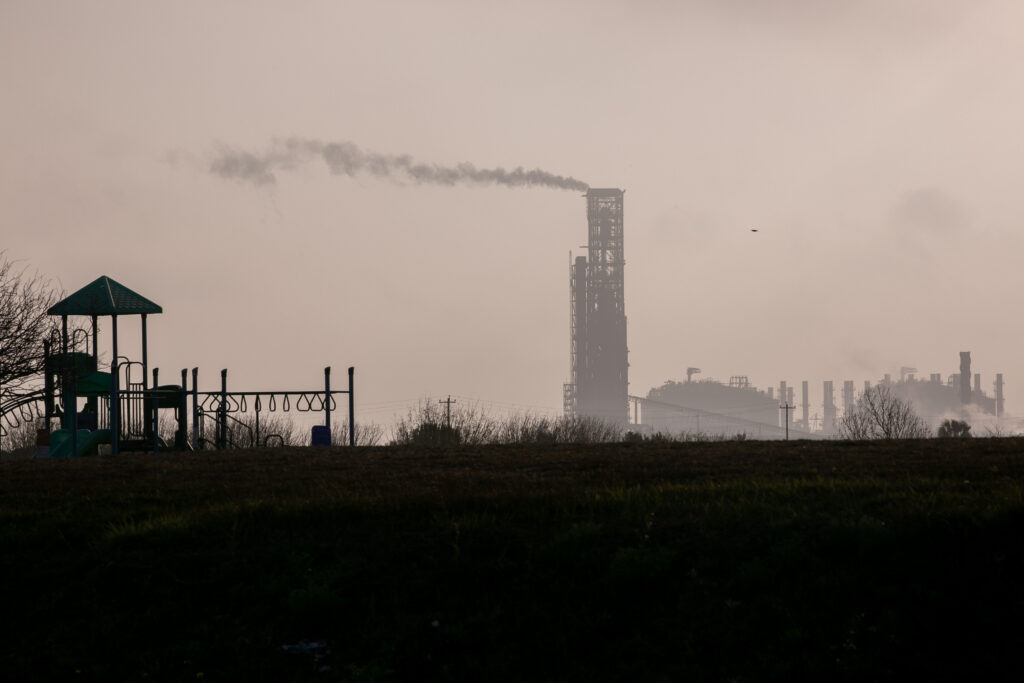
The roots of this situation stretch back more than a decade, to the period of rapid downstream industrial expansion that followed the shale revolution in the oilfields of Texas. Strawbridge joined the Port of Corpus Christi Authority in 2015, as a surge of major industrial projects sought to build in the area. Even then, Strawbridge said, everyone knew Corpus Christi needed more water.
In January 2016, Abbott traveled to Israel, where he toured the world’s largest seawater desalination plant and met with Israeli officials to discuss desalination.
Later that year, an industry group called H2O4Texas, with sponsors including Dow, Chevron and Marathon Oil, hosted an event in Corpus Christi.
“They were basically saying because of the growth in the Coastal Bend, we were gonna need desalination,” said Isabel Araiza, then a professor at Texas A&M University-Corpus Christi, who attended the event.
That was the first that Araiza, a Corpus Christi native with a Ph.D. from Boston University, had heard of desalination. She said she was at the meeting for a different reason, finding it strange how many business and political leaders were there.
The oil and gas industry wanted to build enormous projects in the region, processing oil and gas from Texas’ shale fields into myriad fuels, chemicals and plastics before loading them onto tankers for export.
In March 2017, then-city manager Margie Rose sent a letter to ExxonMobil, the world’s largest private oil company, that said, “because the City aggressively protects water resources for the future by implementing a matrix of supply strategies, we feel that we have sufficient water supplies to meet your needs.”
Six days later the city requested funding from the Texas Water Development Board to study feasibility and do preliminary design of a seawater desalination plant.
Around that time, Strawbridge said, “it became very clear to the port authority that there was a difference of opinions as to how much water was available and how much would be needed to continue to attract large industrial investors.”
“The city felt that it had enough water to last, based on its forecast, until 2040,” Strawbridge said. “We, the port authority, had a very different view of what that demand curve looked like.”
That’s when the port began developing plans for its own desalination plant, he said.
In 2018, a new, interim city manager, Keith Selman, promised another large volume of water to Steel Dynamics, which then built a steel mill in the area.
The Emerging Solution: Four Desalination Plants
That same year, Corpus Christi created a program exempting the region’s largest industrial water users from water curtailment restrictions during drought for a fee of $0.25 per 1,000 gallons. The city said it would use the money to fund the development of a new water source. The city’s water reservoirs were two thirds full at the time.
Gonzales, the city public information officer, said the industrial water users are subject to mandatory State 1, 2, and 3 restrictions of the city’s Drought Contingency Plan, but described the Drought Surcharge Exemption Fee as “a payment structure, not a regulatory waiver.”
“To claim they are ‘exempt’ from curtailment is a fundamental misinterpretation of the city code,” he said.
In 2019, the city’s staff presented the City Council with a plan to build a seawater desalination facility. Exxon had taken up the city’s offer for water and planned to build a massive plastics plant called Gulf Coast Growth Ventures in partnership with Saudi Arabia’s national oil company. It would be the largest water user in the region, consuming as much as all city residents combined.
“Large increases in water demand are projected to occur in 2022,” said a presentation authored by Paulison and given to the City Council by then-Assistant City Manager Mark Van Vleck. “To meet expected water demand, we need to move forward with the procurement of a seawater desalination plant now.”
The plant would produce 10 million gallons per day, cost $140 million and take two years to build, the presentation said. It needed to begin supplying water by the start of 2023. The City Council voted unanimously to move forward.
By 2020 the size of the proposed plant had doubled. “We were recognizing that we’re going to need more water,” said Roland Barrera, a city council member who has served since 2018. “If we want to expand our economy, then we have to recognize that’s the way to go.”
As the scale of the situation came into focus, the city proposed a second desalination plant, and the port also proposed two.
Sounding the Alarm
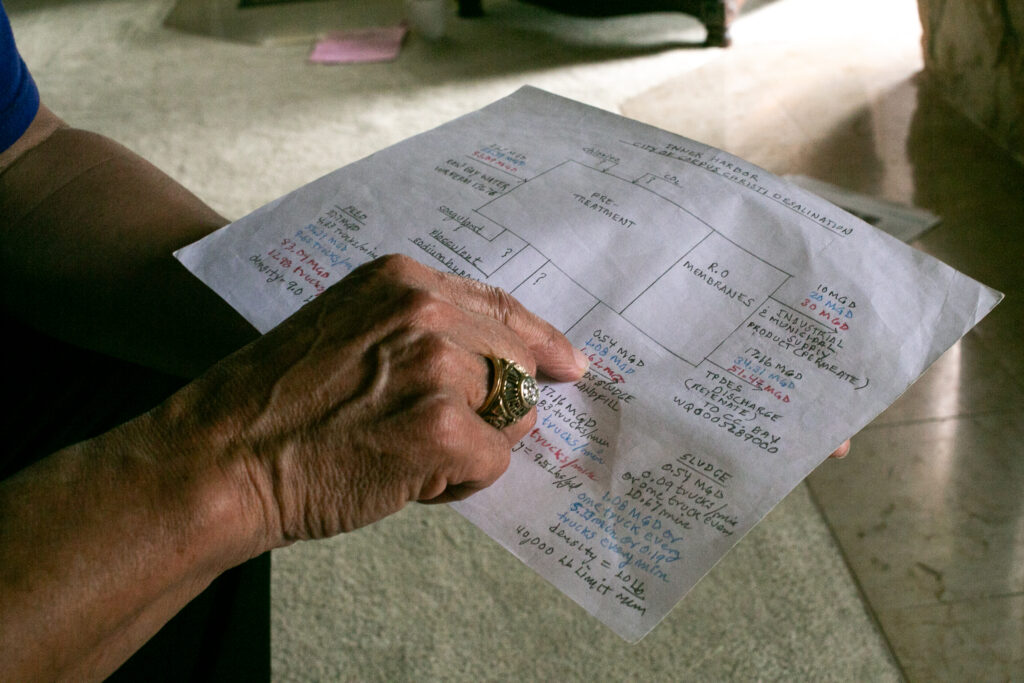
That’s when Encarnacion Serna, a retired chemical plant operations manager, found out about plans for one of those plants just up the shore from his waterfront home on Corpus Christi Bay.
Serna, an engineer who had worked on reverse osmosis water systems for Valero and Occidental Chemical, reviewed the project’s application. What he saw, he said, astounded him: flimsy assumptions, unrealistic estimates and missing information.
A facility of that scale, he knew, would require railcars full of pretreatment chemicals, create a mountain of sludge waste every day and consume a tremendous amount of electricity. But he didn’t see serious plans for any of that, he said.
He dug deeper into the desalination boom and quickly saw what was going on: Politicians and businessmen had oversold their water supply, he said, and were scrambling for more as shortages approached. But none of them had any idea what they were doing, Serna remembered thinking as he reviewed the applications.
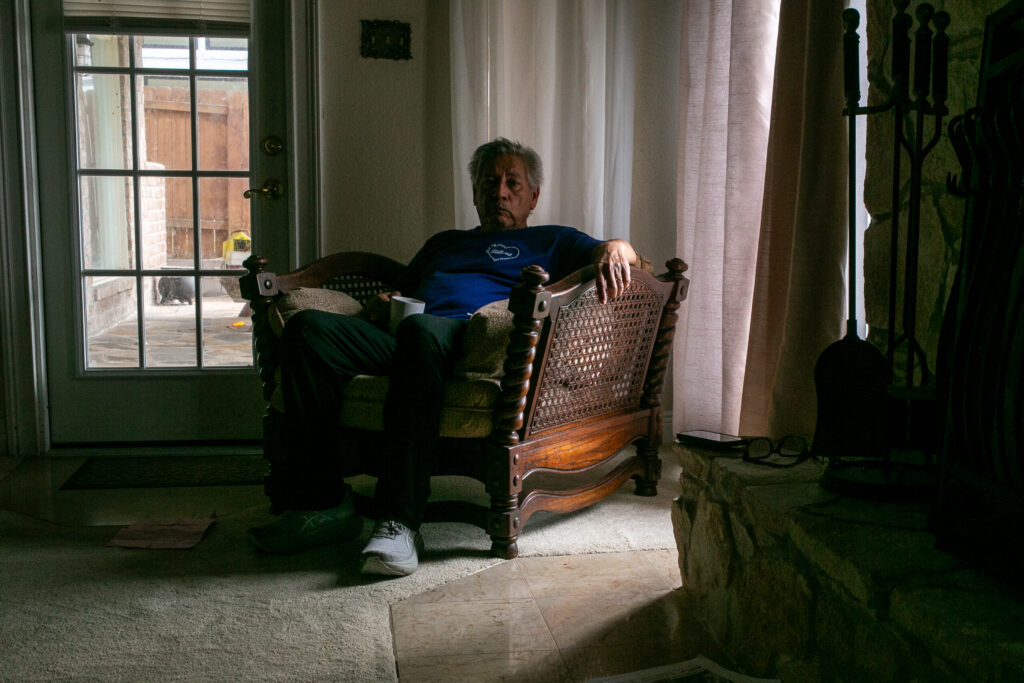
“I’ve been trying since 2020 to let them know how catastrophic this is going to be,” he said in an interview at his home. “They’ve acted with a profound ignorance.”
Serna, a father of four who worked his whole life at chemical plants in Texas, didn’t think any of the proposals would produce as much freshwater as projected, come online as quickly as expected or cost as little as any of the applications stated. These were not going to solve the crisis that officials had teed up, he believed.
In calls, emails and public comments to city and port officials, Serna raised the alarm at what he saw unfolding. He felt brushed off and soon stopped receiving responses.
Serna knew that chemical plants and refineries can’t just throttle down water consumption at will. The multi-billion-dollar facilities are meant to operate consistently at a steady state with a set inflow of water. Changing that balance raised risks of explosions. The whole region was skidding toward catastrophe, Serna thought at the time, with no realistic solution in sight.
In 2022, Gulf Coast Growth Ventures, the Exxon-Saudi partnership, began to draw water while the desalination facility meant to supply it still didn’t even exist on paper.
Strawbridge, then CEO of the Port of Corpus Christi Authority, insisted a private desalination operator should build and run a large facility that could sell its water to the city. But the city wanted to operate its own. Strawbridge considered the location of the city’s project unsuitable. Both sides said the other took steps to undermine the project.
Meanwhile, veteran local scientists rejected environmental studies from developers claiming the massive discharge of brine from the plants wouldn’t turn the coastal bays and estuaries into hypersaline wastelands.
“I’ve read the engineering studies,” said Paul Montagna, an endowed chair at the Harte Institute for Gulf of Mexico Studies at Texas A&M University in Corpus Christi, in a 2022 interview with Inside Climate News. “And I just don’t get it.”
Environmentalists organized against the plants. Araiza, the college professor who attended the first desalination meeting, had become a leader among groups that were fighting desalination as a means to resist the onslaught of petrochemical projects in their area, which they saw as wealthy, outside interests swooping in to hijack their resources, institutions and environment.
“They really thought it was just going to be a yes,” she said from her office at Del Mar College, beneath a poster of Che Guevara. “I think we helped slow things down.”
Barrera, the City Council member, started to feel uneasy as controversy and constant turnover on the council seemed to leave them unable to push the project forward.
“I’ve been accused of being a fearmonger,” he said in an interview at his office in downtown Corpus Christi. “Now everybody’s scared.”
It All Falls Apart
Strawbridge took an entourage of about 30 Texas lawmakers, businessmen and lobbyists to Israel in November 2022 to visit desalination facilities “to see that it is possible to solve for our water issues,” he said.
Strawbridge encouraged the lawmakers to support the port’s development of a private desalination plant, which he said was urgently needed to cover for the failures of the city. But he drew public outrage from city officials when he applied for state funding for a facility that struck them as a competitor to theirs.
Strawbridge said the trip to Israel ultimately led the Texas lawmakers to pass legislation in 2023 that created the state’s $1 billion water fund.
But the trip, not disclosed to the public at the time, ultimately ignited a scandal that led to Strawbridge’s resignation when an investigation by KRIS 6 revealed that the Port, which is not a taxing entity, spent more than $200,000 taking the crew to Israel. The station described “a pattern of lavish spending” on that trip and in prior port activities.
Strawbridge earned $750,000 in the prior year and had expensed an average of $10,000 per month on food and alcohol, including parties. One day later, Strawbridge resigned, but maintained that all expenses were incurred properly through his work representing the Port.
In an interview, he characterized the report and scandal as “a hit job” by political opponents and “an effort to hasten my departure from the Port.”
“They used the expenses from the Israel trip as a basis for smearing my good name, although the trip ultimately proved fortuitous for the state and its water funding,” Strawbridge said. “Ultimately an independent audit of the previous five years of my expenses found absolutely no irregularities or departures from policy. But of course that wasn’t covered by KRIS 6.”
That year, 2023, was the hottest on record in Texas. Water levels in Corpus Christi reservoirs continued to plummet as the drought intensified. Desalination had moved to the center of Corpus Christi’s public conversation. Local politicians spoke for or against it while activists flocked to city council meetings and permit hearings.
“Blessed be the environmentalists,” said Serna, the retired engineer. “But 90 percent of them don’t know what the hell they’re talking about.”
In January 2024, Corpus Christi City Council produced a new cost estimate for its proposed desalination plant of about $550 million to produce 30 million gallons of freshwater per day.
“These numbers are ridiculously low, fraudulent and deceitful,” wrote Serna in an email to city officials.
By that time, Serna was angry. The subject line of his email read: “The Legacy of the Imbeciles.”
Where was the city even getting this cost estimate from, he asked, if it “does not have engineering and construction drawings.”
“All the city has at this time are deficits and bills incurred by lunatics in the millions of dollars already spent in the pursuit of this Scam project with nothing tangible on hand yet,” Serna wrote.
Later that year, a new cost estimate put the project at nearly $760 million. Another estimate, in July 2025, said $1.2 billion.
Two months later, Corpus Christi City Council, dominated by newly elected members and unable to stomach the cost, voted to cancel the project after a rancorous 12-hour public meeting that broke repeatedly into yelling from the audience. By then, the Port of Corpus Christi Authority also handed off one of its desalination projects to the nearby Nueces River Authority and mothballed another.
Corpus Christi city leaders expressed optimism over plans to quickly pipe in groundwater from the Evangeline Aquifer about 20 miles away. But when users of that water, like the small city of Sinton, requested in February 2026 that an administrative law judge review Corpus Christi’s groundwater permits, hope faded for a timely solution, other than hurricane-scale rainfall.
“Let the shit hit the fan,” said Serna. “Let dog eat dog.”
What does he think will happen to Corpus Christi? In time, he said, the refineries and chemical plants will probably build their own water projects, somehow, and possibly restart their facilities that they will have to mothball in the meantime.
For residents, he said, life might be like it used to be for him, 70 years ago, as a boy in the Rio Grande Valley, when he would hang plastic jugs on mesquite branches and carry them on his shoulder to ask nearby companies for water.
“This is the legacy of the imbeciles,” he said.
In an emailed statement following publication of this report, Gonzales listed the projects the city is pursuing to produce more water and alleviate the crisis.
He said that the city is drilling emergency water wells along the Nueces River. Experts interviewed don’t expect those wells to produce significant volumes before the city projects it may run out of water by early fall.
Gonzales also said the city was pursuing its Evangeline Groundwater program. Dodson, who was involved with that project, said the city repeatedly dismissed it for years until 2025 when the situation became dire. A challenge to that project’s permits was filed in February by the city of Sinton, which said “the transport and production of groundwater representing more than four times the total current production of all groundwater users in San Patricio County, is likely to result in unreasonable water level declines.”
Gonzales also said that the Corpus Christi City Council, in February, approved plans for a seawater desalination plant that the city projects will begin producing potable water in two years.
CORRECTION: A previous version of this article incorrectly said that Bob Paulison, director of the Coastal Bend Industries Association, was a member of the Texas Chemistry Council. The article also described him as the architect of Corpus Christi’s desalination project, when it should have said that he was an architect of the project.
About This Story
Perhaps you noticed: This story, like all the news we publish, is free to read. That’s because Inside Climate News is a 501c3 nonprofit organization. We do not charge a subscription fee, lock our news behind a paywall, or clutter our website with ads. We make our news on climate and the environment freely available to you and anyone who wants it.
That’s not all. We also share our news for free with scores of other media organizations around the country. Many of them can’t afford to do environmental journalism of their own. We’ve built bureaus from coast to coast to report local stories, collaborate with local newsrooms and co-publish articles so that this vital work is shared as widely as possible.
Two of us launched ICN in 2007. Six years later we earned a Pulitzer Prize for National Reporting, and now we run the oldest and largest dedicated climate newsroom in the nation. We tell the story in all its complexity. We hold polluters accountable. We expose environmental injustice. We debunk misinformation. We scrutinize solutions and inspire action.
Donations from readers like you fund every aspect of what we do. If you don’t already, will you support our ongoing work, our reporting on the biggest crisis facing our planet, and help us reach even more readers in more places?
Please take a moment to make a tax-deductible donation. Every one of them makes a difference.
Thank you,

Dylan Baddour
Reporter, Austin
Dylan Baddour covers the energy sector and environmental justice in Texas. Born in Houston, he’s worked the business desk at the Houston Chronicle, covered the U.S.-Mexico border for international outlets and reported for several years from Colombia for media like The Washington Post, BBC News and The Atlantic. He also spent two years investigating armed groups in Latin America for the global security department at Facebook before returning to Texas journalism. Baddour holds bachelor’s degrees in journalism and Latin American studies from the University of Texas at Austin. He has lived in Argentina, Kazakhstan and Colombia and speaks fluent Spanish.