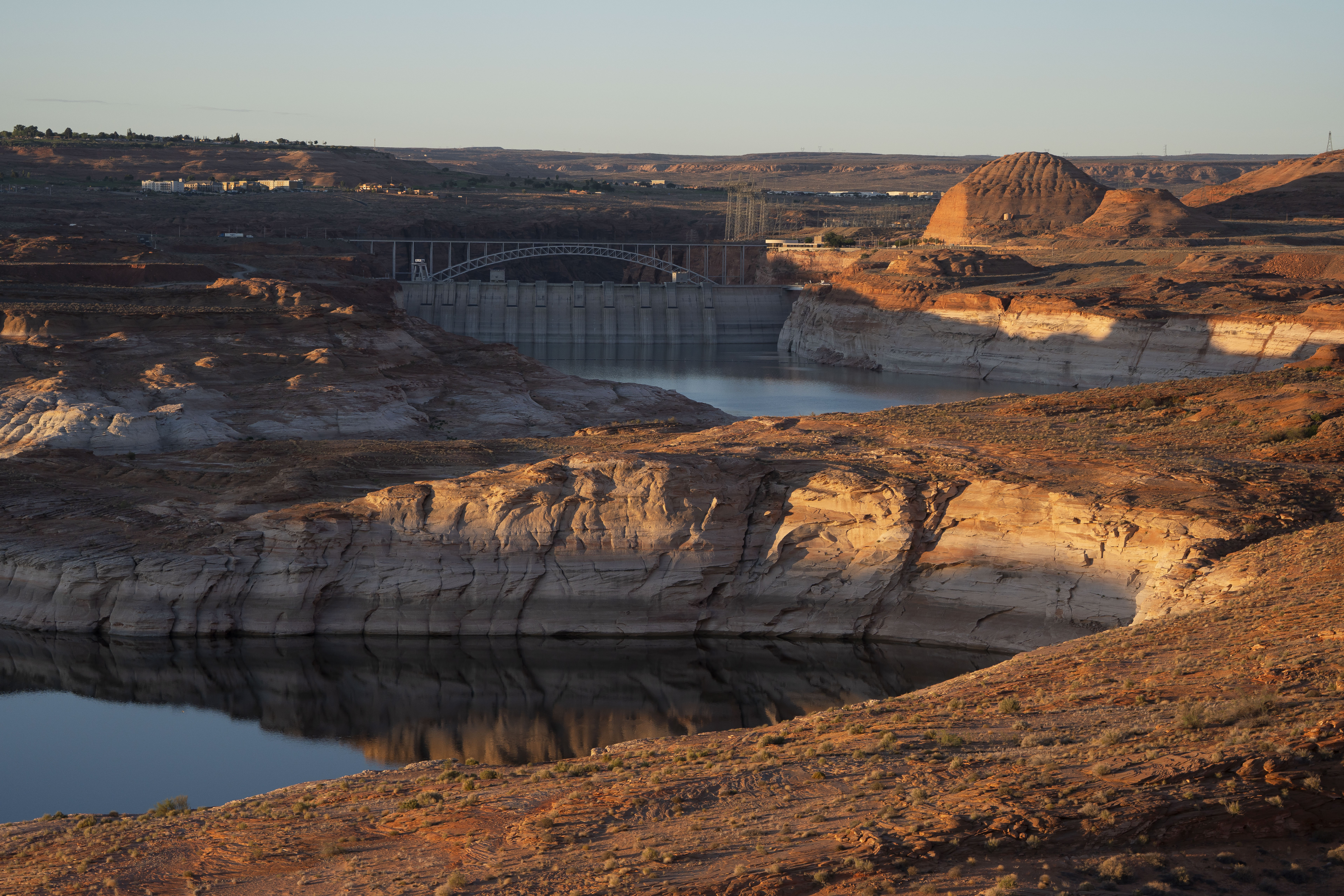


The sluggish Colorado River negotiations have entered a new phase: Long and fiery letter writing.
Politicians, water negotiators and environmental groups recently submitted hundreds of pages of comments on the Interior Department’s playbook for how to manage the waterway. There are currently five possible options to deal with the river in the absence of a deal between the seven states in the basin.
The alternatives were published in January and could result in a variety of scenarios, ranging from significant water reductions in lower basin states to creating new incentives for states to conserve water.
And after the states missed two deadlines for reaching an agreement themselves on how to share and conserve the water, it’s becoming increasingly likely the federal government will piece together its own plan before the current guidelines expire in August.
Public comment on the Interior Department’s menu of alternatives ended March 2. And leaders from both the upper and lower basins are blasting them.
In a 45-page letter, Colorado’s water negotiator said the federal government lacks the legal standing to enact the alternatives it’s put on the table.
The state is generally calling for a plan that forces states in the lower basin to cut back more of their water use in the face of drought.
“The Colorado River has changed dramatically over the last two decades, and our operating rules need to change with it,” Colorado River Commissioner Becky Mitchell said in a statement. “The current rules have not done enough to protect Lake Powell and Lake Mead, and it’s clear that a future management framework must better respond to today’s reality.”
Mitchell said the river is nearing a crisis point. She wrote that under current operating guidelines for the two reservoirs, which have been in place since 2007, Interior has been releasing water to the lower basin “based on demand, largely ignoring worsening hydrology and dropping reservoir levels.”
Downriver in Arizona, leaders are also blasting the Interior’s list of proposals, saying they would result in disproportional and severe water cuts to the lower basin states.
The state’s Democratic congressional delegation said the cuts could hurt national security.
“Arizona’s agriculture, semiconductor and advanced manufacturing, aerospace and defense industries rely on the Colorado River,” the delegation wrote. “Reductions of the magnitude contemplated in the (feds’ playbook) would reverberate across rural communities and throughout the domestic food supply chain.”
The lower basin states of California, Arizona and Nevada are calling for mandatory water cuts in the upper basin states of Colorado, New Mexico, Wyoming and Utah.
Leaders in those states have countered that they already enact water conservation measures during times of drought.
This story is funded by readers like you.
Our nonprofit newsroom provides award-winning climate coverage free of charge and advertising. We rely on donations from readers like you to keep going. Please donate now to support our work.
Donate NowA coalition of conservation groups, including The Nature Conservancy and Trout Unlimited, also weighed in on Interior’s draft proposals. They wrote that stabilizing the Colorado River in the face of drought “depends on early, proactive management; flexible and coordinated use of storage; meaningful Tribal participation; and integration of ecological integrity and mitigation into operational considerations.
“Frameworks that delay action, rely on rigid rules, or institutionalize emergency operations consistently perform worse under the hydrologic conditions the Basin is most likely to face.”
The Interior Department plans to review the public comments and identify which option it prefers to manage the reservoirs sometime this spring.
Environmental groups have warned negotiators in the seven states against taking their fight to court, saying that path could hold up conservation plans that are needed to protect places like the ecosystem of the Grand Canyon.
This story is part of ongoing coverage of the Colorado River, produced by KUNC in Colorado and supported by the Walton Family Foundation. KUNC is solely responsible for its editorial coverage.
About This Story
Perhaps you noticed: This story, like all the news we publish, is free to read. That’s because Inside Climate News is a 501c3 nonprofit organization. We do not charge a subscription fee, lock our news behind a paywall, or clutter our website with ads. We make our news on climate and the environment freely available to you and anyone who wants it.
That’s not all. We also share our news for free with scores of other media organizations around the country. Many of them can’t afford to do environmental journalism of their own. We’ve built bureaus from coast to coast to report local stories, collaborate with local newsrooms and co-publish articles so that this vital work is shared as widely as possible.
Two of us launched ICN in 2007. Six years later we earned a Pulitzer Prize for National Reporting, and now we run the oldest and largest dedicated climate newsroom in the nation. We tell the story in all its complexity. We hold polluters accountable. We expose environmental injustice. We debunk misinformation. We scrutinize solutions and inspire action.
Donations from readers like you fund every aspect of what we do. If you don’t already, will you support our ongoing work, our reporting on the biggest crisis facing our planet, and help us reach even more readers in more places?
Please take a moment to make a tax-deductible donation. Every one of them makes a difference.
Thank you,