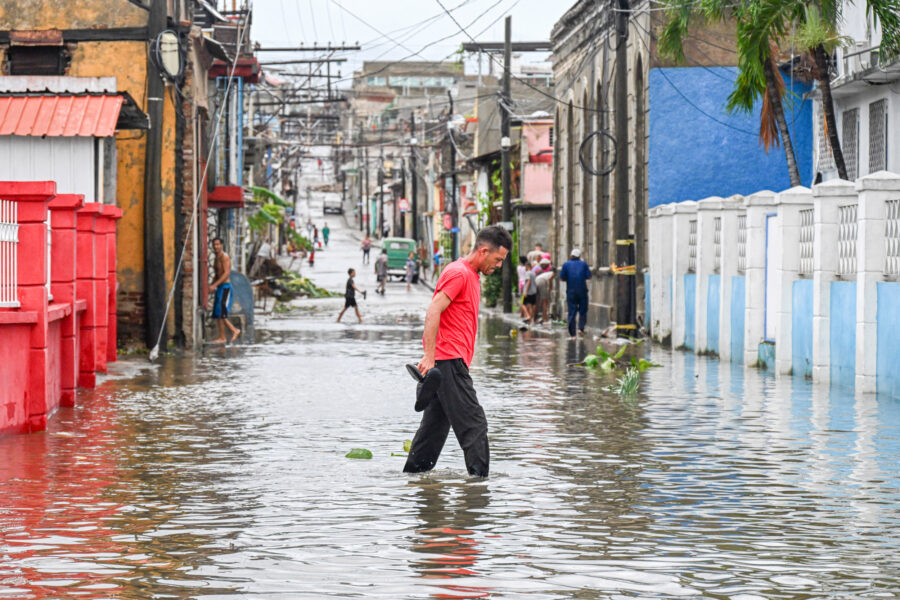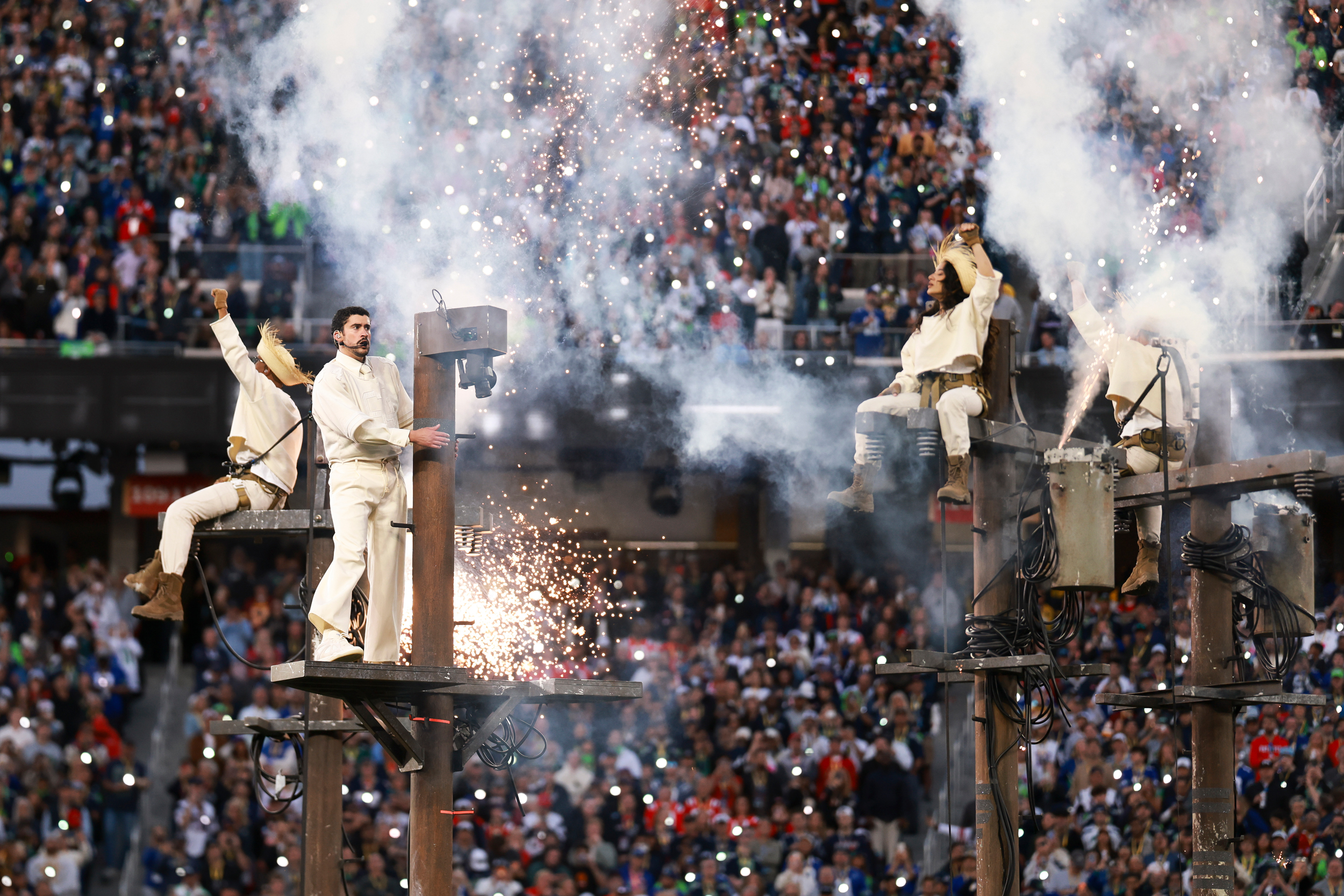


When Bad Bunny climbed onto broken power lines during his Super Bowl halftime show, millions of viewers saw a spectacle. Climate communicators saw a lesson in how to talk about climate change.
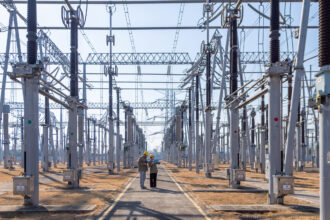
The performance, which drew more than 100 million U.S. viewers last month, highlighted Puerto Rico’s fragile electricity system, ravaged by hurricanes exacerbated by climate change. For Josh Garrett, CEO of Redwood Climate Communications, the display showcased how pop culture can effectively deliver climate messages to wide audiences.
Garrett said the moment worked because it wasn’t a lecture about climate science. Instead, it spotlighted lived experience and the effects of climate change on a specific population. Although climate change was not explicitly mentioned, he said the imagery likely pushed viewers to learn more about Puerto Rico’s climate-induced electricity issues.
“Everybody understands pop music. And again, you can like it or not like it, but you’re going to see it,” Garrett said.
The past year has been difficult for climate activists and communicators. President Donald Trump has repeatedly called climate change a “scam” and “hoax.” His administration recently repealed the endangerment finding, which allowed the U.S. Environmental Protection Agency to protect people from climate pollution.
The public is also hearing less about climate change. The fall 2025 Climate Change in the American Mind survey found that only 17 percent of Americans say they hear about global warming in the media “at least once a week,” the lowest percentage since the question was added to the twice-yearly effort in 2015. Yet the same study found that 64 percent of Americans are at least “somewhat worried” about global warming.
With accelerating federal climate policy rollbacks and declining media coverage, a disconnect remains. A majority of Americans say they believe climate change is happening and support action, yet momentum on solutions has slowed.
Garrett said it doesn’t help that the fossil fuel industry and its allies have confused people with decades of disinformation and propaganda. He said a common message now is that climate change is real, but not as severe a threat as scientists warn.
As climate change becomes increasingly politicized in the United States, the challenge isn’t just explaining the science. The bigger question is how to communicate the issue in ways that resonate with the public to inspire action. Some strategies include using pop culture, shared values or trusted messengers.
Communication as a Solution
In 2018, climate scientist Katharine Hayhoe argued in a TED Talk that one of the most important things people can do to inspire climate action is simply to talk about climate change. Years later, experts said that principle still holds.
“In order to have climate action at the scale that we need to have policy change, we need to be consolidating and growing our awareness that others do care,” said Julia Fine, research assistant professor at the George Mason University Center for Climate Change Communication.
Fine said creating these shared social norms, the sense that others are concerned about climate change and taking action, is a powerful tool for encouraging climate-conscious behavior.
“A lack of effective, consistent communication that gets through to the general populace, and by extension, policymakers, as well as corporate interests, is one of the biggest reasons why we have not made consistent or enough progress in terms of what the science is telling us needs to happen,” Garrett said.
Fighting Polarization
Last fall, Democratic Party-aligned think tank Searchlight Institute found a 50-point gap between Democrats and Republicans in their views on whether climate change is a top concern. Among Democrats, 71 percent considered it a high priority, compared to 21 percent for Republicans.
Risk and behavioral scientist Sweta Chakraborty did not find this polarization surprising. She said America’s diversity contributes to the phenomenon because people naturally cluster into groups that share similar identities and beliefs. Individuals often stay close to these groups for fear of exclusion. But she noted that understanding these behavioral patterns also reveals ways to counteract them by creating shared priorities.
“We can allow people to be part of several different groups,” Chakraborty said. “The way to do that is to find the common ground and build it and build it and build it.”
Finding shared values and building common ground can bring diverse audiences into productive conversation. While conservatives may not consider climate change a priority, Garrett said wanting children to grow up in a safer, more stable world is a near-universal value. From there, he suggested focusing on climate impacts connected to those shared values that people can already observe today.
This story is funded by readers like you.
Our nonprofit newsroom provides award-winning climate coverage free of charge and advertising. We rely on donations from readers like you to keep going. Please donate now to support our work.
Donate NowAnother shared value, he said, can be recreational activities. The skiing and snowboarding industries are threatened by less snowfall and shorter winters. In Italy, the host of the 2026 Winter Olympics, warming temperatures doubled the number of permanently closed ski facilities from 132 in 2020 to 265 in 2025.
“If you’re able to start conversations with those shared values, like, ‘I love my kids and I want them to be safe,’ and then, you know, more sort of preferential recreational type stuff like fishing and snowboarding, that’s where I think we stand to make some headway, and that’s where we can get conversations going in a more productive direction,” Garrett said.
University at Buffalo professor Janet Yang said finding consensus can also mean avoiding certain topics altogether. If people cannot agree on the causes of climate change, she said, it may be more productive not to start there.
“For some audiences, maybe you don’t even lead with the words climate change. You frame it as extreme weather or whatever else is not going to get their hackles up,” Fine said.
Trusted Messengers
Science-based communication also does not always have to come from scientists. Garrett said one of the biggest failures in climate communication is relying on obscure scientific metrics that mean little to most people.
“Scientists have the expertise, but not necessarily the warmth or even the communication skills to be able to deliver their information in a comprehensible way,” Yang agreed.
Yang said one solution could be trusted messengers, where credible voices share information within a community, rather than outside experts. Yang cited religious leaders as one example. Last year, newly elected Pope Leo XIV called for stronger action against climate change.
Chakraborty said meteorologists are an important group of professionals who remain widely trusted and can help communities understand extreme weather events. In a political climate that can be hostile to discussions about science, communicators need to think creatively about who can effectively deliver climate information.
Health professionals can also serve as trusted messengers, according to Fine. For example, the Medical Society Consortium on Climate and Health mobilizes doctors and other health experts to speak about the risks climate change poses to human health.
Relatives, close friends, podcast creators and other influencers can be effective communicators, according to Samantha Harrington, director of audience experience for Yale Climate Connections. In a Pew Research Center study from 2025, 76 percent of Americans who get their news from podcasts say they trust it as much as or more than news from other sources.
“A trusted messenger can be a lot of different people, so let’s just make sure [we] leave no stone unturned that might fit into that category, and get all kinds of different people with different perspectives [to] align on climate action,” Garrett said.
Fine said the public cannot afford to turn away from the issue and wait for more favorable political conditions. Silence, she said, is ultimately not an option.
“[There’s] a lot of pretending bad things aren’t happening,” Garrett said. “A lot of trying to walk back things that were said in the past just because of the political climate.”
Even small steps forward, he added, can make a difference.
“It’s not like either we win, or we lose,” Garrett said. “Because even if it only helps a little, a little plus a little plus a little equals a lot.”
About This Story
Perhaps you noticed: This story, like all the news we publish, is free to read. That’s because Inside Climate News is a 501c3 nonprofit organization. We do not charge a subscription fee, lock our news behind a paywall, or clutter our website with ads. We make our news on climate and the environment freely available to you and anyone who wants it.
That’s not all. We also share our news for free with scores of other media organizations around the country. Many of them can’t afford to do environmental journalism of their own. We’ve built bureaus from coast to coast to report local stories, collaborate with local newsrooms and co-publish articles so that this vital work is shared as widely as possible.
Two of us launched ICN in 2007. Six years later we earned a Pulitzer Prize for National Reporting, and now we run the oldest and largest dedicated climate newsroom in the nation. We tell the story in all its complexity. We hold polluters accountable. We expose environmental injustice. We debunk misinformation. We scrutinize solutions and inspire action.
Donations from readers like you fund every aspect of what we do. If you don’t already, will you support our ongoing work, our reporting on the biggest crisis facing our planet, and help us reach even more readers in more places?
Please take a moment to make a tax-deductible donation. Every one of them makes a difference.
Thank you,