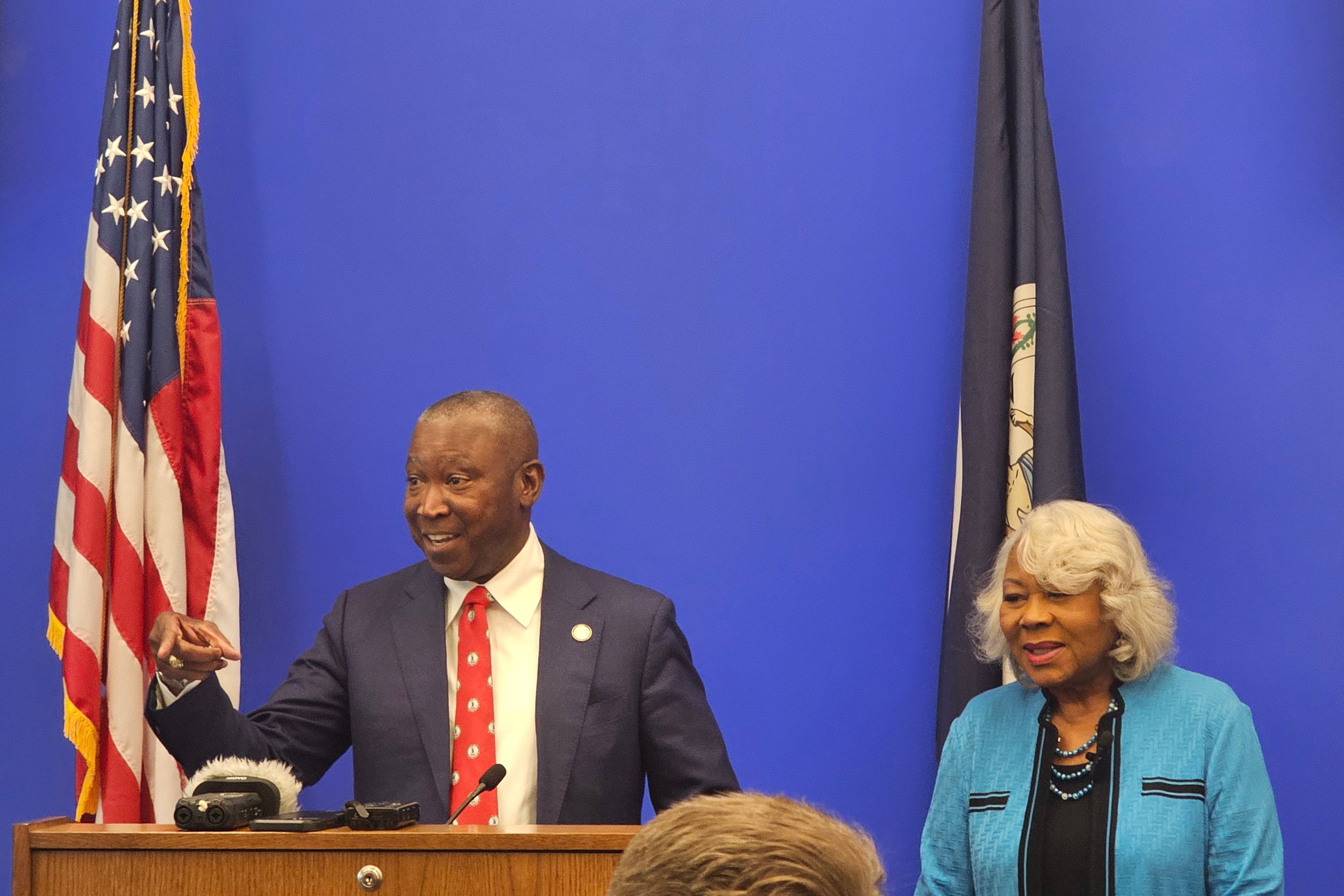


RICHMOND, Va.—Virginia’s Democratic lawmakers failed to make a deal on the budget again on Thursday due to disagreements over whether data centers should continue to receive tax breaks on their computer equipment.
Lawmakers gaveled in and out of a one-day special session that was set to vote on a budget that they failed to pass in March at the end of the 2026 legislation session.
“Let’s take our time and do this thing right,” Senate President Pro Tempore Louise Lucas, D-Portsmouth, said in a brief interview Wednesday when no deal had been made.
Lucas and many Senate Democrats want to end a $1.9 billion tax exemption for data centers to generate revenue for social programs. Their counterparts in the House and newly elected Governor Abigail Spanberger, a moderate Democrat, are more beholden to the industry’s desires to keep the exemption so Virginia remains attractive as the data center capital of the world. An option to tie the exemption to clean energy requirements still exists.
At issue is ending a sales and use tax on data centers’ computer equipment that is waived for a data facility when $150 million is invested and 50 jobs are created in a community. The tax ranges from 5.3 percent to 7 percent, depending upon the locality.
Created in 2008 after the housing crisis, the incentive intended to lure the industry to the state to stimulate economic development. At the time, lawmakers forecast an estimated $1.5 million in tax revenues would be waived.
Now, Virginia has bloomed into the data center capital of the world, with more of the server farms than any other state or country. Residents’ electricity bills have been rising, and environmental groups are concerned about water availability and air quality. Meanwhile, in 2025, the industry reported the state waived $1.9 billion in sales taxes from data centers.
With rising land values in Northern Virginia where many data centers want to build, and a need to buy replacement computer equipment typically every three to five years, the state’s exemption is beneficial to improving tech companies’ bottom lines.
Lucas wants to end the exemption in January, eight years before it’s set to expire in 2035. She initially asked for the $1.9 billion in revenue the industry would have to pay for an array of social programs. Now, she’s lowered that request to $1.6 billion.
“There’s not going to be a cap, I want it to be perpetual and ongoing,” Lucas said of the revenue from data centers. Other states, she said, “are going to feel the same way we do about them taking money from the voters and giving it to these large, large corporations.”
“We got the infrastructure, we got the water, we got the land. Where are they going?” Lucas said. “They’re not going to go anywhere.”
House Speaker Don Scott, D-Portsmouth, urged more caution.
“We have to make sure that we do everything that we can to help Virginia keep its competitive advantage,” Scott said. “We are the leader in the world, not only the country, in the world. Texas and others, they want to have what we have.”
The Senate’s plans for spending the data center tax revenue across the next two years include $1.1 billion for general fund programs, with about $440 million for education. About $300 million would go toward transportation, $324.1 million would be remitted to localities and about $190 million would go toward other regional needs.
Broader initiatives in the budget include making up for less federal funding for the food assistance program known as Supplemental Food Nutrition Assistance Program, or SNAP, and health care under Medicaid. Those losses resulted from President Donald Trump’s One Big Beautiful Bill Act, which also gave tax breaks to the wealthy.
For their part, leaders of the data center industry contend that Lucas is asking for too much and say companies could easily spend funds to quickly move projects to other parts of the country. Data centers still pay local tax revenue, and trade unions covet the steady stream of temporary construction jobs they create.
Since negotiations began in February over the data center tax exemption, a compromise put forth by the industry has been through several iterations. The industry wants to only contribute $1.1 billion over two years, which is what Senate budget documents said would go to the state’s general fund. In March, industry representatives, including government relations specialists from Microsoft and Amazon, and Josh Levi, the Data Center Coalition president, met in closed-door meetings with lawmakers.
The industry and Lucas haven’t come to an agreement on how much revenue could be provided to the state. Those industry representatives declined to comment Thursday during a gathering in the Virginia General Assembly Building.

State Del. Terry Kilgore of Wise County, the House minority leader, said he wants to keep the exemption but is interested in more revenue from data centers. Rural communities in Virginia starving for economic development want to remain competitive, he added.
“We need data centers in the commonwealth,” Kilgore said. “My issue with all this is we’ve made promises to these data centers when they came here to have this tax credit. We as Virginians need to fulfill our promises.”
Democrats in the House of Delegates and officials in the governor’s office remain concerned about how ending the exemption could harm the state’s business-friendly reputation by going against awarded contracts granting the exemption. Beyond the data center debate, the party is worried about federal workforce cuts made early in President Trump’s second term by Elon Musk and his Department of Government Efficiency (DOGE) upending the Northern Virginia economy that serves to lift the entire state.
The House came closer to alignment with Lucas in the Senate after Del. Luke Torian, D-Prince William, joined her in March to say it’s up to the industry to come back to lawmakers with an acceptable budget contribution, whether it’s from a change in the tax exemption or some other new mechanism. Scott, the House speaker, told Inside Climate News in a brief interview at the end of the regular session that “we’re all on the same page, we’re going to be able to claw back.”
This story is funded by readers like you.
Our nonprofit newsroom provides award-winning climate coverage free of charge and advertising. We rely on donations from readers like you to keep going. Please donate now to support our work.
Donate NowSpanberger, though, appears more dug in. At an April 9 groundbreaking for a manufacturer of data center computer racks, Spanberger said “the fact that Virginia is a reliable partner matters as much as the incentives we put on the table, and we intend to protect that reputation aggressively.”
In a session with reporters Wednesday morning, after previously suggesting an electricity consumption tax to have data centers pay their “fair share,” she reiterated that it’s up to budget negotiators to come up with an agreement on a plan, including the amount of revenue from data centers, to present to her.
“At this step, I’m actively engaging, but…I’ll defer to them to answer that question,” Spanberger told Inside Climate News.
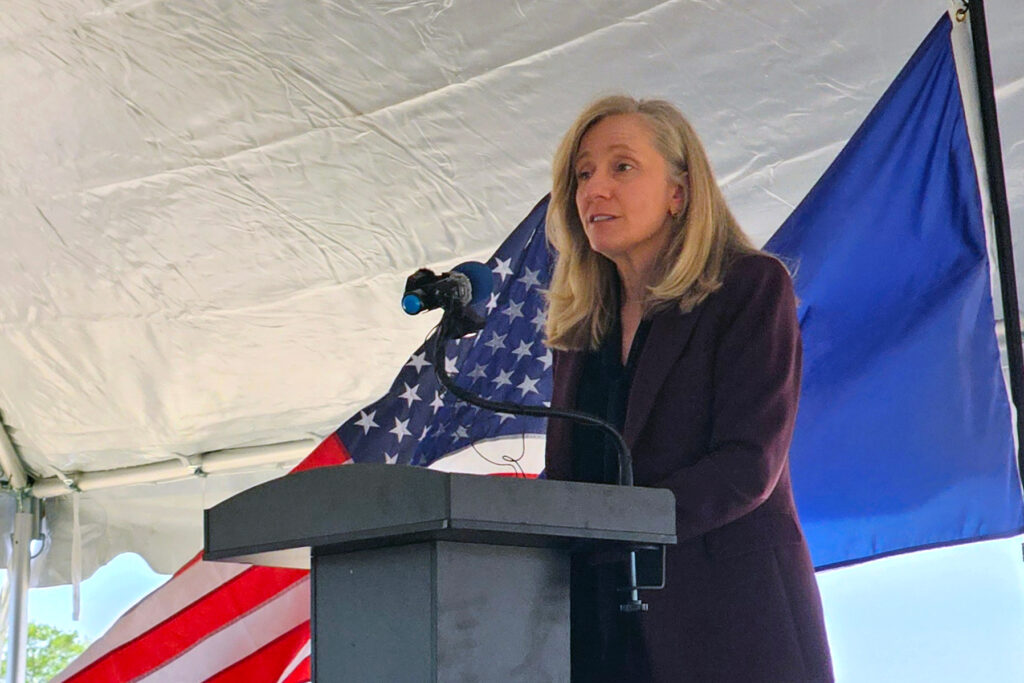
The governor has vetoed a gambling measure expected to generate revenue, and wanted to delay until the next year the establishment of a legal retail marijuana market, which could also provide revenue. But the legislature sent the bill on marijuana back to the governor without the delay. Spanberger has until May 22 to make any final signatures or vetoes on bills.
A politically tense Congressional redistricting fight has also taken up oxygen in the legislative process. Virginia voters settled the debate on Tuesday by voting yes to change Virginia from having a 6-5 Democratic majority in the U.S. House of Representatives to one with an expected 10-1 Democratic majority, pending a legal challenge. Negotiations on the budget may soon be more streamlined. Scott, the speaker, said a deal could be hashed out by June.
“I’m going to see what she’s going to do,” Lucas said, referring to the governor’s action on bills. “At this point it could cause us to probably lose some money in the budget, so I want to wait until she’s done.”
Lost in the data center debate is an alternative included in the House of Delegates budget proposal to keep and possibly extend the data center tax exemption, and tie it to banning the use of fossil fuels as a primary source of power, matching energy needs with clean energy sources, transitioning from diesel backup generators to batteries, and using energy more efficiently. Data centers that chose to avoid those clean energy requirements in favor of fossil fuel energy sources would forego the tax exemption, thus generating some tax revenue for the state. Illinois has a tax credit for data centers that are carbon neutral or have a green building certification.
Asked if there’s interest in placing the clean energy requirements on the exemption, Lucas said, “I have not had that conversation with my caucus so I can’t answer that.”
About This Story
Perhaps you noticed: This story, like all the news we publish, is free to read. That’s because Inside Climate News is a 501c3 nonprofit organization. We do not charge a subscription fee, lock our news behind a paywall, or clutter our website with ads. We make our news on climate and the environment freely available to you and anyone who wants it.
That’s not all. We also share our news for free with scores of other media organizations around the country. Many of them can’t afford to do environmental journalism of their own. We’ve built bureaus from coast to coast to report local stories, collaborate with local newsrooms and co-publish articles so that this vital work is shared as widely as possible.
Two of us launched ICN in 2007. Six years later we earned a Pulitzer Prize for National Reporting, and now we run the oldest and largest dedicated climate newsroom in the nation. We tell the story in all its complexity. We hold polluters accountable. We expose environmental injustice. We debunk misinformation. We scrutinize solutions and inspire action.
Donations from readers like you fund every aspect of what we do. If you don’t already, will you support our ongoing work, our reporting on the biggest crisis facing our planet, and help us reach even more readers in more places?
Please take a moment to make a tax-deductible donation. Every one of them makes a difference.
Thank you,

Charles Paullin
Charles Paullin is a Richmond, Virginia-based reporter focusing on energy and environment issues. He’s won several awards for his previous work covering state policy with the Virginia Mercury and local news with the Northern Virginia Daily in the Northern Shenandoah Valley. His first reporting gig was with the New Britain Herald in Connecticut, a couple years after attending the University of Hartford, where he first studied sports journalism.