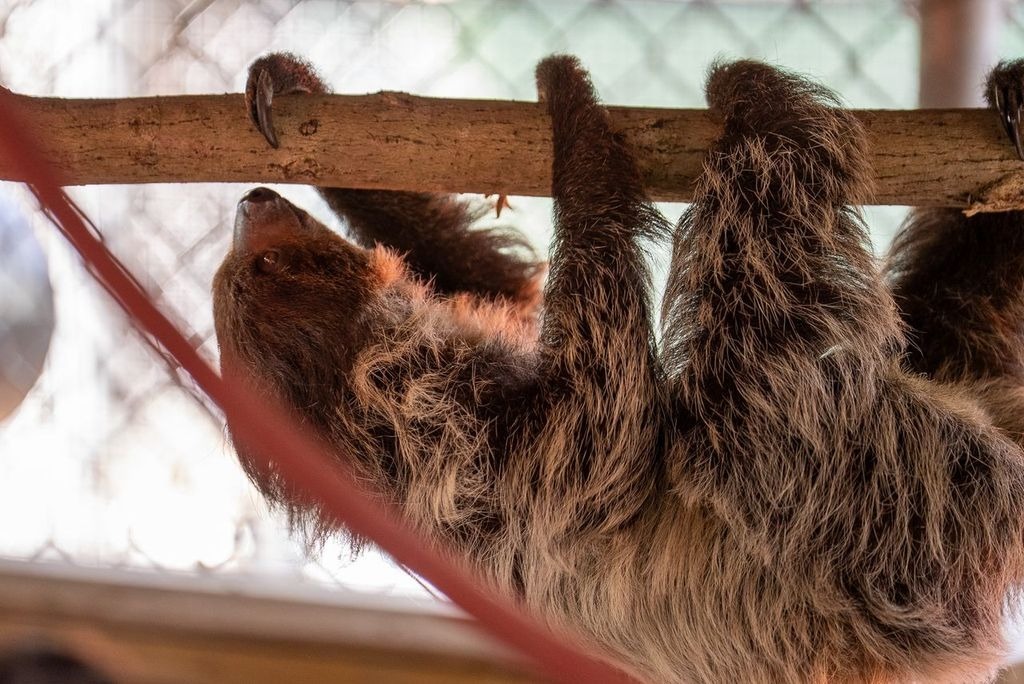


A planned Florida animal attraction that imported dozens of wild sloths has sent 13 surviving animals to a local zoo, days after an Inside Climate News investigation revealed that more than 31 sloths had died in the company’s care.
Pressure on Orlando-based Sloth World has mounted over the last week amid public outcry. A member of Congress called for a federal investigation. The company, which had repeatedly delayed its public opening, has now shuttered its website and social media accounts.
Owner Ben Agresta, who earlier called state records detailing the deaths “completely fiction,” did not respond to questions from Inside Climate News about the status of the company or its remaining sloths. But other news organizations reported Friday that he told them Sloth World will not open.
State records show that Sloth World had imported 69 wild sloths from Guyana and Peru since December 2024. The Florida Fish and Wildlife Conservation Commission found that 21 died soon after arriving that month at an industrial building that wasn’t ready for them, and 10 more from the next shipment in February 2025 also died, according to an incident report that Inside Climate News obtained through an open-records request.
Necropsy reports showed that deaths continued. A spokesperson for the Central Florida Zoo & Botanical Gardens told Inside Climate News that the 13 sloths it accepted from the company are the only survivors.
The zoo said the tropical, tree-dwelling mammals are currently housed in a “special off-display habitat area for a quarantine period of at least 30 days.”
It’s unclear what the health status of the transferred sloths is. The necropsy records obtained by Inside Climate News show that viruses infected some of Sloth World’s animals, including a “novel two-toed sloth gammaherpesvirus.”
“When we were approached about taking in these sloths, the team all agreed it was something we should and wanted to do,” Richard E. Glover, the zoo’s CEO, said in a statement. “Our Zoo team has decades of experience caring for sloths, and we can ensure they will receive the best care and nutrition to give them the best opportunity for a positive outcome.”
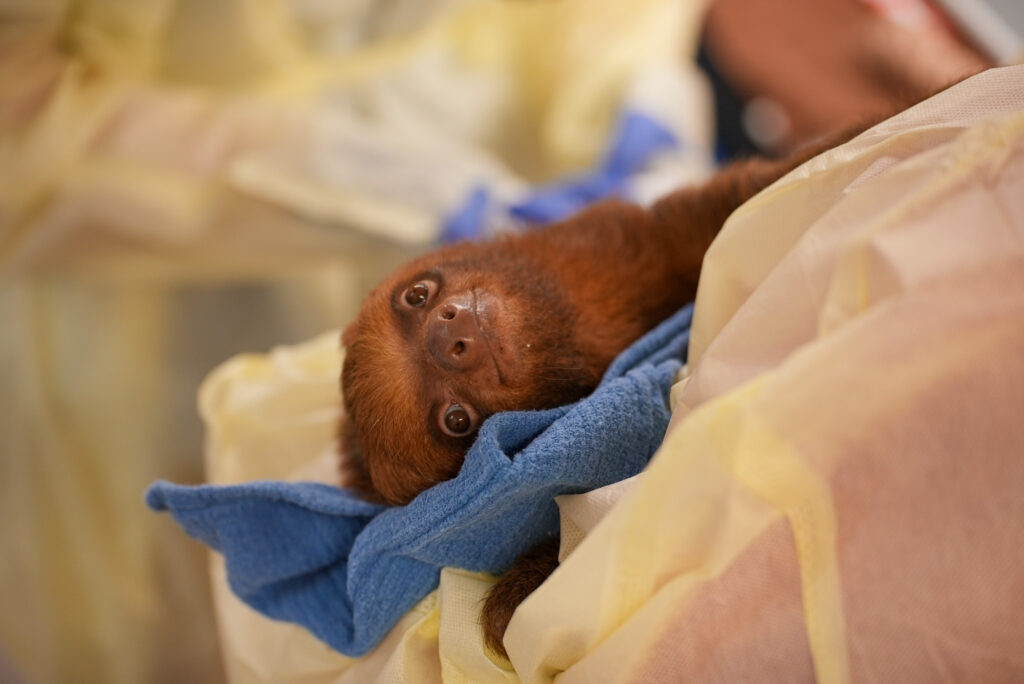
The zoo, a 116-acre facility accredited by the Association of Zoos and Aquariums, is a nonprofit based in Sanford, Florida. The zoo said in its statement that it will assume ownership of the sloths, at least temporarily, while working to determine long-term placement. Some are expected to stay at the zoo while others “will be relocated to accredited partner institutions.”
Scientists and conservation organizations have harshly criticized Sloth World for importing wild sloths for a commercial business. The animals are poorly suited to captivity, internalizing stress, which experts say can suppress their immune systems and allow viruses to take hold.
Ana María Villada Rosales, a member of the Council of Scientific Authority in Costa Rica and head veterinarian and conservation medicine research manager at a rescue organization called The Sloth Institute, said the necropsy reports done on some of Sloth World’s animals indicate that “systemic stress” acted as a “definitive catalyst” for the deaths.
Read More
At ‘Sloth World’ in Florida, Wild Sloths Have Died by the Dozens
By Katie Surma, Kiley Price
The Florida Fish and Wildlife Conservation Commission, which gave the company’s import business a verbal warning in August for the small size of some of its cages, told Inside Climate News last week that Sloth World didn’t violate any state regulations.
On Friday, critics of the company celebrated the news that Sloth World had closedthe transfer. They added that the sloths cannot be returned to the wild because of their compromised health and but said the situation should never have been allowed to go on as long as it did.
“Where were the laws to protect these animals? Why did Sloth World not have to declare the deaths of the sloths in their care? Why was all of this legally able to happen?” said Rebecca Cliffe, founder of the Sloth Conservation Foundation, in a statement.
Some lawmakers have similar questions. “Unacceptable that this behavior doesn’t lead to criminal charges,” state Rep. Anna Eskamani said in a social-media post this week. The Orlando Democrat said she was contacting the state fish and wildlife agency.
U.S. Rep. Maxwell Alejandro Frost (D-Fla.) sent a letter to the U.S. Department of Agriculture on Friday, calling on the agency to “prevent further criminal suffering of any sloths still in the attraction’s custody” and asking if officials planned to investigate Sloth World. That evening, Frost posted on social media celebrating the company’s alleged shuttering.
Demand for sloths—overwhelmingly sourced from the wild—has spiked in recent years, according to government officials in Guyana and Peru. Much of that interest is driven by the pet trade and animal-attraction industry, where tourists pay to pose with the animals.
“Sloth World is an egregious example of the damaging effects of the sloth trade on the welfare and conservation of sloths,” said Sam Trull, executive director of The Sloth Institute.
“Every individual taken from the wild for entertainment is a tragedy,” she added.
About This Story
Perhaps you noticed: This story, like all the news we publish, is free to read. That’s because Inside Climate News is a 501c3 nonprofit organization. We do not charge a subscription fee, lock our news behind a paywall, or clutter our website with ads. We make our news on climate and the environment freely available to you and anyone who wants it.
That’s not all. We also share our news for free with scores of other media organizations around the country. Many of them can’t afford to do environmental journalism of their own. We’ve built bureaus from coast to coast to report local stories, collaborate with local newsrooms and co-publish articles so that this vital work is shared as widely as possible.
Two of us launched ICN in 2007. Six years later we earned a Pulitzer Prize for National Reporting, and now we run the oldest and largest dedicated climate newsroom in the nation. We tell the story in all its complexity. We hold polluters accountable. We expose environmental injustice. We debunk misinformation. We scrutinize solutions and inspire action.
Donations from readers like you fund every aspect of what we do. If you don’t already, will you support our ongoing work, our reporting on the biggest crisis facing our planet, and help us reach even more readers in more places?
Please take a moment to make a tax-deductible donation. Every one of them makes a difference.
Thank you,

Kiley Price
Reporter
Kiley Price is a reporter at Inside Climate News, with a particular interest in wildlife, ocean health, food systems and climate change. She writes ICN’s “Today’s Climate” newsletter, which covers the most pressing environmental news each week.
She earned her master’s degree in science journalism at New York University, and her bachelor’s degree in biology at Wake Forest University. Her work has appeared in National Geographic, Time, Scientific American and more. She is a former Pulitzer Reporting Fellow, during which she spent a month in Thailand covering the intersection between Buddhism and the country’s environmental movement.