The Florida Attorney General’s office announced a criminal investigation into the deaths of dozens of sloths at a now-shuttered Orlando business, a development that signals a new level of animal-welfare accountability in the commercial wildlife trade.
In a letter released Friday, Attorney General James Uthmeier confirmed his office is assisting the Ninth Judicial Circuit of Florida in a probe into Sloth World. The news comes two weeks after an Inside Climate News investigation revealed that more than 31 sloths under the company’s care had died.
The highly sensitive, tree-dwelling animals from the rainforests of Peru and Guyana were kept in a warehouse while Sloth World’s tourist attraction facility was under construction. The company’s now defunct website had promised customers an up-close viewing encounter with sloths for $49, and had been preselling tickets and merchandise for months.
The facility’s owner, Benjamin Agresta, initially called government records documenting the deaths “completely fiction,” and later blamed the deaths on a virus. Wildlife disease experts and necropsy reports obtained by Inside Climate News indicate that the sloths were under immense physiological distress induced by their capture from the wild, international shipment, environmental changes and problems with their care.
Unlike most mammals, sloths lack a strong fight-or-flight response and instead rely on camouflage to survive. When handled by strangers or placed in noisy, high-traffic environments, they don’t scream or struggle. Instead, they internalize the stress—sometimes curling into a ball and closing their eyes. Their bodies flood with cortisol, triggering a cascade of physiological stress that can end in organ failure.
Neither Agresta nor Sloth World’s former vice president, Peter Bandre, responded to requests for comment on the investigation. The attorney general said Friday that the company is filing for bankruptcy protection.
In December 2024, Sloth World received a first shipment of 21 sloths from Guyana. They arrived at a warehouse that wasn’t ready to receive them, according to a Florida Fish and Wildlife Conservation Commission (FWC) incident report that Inside Climate News obtained through an open-records request. At least one night in December 2024, the agency said, the sloths were left alone in the cold warehouse without heat.
Sloth scientists and disease experts told Inside Climate News that stress likely suppressed the sloths’ immune systems, allowing latent viruses to flare and other illnesses to take hold. Necropsy reports indicate the sloths had swollen stomachs, ulcerated mouths, damaged spinal cords, organ failure, pneumonia and, in some cases, the presence of viruses.
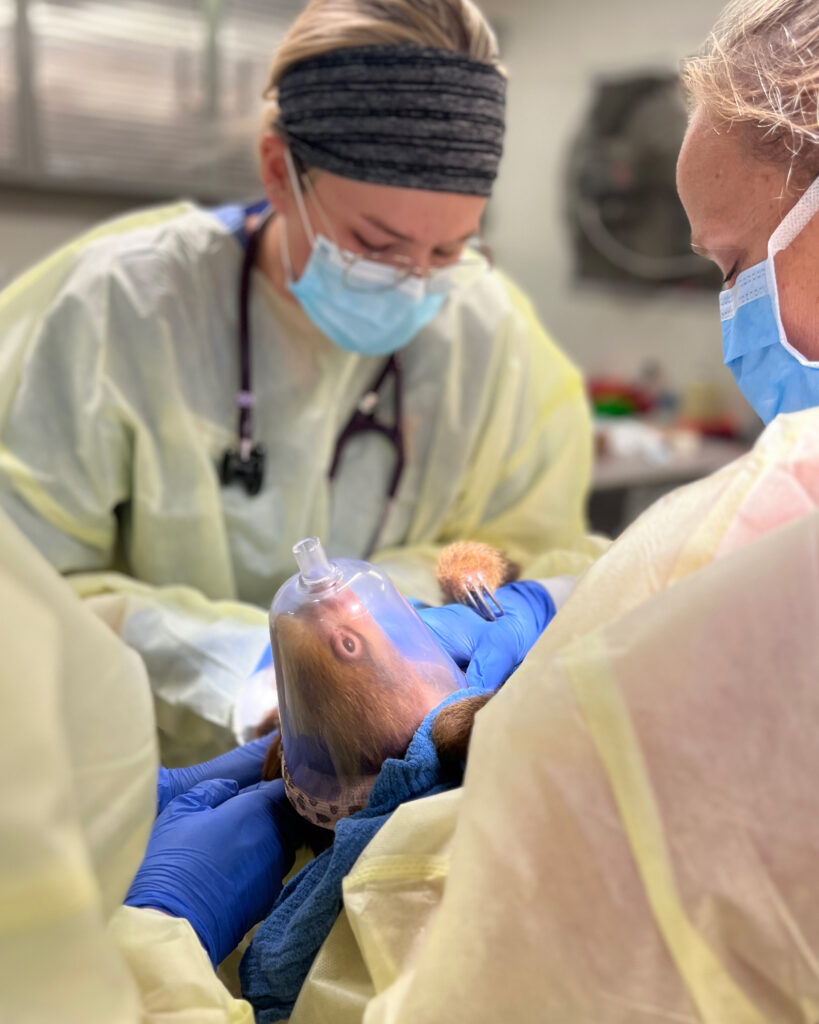
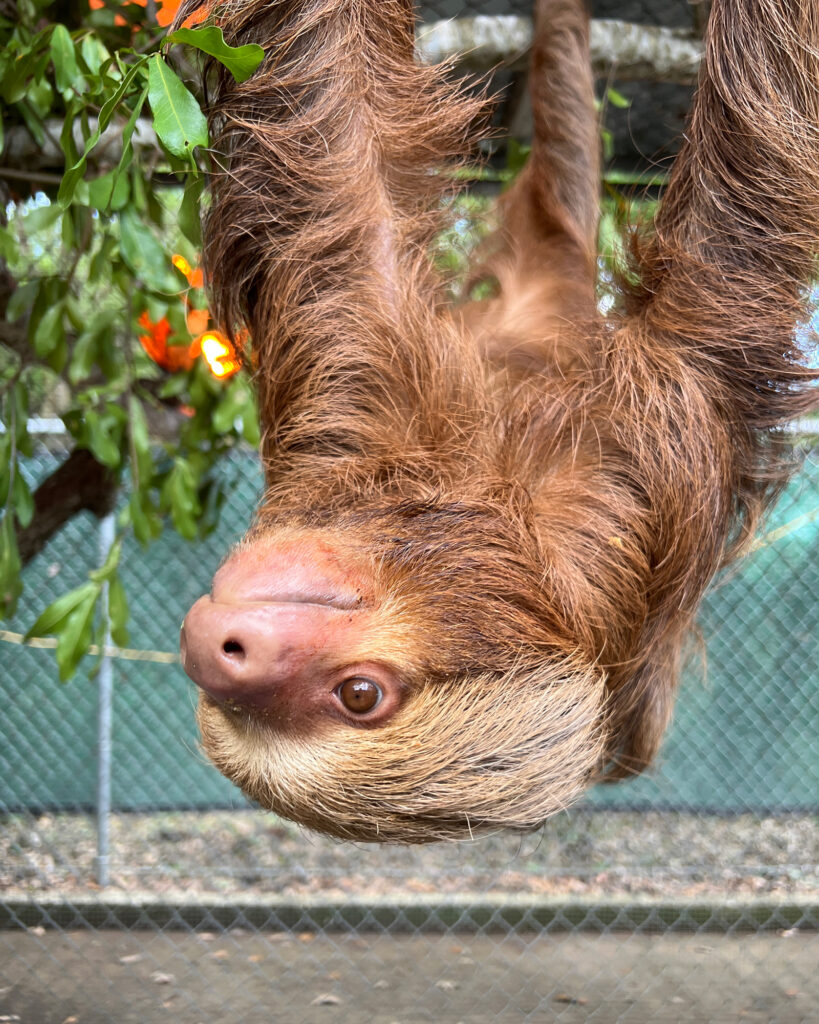
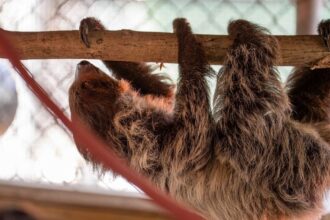
The Central Florida Zoo is caring for sloths transferred from Sloth World, where dozens of sloths died over the last 16 months. Credit: Central Florida Zoo & Botanical Gardens
A spokesperson for Florida’s Office of Attorney General did not respond to Inside Climate News’ questions about whether any individuals associated with Sloth World are being investigated, or just the company. Nor did the spokesperson respond to a question about what crimes are being probed, instead referring Inside Climate News to a May 1 letter to Florida state Rep. Anna Eskamani, who previously called for a criminal investigation into Sloth World.
Last week U.S. Rep. Maxwell Alejandro Frost (D-Fla.) asked the U.S. Department of Agriculture to investigate Sloth World. Earlier this week Republican Gov. Ron DeSantis commented on Sloth World at a press conference, calling the situation “really, really weird” and adding, “I know FWC got involved and I think that they’re going to have to rectify whatever was the matter.”
FWC, which regulates the possession of wildlife in captivity by issuing licenses and permits for the possession, sale and exhibition of certain animals, told Inside Climate News in April that Sloth World didn’t violate any state regulations. The agency said on Thursday in a statement that a prior civil investigation concluded without a citation or written warning.
“There was no legal basis for enforcement action or closure, and while the deaths of these animals are tragic, subsequent inspections found the facility compliant with care and housing standards,” the agency said.
This story is funded by readers like you.
Our nonprofit newsroom provides award-winning climate coverage free of charge and advertising. We rely on donations from readers like you to keep going. Please donate now to support our work.
Donate NowFWC added that its investigators are working with the owner of Sloth World to relinquish the company’s permits.
“I was deeply dissatisfied with FWC’s response,” Eskamani told Inside Climate News in an email. “It is unacceptable that the deaths of dozens of sloths — caused by what appears to be clear negligence — would not result in any meaningful accountability. When animals die under a permitted operator’s care, the public deserves a thorough criminal review, not a closed file.”
Eskamani, a Democrat, said that she is “working across the aisle on future policy to strengthen FWC oversight and to establish clear restrictions and standards” for permits required to possess, exhibit or sell certain non-domesticated wildlife. These restrictions, she added, may include ensuring all deaths under those permits are reported and made public, and setting a pause on permit renewal until a full investigation into deaths is completed.
On Thursday, People for the Ethical Treatment of Animals (PETA) sent an open letter to the Florida Department of Law Enforcement requesting a criminal investigation into Agresta, Bandre, Sloth World and its related business Sanctuary World Imports “for apparent aggravated cruelty to animals.”
The letter, citing Inside Climate News’ reporting, noted that 21 sloths had died “due to inadequate housing causing a ‘cold stun.’” The letter points to a Florida statute that states: “a person who owns or has the custody or control of any animal and fails to act, which results in the cruel death, … or causes the same to be done, commits aggravated animal cruelty, a felony of the third degree.”
Cydnee Bence, counsel and aquatic animal lead at PETA, said Sloth World’s owners should be held accountable, banned from engaging in similar business ventures in the future and prohibited from owning animals.
“This [situation] reveals a pretty big hole in the way we regulate animals,” she said.
Import records indicate Sloth World imported more than 60 wild sloths. As of late April, the company held 13. Days after Inside Climate News’ investigation, Central Florida Zoo & Botanical Gardens announced it accepted the 13 animals from Sloth World.
Earlier this week, the zoo said one of those sloths, named Bandit, died.
“Bandit had been in critical condition since his arrival, showing signs of severe lethargy, dehydration, nutritional and electrolyte imbalances, and gastrointestinal complications,” the zoo said in a social media post.
About This Story
Perhaps you noticed: This story, like all the news we publish, is free to read. That’s because Inside Climate News is a 501c3 nonprofit organization. We do not charge a subscription fee, lock our news behind a paywall, or clutter our website with ads. We make our news on climate and the environment freely available to you and anyone who wants it.
That’s not all. We also share our news for free with scores of other media organizations around the country. Many of them can’t afford to do environmental journalism of their own. We’ve built bureaus from coast to coast to report local stories, collaborate with local newsrooms and co-publish articles so that this vital work is shared as widely as possible.
Two of us launched ICN in 2007. Six years later we earned a Pulitzer Prize for National Reporting, and now we run the oldest and largest dedicated climate newsroom in the nation. We tell the story in all its complexity. We hold polluters accountable. We expose environmental injustice. We debunk misinformation. We scrutinize solutions and inspire action.
Donations from readers like you fund every aspect of what we do. If you don’t already, will you support our ongoing work, our reporting on the biggest crisis facing our planet, and help us reach even more readers in more places?
Please take a moment to make a tax-deductible donation. Every one of them makes a difference.
Thank you,

Katie Surma
Reporter, Pittsburgh

Kiley Price
Reporter
Kiley Price is a reporter at Inside Climate News, with a particular interest in wildlife, ocean health, food systems and climate change. She writes ICN’s “Today’s Climate” newsletter, which covers the most pressing environmental news each week.
She earned her master’s degree in science journalism at New York University, and her bachelor’s degree in biology at Wake Forest University. Her work has appeared in National Geographic, Time, Scientific American and more. She is a former Pulitzer Reporting Fellow, during which she spent a month in Thailand covering the intersection between Buddhism and the country’s environmental movement.