

Reporting for this story was supported by the Pulitzer Center. Sarah Mattalian is a 2025 Reporting Fellow.
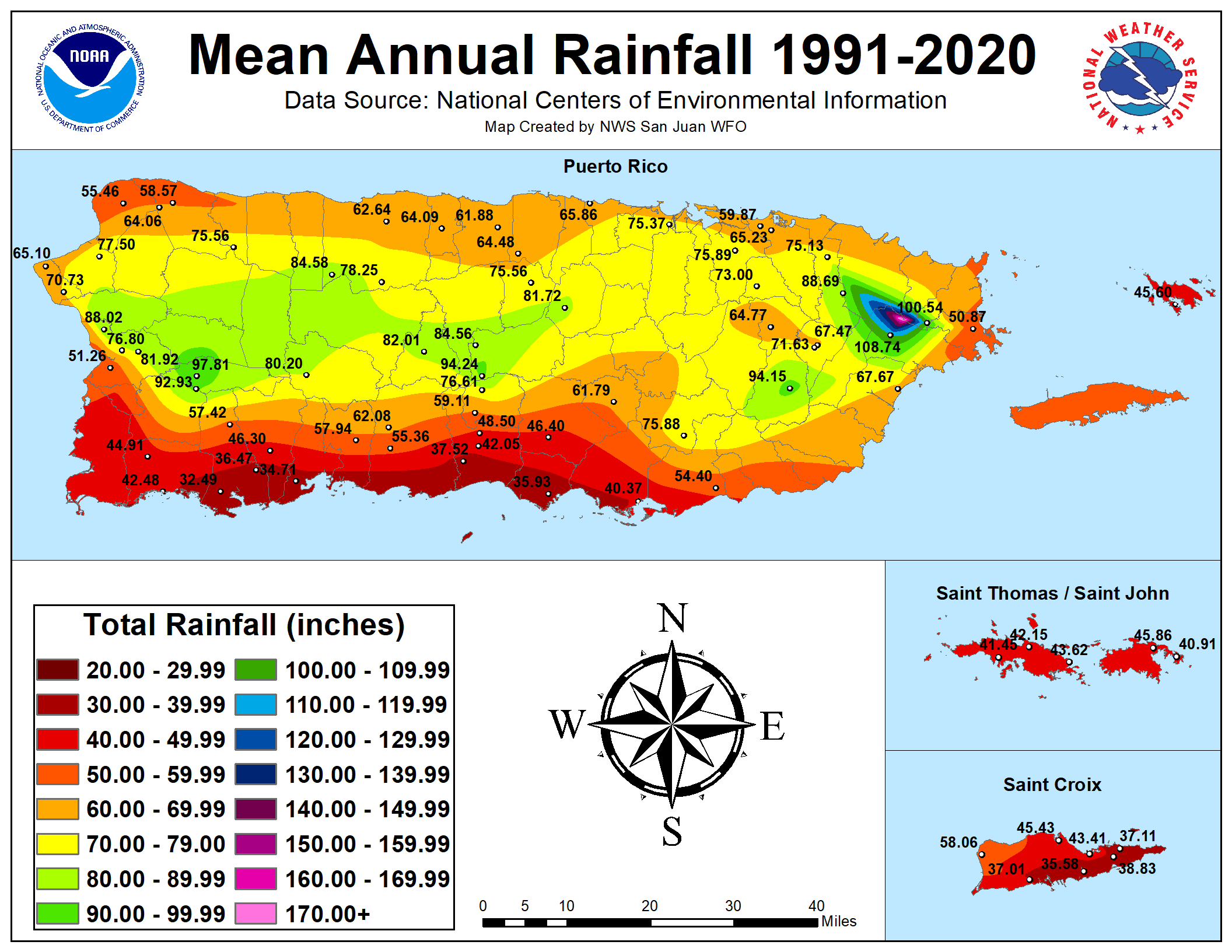
The heavy downpours that bring roughly 90 inches of rainfall to Las Marías, Puerto Rico, each year subside in the first few weeks of December, the start of the dry season. Even as the rainfall decreases, rain still comes on a near-daily basis, often in short bursts that cause mist to rise from the tropical mountainside forests. The rain makes it easy for rainbows to form above the hills where the municipality is nestled.
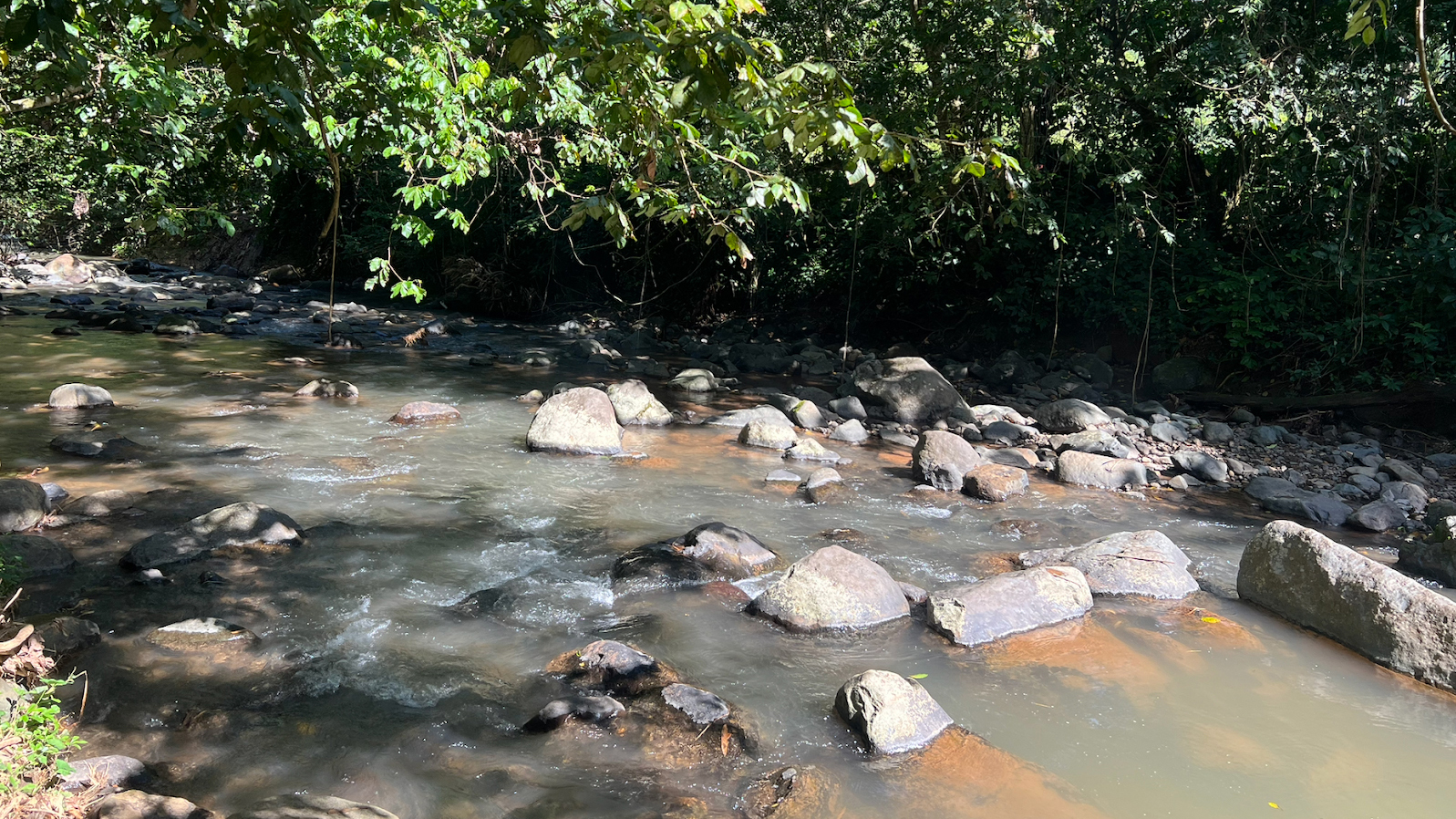
But the precipitation causes more than iridescence in the sky. The region where Las Marías is located, on the west side of the archipelago’s main island, about 90 miles from San Juan, is elevated and prone to landslides. Heavy rainfall cascades into swollen rivers, carrying nutrient-dense soil with it. Water that could be used for drinking and agriculture picks up sediment, making water filtration—already a challenge for most rural communities across Puerto Rico—even harder.
Rural communities within municipalities like Las Marías are often not connected to the Puerto Rico Aqueduct and Sewer Authority (PRASA), which owns and operates 95 percent of the public water supply and wastewater systems in the archipelago. These places, sometimes referred to as non-PRASA communities, rely on locally operated systems for potable water.
But in December, Plenitud P.R., a sustainability nonprofit in Las Marías, took a step that could not only solve water issues in this community, but potentially across the archipelago and beyond.
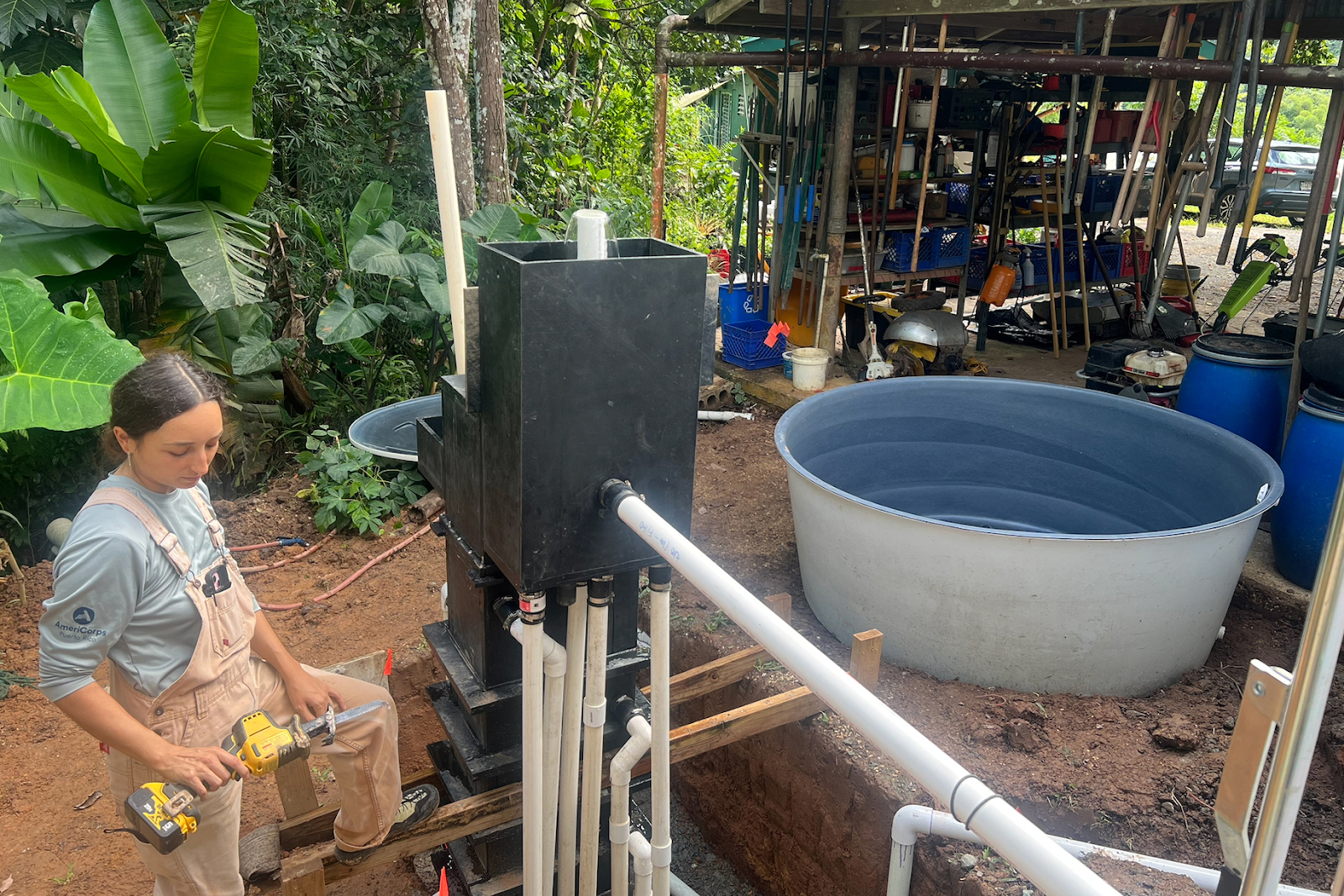
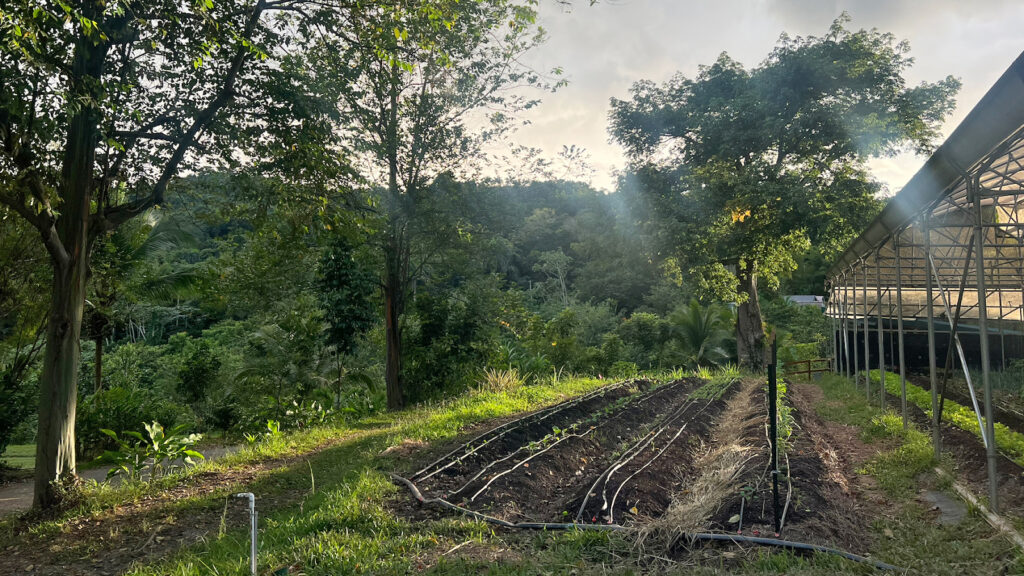
Its farm now serves as the demonstration site for a water treatment system that is the first of its kind in Puerto Rico.
The water treatment system, called the PF250, was developed the nonprofit AguaClara Reach (ACR), which partners with Cornell University, and made possible by decades of research through the AguaClara research program. ACR completed the installation of the PF250 at Plenitud in early December.
Unlike most small community water systems, this system can be transported to rural areas to draw water from rivers and other surface water sources, which will be treated, stored and eventually used for drinking water.
This is crucial in rural municipalities like Las Marías, where some residents lack reliable access to clean drinking water and where government intervention has historically failed to reach communities. After Hurricane María in 2017, which caused the longest blackout in U.S. history, it took nearly a year for power to be restored to all residents across the archipelago. The effects of the storm were exacerbated by bottlenecks in emergency aid distribution, especially in rural areas.
Researchers at the School of Civil and Environmental Engineering at Cornell University partnered with Syracuse University’s Environmental Protection Agency (EPA) Region 2 Finance Center, ACR and the Institute of Sustainable Engagement (ISE) and the Center of Environmental Education and Conservation (CECIA) at the Interamerican University of Puerto Rico to develop a program that would bring the PF250 to Puerto Rico.
The project as a whole is called VersaWater.
For Monroe Weber-Shirk, the founder of AguaClara, who helped invent the system, the focus is now on implementation.
Weber-Shirk founded AguaClara in 2005 and developed the initial system technologies with his Cornell students. Beginning in 2004, he worked with Jacobo Núñez, the director of Agua Para el Pueblo (APP), an organization that developed a solution to provide safe, purified water for communities in small towns in Honduras, where it is based.
APP had figured out how to design and install piped water systems for these communities.
AguaClara began working with APP to first develop a solution that worked for small cities and towns. Over the course of 15 years Cornell and APP jointly developed technologies that are specifically designed for those places. Since 2020, ACR and APP have developed a new series of prefabricated water treatment plants for small communities.
At Plenitud, Weber-Shirk believes he is closer than ever to providing an adequate solution for these issues.
“In many ways, we’re finally, after more than 20 years, answering the question that [Núñez] asked in 2004,” he said.
Rural areas have unique challenges, such as a lack of established, functioning infrastructure and roads and an organized board and management, which make identifying one suitable for the system complex.
Communities’ historic lack of trust amplifies these challenges. Many that manage their own water systems have been fined by the Puerto Rico Department of Health (PRDOH) in the past and have not received help understanding the regulatory requirements the systems must meet to avoid being fined. Additionally, many do not have full-time operators, with volunteers often stepping up, unpaid, to manage the systems.
Following the installation at Plenitud, the team is working to identify a community that could use the system. During the second phase of the National Science Foundation (NSF) grant that funds their work, they aim to have two operating community plants before helping three to five additional communities apply for federal funding for water systems within the next few years.
ISE works with funding sources such as the EPA and the U.S. Department of Agriculture to help communities apply for federal funding.
Its process of identifying a suitable community, Kaira Fuentes, assistant director of Caribbean Programs at ISE, explained, starts with an EPA survey to quantify and evaluate the management capacity of existing water systems. From there, they selected 25 communities to then interview, call and visit. This also involves bringing in regulatory bodies—such as PRDOH, the EPA, USDA and others—and potential technology funders, stakeholders and resiliency hubs.
“It will take a lot of understanding from the community and we’re working very hard to make this sustainable, so by the time that the installation is done, the community can manage to keep it working and functioning over the years, and we are willing and able to do that,” Fuentes said.
Without proper outreach and trust building, the PF250 has far lower chance of adoption by communities that could use the technology.
“We are not trying to convince anyone that this technology is what they want or need. It’s more of an invitation if they’re in need,” Fuentes added.
However, she emphasized that this is “not a challenge for the communities, it’s a challenge for us.” The PF250 will require stronger engagement to overcome these challenges, which is what Fuentes said they are working toward.
Beyond technical support, the goal is also to give communities autonomy over whether they use the system, and to encourage them to host events and celebrations about their water work.
This celebration of success, Fuentes said, is just as important as technical assistance, as many community leaders often do not get recognition for their efforts. This concept is integral to ISE’s engagement planning, and to the success of the PF250 implementation.
The concept is called “acompañamiento,” Fuentes said. “That’s where you go with the community, ask them what they need, and you stay with the same community for a long period of time. We have that rapport, and you build trust with the community.”
In December, ISE held an event, “Celebramos a los Guardianes de Nuestras Aguas,” or “We Celebrate the Guardians of Our Waters,” for community members in the water sector in Cayey, featuring speakers from agencies and outreach organizations who discussed water system management.
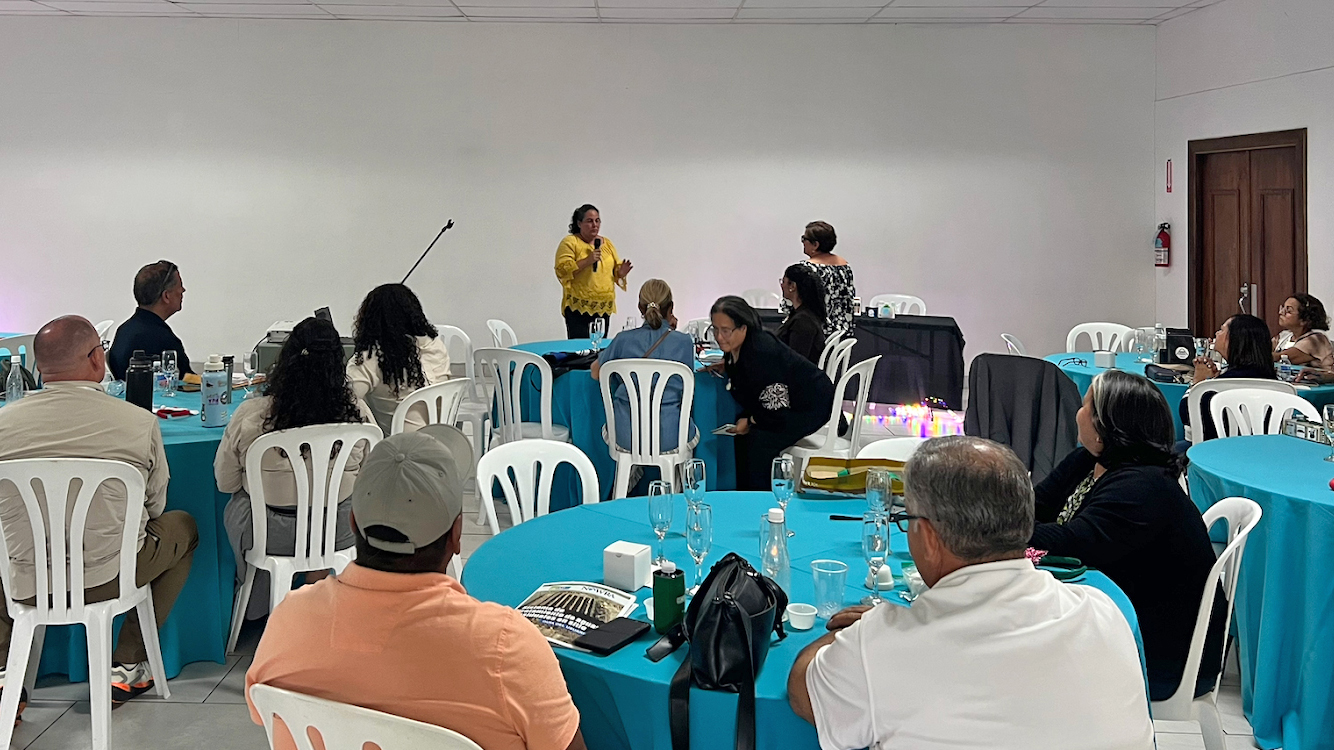
The workshop was facilitated by Miriam Matos Díaz, president of the Non-PRASA Aqueduct Systems Organization (OSAN) of Puerto Rico, a nonprofit organization and network of small water systems that are not connected to PRASA. She lives in the municipality of Caguas, located in the central eastern region of the main island. PRASA cannot service it due to its rural location within the Cordillera Central mountains.
Matos helped bring the PF250 to Puerto Rico. OSAN partnered with Cornell University last year as part of her work searching for solutions for community water systems.
In the morning, speakers gave informative presentations on water system management, regulations and water treatment.
In the afternoon, however, attendees shared success stories of their own water systems, then celebrated the success they have had so far in bringing consistent drinking water to their communities with live music and dancing—an extension of acompañamiento.
Part of the reason ACR is working with Plenitud for the installation is to enable the organization to integrate it into its programming to properly train people to operate the system and demonstrate the technology to communities.
Laura Sofía García Canto, a program manager at Plenitud since 2021, worked with the ACR team to bring the PF250 to Plenitud. During the installation, García Canto was trained by Weber-Shirk and the team to understand the plant’s engineering and become a trained operator.
García Canto said the group is still in “a process of how we could rethink our water systems and possibly integrate this new technology we have.” Some possibilities include washing vegetation and other agricultural uses.
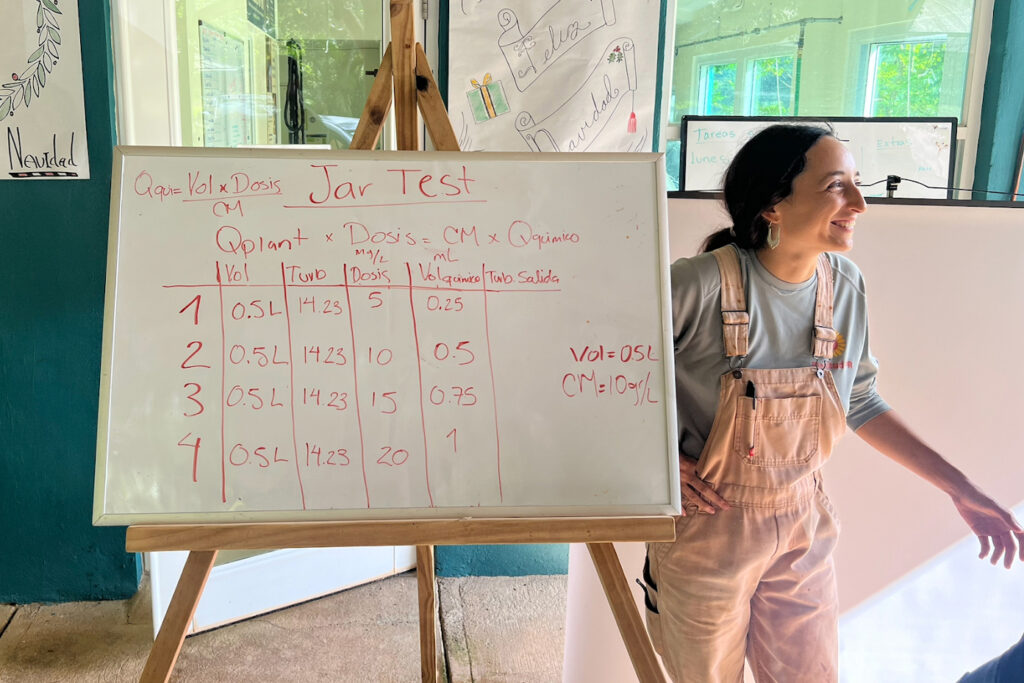
She added that even Plenitud experiences water issues despite their management efforts. Sometimes during the rainy season, there’s so much sediment in the water they pump from the river that their filters get clogged, an issue many farms experience that the PF250 could potentially help.
“I could see that in so many other farms being applied,” she said.
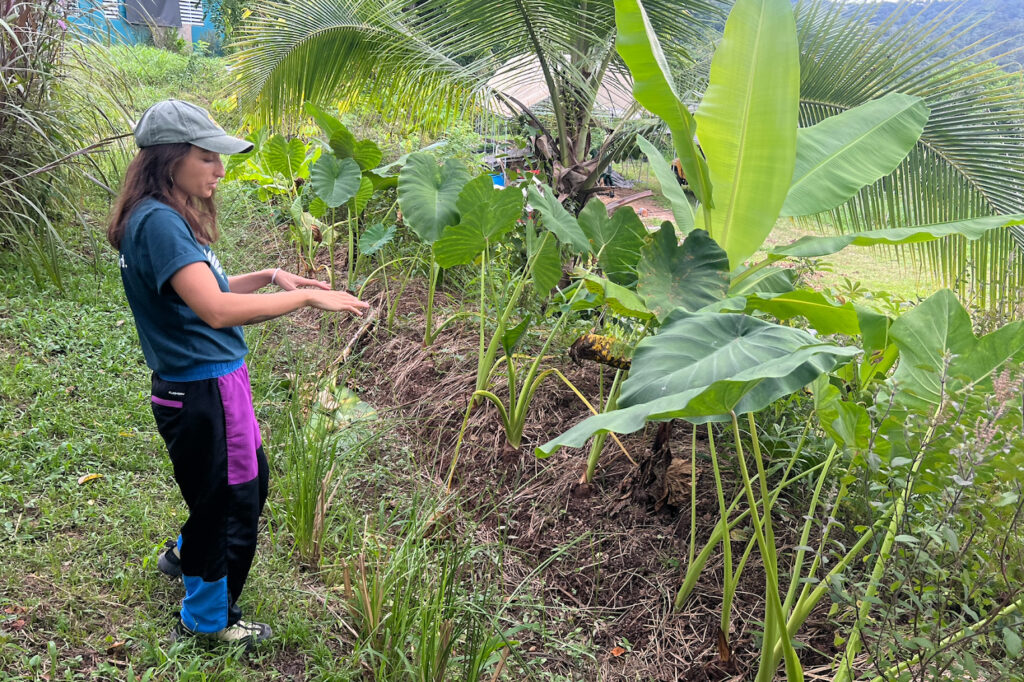
The plant will play a role in Plenitud’s current water management systems. The farm currently uses both active and passive water management. Active refers to human intervention—such as the system—and passive refers to using the earth and landscape to manage water.
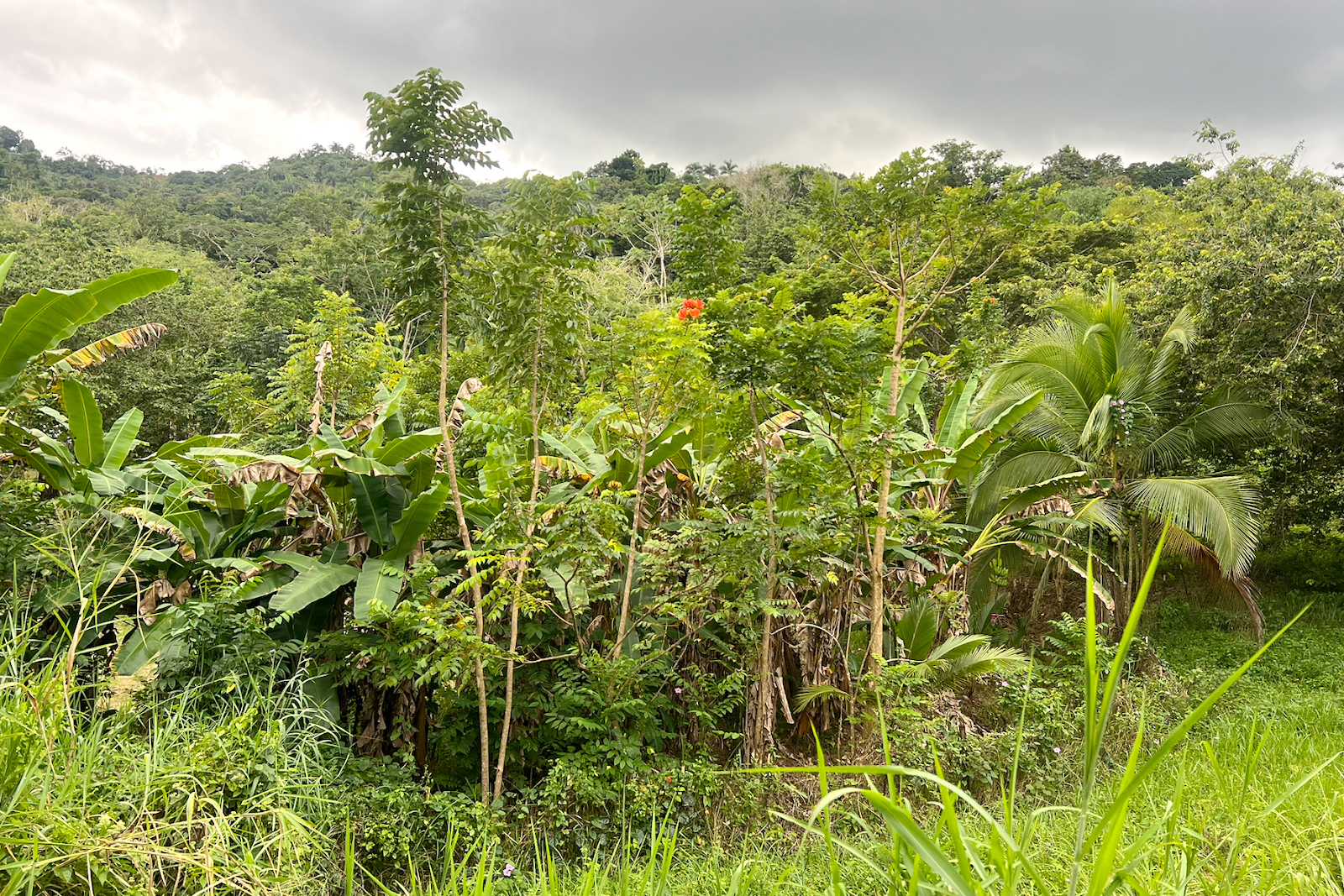
Plenitud employs passive management through swales, an interconnected network of soil pathways and terraces that redirects water down to Rio Arenas.
Swales also reduce the likelihood of landslides, and provide benefits such as passive irrigation, nutrient distribution and groundwater replenishment, which are essential for successful agriculture. Through those methods, García Canto said they didn’t have any major landslides at Plenitud after Hurricanes María and Fiona.
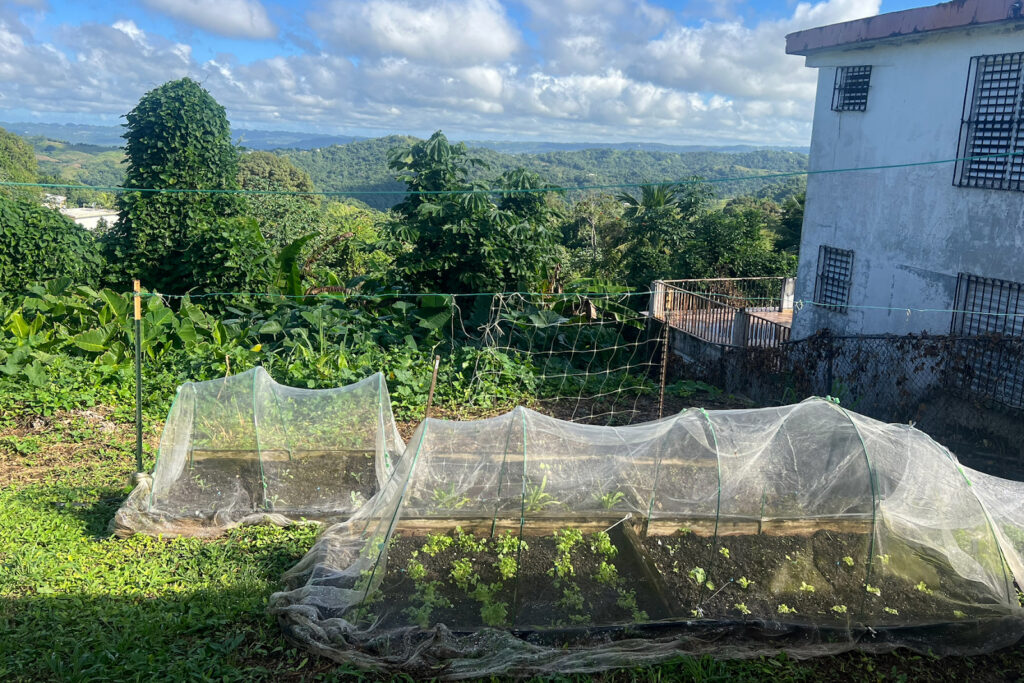
Plenitud integrates these methods into its agricultural programming, demonstrating to attendees how passive management works and how it can be applied in other places.
The PF250 will be an addition to the programming Plenitud offers to community members throughout Puerto Rico.
“Sustainability isn’t a one-size-fits-all solution, but it’s more like figuring out what works for you. That takes a lot of inspiration and curiosity,” García Canto said. “I just hope that people can walk away more curious and more inspired to do something creative.”
This concept is reflected in other programming at Plenitud. The farm also operates La Cancha Sana, a kitchen and resiliency hub built after Hurricane María.
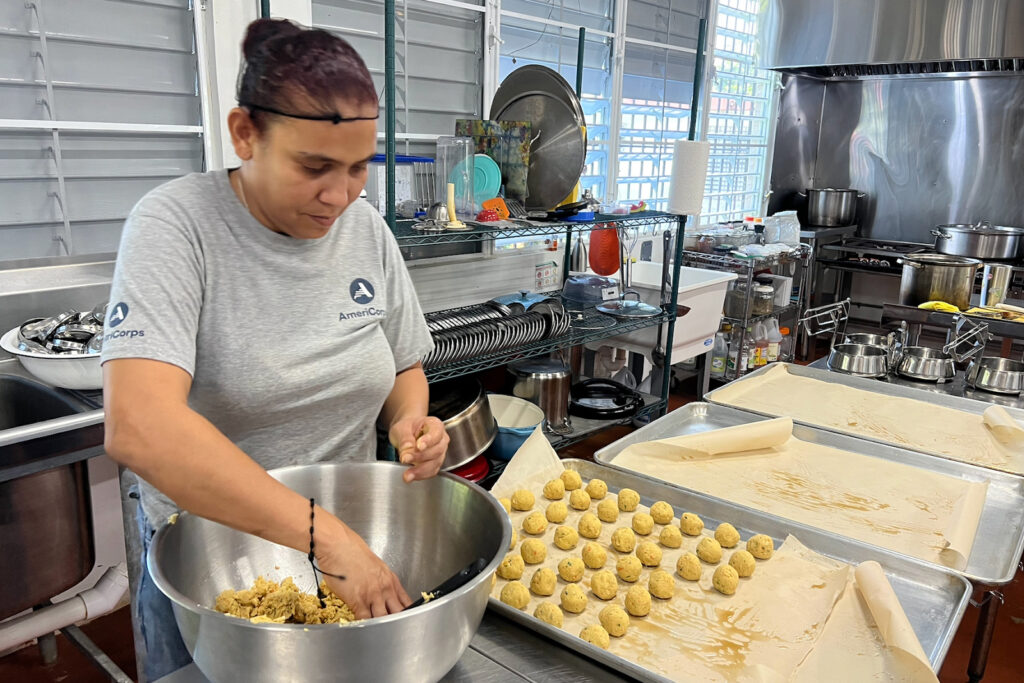
There, volunteers run the program Amo mis Abus, or “Love my Elders,” a meal service that delivers meals made from locally sourced ingredients to senior citizens in Las Marías twice per week.
The space serves as a resiliency hub in times of emergency, providing essential services such as drinkable rainwater, fresh food and solar electricity. It also provides a space for people to gather outdoors and participate in educational workshops and activities. The kitchen has an attached water tank, in preparation for storms and events when access to clean water might be lost.
A program like this is critical to Las Marías, which has a population of roughly 8,600, with 25 percent being 65 years and over. Amo mis Abus delivers them meals and hosts programs that connect seniors with younger residents at Plenitud.
Amo mis Abus has four main team members: Jariksa Valle Feliciano, Migdalia Mass Llorens, Natalia Jiménez and Gina Malley Campos, all local residents.
Mass Llorens became involved with Plenitud during the pandemic, when Plenitud co-director Paula Paoli Garrido sought out natural leaders to help with sourcing food from local farms. Mass Llorens and her family lost everything in Hurricane María, and she had a key role in rebuilding the community through her leadership.
La Cancha Sana was part of the preparation for future disasters such as Hurricane Fiona. Now, the center continues those efforts through its programs.
“It’s beautiful, and I love it,” Mass Llorens said in Spanish about Amo mis Abus.
Valle Feliciano got involved with La Cancha Sana three years ago, but has been at Plenitud since its founding in 2012. After her grandmother was diagnosed with Alzheimer’s, she wanted to find food from an organic farm that could potentially help her condition.
“In vulnerable communities, a lot of elders are not getting attention,” Valle Feliciano said. “The health department is not really helping them. … The community has to step forward and help.”
Plenitud’s farm provides much of the product for Amo mis Abus.
La Cancha Sana also has a dual power system—the kitchen is connected to the main grid and also has a solar-powered system with batteries. They relied solely on solar until last year, when they connected to the grid for backup power. The same goes for water. The center is equipped with a water tank, connected to PRASA, and a rainwater system.
“We had to bring light to the community, to be able to offer love to those most in need, and to stand in solidarity with the people,” Mass Llorens said, referring to the role of La Cancha Sana following Hurricane Fiona.
“You stand with the people, bringing them that plate of healthy food, that wholesome meal we prepare ourselves. It’s just two days a week, but we are making a real difference, ensuring that an elderly person can partake just like everyone else.”
At Plenitud, the ACR team’s eventual goal is to be able to transport or build a similar system in another rural community.
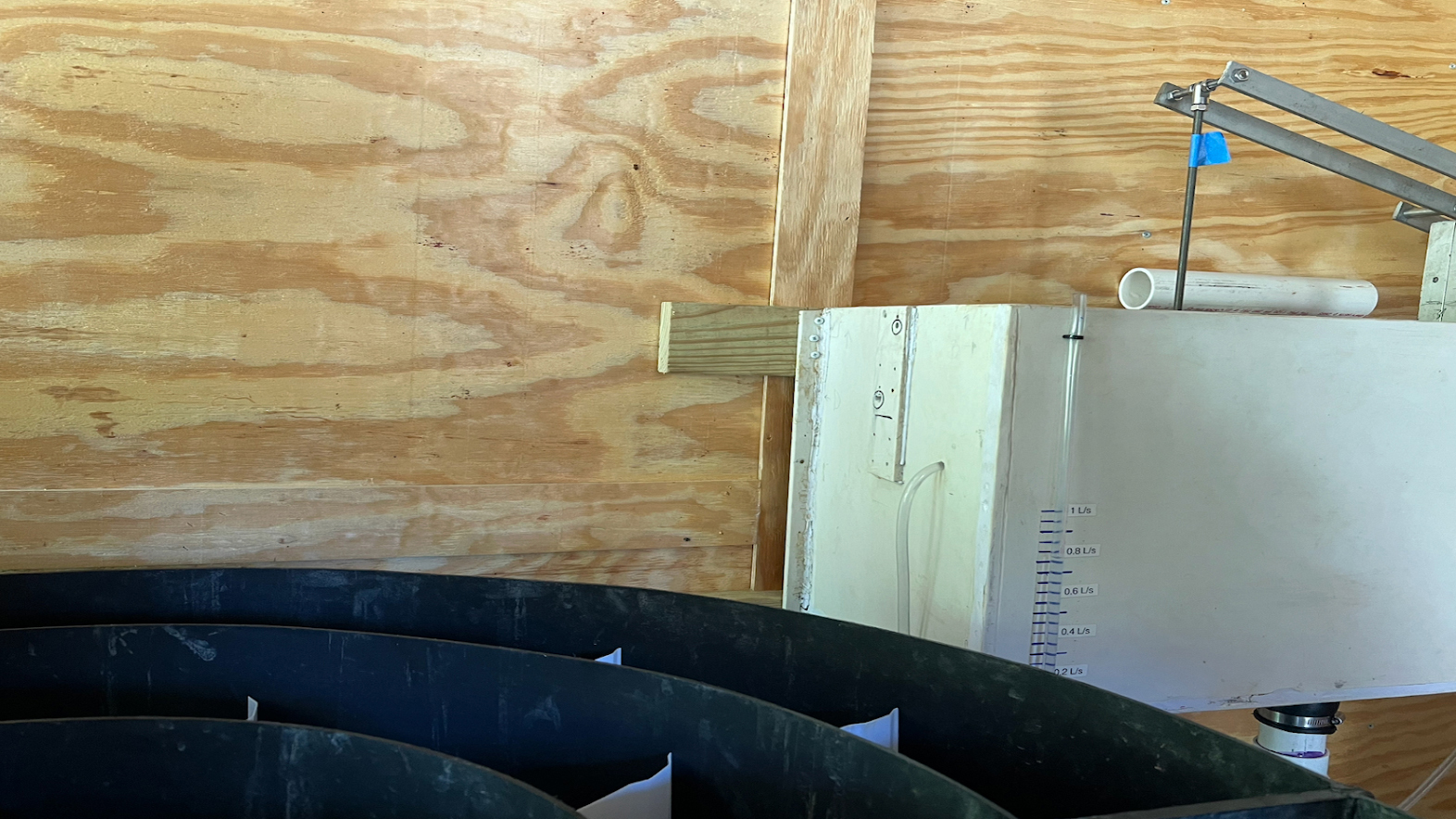
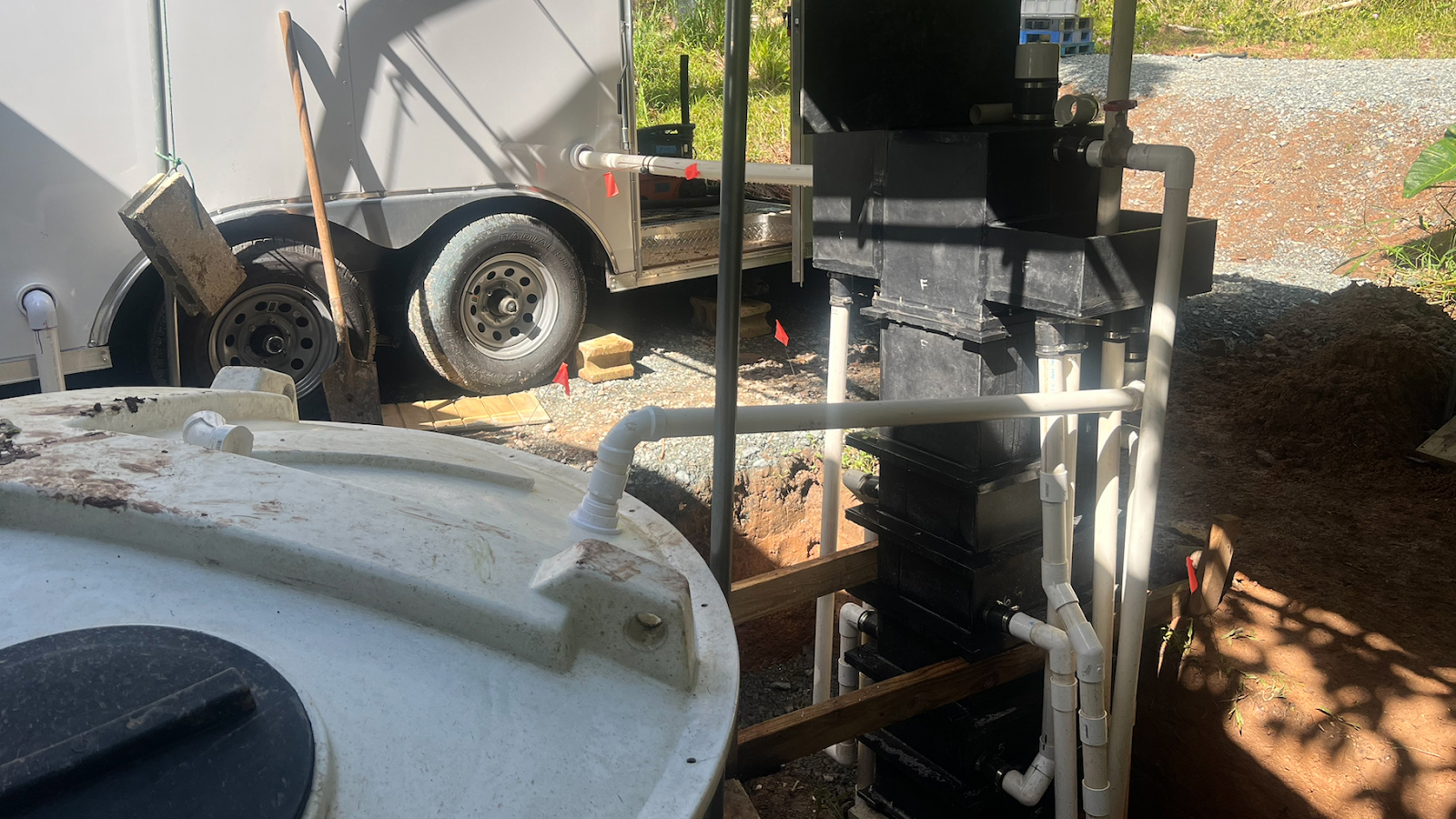
The system was engineered for simplicity in transportation and operation with the goal of making it easy to transport to rural areas. The largest component is an enclosed trailer that holds the water treatment technology and can be transported by being hooked up to a vehicle.
The PF250 was initially piloted in 2024 in Honduras, where it served a rural community, although the trailer component is unique to the installation at Plenitud. The other component of the system is a rapid sand filter located right next to the trailer, through which water runs for the final steps of filtering. The next iterations of this technology will include a redesign of the filter, so it can fit inside the trailer rather than outside it.
This story is funded by readers like you.
Our nonprofit newsroom provides award-winning climate coverage free of charge and advertising. We rely on donations from readers like you to keep going. Please donate now to support our work.
Donate NowAlthough the technology is complex and took years to develop, operating the system is meant to be understandable by people without an engineering background.
“We don’t want it to feel like a huge lift. The only way that these plants will survive in these communities is if [residents] want it, and they want to operate and maintain it,” said Izumi Matsuda, the design and partnerships officer at ACR, adding that their goal with the design of the plant is intentionally “as simple as possible,” which makes it more likely for people to actually use the technology.
“We would love for them to look at it and really believe that it could work in their setting. That’s why having it here in Puerto Rico is so important.”
She added that many people relying on community water systems haven’t yet experienced a technology that is realistically usable, which informed much of the system design, improvement and testing.
“With the invention, improvement and testing of this technology, these communities will finally have an option that could work for them,” Matsuda said. “The dream is that these communities can look at this technology and be like, ‘Oh, that could really work for us,’ and then together we find a way to make it possible.”
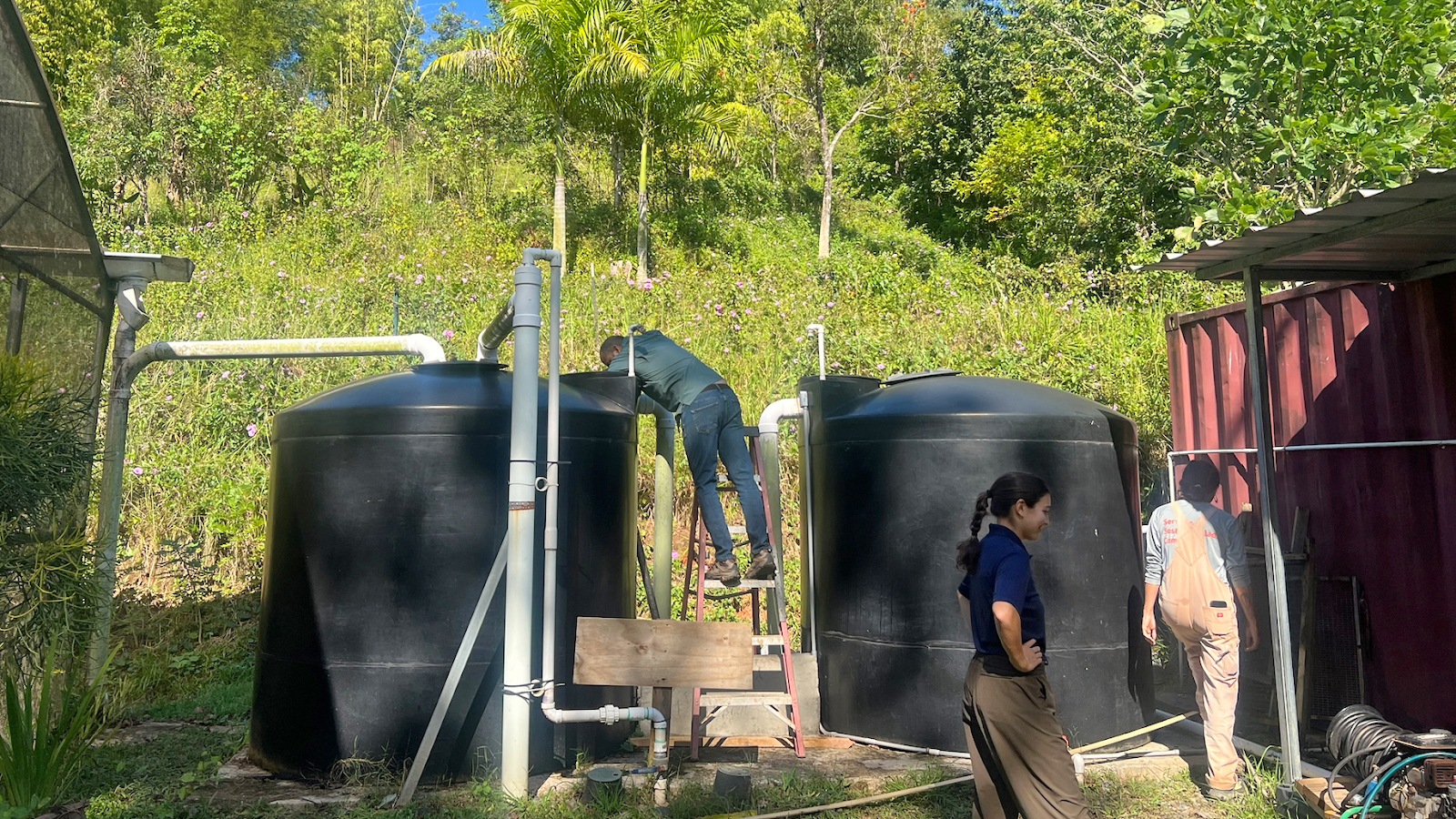
Team members across the organizations that brought the PF250 to Puerto Rico are working to make this a reality.
Among others at Plenitud, García Canto was trained to operate the system alongside Francisco Guzmán Alvarado, a technical specialist at ISE based in Cayey, Puerto Rico, who facilitates connections and engagement with these communities.
This is part of ACR’s partnerships with ISE, CECIA and Plenitud, which focus on outreach and capacity building for communities that could potentially use the PF250.
Guzmán Alvarado called the services provided by VersaWater a “utility in a box,” and his role is to engage people “from the beginning, and make them understand what they’re getting involved in by helping them understand” the importance of treating water correctly, not only for compliance, but also their health.
He was trained as an on-site operator to eventually assist with future system operation. The main goal is for communities to manage and operate systems independently.
ISE, which houses the EPA-designated Environmental Finance Center for EPA Region 2, also helps communities identify funding opportunities, understand water system regulations and how to improve their overall operations, which Guzmán Alvarado said rural communities often do not have the capacity for. ISE works with PRDOH to help communities apply for funding, mainly from the EPA’s Drinking Water State Revolving Funds (DWSRFs), which PRDOH manages locally.
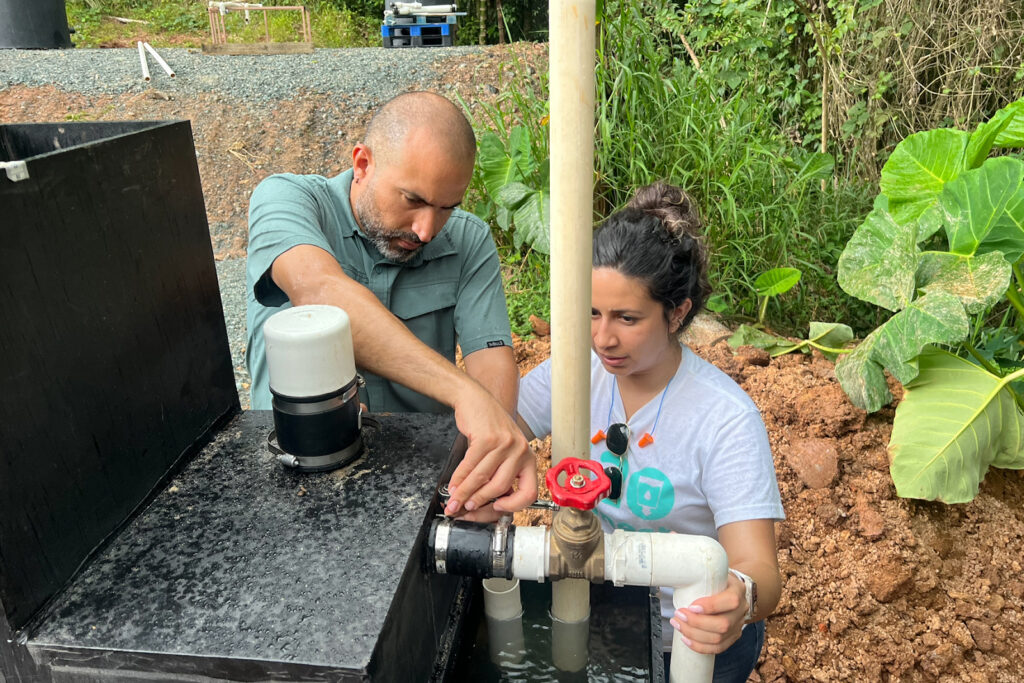
ISE team members Tess Clark, assistant director of water resilience, and Susan McGrattan, a technical specialist, work with Guzmán Alvarado to make the financial outreach component of the work possible. That involves investigating financial pathways to sustainably integrate the technology, helping communities navigate a complex regulatory and funding landscape, including applying and qualifying for grants.
Clark said they haven’t seen non-PRASA community-access DWSRF funding in the past 20 years, which McGrattan said is mainly due to a lack of resources and staff capacity to handle the complicated application process.
“I really see that as an uncharted path,” Clark said. “So VersaWater is looking at installing community water systems, and looking at this new approach in terms of the technology, but it’s also looking at how we can make this work as a financial pathway, and that’s what we are investigating.”
The work involves extensive research on existing needs and capacities and into identifying potential grants that communities can apply for and access to eventually purchase a PF250.
“It’s not a perfect system yet, and we’re still doing a lot of experimentation, and we don’t necessarily want to go to a community and have an imperfect solution for them,” McGrattan said.
Clark added that since the plant is still in a demonstration phase, their main goal is to figure out how to resolve any issues so that integrating the PF250 into a community is as useful as possible.
“We don’t see it being valuable unless it’s accessible,” she said.
The team is also navigating how to assist communities during a time when federal funds critical to making the VersaWater project possible have been previously frozen and potentially remain at risk.
The project, funded by grant from the NSF part of its Convergence Accelerator program, almost didn’t come to fruition.
Phase two of the grant—$5 million spread out across three years—was frozen by the Trump administration in January 2025, delaying its start. The funds were eventually unfrozen in July and the ACR team traveled to Las Marías during the first two weeks of December to install the system at Plenitud.
The grant ends in 2028, and by the second half of 2026, the team hopes to be breaking ground and installing one of the systems that bring water to people and have an established path to serving other types of customers, such as schools, businesses and emergency response services. To do these installs, they will need to employ their wraparound services, such as testing and sampling, co-development and management plans.
Funding cuts have affected Plenitud as well, but people at the organization are equipped to step up in the absence of federal assistance.
Gina Malley Campos, associate director at Plenitud, said that while the organization has not lost current federal funding, many federal grants they were hoping to receive—even some that were already written and close to approval—were cut. USDA grants, including those for sustainability-related projects, were particularly impacted. There’s a lot more competition between nonprofits to find funding sources to sustain their services to communities, she added.
“We’re definitely feeling the stress of needing to find sustained funding in different ways, [but] we were already in that process of diversifying our funding sources and not relying so much on federal or government grants,” Malley Campos said, adding that “it’s been like this for years” and people are still called to support programs like the ones Plenitud runs.
“We know the need and the realities and challenges that people are facing in general, particularly in rural regions like this,” she said.
Even as funding remains at risk, and in the case of another event like Hurricanes María or Fiona, the team at La Cancha Sana and Plenitud as a whole is prepared through their efforts to sustainably source food, water and power.
But the true impacts, Malley Campos said, are made on a daily basis—planning, cooking and delivering meals to elders and making sure that everyone has access to resources, with people looking out for each other when no one else will.
“It goes beyond typical ideas of sustainability,”Malley Campos said. “It’s sustainability of the heart.”
About This Story
Perhaps you noticed: This story, like all the news we publish, is free to read. That’s because Inside Climate News is a 501c3 nonprofit organization. We do not charge a subscription fee, lock our news behind a paywall, or clutter our website with ads. We make our news on climate and the environment freely available to you and anyone who wants it.
That’s not all. We also share our news for free with scores of other media organizations around the country. Many of them can’t afford to do environmental journalism of their own. We’ve built bureaus from coast to coast to report local stories, collaborate with local newsrooms and co-publish articles so that this vital work is shared as widely as possible.
Two of us launched ICN in 2007. Six years later we earned a Pulitzer Prize for National Reporting, and now we run the oldest and largest dedicated climate newsroom in the nation. We tell the story in all its complexity. We hold polluters accountable. We expose environmental injustice. We debunk misinformation. We scrutinize solutions and inspire action.
Donations from readers like you fund every aspect of what we do. If you don’t already, will you support our ongoing work, our reporting on the biggest crisis facing our planet, and help us reach even more readers in more places?
Please take a moment to make a tax-deductible donation. Every one of them makes a difference.
Thank you,