

As the leaders of the world’s two largest economies meet in Beijing this week, a new analysis underscores a growing divergence between China and the United States in shaping the global energy system.
While Chinese companies continue to expand their dominance of clean energy industries, the data shows, their American counterparts are withdrawing from those sectors.
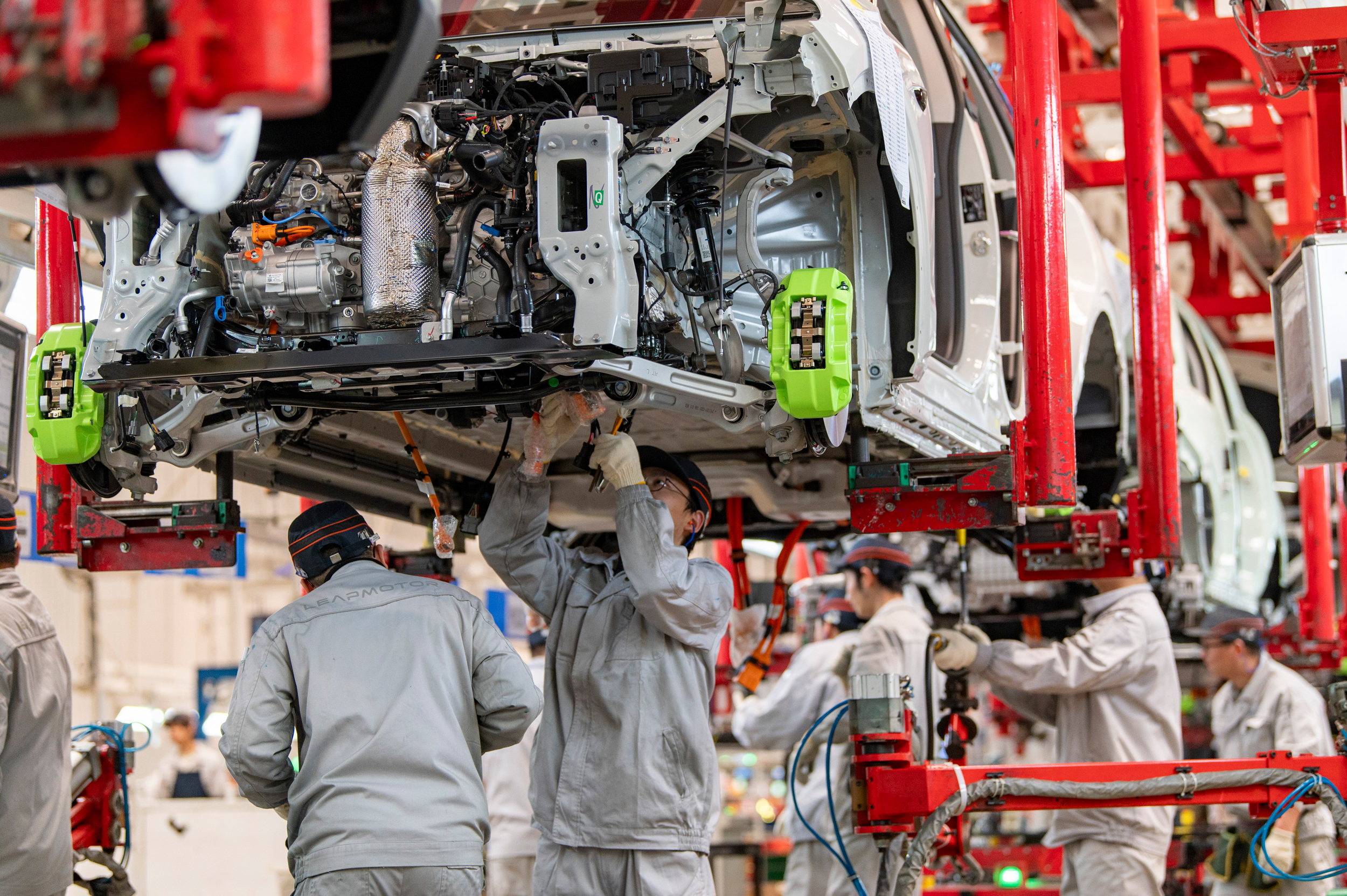
Chinese firms accounted for 55 percent of nearly $1.1 trillion in clean energy manufacturing investments announced from 2019 through 2025, according to a report this week by Atlas Public Policy, a clean energy-focused data and research firm. While China has long led development of solar and wind energy and electric vehicles and batteries, its companies have expanded their footprints overseas in recent years.
“For people who are watching this space closely, that’s not new,” said Tom Taylor, a senior policy analyst at Atlas Public Policy and the report’s lead author. “What is new, I think, is the U.S. is falling further behind.”
The report shows that after several years of growth, companies announced more cancellations of clean energy projects in the United States in 2025 than in the rest of the world combined. The result was the first year that these investments actually shrank in the United States.
While several factors contributed to the loss, Taylor said, it coincided with a slew of actions by the Trump administration and congressional Republicans to withdraw support for renewable energy and electric vehicles and to promote fossil fuels.
The picture that emerges is a growing gap.
U.S. companies had the second-largest amount of announced investments in clean energy technologies over the seven-year period, yet they accounted for less than half the total of their Chinese counterparts.
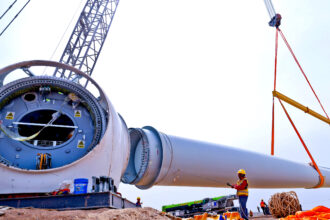
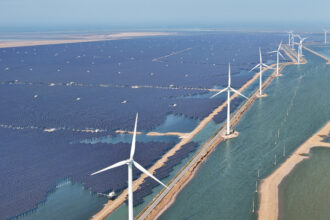
Chinese firms led in each of the categories examined in the report: batteries, solar energy, wind energy and electric vehicles. For solar, Chinese companies accounted for nearly 80 percent of investments. For wind, the share was more than half.
Taylor noted that while the Chinese government has provided robust support for these industries, it is the country’s private sector making the investments. The report identified 86 Chinese companies with more than $1 billion in investments, compared to only 19 firms based in the United States.
Battery manufacturing drew the largest share of investment, at nearly half the total, in part because of the sector’s capital-intensive needs.
One of the newer stories, Taylor said, is the growing presence of Chinese companies overseas. They have announced more than $136 billion in investments outside China, more than four times the foreign investments of American companies.
Many analysts have argued that the U.S. war against Iran, and the resulting closure of the Strait of Hormuz and disruption to oil and gas supplies, could further tilt the global energy landscape toward China.
Oil and gas prices have spiked globally and underscored the fragility of relying on fossil fuel imports. Global stocks of oil have fallen at “a record pace,” the International Energy Agency said Wednesday. The agency expects global oil demand to decline slightly this year because of the war’s disruptions.
Already there are signs that countries may be looking to reduce reliance on fossil fuels by turning to China: Its exports of solar panels doubled in March, according to an analysis of the country’s export data by Ember, a clean energy think tank. Ember attributed the change to higher energy prices caused by the Iran war and changes to Chinese tax rebates.
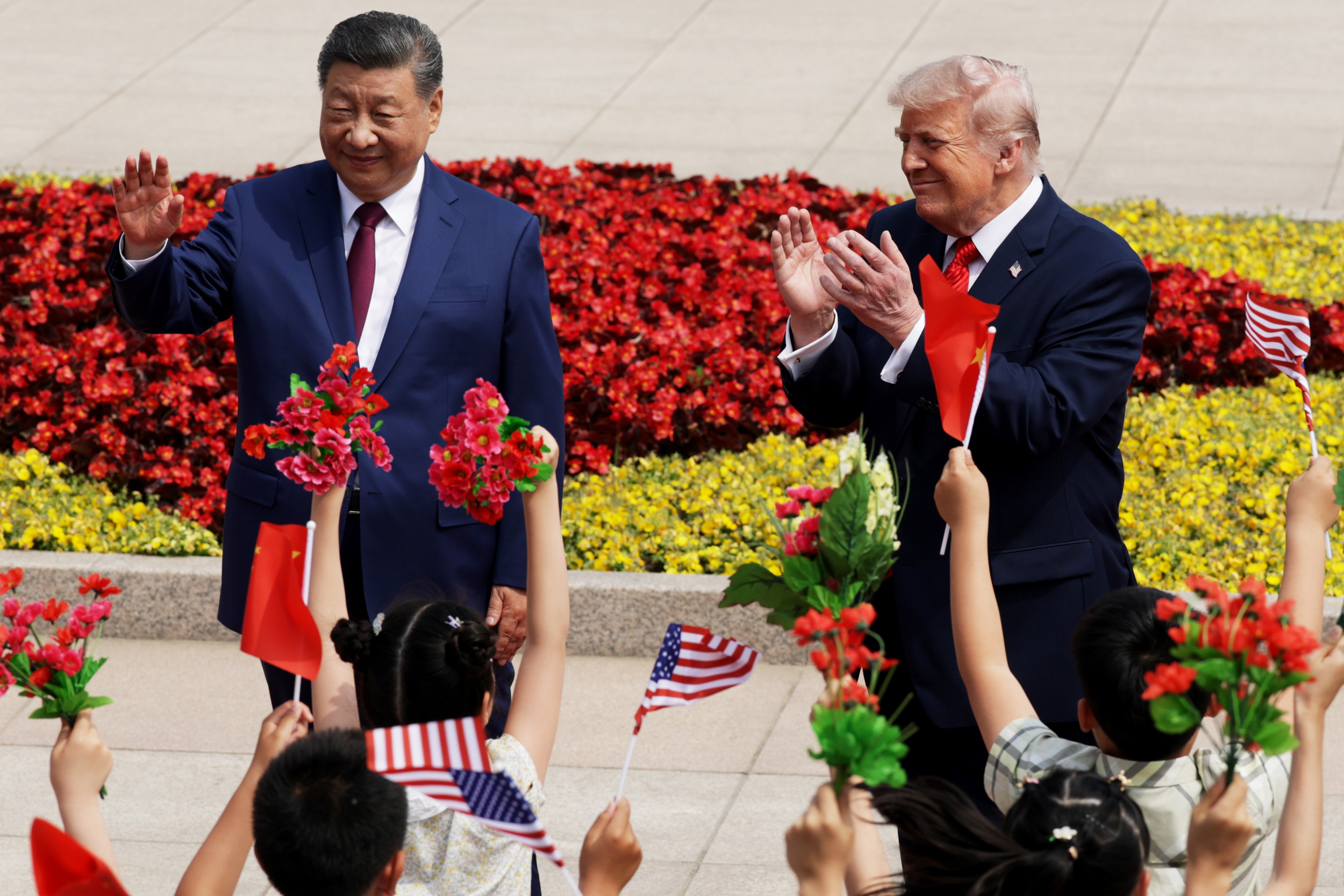
David M. Hart, a senior fellow at the Council on Foreign Relations, wrote this week that the war had weakened President Donald Trump’s position with President Xi Jinping of China ahead of their meeting. Hart argued that the disruption to oil and gas supplies strengthened China’s case that it offers countries a more reliable path to building their energy systems with renewable resources, rather than imports of U.S. oil and gas.
Taylor, with Atlas Public Policy, said the United States’ retreat from renewable energy and electric vehicles is deepening reliance on China in a way that could make the global energy system more fragile.
“It’s really important to have a supply chain that is not dependent on a single country,” Taylor said.
The paths of the United States and China are not entirely divergent, however. Chinese money has been flowing into American clean energy manufacturing for years: From 2019 through 2025, according to the report, the United States was the fourth-largest destination for Chinese investment.
One exception is Chinese EVs, blocked in the U.S. by restrictions and high tariffs. But Trump has concerned some allies of the U.S. auto industry by indicating an openness to investment. The average price of a new EV in China is less than half what it is in the United States.
About This Story
Perhaps you noticed: This story, like all the news we publish, is free to read. That’s because Inside Climate News is a 501c3 nonprofit organization. We do not charge a subscription fee, lock our news behind a paywall, or clutter our website with ads. We make our news on climate and the environment freely available to you and anyone who wants it.
That’s not all. We also share our news for free with scores of other media organizations around the country. Many of them can’t afford to do environmental journalism of their own. We’ve built bureaus from coast to coast to report local stories, collaborate with local newsrooms and co-publish articles so that this vital work is shared as widely as possible.
Two of us launched ICN in 2007. Six years later we earned a Pulitzer Prize for National Reporting, and now we run the oldest and largest dedicated climate newsroom in the nation. We tell the story in all its complexity. We hold polluters accountable. We expose environmental injustice. We debunk misinformation. We scrutinize solutions and inspire action.
Donations from readers like you fund every aspect of what we do. If you don’t already, will you support our ongoing work, our reporting on the biggest crisis facing our planet, and help us reach even more readers in more places?
Please take a moment to make a tax-deductible donation. Every one of them makes a difference.
Thank you,