

The world’s largest meat company is preparing to build a sprawling industrial beef operation in Nigeria—its first on the African continent—but has not revealed details about its plans, prompting a challenge by environmental advocates.
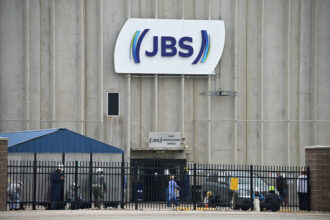
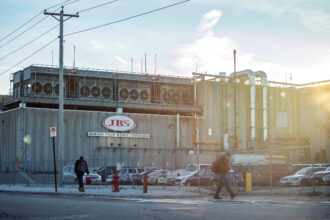
JBS, the Brazilian beef juggernaut plagued by corruption scandals and ongoing links to deforestation in the Amazon rainforest, announced its first foray into Africa in 2024 after signing an agreement with the Nigerian government. The company says it will open at least six slaughterhouses in the country, investing $2.5 billion, nearly half of its broader $6 billion global expansion plans.
“It’s a bridgehead into a growing continent,” said Alex Wijeratna, an attorney with Mighty Earth, an advocacy group that has tracked JBS’s connections to deforestation and sued it in the past for making climate-related promises that conflict with its business plans. “There’s a lot of food insecurity across the nation, across the continent, so there’s concern. What are the terms of this investment? What analysis have they done? What information have they released into the public domain? What kind of impact will that have on landscapes, deforestation?”
A recent analysis found JBS’s emissions of methane, the short-lived but especially potent greenhouse gas, exceeded those of Shell and ExxonMobil combined in 2023.
In April of last year, the U.S. Securities and Exchange Commission allowed JBS to list on the New York Stock Exchange after the company campaigned for a decade to get its approval. The SEC’s greenlight came only days after new campaign filings showed that a major subsidiary of JBS gave $5 million to President Donald Trump’s inauguration campaign, the largest of any company.
Lawmakers from both parties pushed against the listing, which now allows JBS to tap into U.S. capital markets to fund its expansion.
As part of that listing process, JBS reincorporated in the Netherlands, where corporations often seek tax exemptions under Dutch law. But, critics say, it may have made a strategic mistake: Dutch law requires companies to meet a “duty of care,” in line with international human rights laws, which encompasses harms caused by planet-warming greenhouse gas emissions.
In April, Greenpeace Netherlands sent a letter to JBS alleging that the company is in violation of Dutch law and that its expansion into Nigeria and elsewhere could cause further climate, environmental and human rights damage. In the letter, which represents the first step toward a lawsuit, Greenpeace also requested details of JBS’s planned Nigeria expansion, a legal maneuver under a newly passed Dutch law that allows entities to demand specific details on Dutch companies if they intend to sue them.
“Greenpeace Netherlands believes JBS holds a special position as one of the most climate polluting and ecosystem damaging meat companies in the world,” the letter said, arguing that JBS “has a duty of care under Dutch law that requires the company to refrain from conduct that violates human rights, in particular the right to a clean, healthy and sustainable environment and to take reasonable measures to prevent harm to people and the planet.”
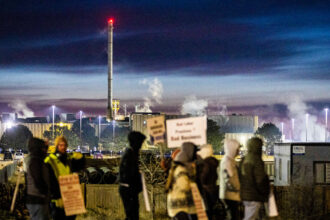
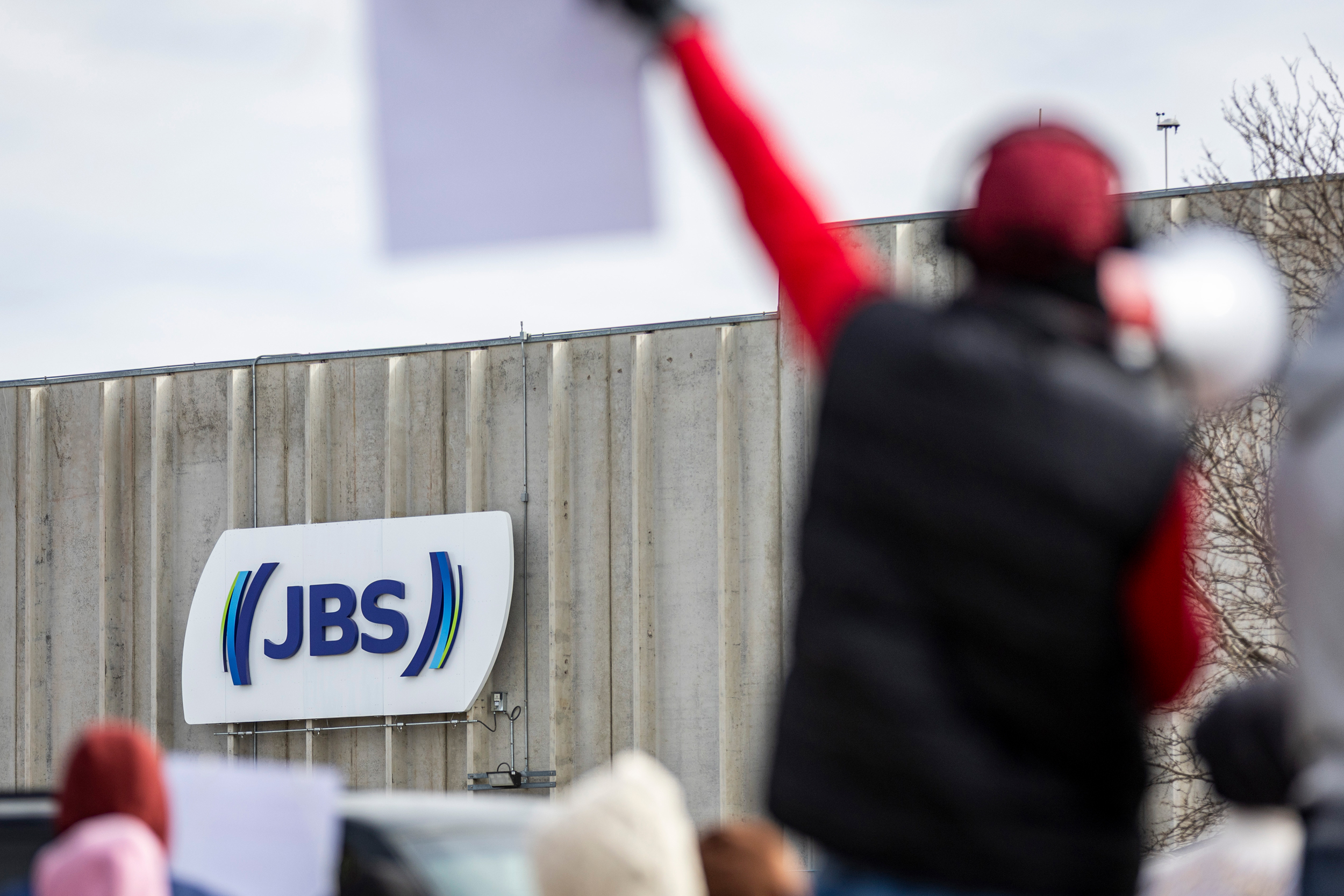
The letter was sent April 30, the day of JBS’s first annual meeting in the Netherlands, held at a hotel near Amsterdam’s Schiphol airport, where protesters gathered with a banner reading, “JBS: Keep your bloody business out of Africa.”
This story is funded by readers like you.
Our nonprofit newsroom provides award-winning climate coverage free of charge and advertising. We rely on donations from readers like you to keep going. Please donate now to support our work.
Donate NowThe letter asks that JBS provide “certain information relating to its impact on people and the planet, as well as the steps it takes to measure and mitigate that impact, whether contained in documents or obtainable through the hearing of witnesses or independent expert reviews.”
In its response to the letter, dated May 21, JBS declined to provide the information and said the company “complies with laws and regulations and believes it is well positioned to support food security in markets around the world. Your letter ignores both the pressing need for food security and the aim for food independence in local markets around the globe, as well as geopolitical dynamics at play.”
Opponents, including Nigerian civil society groups, say the lack of transparency from JBS and the Nigerian government means it is unclear how the projects will impact not only the environment, but also livelihoods in pastoralist communities that still dominate much of the rural countryside.
“They’ve been remarkably opaque,” said Richard Brown, a Greenpeace International attorney. “We know that they entered into an agreement 18 months ago and we know that they are planning to invest $2.5 billion in Nigeria and they’ve been talking to people in Nigeria and preparatory work is underway, but the detail is really, really sketchy. They are operating in the shadows.”
Some activists have said they believe most of the processed meat will not end up in Nigeria, but rather be sent to wealthy Middle Eastern countries.
JBS did not respond to questions from Inside Climate News.
Greenpeace maintains that the case could establish “a new frontier in the fight against climate change” and if successful “could set a major precedent for future legal challenges against the industrial agriculture sector, which is a major source of methane emissions.”
In 2019, the Dutch branch of Friends of the Earth, Milieudefensie, sued Netherlands-based Shell in an effort to force the oil giant to reduce its emissions in line with the target of the 2015 Paris Agreement. A Dutch court in 2021 ruled in Milieudefensie’s favor, saying Shell had breached its duty of care under Dutch law. That ruling was overturned in 2024, but the court maintained the company still had an obligation to reduce emissions.
The case against JBS is being made on similar grounds.
“The Milieudefensie case made it clear that when you have big-emitting companies, they have a special obligation to reduce emissions,” Brown said. “What is being argued is that JBS is essentially a growth stock—its business model is based on aggressive global expansion—and in order to act in accordance with the Dutch law, as a Dutch company, which is what they now are, they have to have regard in their investment decisions to what that means for a livable planet.”
This story has been updated to reflect that a JBS subsidiary donated to President Donald Trump’s inauguration campaign, not his election campaign, and to correct that Greenpeace Netherlands, not Greenpeace International, sent the April 30 letter to JBS.
About This Story
Perhaps you noticed: This story, like all the news we publish, is free to read. That’s because Inside Climate News is a 501c3 nonprofit organization. We do not charge a subscription fee, lock our news behind a paywall, or clutter our website with ads. We make our news on climate and the environment freely available to you and anyone who wants it.
That’s not all. We also share our news for free with scores of other media organizations around the country. Many of them can’t afford to do environmental journalism of their own. We’ve built bureaus from coast to coast to report local stories, collaborate with local newsrooms and co-publish articles so that this vital work is shared as widely as possible.
Two of us launched ICN in 2007. Six years later we earned a Pulitzer Prize for National Reporting, and now we run the oldest and largest dedicated climate newsroom in the nation. We tell the story in all its complexity. We hold polluters accountable. We expose environmental injustice. We debunk misinformation. We scrutinize solutions and inspire action.
Donations from readers like you fund every aspect of what we do. If you don’t already, will you support our ongoing work, our reporting on the biggest crisis facing our planet, and help us reach even more readers in more places?
Please take a moment to make a tax-deductible donation. Every one of them makes a difference.
Thank you,