

If you knew a major storm or fire was heading toward your home, what would you save? Maybe your pet? A box of letters? The blanket that your grandma knitted for you as a baby?
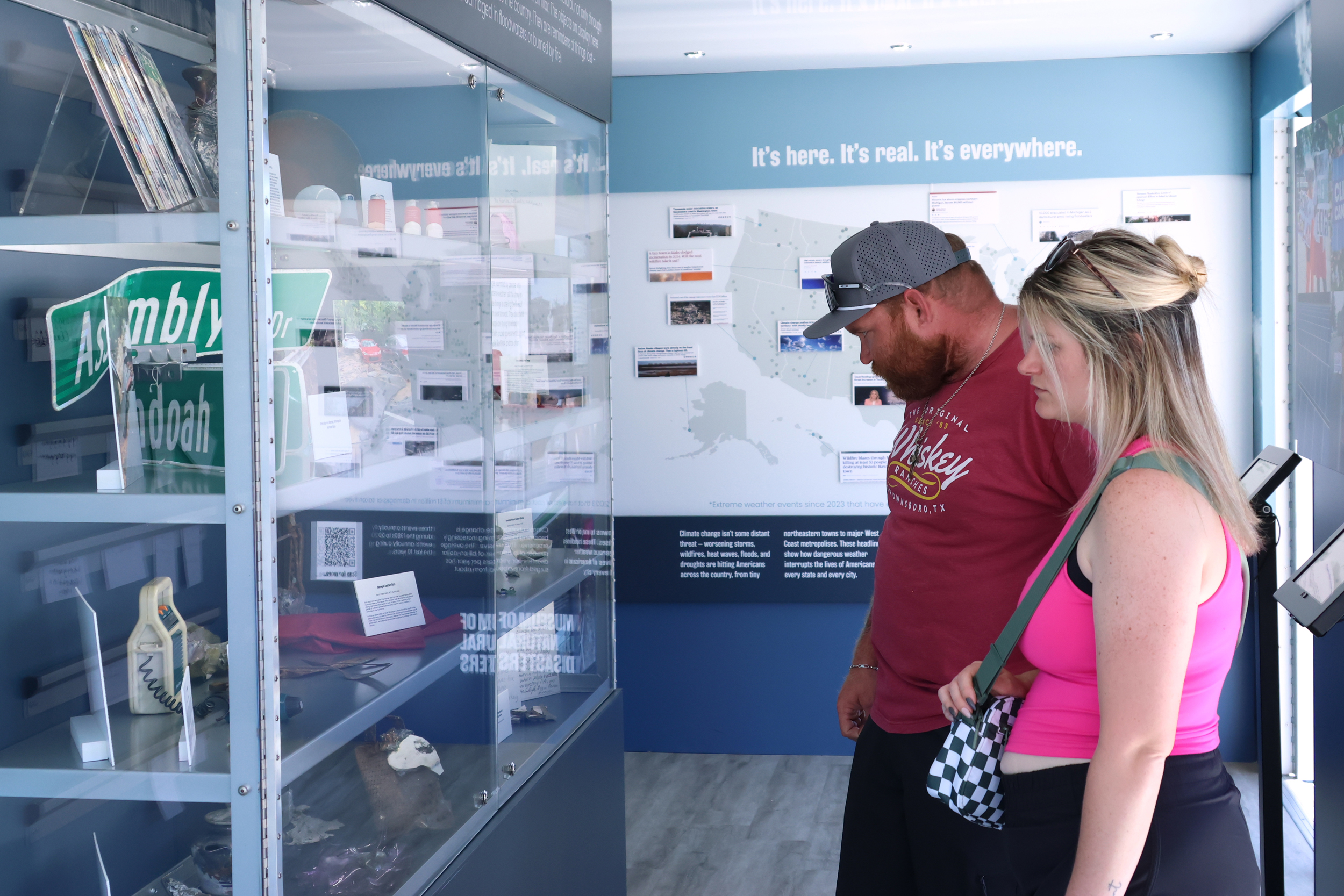
A pop-up exhibit led by the Climate Action Campaign and curated by Sam Hartman, an artist and survivor of Hurricane Helene, asks that question of visitors. Built in a shipping container-sized space, the exhibit at Constitution Gardens on the National Mall brings together artifacts and stories from survivors of extreme weather events across the country to the political heart of the country.
“You can look at anyone’s face and you’ll never know what storm they have weathered, but you can look at an artifact from their house and you’ll immediately see what happened to it,” Hartman said in a video promoting the event.
Called the “Museum of Unnatural Disasters,” the exhibit featured roundtable discussions with climate experts, members of Congress and disaster survivors to talk about the economic pain of extreme weather and what could be done to protect people moving forward.
Kimberly Wills, director of strategic partnerships for the Climate Action Campaign, said the group hopes sharing these experiences can motivate people to demand action from their leaders, as they become more aware of the impacts of extreme weather on their lives.
“We are doing a lot of work to call on our leaders in Congress to do more, to tackle the climate crisis,” she said. “We know so many people understand that climate change is real and it’s happening through the frame of extreme weather, because they can see it.”
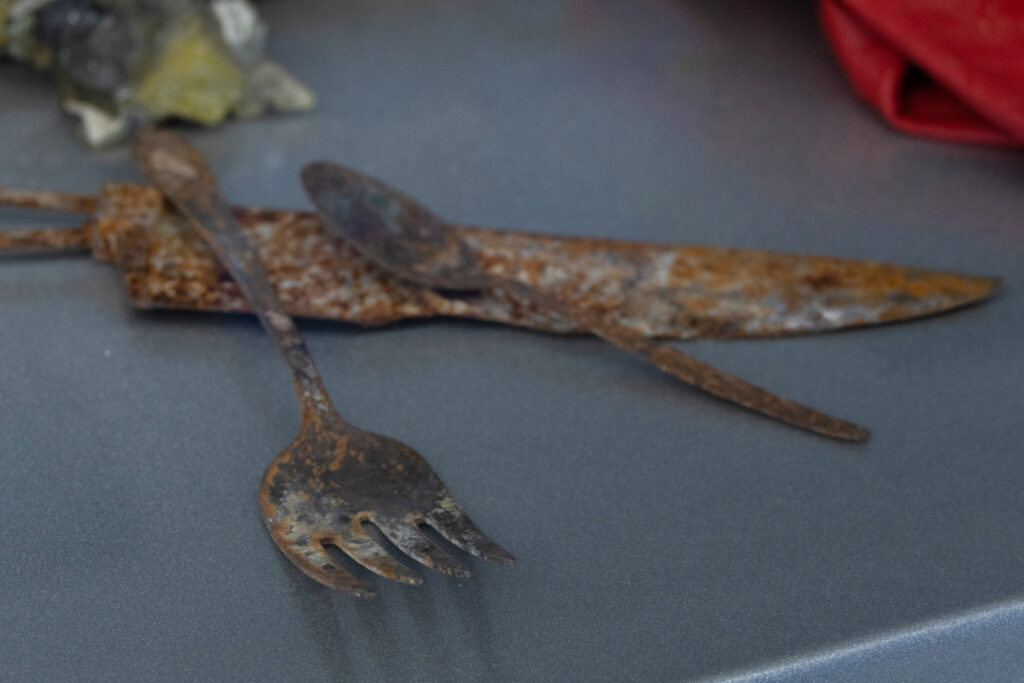
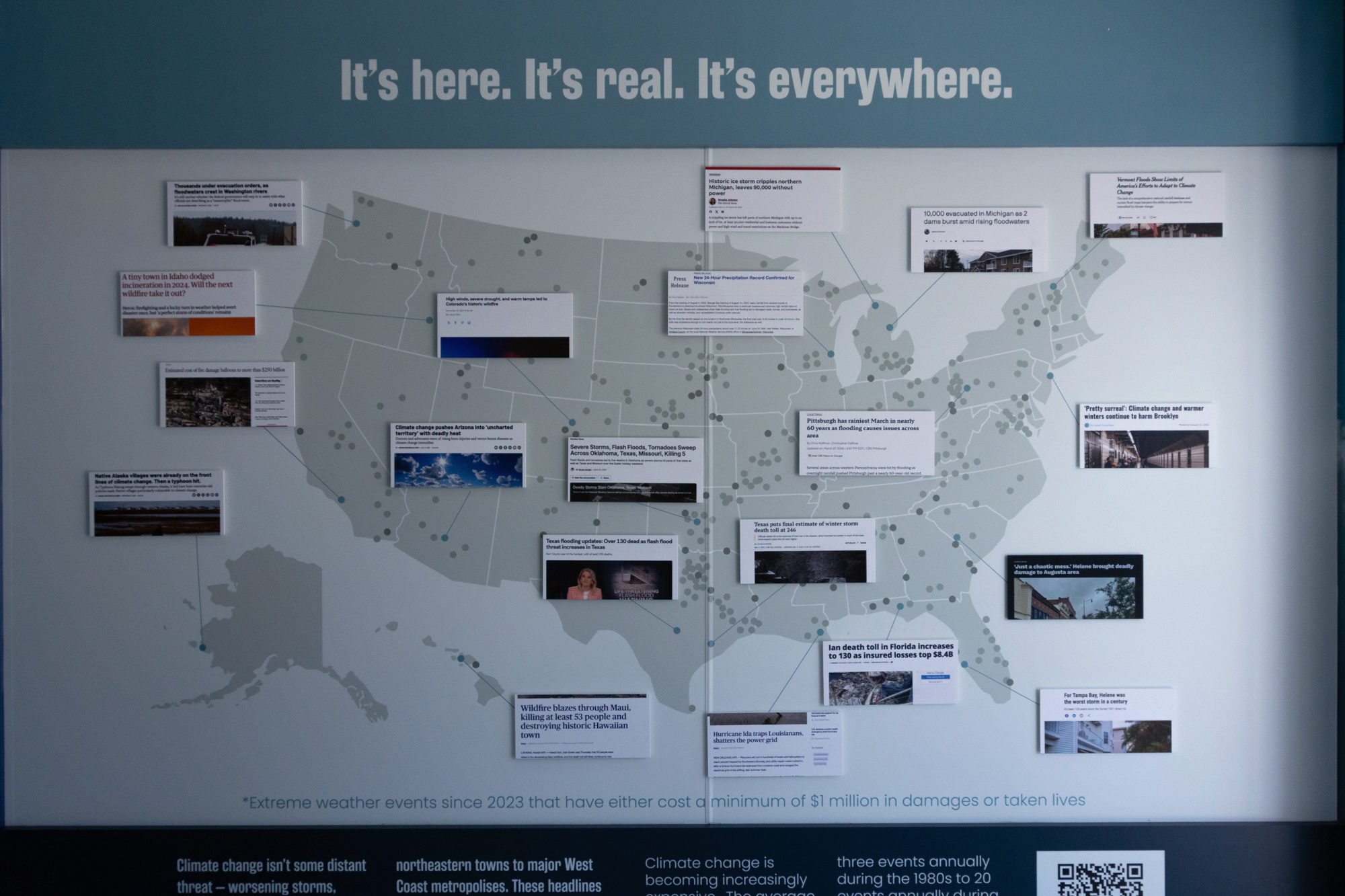
A U.S. map of extreme weather events in the last two years that caused over $1 million in damages and respective news headlines hangs on one wall of the museum. Next to the map is a rectangular glass display case featuring artifacts such as broken household utensils and asthma inhalers, and a small table with handheld fans and pamphlets from the coalition. Wills said the people whose artifacts and stories are shown in the exhibit “could be any of us.”
While the U.S. is expected to face a more tame hurricane season in the Atlantic Ocean, conditions in the West, as a result of widespread drought and light snowpack in mountainous areas, have wildfire experts particularly worried about this year’s fire season.
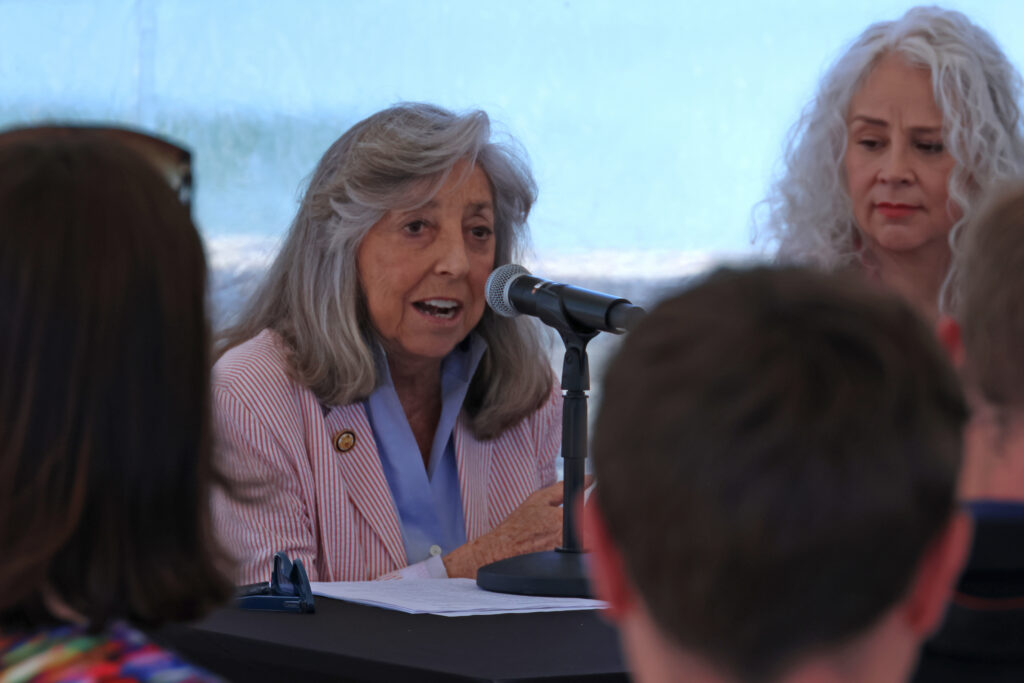
At the first scheduled discussion about extreme heat, held in a tent beside the main exhibit space, Rep. Adelita Grijalva (D-Ariz.) warned about the dangers of inaction when facing it.
“You see in New Mexico, they don’t have snowpacks, there’s going to be water consequences, we’re not building the infrastructure,” Grijalva said. “People say, ‘Well, you know heat,’ I’m like, ‘I do, but I don’t know heat 117 degrees in the second week of June. We shouldn’t be right in triple digits in May. It impacted things that we historically had outside, like high school graduations.”
The roundtable also featured Rep. Dina Titus (D-Nev.) and Hannah Safford, associate director at the Federation of American Scientists. “Heat is inescapable and visceral,” Safford said.
This story is funded by readers like you.
Our nonprofit newsroom provides award-winning climate coverage free of charge and advertising. We rely on donations from readers like you to keep going. Please donate now to support our work.
Donate NowDeidre Radford, a Nevada resident who joined the panel, described the personal consequences she faces as a result of extreme heat. “To me, what that translates to is a lot more asthma and allergies, and that creates infection,” she said. “I’ve been battling infection after infection after infection that stem from high heat and worsened air quality. This affects elderly people, it affects children, and it’s a constant battle for me.”
Titus said the country still has a lot of educating and advocating to do about heat, which she said does not make as “good TV” as floods, hurricanes and tornadoes.
“I can tell you that heat is still the stepchild of natural disasters,” Titus said. “Any time you try to argue that with my colleagues, in the language of legislation or regulation, you have to put extreme heat and extreme cold to get their support. You can’t just talk about heat because they just don’t get it.”
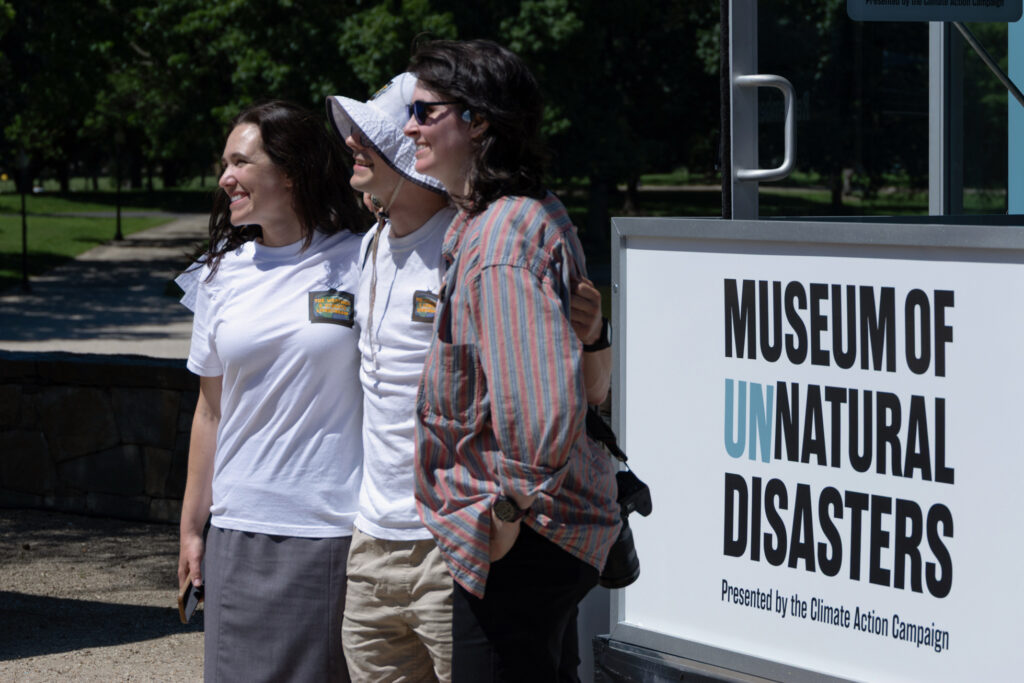
Syl Foisy, a Ph.D. candidate in atmospheric science at Columbia University, had been on a 12-day march, on foot, from New York to Washington D.C. in support of climate funding. He and two other researchers and science communicators stopped at the exhibit prior to dropping their petitions at the Capitol to stop the dismantling of the National Center for Atmospheric Research.
Foisy and his colleagues were concerned about the future of their profession. They wore shirts with the logo of the Weather & Climate Livestream, a 50-hour-long livestream that took place from June 1-3 and covered a diverse range of meteorological topics.
“All of us face the weather, we face disasters,” he said. “We get a warning on our phone that tells us to stay out of it; that saves lives. I think being here is a great example of communicating to folks that these forecasts are not only helpful, but the forecasts are important because the storms are getting more intense, the extreme events are getting more extreme because of what we know from studying the Earth.”
The Museum of Unnatural Disasters at Constitution Gardens is open daily through June 14.
About This Story
Perhaps you noticed: This story, like all the news we publish, is free to read. That’s because Inside Climate News is a 501c3 nonprofit organization. We do not charge a subscription fee, lock our news behind a paywall, or clutter our website with ads. We make our news on climate and the environment freely available to you and anyone who wants it.
That’s not all. We also share our news for free with scores of other media organizations around the country. Many of them can’t afford to do environmental journalism of their own. We’ve built bureaus from coast to coast to report local stories, collaborate with local newsrooms and co-publish articles so that this vital work is shared as widely as possible.
Two of us launched ICN in 2007. Six years later we earned a Pulitzer Prize for National Reporting, and now we run the oldest and largest dedicated climate newsroom in the nation. We tell the story in all its complexity. We hold polluters accountable. We expose environmental injustice. We debunk misinformation. We scrutinize solutions and inspire action.
Donations from readers like you fund every aspect of what we do. If you don’t already, will you support our ongoing work, our reporting on the biggest crisis facing our planet, and help us reach even more readers in more places?
Please take a moment to make a tax-deductible donation. Every one of them makes a difference.
Thank you,

Gabriel Matias Castilho
Fellow
Gabriel Matias Castilho is an Inside Climate News fellow reporting on the Washington, D.C. area. Previously, he worked for Capitol News Illinois, covering environmental policy, energy and utilities across the state. He is currently a master’s student at Northwestern University.