

For the first time in history, Deep Tunnel, Chicago’s massive system of underground tunnels and reservoirs designed to hold flood water, is almost completely full after a weekend of heavy rain.
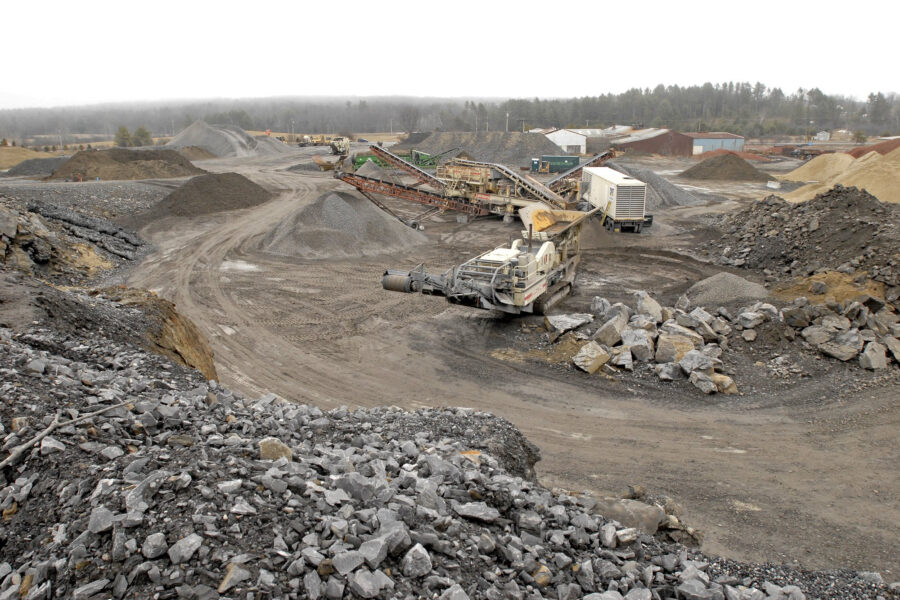
Built over more than a half-century, Deep Tunnel sends floodwaters from Chicago and nearby suburbs through more than 100 miles of tunnels into three reservoirs located just outside of the city. It was designed to help protect area rivers as well as Lake Michigan.
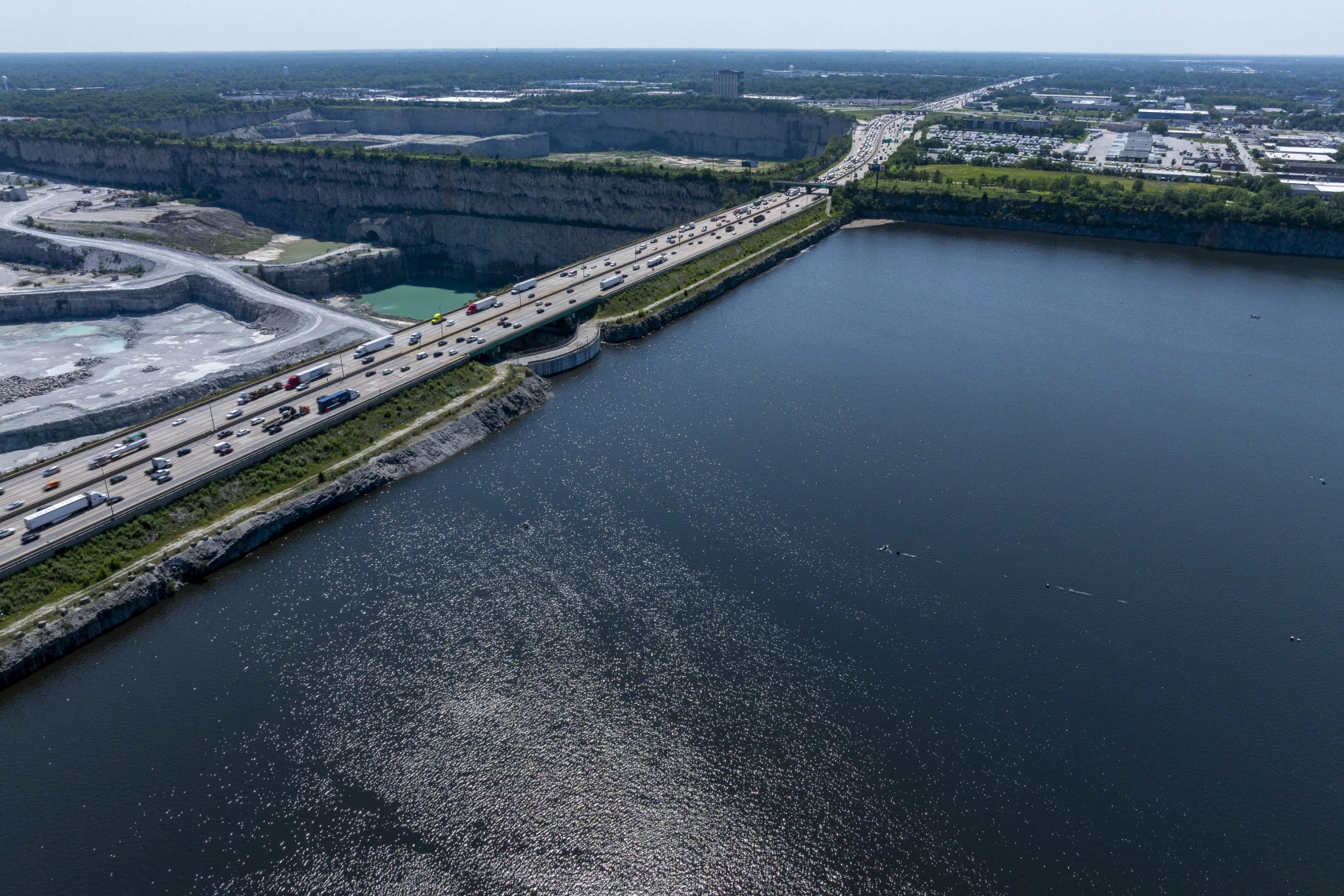
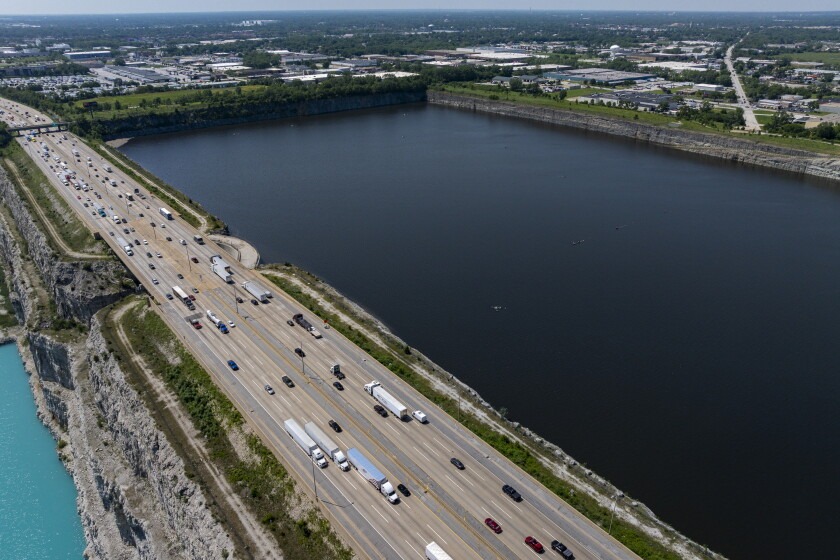
The Thornton reservoir in south suburban South Holland was at 94 percent capacity Monday. The McCook reservoir in southwest suburban Bedford Park fluctuated between 96 percent and 100 percent full. Between the two, they are holding around 11 billion gallons of water.
The Thornton reservoir has never filled up much more than half its capacity and that was at almost 55 percent in June 2019. The smaller McCook reservoir has filled up several times this year, most recently on June 26.
The third reservoir, Majewski in Elk Grove Village, is considerably smaller than the other two sites, holding less than 3 percent of the more than 13 billion gallons in the system.
As a result, 11 south suburban communities face river flooding threats. They are Blue Island, Calumet City, Dixmoor, Dolton, Glenwood, Harvey, Lansing, Phoenix, Riverdale, South Holland and Thornton, according to officials.
In Chicago, sewer overflows into the Chicago River took place over the past three days. The city’s sewers are a combined system of stormwater and wastewater, including everything flushed down the toilet.
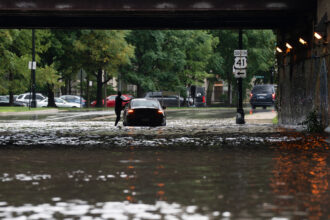
The city’s 311 system received almost 400 complaints about water in basements and nearly 600 reports about flooded streets between Thursday and Monday afternoon. That was far more street flooding complaints received than during a June 12 storm, though fewer basement reports.
According to the Metropolitan Water Reclamation District, which manages the tunnel and reservoir system, the giant holding areas are full after more than 8 inches of rain over the past 30 days. With more than 3 inches of rain in the Chicago area July 3 and 4, the total is almost a month’s rain in two days.
While the Chicago area has seen intense downpours of 8 or more inches of rain over short periods of time in recent years in part due to climate change, the steady rainfall in recent months has created a cumulative effect.
“We have inundated soils and nearly full reservoirs, meaning that the region-wide flood risk is higher, even from rain that is not particularly heavy,” said Illinois State Climatologist Trent Ford.
Experts say that Deep Tunnel isn’t enough to prevent flooding and that more greenspace and new types of water storage need to be developed.
“We need to blanket the region with natural areas,” said Margaret Frisbie, executive director of the advocacy organization Friends of the Chicago River. “This kind of rain is going to keep on coming.”
About a dozen spectators visited the Thornton reservoir on Monday to take a look.
“I’ve never seen anything like this before. I didn’t think this was possible,” said nearby resident Jeff Melone.
This story is funded by readers like you.
Our nonprofit newsroom provides award-winning climate coverage free of charge and advertising. We rely on donations from readers like you to keep going. Please donate now to support our work.
Donate NowEven though it’s been built over more than 50 years, Deep Tunnel is still not complete. An expansion of the McCook reservoir is scheduled to be complete by the end of 2032. It has reached capacity six times this year, which is notable because it only filled up five other times between 2021 and 2025, according to a district official.
Water from the Thornton reservoir will be pumped to the Calumet water treatment plant at 400 E. 130th St., while the McCook reservoir will be pumped to the wastewater plant in Stickney. After water is treated, it is returned to waterways and eventually flows to the Mississippi River and down to the Gulf of Mexico.
Depending on the weather, the reservoirs could remain near capacity. More rain is forecast in the Chicago area Thursday.
This article originally appeared in the Chicago Sun-Times and is republished with permission. Contributing: Tyler Pasciak LaRiviere
About This Story
Perhaps you noticed: This story, like all the news we publish, is free to read. That’s because Inside Climate News is a 501c3 nonprofit organization. We do not charge a subscription fee, lock our news behind a paywall, or clutter our website with ads. We make our news on climate and the environment freely available to you and anyone who wants it.
That’s not all. We also share our news for free with scores of other media organizations around the country. Many of them can’t afford to do environmental journalism of their own. We’ve built bureaus from coast to coast to report local stories, collaborate with local newsrooms and co-publish articles so that this vital work is shared as widely as possible.
Two of us launched ICN in 2007. Six years later we earned a Pulitzer Prize for National Reporting, and now we run the oldest and largest dedicated climate newsroom in the nation. We tell the story in all its complexity. We hold polluters accountable. We expose environmental injustice. We debunk misinformation. We scrutinize solutions and inspire action.
Donations from readers like you fund every aspect of what we do. If you don’t already, will you support our ongoing work, our reporting on the biggest crisis facing our planet, and help us reach even more readers in more places?
Please take a moment to make a tax-deductible donation. Every one of them makes a difference.
Thank you,