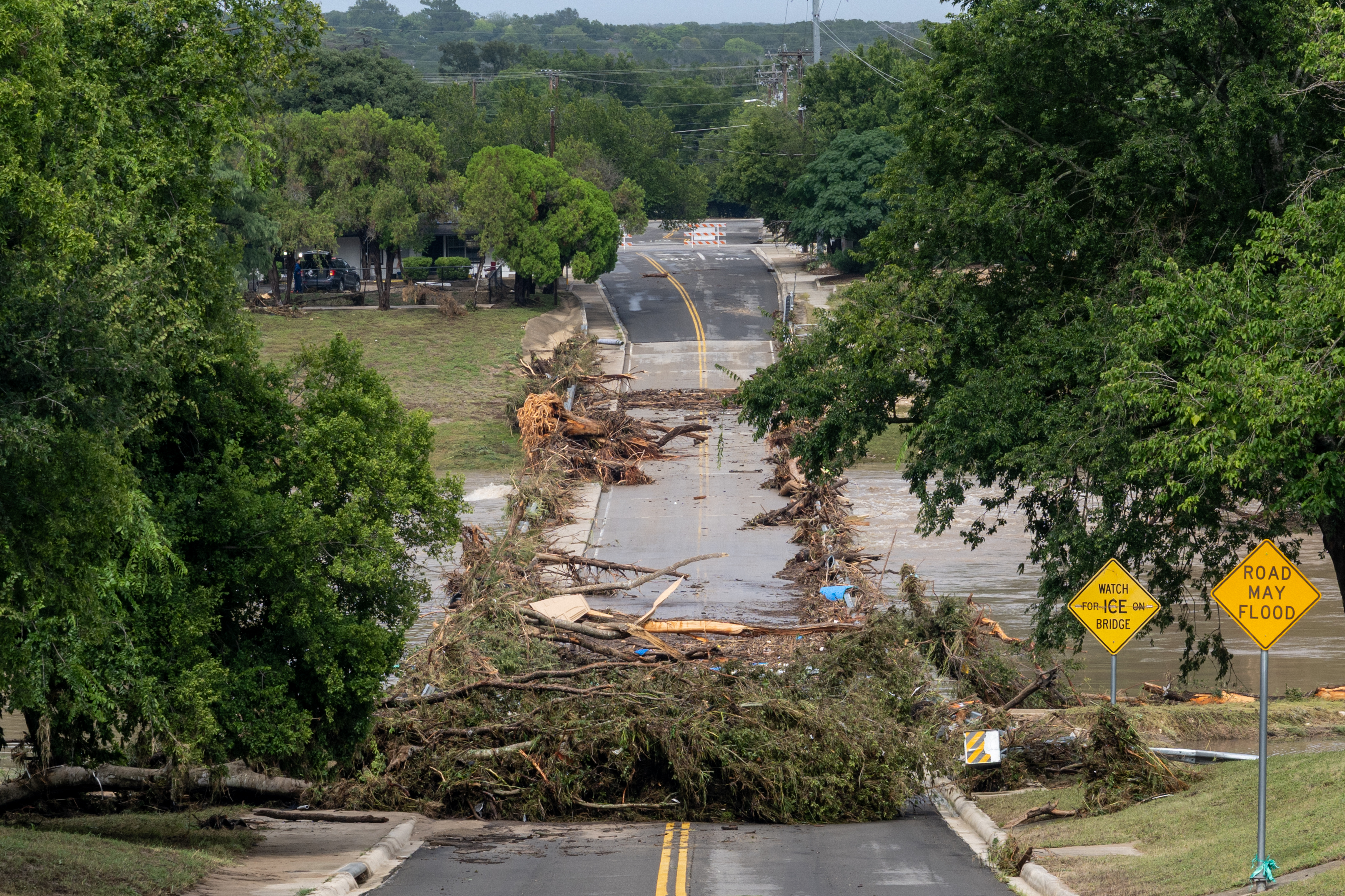


The deadly thunderstorms that inundated the Hill Country area of central and south Texas last week hit almost exactly a year after devastating floods killed more than 130 people, including 25 young girls at a summer camp along the Guadalupe River.
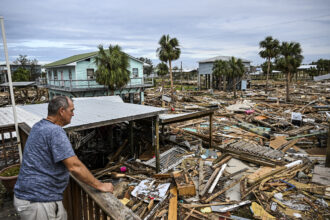
Some communities were still rebuilding from that disaster when the skies opened early last week, dumping more than two feet in certain areas in the days that followed. At least two people died and around 700 homes and businesses were damaged or destroyed by rushing waters. Many rivers and tributaries in the region rose several feet in a matter of hours and overflowed, causing widespread flooding.
Flood survivors reported a disturbing sense of déjà vu. At the same time, officials, emergency responders and community members noted key differences between the two floods, including improvements made to warning systems that may have meant the difference between life and death last week.
But as climate change supercharges storms in the region, experts say the Hill Country will likely face even more catastrophic floods in the near future—and forecasts and emergency response must catch up at an equally rapid pace.
A Deadly Deluge
Officials have long known that the Hill Country is one of the deadliest places in the U.S. for flash flooding. Even so, the thunderstorms and subsequent flooding last week were abnormal.
As my colleague Dylan Baddour reported, four-day rainfall totals in the towns of Uvalde and Sabinal set records and ranked in federal models as 1,000-year rain events, meaning they have an estimated 0.1 percent chance of happening each year. Rainfall last Thursday raised water levels on the Guadalupe River in Comfort to as much as 37 feet and the Pedernales River to 34 feet in Fredericksburg, some of their highest levels ever, The Texas Tribune reports.
Rainfall that caused flooding on the Guadalupe River in 2025 also hit the 1,000-year event benchmark. However, this year’s storms were more spread out, falling over several days rather than the unrelenting rainfall that hit the region last year in a shorter timeframe.
Another difference: The 2025 rain event fell on a holiday weekend, striking late in the night while many were asleep, which was deadly timing for visitors less familiar with flood risks and those without phone service to receive evacuation alerts as water swallowed their homes. The result was harrowing. Around 3 a.m. on July 4 that year, the Guadalupe River climbed about 1 foot every 5 minutes in Hunt, Texas, according to the National Weather Service.
Twenty-five campers died at the riverside Camp Mystic, along with two young counselors and the executive director. Aaron Parsley, a senior editor at Texas Monthly, published a devastating account of his family’s experience during the flooding, which his nearly 20-month-old nephew Clay did not survive.
Other families had similar experiences. Survivors, advocacy groups and Texas lawmakers criticized state and local governments for a lack of adequate flood gauges, evacuation planning and warning systems in certain areas. Some said alerts did not come in time for the floods, CBS News reports.
The event prompted major upgrades and investments in flood preparation across the Hill Country. The Texas Legislature passed more rigorous safety requirements for summer youth camps and mandated more warning sirens in areas particularly prone to flash flooding. Texas politicians greenlit $50 million for improved warning systems, water monitoring and other disaster infrastructure across the region, with many projects finished by the time storms started last week, The New York Times reported. Private businesses also helped equip areas with emergency systems, water sensors and additional sirens.
Last week, these new systems were put to the test in a big way.
Flood After Flood
With ominous forecasts rolling in, the National Weather Service briefed local officials starting last Sunday about possible storm risks in the Hill Country, The Texas Tribune reports. Once the rain began, the federal agency issued flash flood warnings in many areas, and counties issued more localized alerts. Some areas in Sutton and Crockett counties were evacuated.
Margo Denke, a resident of Medina County, told Dylan that monitors installed by the U.S. Geological Survey send automated notifications to cell phones when streamflow passes thresholds, as they did last week.
“I was getting emails whenever the rain amount was over 0.8 inch per hour, so I had several warnings,” she told him. “The USGS precipitation gauges are a very big blessing in a community like ours. If you had a horn siren, where would you put it? No one could hear it.”
Summer camps were a particular concern after the deaths at Camp Mystic last year. At least one camp in Uvalde evacuated more than 300 campers after flooding washed out the main access road, though many of the camps faced lesser threats than last year, given that much of the flooding was occurring downstream of their location, Houston Public Media reports. Ahead of the storm, forecasting company AccuWeather provided specialized weather services to 10 camps, which were sent storm potential notices and flash flood warnings before National Weather Service alerts came in, according to a statement from the business.
But it wasn’t just the more comprehensive government and private alerts that helped. It was local communities’ swift response to them, experts say. With the memory of last year’s devastation still looming large, many Hill Country residents told news outlets they were better prepared for the most recent deluge.
“We weren’t caught off-guard by something nobody expected,” Texas state Rep. Wes Virdell told the San Antonio Express-News. “We had a lot of critical, key people that were in the proper locations that were very instrumental in helping us. Residents were very aware of the possibility of what’s going to happen when that river floods.”
Not everyone came out unscathed. Though state and local emergency crews rescued more than 500 people from the floodwaters, at least two died. One of them was John Mark Steward, 65, who had just celebrated his wedding anniversary the day before losing his life to the floods.
Water and climate experts told Dylan on Friday that the latest precipitation models still seem to underestimate rainfall risk in the region. That speaks to the underappreciated climate risks driving extreme, dangerous weather.
For many survivors, a long road of recovery lies ahead. That includes 77-year-old L.A. Cude, a resident of Center Point near the Guadalupe River, whose home was lost in the storm last year only to be claimed by floodwaters once again shortly after being rebuilt, CNN reports.
“I’m not looking forward to, and it’s the wrong word, wasting another year. That may sound terrible,” he told CNN. But he still plans to persevere, adding: “I’ll put my boots on in the morning, pull them up by the bootstraps, and I’ll get through the day.”
More Top Climate News
Smoke from wildfires in Canada blanketed much of the Midwest and Northeast regions of the United States last week, as my colleagues Phil McKenna and Keerti Gopal reported. In recent years, researchers have linked wildfire smoke to tens of thousands of deaths annually, which could increase as climate change fuels more intense blazes, Raymond Zhong reports for The New York Times. The fine particulate matter released by wildfire smoke can cause a range of health problems, from respiratory issues to heart disease. Phil covered a study in 2025 that shows that health impacts of wildfire smoke stoked by climate change would be among the most severe and costly consequences of global warming in the U.S. by 2050.
The government of French Polynesia opposes plans to mine the critical minerals just beyond its ocean borders put forth by U.S. company American Deep Sea Minerals, Anita Hofschneider and Sachi Kitajima Mulkey report for Grist. The company is seeking approval from the Trump administration to explore these waters, which are international and do not belong to any one country.
While the Trump administration has expressed support for deep-sea mining and streamlined the approval process for it, more than 170 nations are still negotiating laws and regulations around the practice, which has not yet been approved anywhere for commercial-scale operations. Biologists say deep-sea mining could harm ecosystems and fish stocks, which are prime concerns for French Polynesia.
The Trump administration on Friday rolled back Endangered Species Act rules, shrinking the number of wildlife species receiving the greatest protection under the law, and changing the process for designating “critical habitat” for endangered plants and animals. The move comes just a week after the administration finalized a change eliminating the majority of habitat protections for threatened and endangered species, which experts told me represents the most profound change to the law since it was first enacted in 1973. Combined, these changes could devastate plant and animal species vulnerable to habitat loss, pollution and climate change, conservation groups say.
About This Story
Perhaps you noticed: This story, like all the news we publish, is free to read. That’s because Inside Climate News is a 501c3 nonprofit organization. We do not charge a subscription fee, lock our news behind a paywall, or clutter our website with ads. We make our news on climate and the environment freely available to you and anyone who wants it.
That’s not all. We also share our news for free with scores of other media organizations around the country. Many of them can’t afford to do environmental journalism of their own. We’ve built bureaus from coast to coast to report local stories, collaborate with local newsrooms and co-publish articles so that this vital work is shared as widely as possible.
Two of us launched ICN in 2007. Six years later we earned a Pulitzer Prize for National Reporting, and now we run the oldest and largest dedicated climate newsroom in the nation. We tell the story in all its complexity. We hold polluters accountable. We expose environmental injustice. We debunk misinformation. We scrutinize solutions and inspire action.
Donations from readers like you fund every aspect of what we do. If you don’t already, will you support our ongoing work, our reporting on the biggest crisis facing our planet, and help us reach even more readers in more places?
Please take a moment to make a tax-deductible donation. Every one of them makes a difference.
Thank you,

Kiley Price
Reporter
Kiley Price is a reporter at Inside Climate News, with a particular interest in wildlife, ocean health, food systems and climate change. She writes ICN’s “Today’s Climate” newsletter, which covers the most pressing environmental news each week.
She earned her master’s degree in science journalism at New York University, and her bachelor’s degree in biology at Wake Forest University. Her work has appeared in National Geographic, Time, Scientific American and more. She is a former Pulitzer Reporting Fellow, during which she spent a month in Thailand covering the intersection between Buddhism and the country’s environmental movement.