

Policies promoting solar power construction projects in China have contributed to a decline in bird diversity across the country.
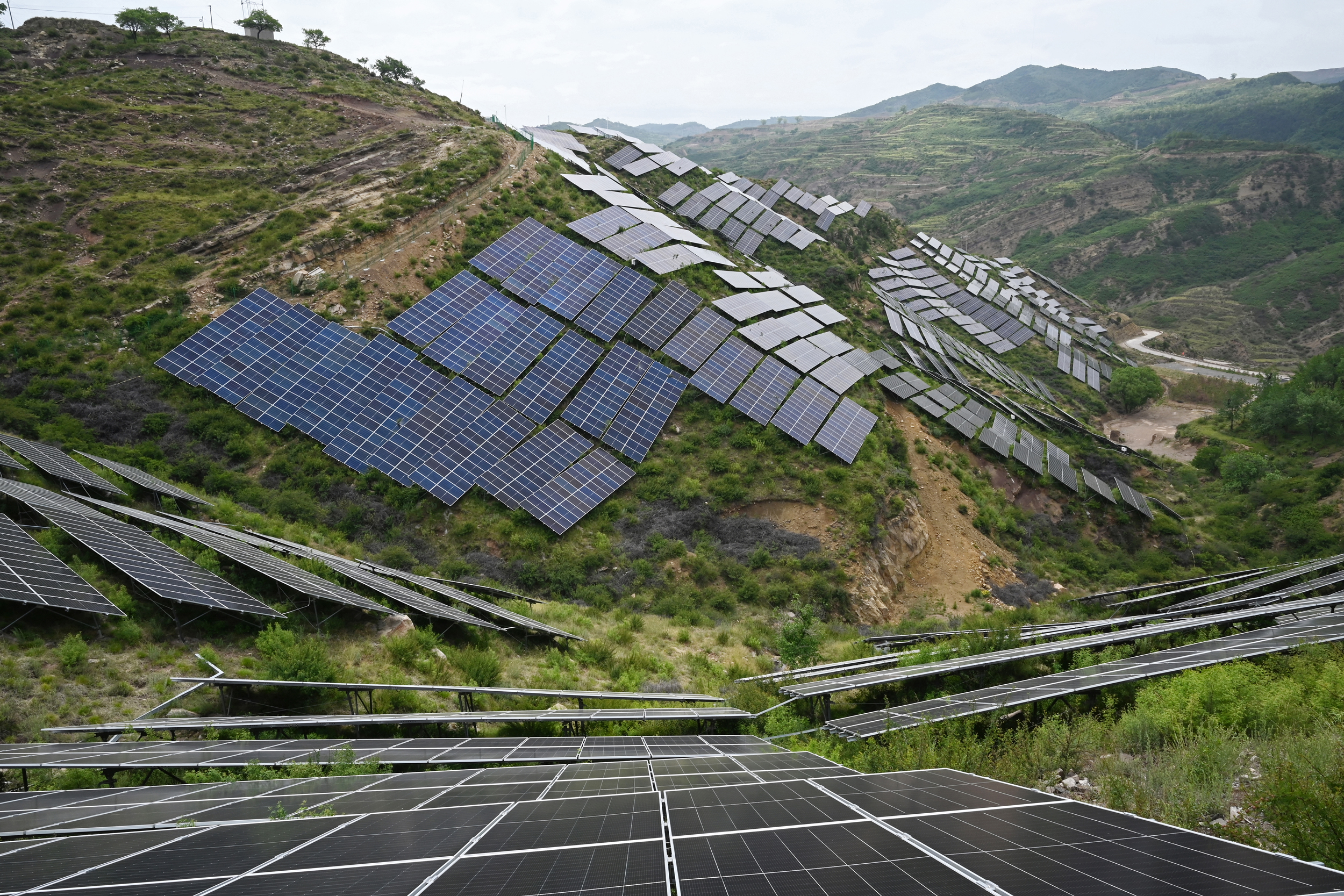
Those findings, from a study published Thursday in the journal Science, highlight the environmental impacts of large-scale solar developments and suggest ways that policies supporting photovoltaics could be improved in China, which has installed nearly as many solar panels as the rest of the world combined.
The researchers assessed policies promoting solar power while also measuring bird diversity, an indicator of ecosystem health, across 2,344 counties in China monthly from 2014 to 2023.
“The average effect is modest, but it is meaningful when it occurs systematically across many counties,” lead author Zhang Huiming, a researcher at the Institute of Climate Economy and Low-carbon Industry at Nanjing University of Information Science & Technology, said in a written statement he wrote with his co-authors.
In their multi-step assessment, the researchers first collected official solar-related directives from provincial, city and county government websites to create a “policy stringency index,” which scored the documents based on their binding force and originating agency.
They then collected “citizen-science” birdwatching records from across the country. These records were fed into the Shannon Index, a formula frequently used to assess biodiversity based on the number of species observed and how evenly individuals are distributed among them.
Comparing the two indexes revealed how policies supporting solar power development impacted avian communities.
The decrease in biodiversity was most pronounced in wealthier, non-arid counties and in areas with high numbers of birds that nest in vegetation, the authors noted. They reported no significant negative effect in desert regions or in poverty-designated counties.
“In North America, we see similar patterns where species diversity often declines in areas developed for PV [photovoltaics] due to loss of sensitive/specialist species,” Amanda Rodewald, senior director of the Center for Avian Population Studies at the Cornell Lab of Ornithology at Cornell University, who was not involved in the current study, wrote in an email.
However, Rodewald said that species diversity can also increase after landscapes are initially fragmented. She cautioned that bird species diversity may not necessarily be the most meaningful measure of the health of avian species in an area.
Using satellite imagery data to assess vegetation cover at solar project sites, the authors of the new study found that plant cover increased at these locations, a phenomenon they described as “inferior greening.”
“The dense but homogeneous undergrowth that may flourish under solar panels lacks the structural complexity and resource diversity of the natural habitats it replaces,” the researchers wrote.
Future policies in China could yield environmental improvements through careful site selection, such as steering large projects away from ecologically sensitive areas, Zhang and his co-authors wrote in an email. Using rooftop solar in habitat-rich regions and restoring diverse native vegetation, rather than relying only on simple greening targets, could also help, they added.
Current policies in China such as the Biodiversity Conservation Strategy and Action Plan for 2023 to 2030 emphasize ecological protection.
“These commitments give us reason to expect better coordination between solar development and biodiversity conservation,” Zhang said.
Rodewald added that while some may be tempted to use the study’s findings to challenge renewable energy development, it is important to compare the effects of such projects with those of conventional energy sources like coal and oil, which have steep environmental consequences.
“Studies that identify potential negative ecological impacts of renewable energy development help us to understand how we can better design and site renewable energy development in ways that they return benefits for people and the planet while minimizing harm,” she said.
About This Story
Perhaps you noticed: This story, like all the news we publish, is free to read. That’s because Inside Climate News is a 501c3 nonprofit organization. We do not charge a subscription fee, lock our news behind a paywall, or clutter our website with ads. We make our news on climate and the environment freely available to you and anyone who wants it.
That’s not all. We also share our news for free with scores of other media organizations around the country. Many of them can’t afford to do environmental journalism of their own. We’ve built bureaus from coast to coast to report local stories, collaborate with local newsrooms and co-publish articles so that this vital work is shared as widely as possible.
Two of us launched ICN in 2007. Six years later we earned a Pulitzer Prize for National Reporting, and now we run the oldest and largest dedicated climate newsroom in the nation. We tell the story in all its complexity. We hold polluters accountable. We expose environmental injustice. We debunk misinformation. We scrutinize solutions and inspire action.
Donations from readers like you fund every aspect of what we do. If you don’t already, will you support our ongoing work, our reporting on the biggest crisis facing our planet, and help us reach even more readers in more places?
Please take a moment to make a tax-deductible donation. Every one of them makes a difference.
Thank you,

Phil McKenna
Reporter, Boston
Phil McKenna is a Boston-based reporter for Inside Climate News. Before joining ICN in 2016, he was a freelance writer covering energy and the environment for publications including The New York Times, Smithsonian, Audubon and WIRED. Uprising, a story he wrote about gas leaks under U.S. cities, won the AAAS Kavli Science Journalism Award and the 2014 NASW Science in Society Award. Phil has a master’s degree in science writing from the Massachusetts Institute of Technology and was an Environmental Journalism Fellow at Middlebury College.