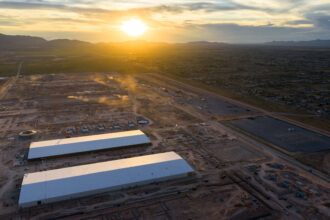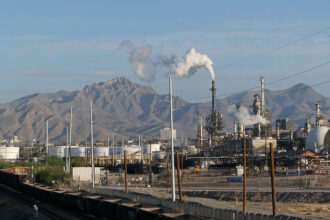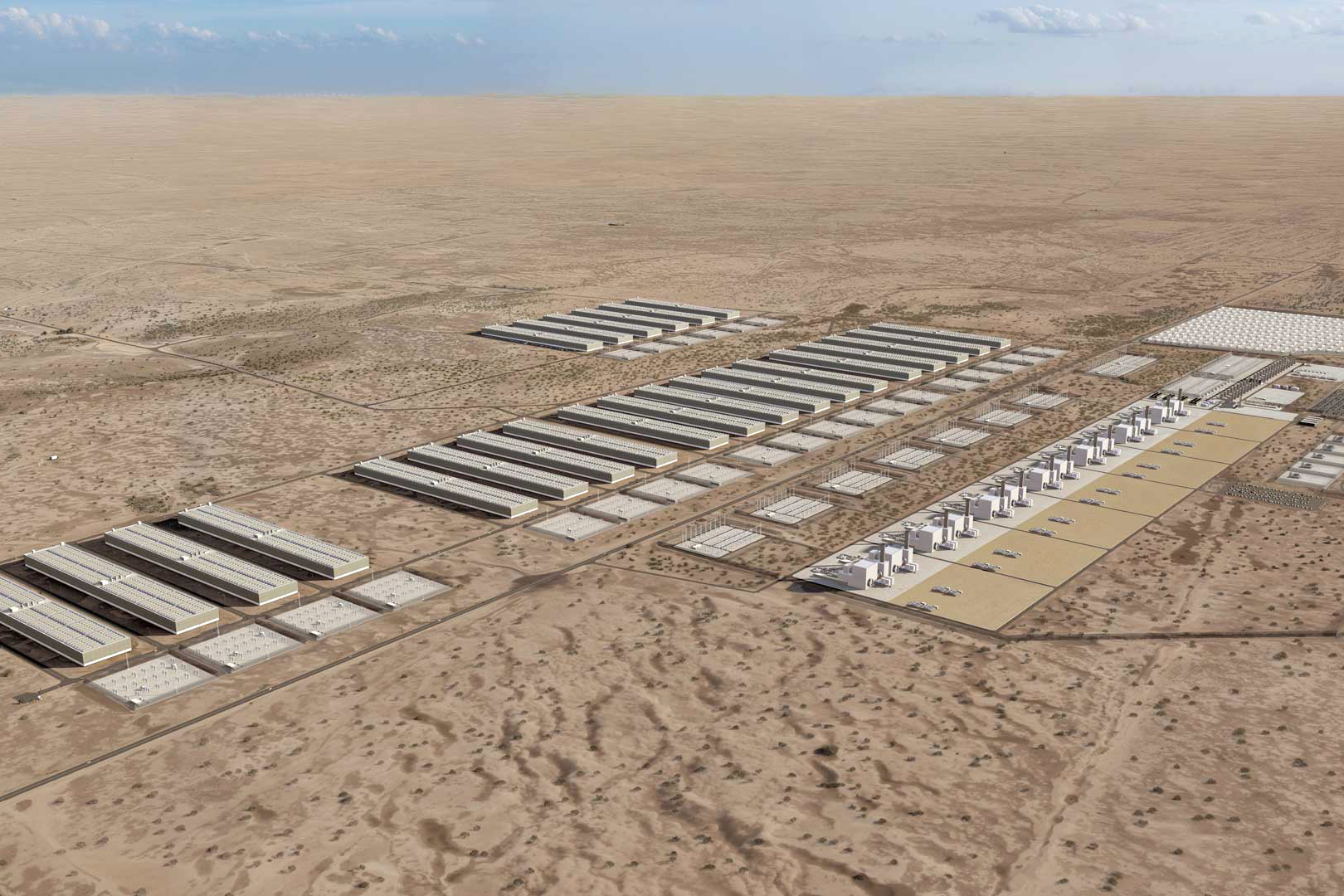


The 12 largest gas power projects planned in Texas are all specifically intended to run data centers, according to data released Tuesday by Global Energy Monitor, a global nonprofit that maps and tracks energy infrastructure.
The volume of gas power generation planned in Texas has continued to surge, growing by 50 percent in the last six months, the GEM report said—more than any country besides the United States.
Permitting documents show that just a handful of mega-projects in Texas could emit over 100 million tons per year of greenhouse gases, an enormous amount roughly equal to the annual emissions of a mid-sized industrialized country. These projects are also expected to discharge tens of thousands of tons of other pollutants.
The latest release of GEM’s Global Oil and Gas Plant Tracker shows 81.7 gigawatts of operating gas power generation in Texas, with 99.4 GW in development and another 22.4 GW recently announced.
“This frenzy of gas proposals is running headlong into the hurdles of an already tight gas market,” said Jenny Martos, project manager for the Global Oil and Gas Plant Tracker. “It is nearly impossible nowadays to guess what is a pie in the sky proposal, and what has a real chance of getting built.”
GW Ranch Energy Center, near Fort Stockton in Pecos County, received the largest air pollution permit in the country this year and expects to emit 33 million tons per year of greenhouse gases, which fuel global warming. Earlier this month Amazon announced it had acquired the project.
In the Texas Panhandle, Fermi America’s Project Matador, backed by former Texas Gov. Rick Perry, plans to build 90 combined-cycle gas turbines, 16 cooling towers and six emergency generator engines with 24 million tons per year of greenhouse gas emissions. In Southeast Texas, gas power for the Nexus Data Center Hubbard would emit 22 million tons per year of greenhouse gases.
Faced with a global backlog of combined-cycle turbine supplies, developers have turned to smaller and dirtier units that can be quickly deployed, the GEM report said, including simple-cycle turbines and gas-powered engines.
“Gas turbines and engines are less efficient than combined-cycle plants and carry higher emissions per unit of electricity generated,” the report said.
According to GEM data, engines and simple-cycle gas turbines make up nearly half the generating technology for gas power proposals tied to data centers nationwide.
For example, in West Texas, the Kilby Power Plant proposes to release 12 million tons of greenhouse gases per year from two combined-cycle gas turbines and 15 simple-cycle turbines.
“The simple-cycle turbines are critical to provide uninterrupted power operating behind the meter to meet onsite data center customers’ dynamic power demands,” the project permit application said.
In the Panhandle, a permit application for a “data center and associated energy-generation facility” called Westline 2335 proposes to release 10 million tons per year of greenhouse gases from 240 gas-powered generators arranged in 20 “engine halls,” and Roman Energy Center projects that it will emit 8 million tons per year via 640 gas-powered generators and 25 backup diesel emergency generator engines to provide power to data centers.
In nearby Abilene, the Longhorn Power Plant, described in permitting documents as “power generation equipment for onsite consumption in data center buildings,” would emit 8 million tons per year of greenhouse gases.
Other enormous gas projects for data centers did not readily indicate expected greenhouse gas emissions in permitting documents, like the Schlachter Realty data center power station, which proposes to build 891 Caterpillar 3516E emergency generators at its complex south of Dallas.
Texas Gov. Greg Abbott has urged data center developers to build their own power plants in order to avoid straining the state’s electrical grid. In August he announced a “pause” on data center proposals.
“They must not take power from the Texas power grid,” Abbott said Sunday on ABC News. “They need to make sure that they are not disturbing neighborhoods or rural communities.”
About This Story
Perhaps you noticed: This story, like all the news we publish, is free to read. That’s because Inside Climate News is a 501c3 nonprofit organization. We do not charge a subscription fee, lock our news behind a paywall, or clutter our website with ads. We make our news on climate and the environment freely available to you and anyone who wants it.
That’s not all. We also share our news for free with scores of other media organizations around the country. Many of them can’t afford to do environmental journalism of their own. We’ve built bureaus from coast to coast to report local stories, collaborate with local newsrooms and co-publish articles so that this vital work is shared as widely as possible.
Two of us launched ICN in 2007. Six years later we earned a Pulitzer Prize for National Reporting, and now we run the oldest and largest dedicated climate newsroom in the nation. We tell the story in all its complexity. We hold polluters accountable. We expose environmental injustice. We debunk misinformation. We scrutinize solutions and inspire action.
Donations from readers like you fund every aspect of what we do. If you don’t already, will you support our ongoing work, our reporting on the biggest crisis facing our planet, and help us reach even more readers in more places?
Please take a moment to make a tax-deductible donation. Every one of them makes a difference.
Thank you,

Dylan Baddour
Reporter, Austin
Dylan Baddour covers the energy sector and environmental justice in Texas. Born in Houston, he’s worked the business desk at the Houston Chronicle, covered the U.S.-Mexico border for international outlets and reported for several years from Colombia for media like The Washington Post, BBC News and The Atlantic. He also spent two years investigating armed groups in Latin America for the global security department at Facebook before returning to Texas journalism. Baddour holds bachelor’s degrees in journalism and Latin American studies from the University of Texas at Austin. He has lived in Argentina, Kazakhstan and Colombia and speaks fluent Spanish.