

It’s been more than three decades since Democrats held a trifecta in Pennsylvania, but the prospect of a blue wave in next month’s elections has Gov. Josh Shapiro and party leadership optimistic that their time could come in Harrisburg.
After flipping the state House of Representatives in 2022, Democrats now have a chance to take advantage of flagging support for President Donald Trump and Shapiro’s positive favorability to gain control of the state Senate for the first time since 1993. If the gridlock breaks, legislators and environmental advocates see an opportunity to advance long-stalled proposals on renewable energy, data centers and greenhouse gas reductions.
“I think of it as a tectonic shift in Pennsylvania environmental politics,” PennEnvironment executive director David Masur said about a potential trifecta. “It’s a generational shift, and it really changes the playing field with the opportunity to move toward a green majority in the legislature.”
For years, Democratic legislators have operated with an “imaginative constraint” because of their inability to move bills through both chambers, said Sen. Nikil Saval, a Democrat from Philadelphia who is a member of the environmental resources and energy committee. If they secure the trifecta, quick action is possible on several House bills that have been blocked by a Republican-controlled Senate for the past four years, addressing solar power, siting reform for energy projects and guard rails for data center development.
Given the recent price hikes ratepayers have seen in their energy bills, offering relief would likely be among Democrats’ first priorities if they control the state government. One in four Pennsylvania families are struggling to pay their energy bills, and one in 20 carries significant utility debt.
“Energy has become a kitchen-table issue,” said Elowyn Corby, senior regional director for the Mid-Atlantic at nonprofit Vote Solar.
In this environment, community solar is the type of “low-hanging fruit” that should quickly move through the legislature, Saval said. Legislation that passed the House with support from more than a dozen Republicans would allow Pennsylvanians to subscribe to a local array and cut costs on their electricity bills. Several neighboring states have already opened the door to the practice.
Similarly, Democrats and advocates point to battery storage as a sensible solution with a clear path to law. Earlier this month the House passed a bill with bipartisan support that would require electric utilities to store energy for use during peak periods to lower overall costs and improve reliability. A proposal to make warehouses solar-ready has also sat in the Senate after clearing the House and could complement other actions on energy policy.
Rep. Elizabeth Fiedler, a Democrat from Philadelphia and chair of the House energy committee and co-sponsor of the battery storage bill, highlighted another idea to lower ratepayers’ bills: her proposal to rein in utilities’ profits by ensuring that their rates of return equal their demonstrated capital costs. That bill passed the House unanimously in June and has been stuck in the Senate since.
“Regardless of the election’s outcome, I believe our mission remains to do everything we can on the energy committee to lower peoples’ utility bills, generate more energy to meet demand, and hold big corporations accountable,” Fiedler said in a statement.
In the interest of energy generation, Rep. Mandy Steele, a Democrat from Allegheny County, has proposed a bill that would prevent municipalities from passing blanket prohibitions against renewable energy projects. This bill could be a “starting point,” Saval said. Pennsylvania is among a small number of states that lack a statewide energy siting policy, making it a target for reform.
“It would lower our energy bills in noticeable ways,” said Alex Bomstein, executive director of nonprofit Clean Air Council. “It would make our air cleaner. It would be a huge deal.”
Democrats could also approach renewable energy by updating the Alternative Energy Portfolio Standard, which sets requirements for the portion of the energy grid composed of renewable energy. Pennsylvania ranks 47th nationally in renewable energy growth, in large part because the standard has “flatlined,” allowing utilities to maintain the status quo, Masur said.
Of course, skyrocketing utility bills are inextricable from the proliferation of power-hungry data centers. There are already 70 in the state, and 93 more projects are proposed, according to the Data Center Tracker, heaping unprecedented demand on a grid already forecast by the Public Utility Commission to face 13 annual outages by 2030. Legislators and advocates said a House-approved proposal to regulate data centers and limit their impact on electricity bills could pass in a Democratic trifecta.
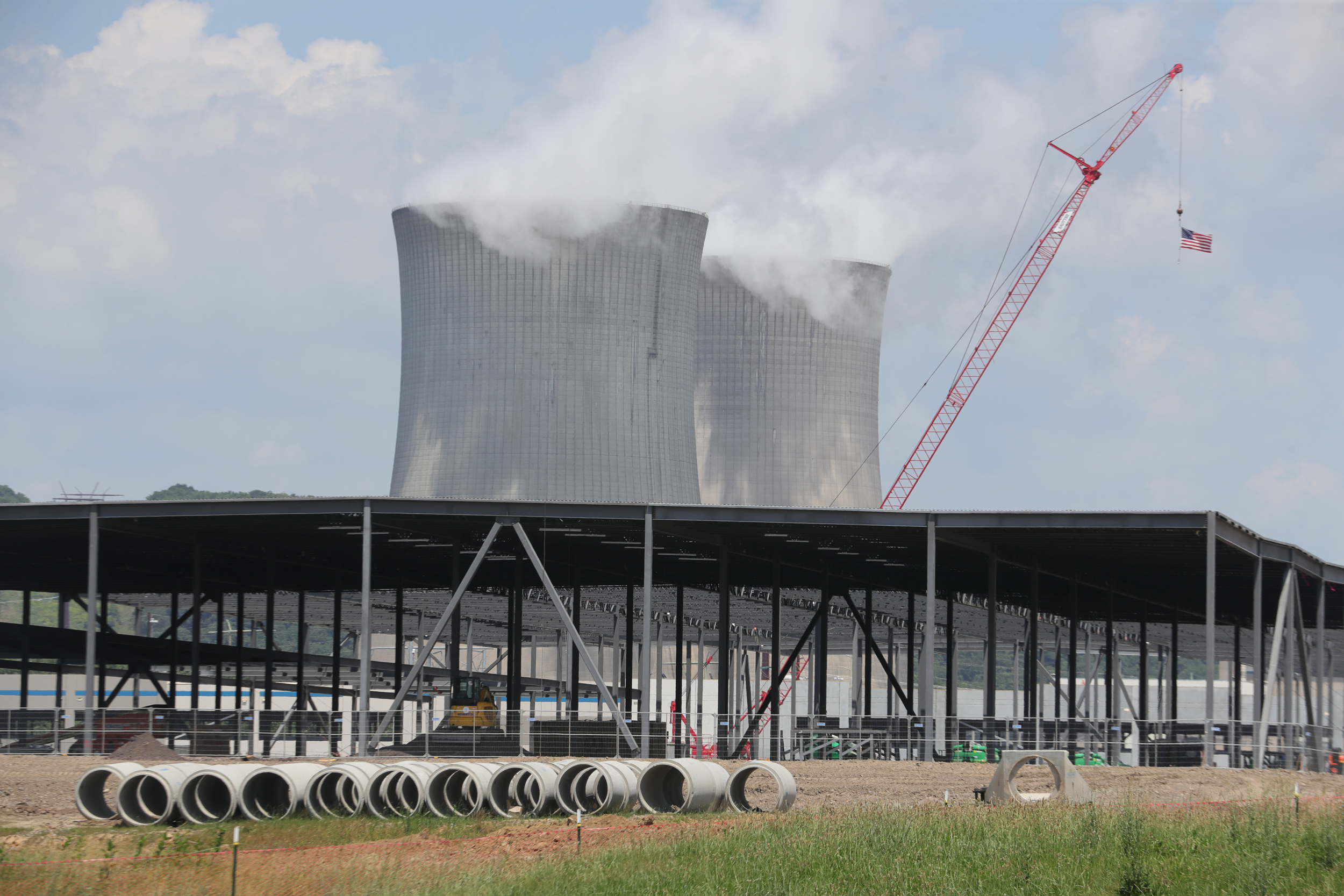
The environmental concerns around data centers go well beyond electricity. Rep. Danielle Friel Otten, Democrat from Chester County, said the Pennsylvania Water Resource Act, which she introduced in May, would be an important companion to any legislation, imposing a fee on users withdrawing more than 10,000 gallons per day.
“There’s an opportunity there to hold these large water users accountable and make it more expensive to do consumptive use in Pennsylvania,” she said.
Data centers are a key issue for Pennsylvania voters. Nearly three-quarters said they would oppose having one built in their community, according to a recent Quinnipiac poll. The stiff public opposition has given rise to calls for a moratorium on new data center construction.
“We should push pause until and unless the industry can show that their negative effects on the environment and public health and our pocketbooks can get resolved,” Masur said.
And yet legislators and advocates said a moratorium is unlikely, given Shapiro’s extensive courtship of the industry—even despite his recent executive order that requires local approval for projects to receive state permits.
“He is the limiting factor,” said Sen. Katie Muth, a Democrat who represents parts of Berks, Montgomery and Chester counties.
A governor-approved moratorium of any kind is hard to envision, Masur said: “How much pivoting can you do in six months?”
Ahead of a potential presidential run, a trifecta would hand Shapiro a golden opportunity to make good on his “get shit done” slogan with action on climate and environmental issues, Masur said. Shapiro’s proposed energy reforms include the Pennsylvania Reliable Energy Sustainability Standard (PRESS), which would add nuclear power, fusion and “clean forms of natural gas” to the state’s alternative energy portfolio, and the Pennsylvania Climate Emissions Reduction Act (PACER), a state-specific cap-and-trade program.
This story is funded by readers like you.
Our nonprofit newsroom provides award-winning climate coverage free of charge and advertising. We rely on donations from readers like you to keep going. Please donate now to support our work.
Donate NowBut assuming Democrats hold narrow margins in the House and Senate, getting much done without upsetting key factions—from labor unions to fossil fuel-friendly legislators—won’t be easy. If the moment suggests the prospect of transformational progress, Pennsylvanians may have to settle for incremental gains instead.
“It’s not like the next day solar farms spring up everywhere and wind and battery storage as far as the eye can see,” Saval said.
Pennsylvania’s environmentalists also have good reason to question whether Shapiro has their interests in mind after his “bait and switch” on the Regional Greenhouse Gas Initiative last year, Vote Solar’s Corby said. He backed out of the agreement to cut carbon emissions from power plants in a budget deal that critics said sacrificed climate action to restore normal state funding.
“Pennsylvanians are not just eager for progress but also rightfully demanding it,” Corby said.
Although legislation has consistently stalled in the Senate in recent sessions, the House has developed “a very compelling narrative of preparation,” Corby said, paving the way for a trifecta to move bills with far-reaching potential on energy, climate and the environment. The question remains whether they would have the right leaders in place—whether in the governor’s office or in key House and Senate positions—to deliver.
Muth, an outspoken critic of her colleagues on both sides of the aisle, said the public should expect bills framed around environmental protections that are nonetheless industry-approved.
“People feel they have a right to live in a safe and healthy place and, unfortunately, the legislature is not making that very easy,” she said. “The heat is still going to have to be applied to the people holding power, regardless of party.”
For his part, Saval said he wants the legislature to take seriously the opportunity “to render life for Pennsylvanians healthier, more sustainable, safer and cleaner.” Flipping the Senate and securing the trifecta would be a significant step in that direction.
“There have been strong efforts to get the legislature to serve that responsibility,” Saval said, “and we are in the process of removing one, if not all of the obstacles.”
About This Story
Perhaps you noticed: This story, like all the news we publish, is free to read. That’s because Inside Climate News is a 501c3 nonprofit organization. We do not charge a subscription fee, lock our news behind a paywall, or clutter our website with ads. We make our news on climate and the environment freely available to you and anyone who wants it.
That’s not all. We also share our news for free with scores of other media organizations around the country. Many of them can’t afford to do environmental journalism of their own. We’ve built bureaus from coast to coast to report local stories, collaborate with local newsrooms and co-publish articles so that this vital work is shared as widely as possible.
Two of us launched ICN in 2007. Six years later we earned a Pulitzer Prize for National Reporting, and now we run the oldest and largest dedicated climate newsroom in the nation. We tell the story in all its complexity. We hold polluters accountable. We expose environmental injustice. We debunk misinformation. We scrutinize solutions and inspire action.
Donations from readers like you fund every aspect of what we do. If you don’t already, will you support our ongoing work, our reporting on the biggest crisis facing our planet, and help us reach even more readers in more places?
Please take a moment to make a tax-deductible donation. Every one of them makes a difference.
Thank you,