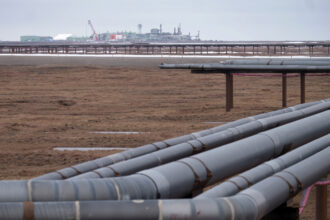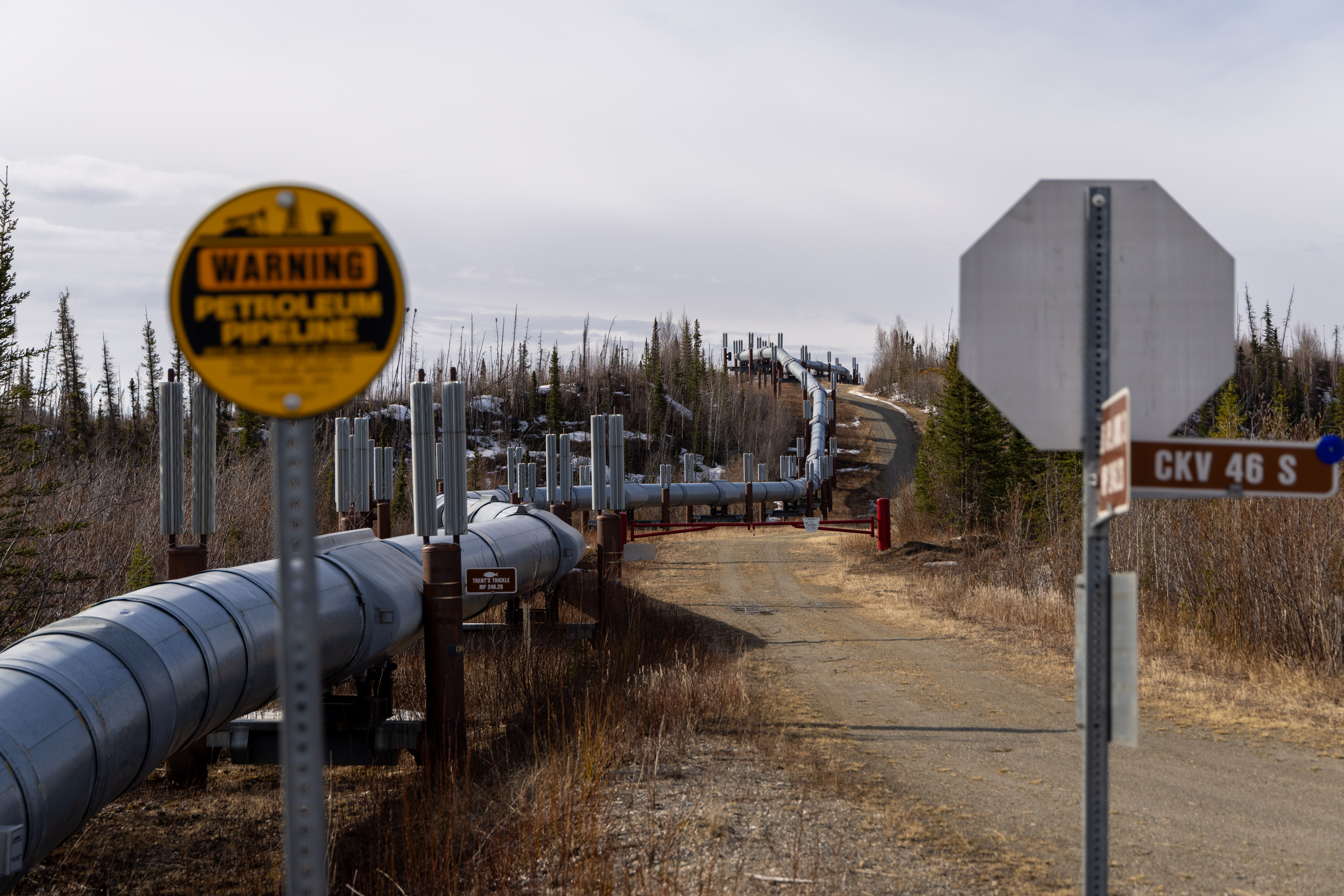


The Trump administration is expediting an environmental review of the 800-mile Trans-Alaska Pipeline System that would reauthorize the project for another 30 years, including the pipeline, pump stations, access roads, bridges and a fuel gas line that lie within the right-of-way.
The Bureau of Land Management is also shortening the public comment period for review of the project to 15 days. The federal government usually accepts public comment from 30 to 60 days, or even longer, depending on the complexity of the rules.
BLM, which is part of the U.S. Department of the Interior, was not scheduled to renew the right-of-way until 2034, the third renewal since 1974.
“We are acting now to secure the pipeline’s future as we work to unlock the energy resources of the National Petroleum Reserve in Alaska and the Coastal Plain of Arctic National Wildlife Refuge,” said Kevin Pendergast, BLM Alaska state director, in a press release. Pendergast said the pipeline is “only growing in its importance to Alaska’s economy and global energy markets.”
The BLM’s Alaska office did not respond to a request for comment from Inside Climate News.
The pipeline has transported more than 19 million barrels of oil from Alaska’s North Slope since it began operations in 1977. Last year, it moved an average of 463,000 barrels per day, according to BLM.
Critics say the two events indicate the Trump administration “is seeking an early, quick renewal to preclude long overdue consideration of mounting economic and ecological concerns” about the pipeline, according to PEER, a watchdog group that works with current and former federal, state, local and tribal employees.
The expedited project would exacerbate climate change while benefitting two of the pipeline owners, ConocoPhillips and ExxonMobil, each of whom contributed $1 million to Trump’s inaugural fund, federal records show. Harvest Alaska also co-owns the pipeline.
Despite overwhelming scientific evidence of a warming planet—and climate disasters accelerating in real time—from the burning of fossil fuels, on Jan. 20, 2025, President Trump signed an executive order, “Unleashing Alaska’s Extraordinary Resource Potential.”
It contained several provisions, including a directive to ramp up fossil fuel development and production on federal- and state-owned lands in Alaska. The order also called for expediting the permitting of fossil fuel projects there.
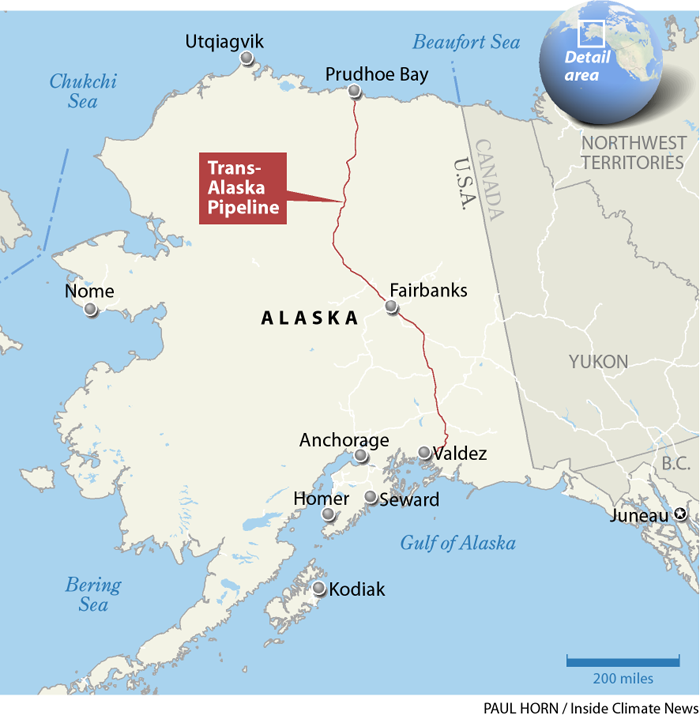
The Trans-Alaska Pipeline carries crude oil from the North Slope of Alaska to the Valdez Marine Terminal. Congress approved its construction Nov. 16, 1973, less than a month after the announcement of the Arab embargo on the shipment of petroleum to the U.S., according to researcher Joseph Rudolph.
How to comment on the proposal
Submit comments via the BLM website or by email at [email protected].
Deadline is Sept. 10, at 10 p.m. Alaska Time; 11 p.m. Pacific; Sept. 11 at 2 a.m. Eastern.
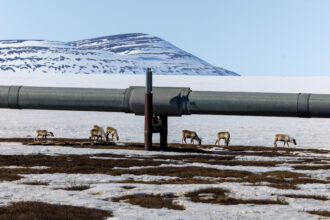
The pipeline opened in 1977 despite significant environmental and social concerns: the potential damage to wildlife habitats, particularly caribou, the melting of permafrost and the disruption of tribal cultural practices.
Even then, some scientists predicted the world’s continued reliance on fossil fuels, such as oil, would permanently alter the planet.
The same year the pipeline opened, President Jimmy Carter received a memo from his chief science adviser, Frank Press, titled “Release of Fossil CO2 and the Possibility of a Catastrophic Climate Change.”
Press warned the atmospheric concentration of carbon dioxide was escalating. He estimated concentrations could increase by 1.5 times that of pre-industrial levels by 2037. It turns out Press was overly optimistic: The planet hit that benchmark—420 parts per million—14 years early.
“The urgency of the problem derives from our inability to shift rapidly to non-fossil fuel sources once the climatic effects become evident not long after the year 2000,” Press wrote. “The situation could grow out of control before alternate energy sources and other remedial actions become effective.”
Alaska is a bellwether of future climate disruptions. The state is warming at rates two to three times the global average, according to federal data.
Since 1971, average annual temperatures have increased from 2.2 degrees Fahrenheit in central Southeast Alaska to 6 degrees on the North Slope, the geographic origin of the Trans-Alaska Pipeline system.
Rising temperatures contribute to melting permafrost, diminishing sea and river ice. Glaciers are melting twice as fast now as they did from 1960 to 2004, according to a federal climate hub.
“The oil burned from Alaska’s pipeline has come with a huge cost to our state’s climate. It’s driving declines in salmon and caribou, and contributing to mega-storms that are making communities unlivable,” said Cooper Freeman, Alaska director at the Center for Biological Diversity, in a prepared statement.
“Alaska is facing massive climate disruption, but Trump wants to give the oil companies carte blanche to continue business as usual for the next three decades. This process should be thorough and public, not rammed through at the behest of billionaire oil company owners.”
About This Story
Perhaps you noticed: This story, like all the news we publish, is free to read. That’s because Inside Climate News is a 501c3 nonprofit organization. We do not charge a subscription fee, lock our news behind a paywall, or clutter our website with ads. We make our news on climate and the environment freely available to you and anyone who wants it.
That’s not all. We also share our news for free with scores of other media organizations around the country. Many of them can’t afford to do environmental journalism of their own. We’ve built bureaus from coast to coast to report local stories, collaborate with local newsrooms and co-publish articles so that this vital work is shared as widely as possible.
Two of us launched ICN in 2007. Six years later we earned a Pulitzer Prize for National Reporting, and now we run the oldest and largest dedicated climate newsroom in the nation. We tell the story in all its complexity. We hold polluters accountable. We expose environmental injustice. We debunk misinformation. We scrutinize solutions and inspire action.
Donations from readers like you fund every aspect of what we do. If you don’t already, will you support our ongoing work, our reporting on the biggest crisis facing our planet, and help us reach even more readers in more places?
Please take a moment to make a tax-deductible donation. Every one of them makes a difference.
Thank you,

Lisa Sorg
Reporter, North Carolina
Lisa Sorg is the North Carolina reporter for Inside Climate News. A journalist for 30 years, Sorg covers energy, climate environment and agriculture, as well as the social justice impacts of pollution and corporate malfeasance.
She has won dozens of awards for her news, public service and investigative reporting. In 2022, she received the Stokes Award from the National Press Foundation for her two-part story about the environmental damage from a former missile plant on a Black and Latinx neighborhood in Burlington. Sorg was previously an environmental investigative reporter at NC Newsline, a nonprofit media outlet based in Raleigh. She has also worked at alt-weeklies, dailies and magazines. Originally from rural Indiana, she lives in Durham, N.C.