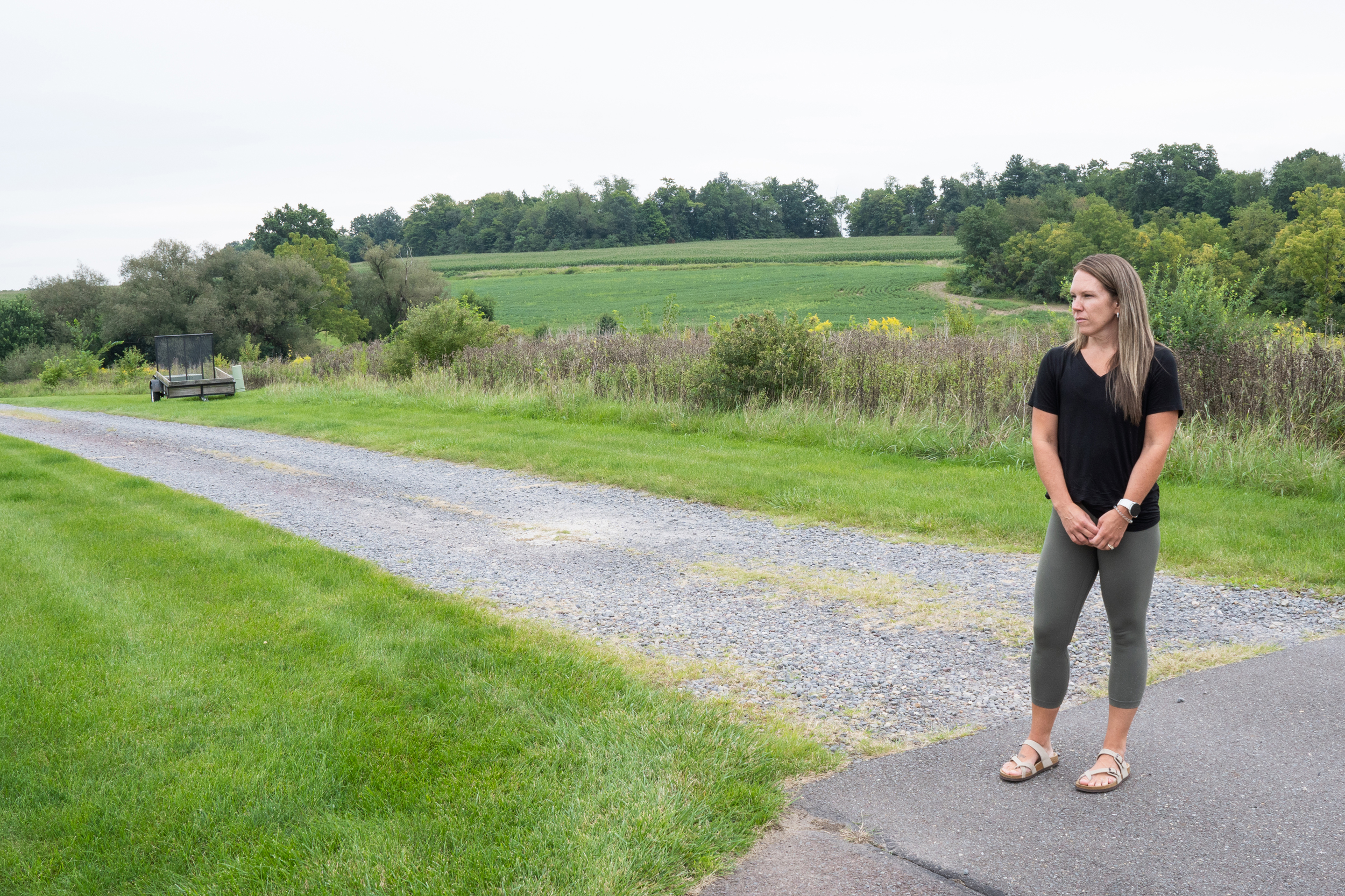


When Nicole Williams moved into her house in Pennsylvania’s North Centre Township in 2011, it was a homecoming. She’d spent the first few years of her life a half-mile down the road in Brookside Village, a tidy community of 170 mobile homes nestled between the west branch of Briar Creek and a farm that grew sweet corn and pumpkins just up the hill. Her new colonial revival with expansive views of the Susquehanna Valley’s rolling landscape was one of several houses built on land that once belonged to that farm.
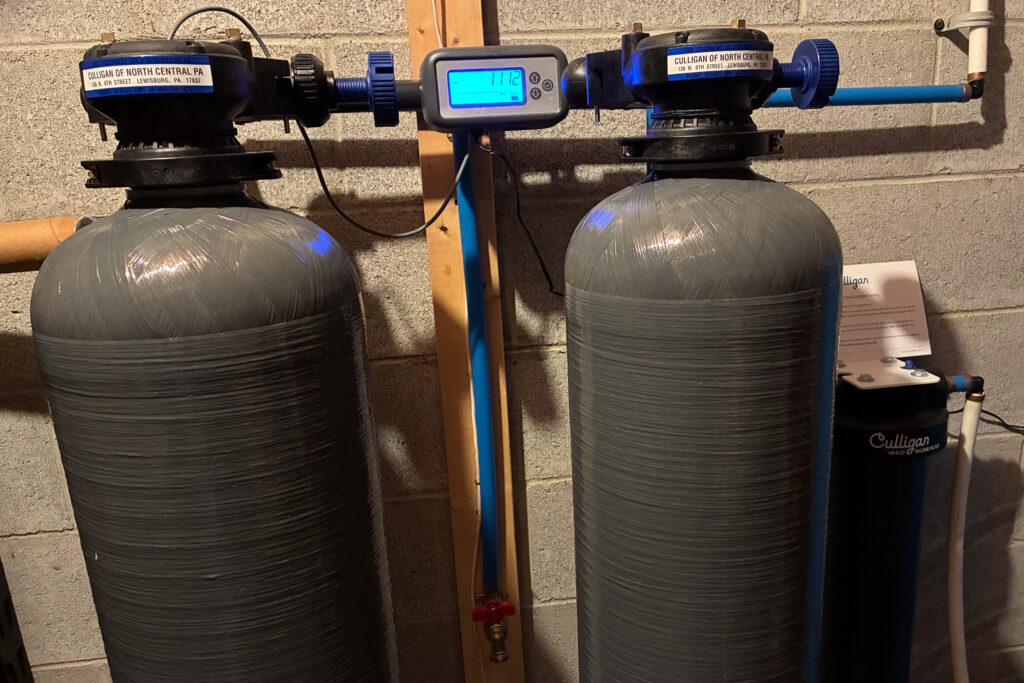
Fifteen years later, Williams has three kids between 11 and 16, two English bulldogs and an in-line water filtration system in her basement whose two sturdy tanks remove the toxic chemicals leaching from the neighboring farm into her well.
The chemicals in Williams’ well are among a class of thousands known collectively as per- and polyfluoroalkyl substances, or PFAS, colloquially called “forever chemicals” because they don’t break down naturally. They were present in the sewage sludge the nearby farm received from the local water treatment plant and spread on its fields as fertilizer beginning sometime in the 1980s. For two years, the state Department of Environmental Protection has been investigating the groundwater plume emanating from the farm and around a dozen other sites in Columbia County that also utilized the sludge.
The investigation is the state’s first in the region, but the crisis in North Centre “is the tip of the iceberg,” said Lane Whigham, director of the Alliance for Aquatic Resource Monitoring—which goes by ALLARM—at Dickinson College in Carlisle. His group’s volunteers test water quality throughout the Chesapeake Bay watershed, including Columbia County. The Department of Environmental Protection found elevated levels of PFAS in Briar Creek and has cautioned residents not to eat fish caught there. That warning is likely just the beginning of what’s needed, according to Whigham.
A 2023 study led by the U.S. Geological Survey found that 76 percent of Pennsylvania streams contained at least one PFAS. In 2025, the Three Rivers Waterkeeper tested 39 sites in Western Pennsylvania and found PFAS in 74 percent. When it comes to these chemicals in the state’s waterways, “it’s not a matter of ‘if’ anymore, it’s ‘how much,’” Whigham said.
Consuming high levels of PFAS—used in a wide range of industrial processes and consumer products—can pose a risk to reproductive and developmental health, hinder the body’s immune system and hormones and contribute to a variety of cancers, according to the U.S. Environmental Protection Agency.
In 2024, the agency established drinking water standards for six PFAS chemicals, including limits of 4 parts per trillion (ppt) for PFOA and PFOS, two of the most prominent. That fall, the Williams’ water tested at 182.4 total ppt. PFOA in their water was eight times the EPA limit; PFOS was 32 times the limit.
Among 80 residential wells tested by state environmental regulators during their investigation, 23 had rates above the Williams’, reaching as high as 3,612 total ppt.
The worrying presence of PFAS in sewage sludge—the semi-solid, nutrient-rich material left after wastewater treatment, referred to by the waste industry as biosolids—was first identified in Maine in 2016. Well testing revealed elevated levels on a dairy farm there. The farm’s milk was also contaminated, and further testing has identified tainted water on more than 100 farms and 500 residential properties in the state.
Maine became the first state to ban the use of sludge on farmland in 2022. Pennsylvania, like nearly every other state, still allows the practice. Its use as fertilizer has long been encouraged by both federal and state agencies.
The Department of Environmental Protection estimates that 400,000 tons of sludge are applied to land in Pennsylvania annually. More than 40 percent of that total ends up on farmland, according to the National Biosolids Data Project, a group whose partners include industry members and municipal entities. Since 1997, more than 1,100 Pennsylvania farms have been permitted to apply sludge, and 740 of those permits are still active.
“If your boat is filling up with water, you need to plug the hole first,” said Stephanie Wein, a water and conservation advocate at the nonprofit PennEnvironment. “They’re just letting this stuff continue to be applied.”
The investigation in North Centre has alerted residents to the hazards in their community and stopped the consumption of tainted water. Across Pennsylvania, though, the extent of the risk posed by PFAS-contaminated sludge is unknown. A full accounting would require a testing program that could tally the toll of decades of sludge application on rural communities reliant on private wells. More than a quarter of Pennsylvania residents get their water from a private well.
An adequate response is complicated by the fact that forever chemicals are colorless, odorless and tasteless—not to mention highly persistent—and therefore undetectable without the right test.
Williams, a pediatric registered nurse, had her well water tested when she moved in, but PFAS isn’t among the pollutants typically tested, so it wasn’t caught. Now, she’s left to wonder how her children’s health might be affected by a childhood spent drinking polluted water. And she can’t help but question what’s lurking in the groundwater in rural communities across the state.
“You drive through the countryside and you no longer see these beautiful fields,” Williams said. “You look at fields and you’re like, ‘I wonder if these fields are contaminated or if these houses are OK.’”
Discovering a PFAS Crisis
The first indication that something was wrong in Columbia County came from Brookside Village, Williams’ first home.
In 2023, Pennsylvania established drinking water limits for PFOA and PFOS in public and community water systems, set at 14 and 18 ppt, respectively—both well above the federal standards announced the following year. (A statewide sampling of more than 400 public supply wells that preceded the state’s new limits found that among those where forever chemicals were detected, PFOA averaged 7.5 ppt and PFOS averaged 9.9 ppt.) Following the new regulation, water quality monitoring at Brookside in spring 2024 showed concentrations as high as 2,100 ppt.

That summer, the Department of Environmental Protection began testing private wells in the area and delivering bottled water to residents with elevated PFAS levels. The agency also identified sludge applied to the farm directly across from Brookside Village as a likely source of contamination and began sampling it and other farmland that had received sludge through the decades. Its soil contained as much as 79 ppt of PFOS. At another farm along State Route 93 a few miles north, samples reached 186 ppt.
Over the years, forever chemicals had been migrating from these soils into the groundwater that feeds residents’ wells and neighboring waterways. In all, 115 of the 285 wells sampled by the state as of May contained PFAS levels that exceeded federal limits.
To date, the department has installed point-of-entry filtration systems in 38 homes and the process is ongoing. Once the investigation is completed, residents will be on the hook for the cost of regular maintenance. At Brookside, meanwhile, management company UMH Properties has installed kitchen faucet filters to remove PFAS at the tap, but other sources within homes remain unfiltered. The company plans to install a permanent, communitywide filtration system once it is approved by the Department of Environmental Protection, according to spokesperson Ken Frydman.
This story is funded by readers like you.
Our nonprofit newsroom provides award-winning climate coverage free of charge and advertising. We rely on donations from readers like you to keep going. Please donate now to support our work.
Donate NowUnfortunately for residents, filters and bottled water can’t reverse the potential harms of years spent drinking contaminated water. Timothy Jasinski grew up on a farm next to the tainted agricultural fields on Route 93. He recalls seeing sludge piled under plastic tarps on his neighbor’s land, waiting to be spread. On his neighbor’s side of the hedgerow, corn and soy outgrew anything his family could produce.
But he wonders now whether the sludge’s contributions to soil fertility came at an untold cost. Jasinski said some of his family members suffered from rashes that quickly cleared up after they moved away, and he’s been shocked by the number of neighbors along Route 93 who have developed cancers in recent years.
Kaylin Bower, who lives across the street from Williams, said the discovery of PFAS in the community’s groundwater has compelled residents with reproductive issues, neurological conditions and various forms of cancer to question whether it’s the source of their troubles. Her water tested at 230 total ppt, including PFOS levels nearly 40 times the federal limit.
Like other community members, Bower is still in the dark about the level of forever chemicals in her body, but she’s expecting answers soon. Geisinger, a regional health system serving Central and Northeastern Pennsylvania, is in the beginning stages of a study of those who live near one of the identified sources of pollution. The study aims to understand the link between long-term health outcomes and the levels of PFAS in individuals’ blood. Bower and Williams, who works for Geisinger, are both members of a three-person community board advising the study.
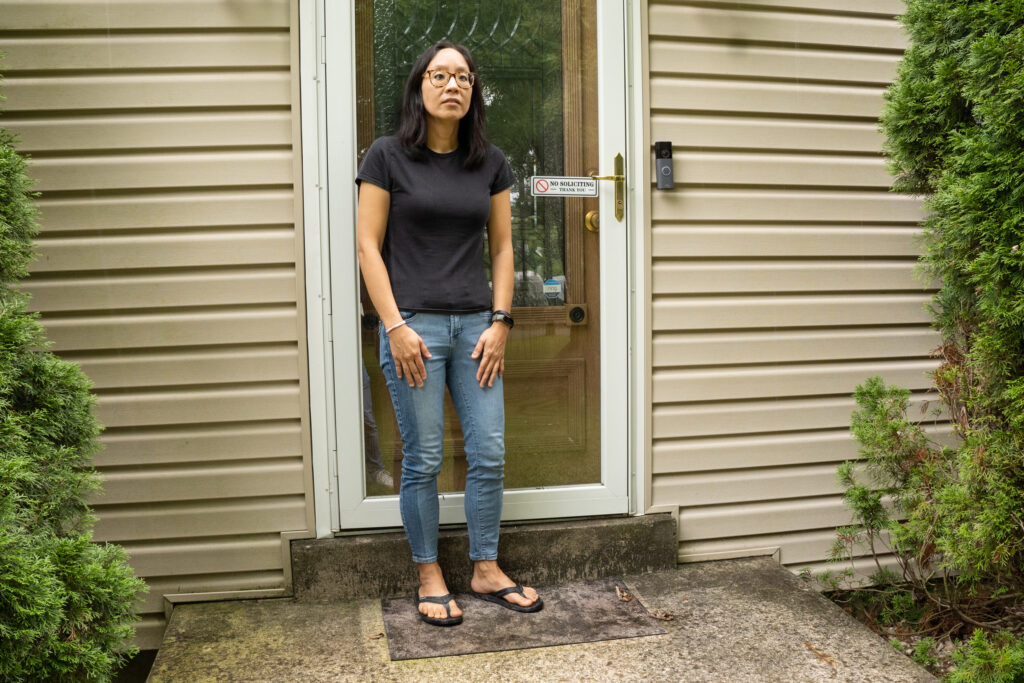
When Bower and her husband moved into their home in 2014, they were drawn by the promise of a rural lifestyle in a relatively undeveloped agricultural community. The discovery of PFAS in her water has upended her peaceful existence.
She worries about her 11-year-old son, who’s likely been consuming the chemicals since he was in the womb. And if she were to move, she suspects her property value would be limited by a stipulation on her deed, required by the state, that acknowledges her well is contaminated.
“For so many of us,” Bower said, “this was the death of a dream.”
An “Enormous” Issue for Pennsylvania
Tracy Carluccio fears it’s only a matter of time before other communities must confront the costs of Pennsylvania’s longstanding use of sewage sludge. Carluccio is deputy director of the Delaware Riverkeeper Network, which has spent years pushing the state to adopt strict limits on forever chemicals, including filing a lawsuit over the lack of action in 2019.
Given the widespread use of sludge on agricultural fields, “this is an enormous statewide issue,” she said.
In July, the Department of Environmental Protection proposed a tiered system for sludge application permits, which would create PFAS monitoring requirements for sewage treatment plants and require remediation at certain levels. Under the proposal, sludge containing less than 20 parts per billion of each PFOS and PFOA could be applied without restriction. Sludge between 20 ppb and 100 ppb could be applied at a reduced rate, and application of sludge above 100 ppb would be prohibited.
In a January 2025 draft risk assessment, the Biden-era EPA said that using sludge with as little as 1 ppb of one of the chemicals “could result in human health risks exceeding the agency’s acceptable thresholds.” The Trump administration has since criticized and backed away from those findings.
The Department of Environmental Protection’s proposed solution is “totally inadequate,” Carluccio said. Instead, she argues, the state should bring an end to sludge application, just as Maine has done. The agency declined to comment on criticism of its plan.
Until sludge application stops, the material will remain an “uncontrolled pathway” for PFAS pollution in agricultural communities, she said. “The only reason we don’t know more about it is because there hasn’t been more testing” near farms with sludge permits, she said.
In addition to a “full stop” on using sludge on farmland, Carluccio would like to see the state establish surface water standards for PFAS to protect waterways like Briar Creek and the fish that live in them—as well as those who fish those streams.
For Whigham, at ALLARM, the investigation in Columbia County raises questions about the continued manufacturing of forever chemicals that cycle through waterways and into sludge and back again.
“Are these things more important to us than clean water and clean soil and healthy food?” he said.
Facing the Consequences
Nicole Williams is still waiting to learn how much PFAS is in her bloodstream after years drinking tainted water, but she’s already pushing for answers for her community.
Seeking advice, she turned to a pair of family doctors in Maine who have treated those affected by that state’s sludge crisis. They’re exploring the potential for the cholesterol drug cholestyramine to help remove PFAS from the body. Williams’ husband is now taking the medicine in hopes it will eliminate any PFAS he’s absorbed since moving into their home.
Coupled with the study she’s advising on at the local health system, she believes it could offer her neighbors a way to respond to what they’re facing—even if it can’t undo any health impact they’ve already suffered.
Becky Garrison and her husband, Bill, have lived across from the contaminated hilltop farm since 1985. Becky Garrison grew up on a farm where spreading manure was a regular practice, so when she saw sludge piled up on the neighboring farm back in the day she didn’t think much of it. Until recently, that is.

Once they learned of the investigation, the Garrisons installed a filtration system as soon as they could, even before the state came around offering to help. Their well tested at 874 total ppt; the presence of PFOS was 125 times the federal limit.
“Who would have ever thought?” she said.
Both she and Bill have had cancer—myeloma and colon, respectively—and although she can’t know whether the PFAS in their well played a part, she also can’t help but wonder.
“After 40 years,” she said, “there’s nothing we can do.”
About This Story
Perhaps you noticed: This story, like all the news we publish, is free to read. That’s because Inside Climate News is a 501c3 nonprofit organization. We do not charge a subscription fee, lock our news behind a paywall, or clutter our website with ads. We make our news on climate and the environment freely available to you and anyone who wants it.
That’s not all. We also share our news for free with scores of other media organizations around the country. Many of them can’t afford to do environmental journalism of their own. We’ve built bureaus from coast to coast to report local stories, collaborate with local newsrooms and co-publish articles so that this vital work is shared as widely as possible.
Two of us launched ICN in 2007. Six years later we earned a Pulitzer Prize for National Reporting, and now we run the oldest and largest dedicated climate newsroom in the nation. We tell the story in all its complexity. We hold polluters accountable. We expose environmental injustice. We debunk misinformation. We scrutinize solutions and inspire action.
Donations from readers like you fund every aspect of what we do. If you don’t already, will you support our ongoing work, our reporting on the biggest crisis facing our planet, and help us reach even more readers in more places?
Please take a moment to make a tax-deductible donation. Every one of them makes a difference.
Thank you,