

This story is a collaboration between Inside Climate News and CityView NC, part of The Assembly Local Network.
North Carolina and a handful of local governments agreed to settle with Chemours over its pollution in the eastern part of the state, the parties announced on Thursday.
The company will pay the state and 11 entities near its Fayetteville Works plant on the border of Cumberland and Bladen counties $455 million over the next 15 years for what the company said in a press release involved both the plant and “claims of PFAS contamination unrelated to that site.”
The state will receive $75 million of the $455 million while the local entities will share $380 million, with payment beginning this year. It’s the largest environmental damage payment in the history of North Carolina.
Cumberland County said it will receive $161.5 million from the settlement. Robeson County announced on social media its portion will be $22.8 million, including $2.3 million in the first year.
PFAS, per- and polyfluoroalkyl substances, are a class of forever chemicals found in water, soil and homes near the plant. Exposure to the chemicals is linked to an increased risk of cancer, thyroid disease, reproductive problems and developmental delays in children, according to the U.S. Environmental Protection Agency.
Ten local governments were involved in the settlement: Bladen, Brunswick, Columbus, Cumberland, New Hanover, Robeson and Sampson counties, as well as the town of Wrightsville Beach, city of Lumberton and village of Bald Head Island. The Lower Cape Fear Water and Sewer Authority also joined the settlement.
The agreement also resolves the state’s lawsuit against Chemours, which was scheduled to be heard before the North Carolina Supreme Court next week.
North Carolina Attorney General Jeff Jackson valued the settlement at $590 million to include the additional $135 million that DuPont, Chemours’ former parent company, has to put into a reserve fund to meet the terms of a 2019 consent order the companies have with the state. If Chemours goes bankrupt during the payment period, the state will receive the entire settlement and the reserve fund, Jackson said.
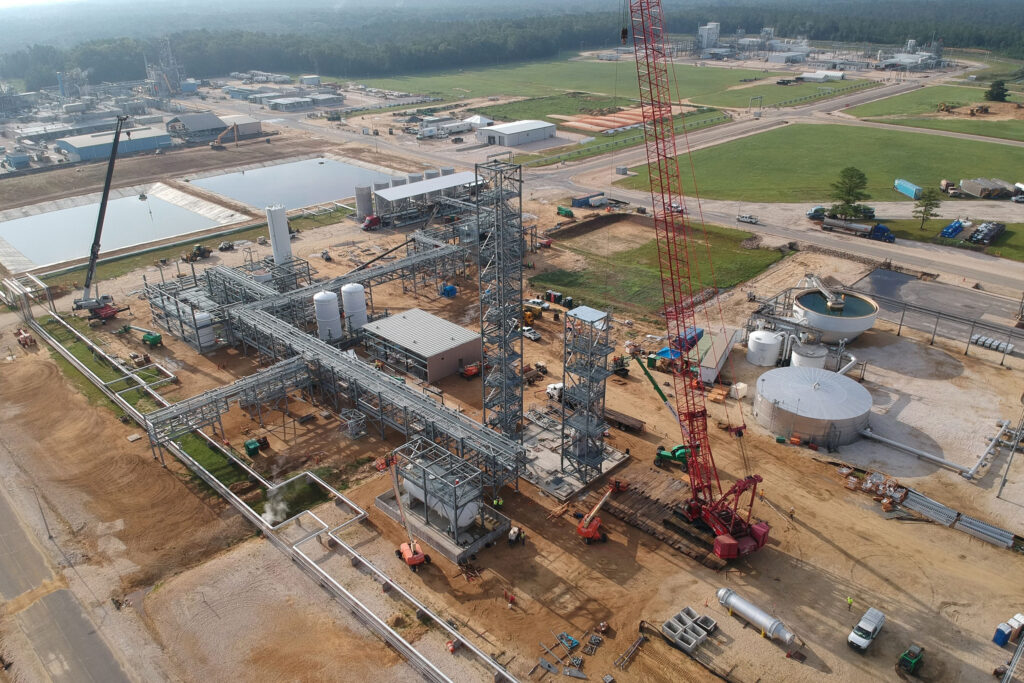
Jackson told The Assembly and Inside Climate News there was a risk of Chemours going bankrupt during litigation. The company is currently valued at $2.28 billion. It is already required to pay $875 million to New Jersey over the next 25 years. Jackson said the settlement agreement’s reserve fund ensures the state and local entities will get paid as it puts DuPont on the hook if Chemours goes under during the payment period.
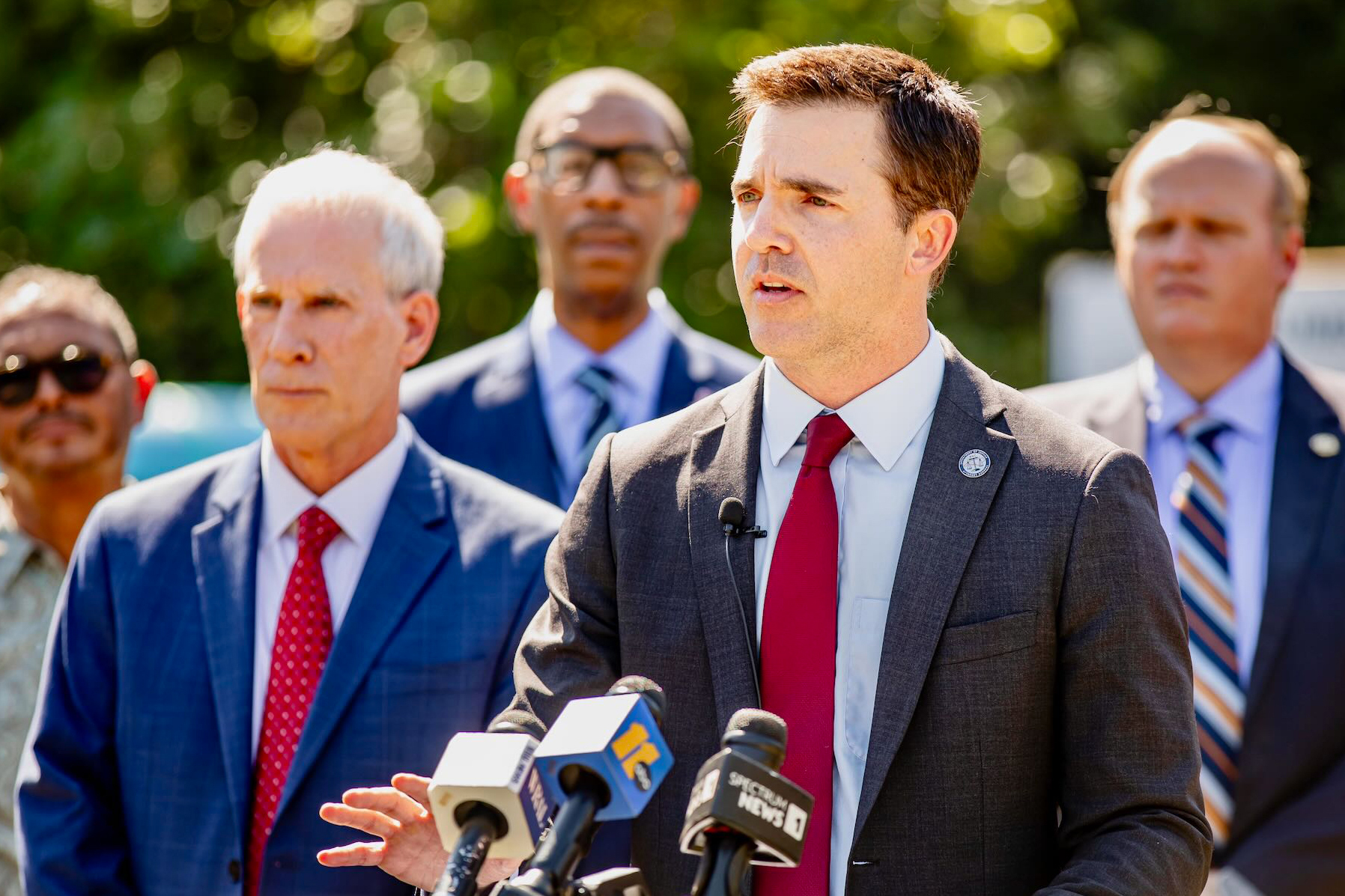
“They wouldn’t be in this position if they hadn’t massively damaged the state and then lied about it for years,” Jackson said Thursday at the site of a water cleanup effort in the Gray’s Creek community in Cumberland County. The community’s private wells were contaminated by Chemours’ chemicals and the county is expanding municipal water connections to provide residents clean drinking water.
Chemours Cites “Substantial Investments” Reducing PFAS
Earlier this summer, Jackson, N.C. Department of Environmental Quality Secretary Reid Wilson and Gov. Josh Stein denounced an agreement between Chemours and the U.S. Environmental Protection Agency to settle claims that the company violated federal drinking and environmental protections. That deal brings about $2 million per year to North Carolina to address water pollution, 20 times less than what the state’s settlement obtained.
“We were hoping that the EPA would take this seriously, but they failed,” Jackson said in his announcement Thursday. “They did a slap on the wrist for these companies.”
About 3.5 million North Carolinians, about one in every three, drink water with PFAS levels above the federal health standards, Wilson told a crowd of local government officials and members of the media gathered in Gray’s Creek.

Chemours said in its press release the state’s settlement agreement acknowledges the “substantial investments to significantly reduce PFAS emissions from Fayetteville Works and mitigate off-site impacts in the surrounding communities.” North Carolina has already forced Chemours to spend nearly $1.2 billion on clean-up efforts across the state, Wilson said, including filtration systems on private wells and treatment systems at its Fayetteville facility.
Local entities have full discretion on how to use their settlement funds, Jackson said, as many have already spent millions on addressing the forever chemicals.
In August, two elementary schools in Gray’s Creek were connected to the Fayetteville Public Works Commission water system through a $12 million project to provide safe drinking water. In March, PWC approved a $133.7 million contract to build a granular activated carbon filtration system at its two water treatment plants that serve much of Cumberland County.
Neighboring Robeson County is piloting a carbon filtration system at its Rocco Treatment Plant in St. Pauls after months of residents complaining about PFAS contamination in their water. David Edge, chair of the Robeson County Board of Commissioners, said its settlement dollars will help pay for the filtration system and other yet to be determined cleanup efforts.

“This settlement can make a difference for generations if we make responsible decisions about what comes next,” Kirk deViere, chair of the Cumberland County Board of Commissioners, told the crowd. “Our work now moves from the courtroom to the community. Our commitment has not and will not change: We will protect our communities. We will pursue every resource available, and we will build, and we will not stop until our community has the clean, safe, regulated drinking water it deserves.”
The settlement agreement, which deViere said local leaders have already signed, doesn’t stop others from suing Chemours for damages. The state can also take Chemours to court if they violate the agreement, Wilson said.
However, it does resolve the lawsuits from the state, Cumberland County and other localities.
A Preventable Disaster
The litigation, public scrutiny, fines and decades of contamination didn’t have to happen, unsealed court records show.
From 2011 to 2013, DuPont developed a plan called Project Alice to eliminate fluorine emissions from Fayetteville Works into the Cape Fear River. However, company officials rejected the most effective option, a thermal oxidizer, because of the expense: $60 million to install, with an additional $4 million in operating and maintenance costs.
Instead, DuPont chose a $2.5 million gas permeator to reduce, but not eliminate, the amount of GenX, a type of PFAS, that was entering the Cape Fear River.
This story is funded by readers like you.
Our nonprofit newsroom provides award-winning climate coverage free of charge and advertising. We rely on donations from readers like you to keep going. Please donate now to support our work.
Donate NowDuPont canceled Project Alice shortly before announcing it would spin off a new company to handle specialty chemicals—Chemours.
Chemours revitalized Project Alice and, in February 2017, rechristened it “Project Wright” for the Wright brothers, court records show.
Neither Project Alice nor Project Wright have been previously reported.
Chemours officials had a “genuine product stewardship concern” about GenX releases, “heightened by recent third-party sampling results of the Cape Fear River,” court documents show.
Those third parties were Detlef Knappe of N.C. State University, and Andy Lindstrom and Mark Strynar of the U.S. Environmental Protection Agency, who had discovered several types of PFAS, including GenX, in the Lower Cape Fear River. The scientists traced many of the compounds to Chemours’ Fayetteville Works plant.
Chemours identified two technologies: a $21 million granular activated charcoal carbon filtration system and a $40 million to $60 million thermal oxidizer. The company set a deadline of June 1, 2017, to finalize its recommendation.
A week before that deadline, though, a reporter from the Wilmington Star-News broke the story on the scientists’ findings. Several municipal utilities subsequently spent tens of millions of dollars to install treatment systems to reduce the amount of PFAS in drinking water. The reporting set in motion years of community activism, scrutiny by state regulators and litigation.
North Carolina and its local governments have recovered almost $2 billion in value from Chemours, according to Jackson. The settlement announced Thursday represents another victory in the state’s effort to hold Chemours accountable, Wilson and Jackson emphasized in their statements, as it will strengthen the company’s consent order with the state that required it to start cleanup and mitigation efforts.
Today, Wilson said emissions of GenX are down at least 99 percent from where they were almost a decade ago. Chemours no longer discharges PFAS into the Cape Fear River, he said.
“Our department’s position is that the most effective and cost-efficient way to protect people is to prevent the pollution at the source, so the stuff never gets into the air, never gets into the water, never gets into people’s drinking water,” Wilson said.
There is still work to be done, Wilson said. He encouraged state legislators to set numeric standards for PFAS emissions and discharges so that his department has “the tools to protect people’s health.”
This story was updated Sept. 10, 2026, with additional information about settlement amounts to local governments, and on Sept. 11, 2026 to correctly reflect that a water project in Cumberland County was completed by the Fayetteville Public Works Commission.
About This Story
Perhaps you noticed: This story, like all the news we publish, is free to read. That’s because Inside Climate News is a 501c3 nonprofit organization. We do not charge a subscription fee, lock our news behind a paywall, or clutter our website with ads. We make our news on climate and the environment freely available to you and anyone who wants it.
That’s not all. We also share our news for free with scores of other media organizations around the country. Many of them can’t afford to do environmental journalism of their own. We’ve built bureaus from coast to coast to report local stories, collaborate with local newsrooms and co-publish articles so that this vital work is shared as widely as possible.
Two of us launched ICN in 2007. Six years later we earned a Pulitzer Prize for National Reporting, and now we run the oldest and largest dedicated climate newsroom in the nation. We tell the story in all its complexity. We hold polluters accountable. We expose environmental injustice. We debunk misinformation. We scrutinize solutions and inspire action.
Donations from readers like you fund every aspect of what we do. If you don’t already, will you support our ongoing work, our reporting on the biggest crisis facing our planet, and help us reach even more readers in more places?
Please take a moment to make a tax-deductible donation. Every one of them makes a difference.
Thank you,