

This story is part of an investigation conducted by an international team of journalists based at The Outlaw Ocean Project. Read the other stories here.
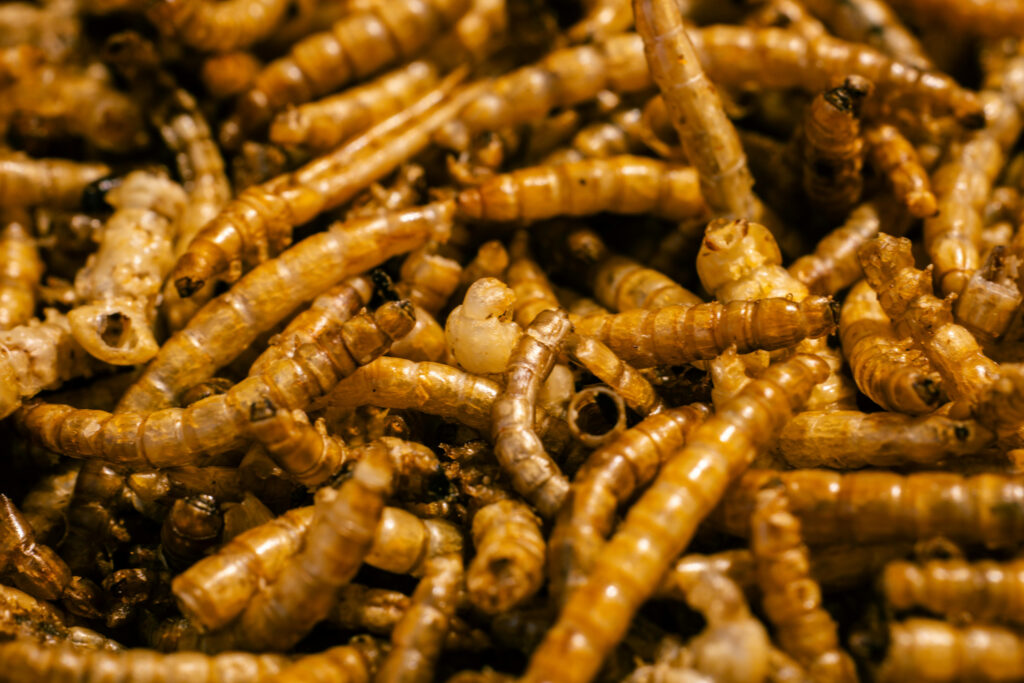
Inside a sprawling warehouse in northern France, millions of brown, inch-long mealworm larvae writhed in purple trays stacked 60 feet high. Grown by a company called Ynsect, these larvae were destined to be ground into a high-protein powder for livestock feed.
The company’s mission was to spur a global farming revolution by mass-producing a replacement for fishmeal—a key ingredient in animal feed that’s been linked with overfishing, avoidable worker deaths and violent protests over the horrid stench of its manufacture.
Ynsect broke ground in 2021 for what was hailed in the press as the world’s largest insect farm. “A symbol in this reconquest of protein sovereignty” is how France’s then-Minister for Agriculture described the operation. Investors flocked to the project, sinking more than half a billion dollars into the company.
But a year later, things were not going so well for Ynsect.
By 2022, the company suffered over $105 million in losses, mostly due to minimal demand from buyers. And by December 2025, a French commercial court ordered the liquidation of Ynsect, after management failed to secure funds needed to guarantee a path to profitability.
The rise and fall of Ynsect offers an instructive tale of the inefficient use of planetary resources for animal feed and how difficult it will be to change the fishmeal industry.
The “Caloric Middlemen”
Globally, only a small percentage of crops grown go toward feeding humans.
In the U.S., barely more than a quarter of crop calorie production feeds people—over 67 percent is instead used to feed animals raised for human consumption. This indirect method, using animals as the “caloric middlemen,” is a highly inefficient use of food.
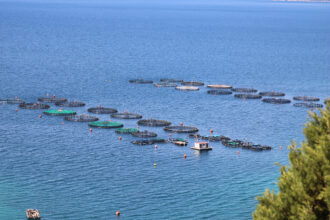
Fishmeal is one source of protein that is increasingly popular for livestock feed and is used extensively in aquaculture—which now produces half of the world’s seafood. Unlike bivalves such as oysters, clams and mussels, which typically do not require external feed, the biggest challenge in farming carnivorous fish is feeding them.
Food constitutes roughly 70 percent of the aquaculture industry’s overhead. The farms that yield some of the most popular seafood, such as salmon, tuna, shrimp, carp or European sea bass, often consume more fish than they ship to supermarkets and restaurants. Before it reaches the market, a farm-raised tuna can eat over 15 times its weight in free-roaming fish converted to fishmeal. Farmed crustaceans like prawns are the biggest consumers, accounting for about 30 percent of fishmeal used globally.
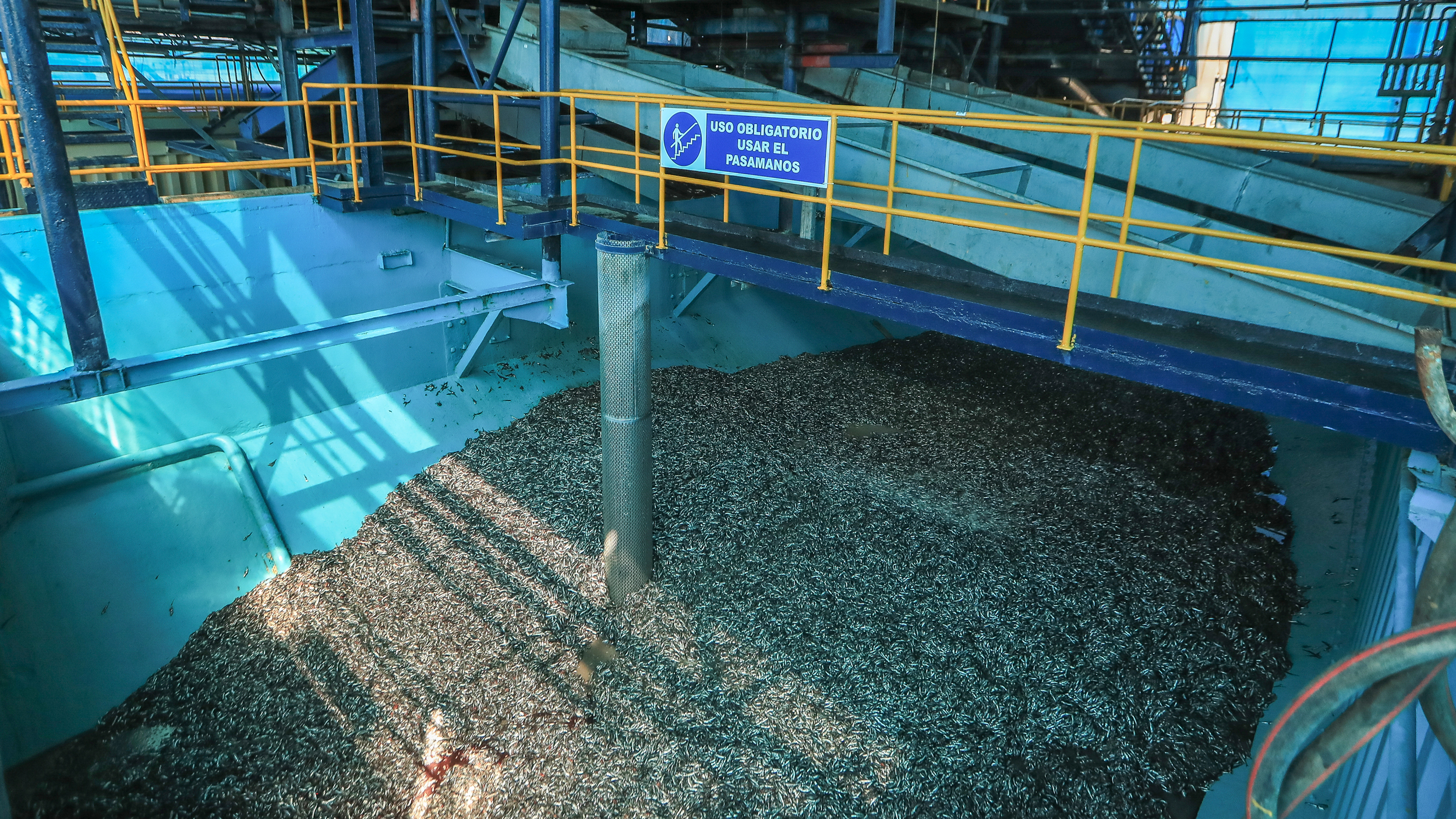
Fishmeal production is currently decimating the oceans and accelerating the climate crisis. Over a fifth of all marine life pulled from the sea is converted into fishmeal, which is a major factor in why over a third of the world’s stocks are overfished and worsening every year.
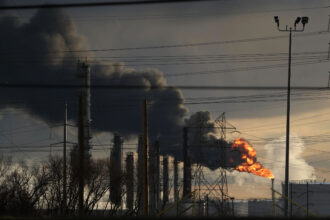
The fishmeal industry is also tied to systematic dumping of toxic waste into local waterways, choking stench from the cooking of rotting fish and extensive illegal fishing by the ships that supply these factories, according to an investigation by The Outlaw Ocean Project.
The Elusive Alternatives
Researchers have identified various potential alternative food sources—including seaweed, cassava waste, soldier-fly larvae, single-cell proteins produced by fungi and bacteria and even human sewage. But none are being produced affordably at scale. The alternatives often lack the full range of nutrients that support the growth of farmed fish, especially omega-3.
Alternatives that are high in fat and protein like maggots, grubs and worms, have been seen as attractive replacements for fishmeal. The Food and Agriculture Organization of the United Nations has endorsed these insect larvae as a sustainable means of meeting the growing demand for protein in animal feed and human food. Raised on a slurry of food waste—requiring little land or water—experts have called this a far more “circular,” energy-efficient feed-to-food system.
As of 2023, approximately one trillion insects were farm-raised annually for inclusion in food and animal feed.
This story is funded by readers like you.
Our nonprofit newsroom provides award-winning climate coverage free of charge and advertising. We rely on donations from readers like you to keep going. Please donate now to support our work.
Donate NowConverting food waste into feed was one of the biggest advantages insect farming was supposed to provide, but companies have faced major technical and regulatory barriers. Insects fed with low-quality materials—such as household, slaughterhouse or catering waste and manure—have lower growth rates, poor nutritional value and are associated with food safety concerns.
In the EU, restrictions aiming to prevent disease in animals, including insects, prohibit feeding them food waste. As a result, 75 percent of insect producers use food or feed-grade fruits, vegetables and cereals, while one-third use commercial animal feed. Instead of upcycling food waste, insect farming companies are therefore directly competing with humans and livestock for resources.
Another main ingredient in feed for fish farms and other types of livestock is soy, which raises its own concerns. Roughly 40 percent of the world’s arable land is used for animal feed, particularly soy. As of 2021, the world’s leading producer of soy was Brazil, where industrial farming has been a major driver of deforestation and human rights abuses, including the systematic and often violent seizure of Indigenous lands by private companies.
The same trend can be seen in Bolivia, where the expansion of soy resulted in the clearing of 2.2 million acres of forest between 2001 and 2021. Collectively, land dedicated to soy production in South America covers an area larger than France, much of this in previously forested areas cleared for this purpose.
Shifting away from fishmeal to focus more on soy brings additional costs. These problems would not be solved simply by pivoting to another protein source, according to a 2023 report in the journal Frontiers in Sustainable Food Systems.
“There appears to be no ‘silver bullet, free from tradeoffs’ livestock feed formulation that can guarantee global sustainability,” the report concluded.
What can be done? The short answer, according to experts, is to change our diets and the feed we give to livestock.
Rather than feeding crops to livestock being reared for beef, the World Wildlife Fund has suggested giving the cows food not fit for human consumption and having only humans eat the edible crops, thereby saving millions of acres of land.
Researchers also suggest the problems caused by soy agriculture in the Global South could be alleviated if Europe’s livestock industry shifted to a reliance on locally-grown proteins like alfalfa and fava beans. This change, they say, would reduce the carbon footprint of the feed industry by approximately 10 percent.
However, there may be a deeper issue at play: sometimes solving one problem creates new, even worse problems. Aquaculture was meant to slow ocean depletion on the logic that by growing fish on land, the world could take fewer fish from the sea. The problem was that the industry began using fish from the sea to feed and fatten the fish grown on land using fishmeal. Now, aquaculture is a major driver of declining fish stocks in the ocean. Similarly, the switch to insects aimed to replace fishmeal as feed. But now insects are often being fed food-grade crops, further jeopardizing food security and accelerating the climate crisis.
Jennifer Jacquet, an environmental-studies professor at the University of Miami, said that shifting to less meat-intensive diets would help to reduce the impacts associated with harvesting plants and animals to manufacture feed.
“If done correctly, aquaculture could provide sustenance for our growing planet as well as reduce overfishing,” she added. This would require a shift in what we consume, “eating more bivalves—oysters, mussels, and clams—instead of fish, shrimps, and octopus.”
About This Story
Perhaps you noticed: This story, like all the news we publish, is free to read. That’s because Inside Climate News is a 501c3 nonprofit organization. We do not charge a subscription fee, lock our news behind a paywall, or clutter our website with ads. We make our news on climate and the environment freely available to you and anyone who wants it.
That’s not all. We also share our news for free with scores of other media organizations around the country. Many of them can’t afford to do environmental journalism of their own. We’ve built bureaus from coast to coast to report local stories, collaborate with local newsrooms and co-publish articles so that this vital work is shared as widely as possible.
Two of us launched ICN in 2007. Six years later we earned a Pulitzer Prize for National Reporting, and now we run the oldest and largest dedicated climate newsroom in the nation. We tell the story in all its complexity. We hold polluters accountable. We expose environmental injustice. We debunk misinformation. We scrutinize solutions and inspire action.
Donations from readers like you fund every aspect of what we do. If you don’t already, will you support our ongoing work, our reporting on the biggest crisis facing our planet, and help us reach even more readers in more places?
Please take a moment to make a tax-deductible donation. Every one of them makes a difference.
Thank you,