

COLUMBUS, Ohio—A four-hour legislative committee hearing in June, punctuated by applause and anger, offered a window into the growing backlash against data centers.
The prospect of unchecked development has galvanized a cross-section of Ohioans, urban and rural, Democrat and Republican, alarmed about the spread of the giant computing facilities. Residents are demanding that local governments impose bans and moratoria on data centers while gathering signatures for a statewide ballot measure that could go before voters in 2027.
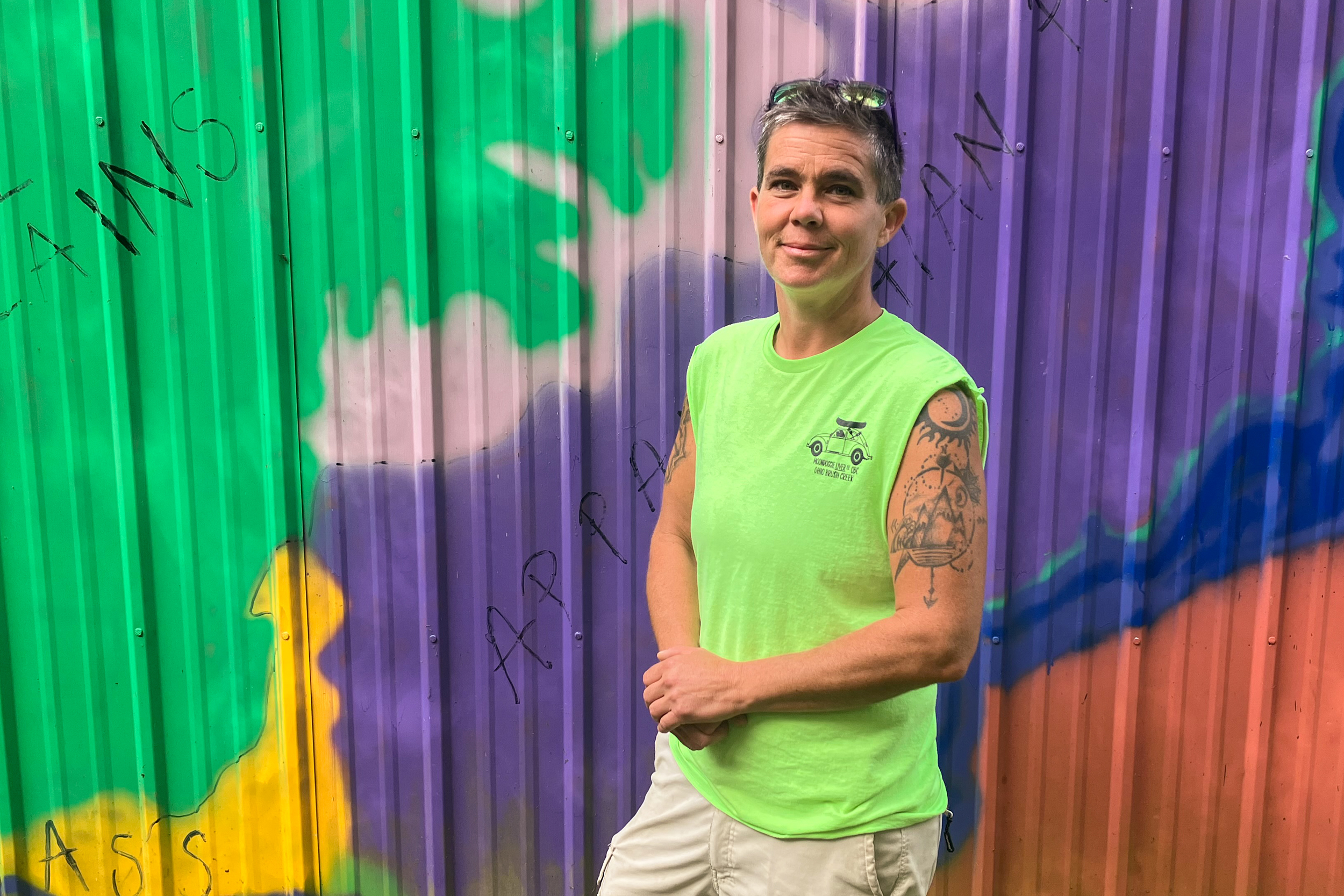
Leading the push is an eclectic group from rural Southern Ohio, including an outdoor-tourism guide, a lawyer and others who fear that the state’s data center boom is changing their communities faster than they can respond.
“Especially on America’s 250th anniversary it’s your job to make sure there’s life for another 250,” Nikki Gerber, the tourism guide, said at the June 1 statehouse hearing.
Data centers powered by fossil fuels are a rising source of planet-warming emissions. But for many opponents, the concerns are closer to home: they fear that data centers will change the look and feel of familiar landscapes and threaten local air and water.
Resistance to data centers is spreading across the country, especially against the supersize complexes being built to support artificial intelligence. The issue is emerging as a focal point in the November midterm elections, with about 40 local ballot measures in seven states, according to Ballotpedia.
Ohio has the most, with 21, including 10 communities set to vote next month on local restrictions on data centers: Conneaut, Defiance, Granville, Oregon, Pataskala, Piqua, Sunbury, Upper Sandusky, Trenton and Urbana.
The Ohio campaign stands out because the Columbus region has become one of the nation’s data center development hot spots.
If opponents prevail in Ohio, the outcome could reverberate beyond the state.
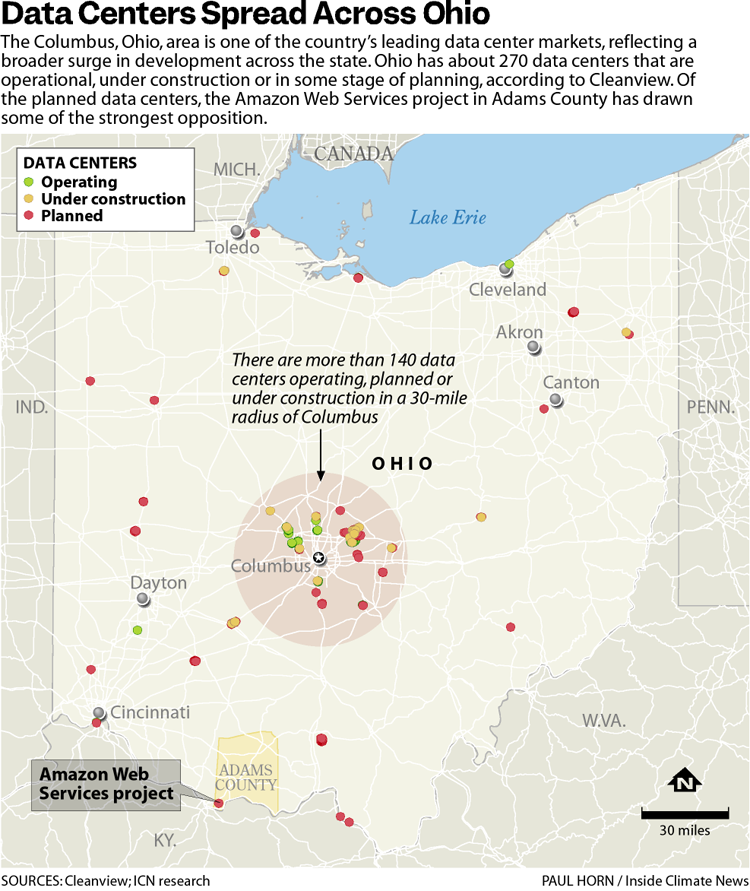
But Gerber is not thinking about the national stakes. Her focus is the 1.3-gigawatt data center that Amazon Web Services wants to build about 15 miles from her campground. She’s worried about what the project could do to the area’s water levels and biodiversity.
Inside Climate News visited her business, Moondoggie Liveree, tucked into the woods near Ohio Brush Creek, which flows into the Ohio River in Adams County.
Gerber’s office is an open-air shed left behind by a previous owner, with walls covered with knickknacks, bumper stickers and signs. Among the messages: “Watch! 4 Turtles! Caution!” The business rents campsites, canoes and kayaks, and assists hikers.
“Everybody thinks Ohio’s flat,” she said. “But it’s not, and it’s a really, really special area out here.”
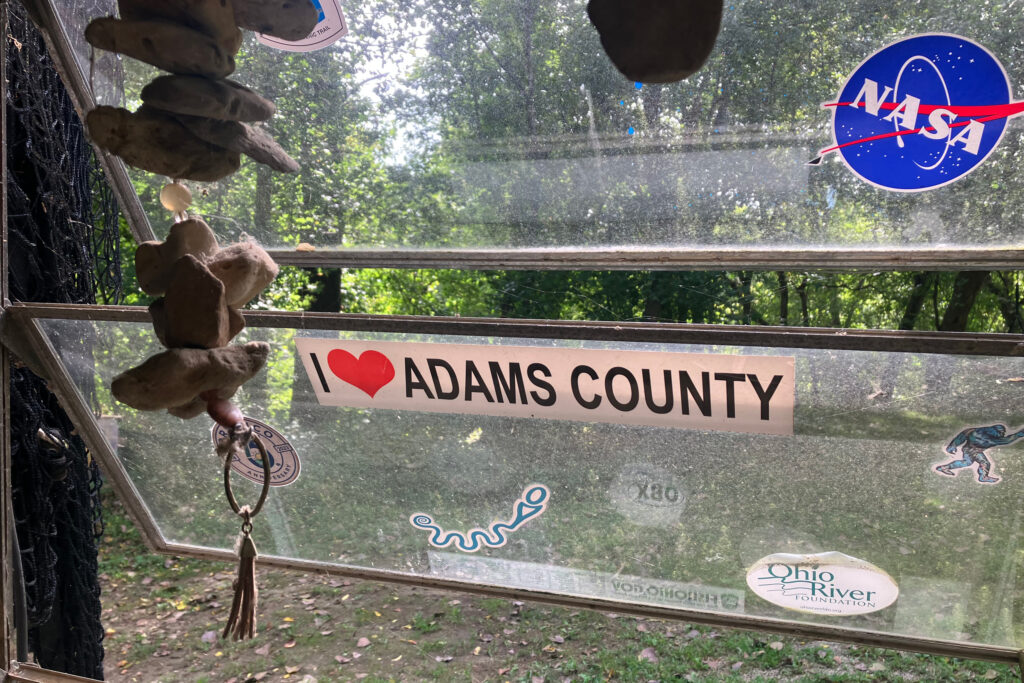


Gerber is a local leader in promoting Adams County—one of Ohio’s poorest counties based on median household income—as a destination for outdoor tourism. She’s worried that the proposed data center could open the door to more projects, transforming the rustic landscape into an industrial zone.
She bought her property after working for years as a medical assistant. During the offseason, she builds rental cabins around the region.
After learning about the proposed Amazon data center early this year, she grew frustrated by what she saw as a lack of details from the local government. Adams County officials did not respond to requests for comment for this story.
In neighboring Brown County, also one of the poorest counties in the state, attorney Austin Baurichter left his job at a law firm office in Cincinnati, partly because he didn’t want to work on behalf of data center developers. He opened his own practice and connected with Gerber and others looking for answers about the projects.
They seem to have little in common. Gerber spends most of her day outdoors in flip-flops and shorts, while Baurichter is an early-career lawyer, usually dressed in a suit and tie. But they share a dedication to the cause.
Gerber is “the living embodiment of the sparkle emoji,” Baurichter said, interviewed by phone from his home office. He praised her energy and optimism.
The two are among the half-dozen people at the core of Conserve Ohio, the organization leading a statewide campaign for a data center moratorium.
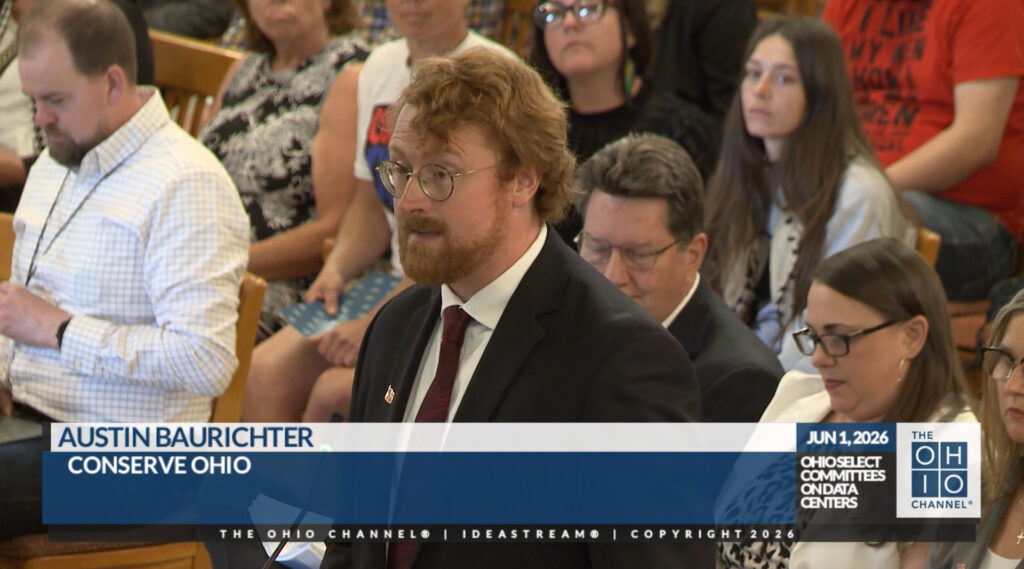
Baurichter has grown frustrated with local governments, which he says are becoming more hostile toward data center opponents. He argues that some officials “got bamboozled” by developers early on, sometimes signing nondisclosure agreements and supporting projects without understanding the ramifications.
He approaches his activism with intensity, bringing his legal skills into the fight, filing public-records requests and questioning officials at public meetings.
In late September, he was there when the Ohio General Assembly voted on a temporary pause in the state’s gasoline tax. Data center opponents, along with Democratic gubernatorial candidate Amy Acton, a former director of the state health department, urged lawmakers to pass a measure pausing data center development that day. Majority Republicans declined to take up the issue.
Ohio political blogger D.J. Byrnes, who writes The Rooster newsletter about Ohio politics, captured video of Baurichter speaking on the sidelines with state Rep. Bride Rose Sweeney, a Cleveland-area Democrat. Baurichter admonished her for not doing more.
“We would rather you fight for our honor than for scraps that are being offered by people who know what they’re offering [is] scraps,” he said.
His conversations at the statehouse underscored his sense that leaders are not listening.
“It’s exhausting, like throwing your energy down a black hole,” he said soon after.
Dramatic Change and Anxiety
The legislature responded to public concerns last spring by creating the Select Committee on Data Centers. The panel has met five times, including the June 1 hearing, and has gathered feedback from local officials, data center companies and the public.
“We’re committed to being a good neighbor—operationally, economically, and in how we engage with communities across the state,” Thor Underdahl, data center and energy public policy manager for Meta, said at a June 4 committee hearing.
Craig Sundstrom, head of energy and sustainability policy for Amazon Web Services, testified about the jobs and investment that data centers could bring. He pushed back against concerns about their water use, saying claims about excessive water consumption are false. An Amazon data center “uses less water than a few car washes do annually,” he said.
State Rep. Adam Holmes, a Republican from a rural district in the east-central part of Ohio, is the committee’s co-chair. In an interview, he said that legislators are in a fact-finding phase, trying to understand how the state can reap the economic benefits of development while addressing the issues raised by voters.
“It’s overwhelming the amount of money that’s coming, and it’s coupled with this historic transformation in technology that we’re facing,” he said. “The change is dramatic; that creates a lot of anxiety.”
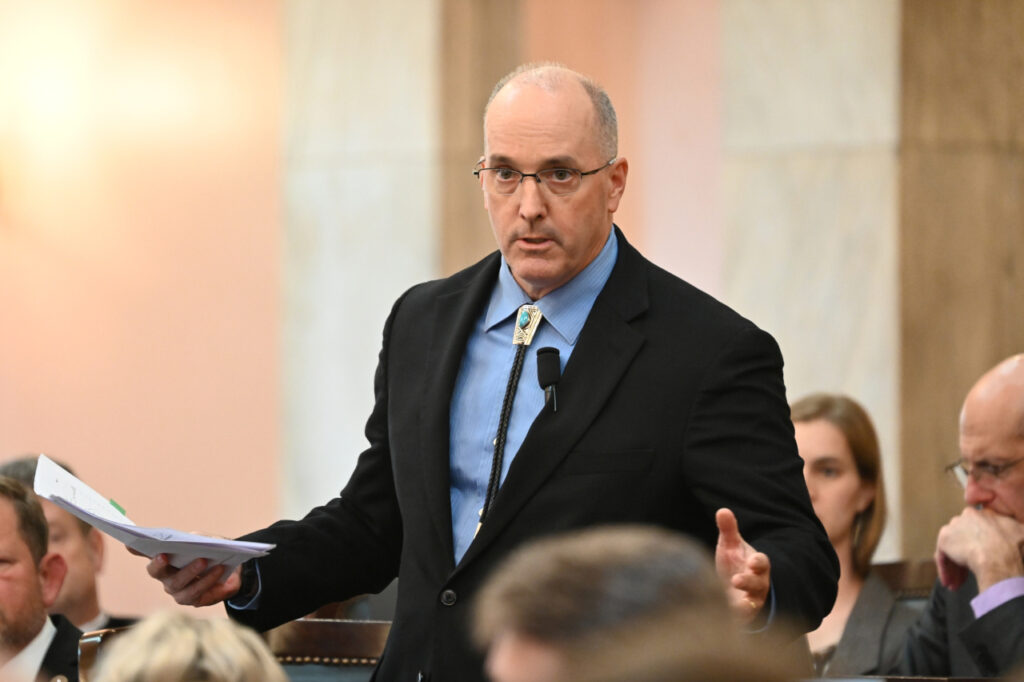
Holmes wants to make sure consumers are protected from potential increases in electricity and water bills tied to data centers’ demand for those resources, he said.
But he’s still figuring out how to approach proposals that would pause development. He noted that both Acton, the Democratic nominee, and her Republican opponent, businessman Vivek Ramaswamy, support some form of a moratorium.
That said, candidates differ on what could come next.
On her campaign website, Acton has called for greater transparency, ending state incentives for data centers and restricting where they can be built. This is in addition to a moratorium that would give lawmakers time to establish new rules.
Ramaswamy, a former presidential candidate and prominent supporter of President Donald Trump, has proposed making electricity free for residents of communities with data centers and strictly enforcing clean-air and clean-water rules for the projects. He supports pausing development until state law clearly protects consumers.
“Despite my opponents’ claims, I’m not ‘pro-data center,’” he said on his campaign website. “I’m pro-Ohio, and I have a plan to fix the problem.”
Conserve Ohio leaders are skeptical of both candidates. They question whether politicians, especially Republicans, can withstand pressure from gigantic tech companies and Trump.
The Trump administration has a stake in Ohio’s data center debate because the federal government owns the land that would host the largest data center in the country, Ports Technology Campus near Piketon, which is not far from Adams and Brown counties.
When fully built, the project would require 10,000 megawatts of electricity. A proposed natural-gas power plant would supply 9,500 megawatts, with an additional 500 megawatts that may come from other sources. The federal government is working with SoftBank, the Japanese conglomerate, to develop the site, with OpenAI expected to be its primary user.
Even though Ports Technology Campus is a short drive from where Gerber and Baurichter live, the project is almost too large for them to comprehend, and its federal ownership makes it difficult to challenge, they said. So far, the proposal has drawn little opposition in Pike County, which, like Adams and Brown counties, has struggled to attract jobs for decades.
Data center opponents are focusing on several dozen hot spots where resistance is strongest. Conserve Ohio advises local activists on how to obtain public records. In return, local activists help gather signatures for a statewide moratorium vote.
This story is funded by readers like you.
Our nonprofit newsroom provides award-winning climate coverage free of charge and advertising. We rely on donations from readers like you to keep going. Please donate now to support our work.
Donate NowAs of Oct. 2, the campaign has collected about 140,000 signatures of the roughly 410,000 needed to qualify for the ballot, Baurichter said.The campaign is too late to make the November ballot, meaning the earliest the issue could go before voters is 2027.
Polling suggests the campaign has public support. A survey released by Bowling Green State University’s Democracy and Public Policy Network found that 75 percent of residents opposed data center construction in their communities, while 63 percent oppose such projects anywhere in Ohio and 55 percent oppose them anywhere in the United States.
Data Center Leader
Ohio has emerged as one of the country’s leading data center markets, ranking among the top five states for development based on the number of projects and their electricity demand, according to industry research firms. Cushman & Wakefield, a commercial real estate research firm, ranks Columbus third among U.S. data center markets behind Virginia and Portland and Eastern Oregon.
Much of the development has happened in New Albany, a suburb northeast of Columbus. Amazon and Meta were among the companies that built large data centers in New Albany in the 2010s. Today, rows of buildings filled with computer equipment, surrounded by muddy construction sites, occupy much of the city, as The Columbus Dispatch showed in a recent video.
For data center opponents, New Albany is an example to be avoided.
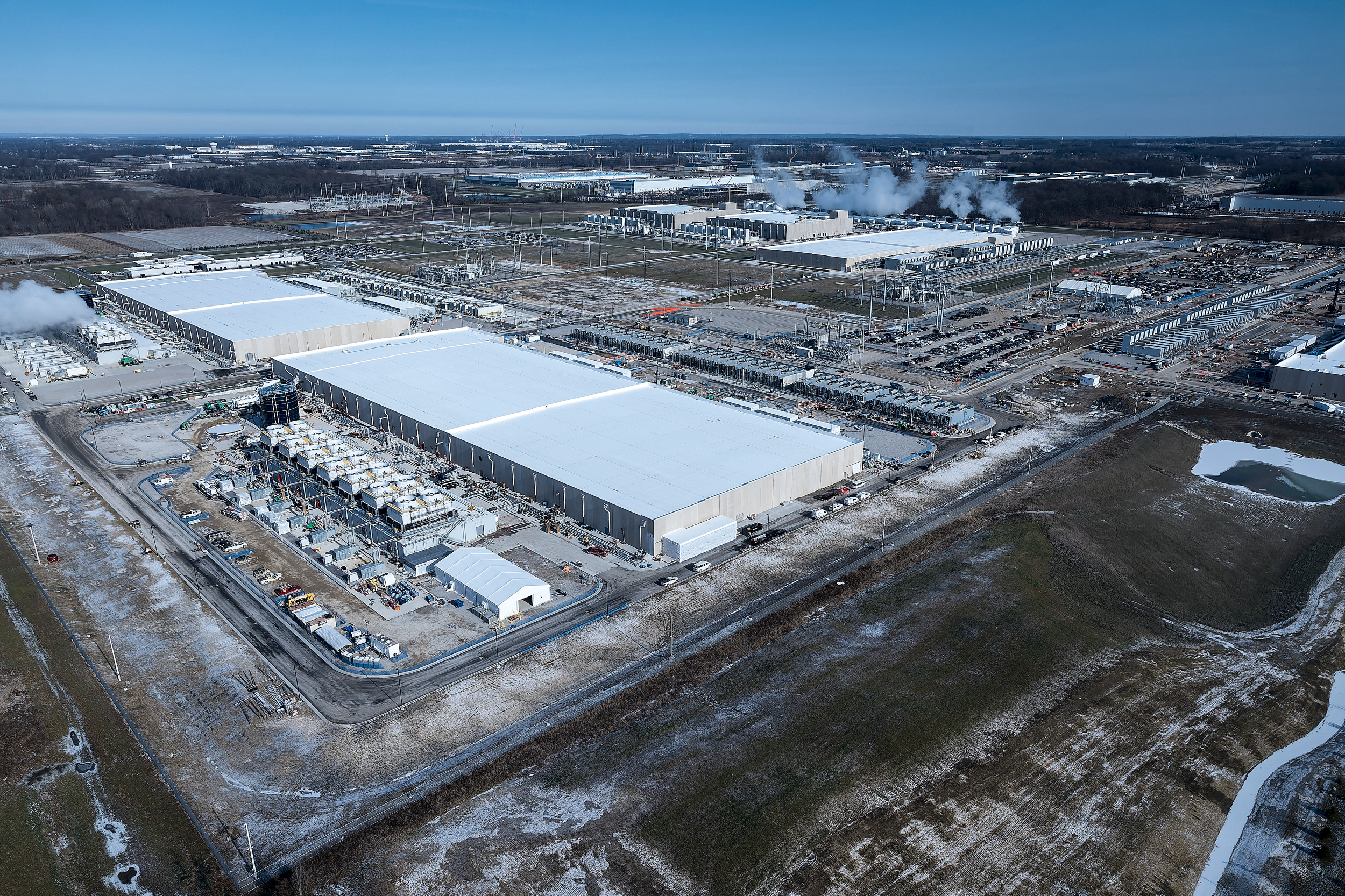
Michael Thomas, CEO of Cleanview, a research firm that tracks power plants and data centers, said that the Columbus-New Albany area is attractive for data centers because of its abundant electricity and close proximity to many of the nation’s’s population centers.
“Ohio has cheaper power than most other states, and historically the state and its utilities have offered generous incentives and easy permitting,” he said in an email.
Back on Gerber’s property, she led a tour of Ohio Brush Creek, where the water level was unusually low. The area, she said, has suffered from drought broken up by flooding, making her wary of projects that may affect the region’s water.
The campaign has cost Gerber time and added to her stress, but she sees those costs as small compared with what is at stake. She believes this fight will determine the future of Adams County.
“It’s overwhelming,” she said.
About This Story
Perhaps you noticed: This story, like all the news we publish, is free to read. That’s because Inside Climate News is a 501c3 nonprofit organization. We do not charge a subscription fee, lock our news behind a paywall, or clutter our website with ads. We make our news on climate and the environment freely available to you and anyone who wants it.
That’s not all. We also share our news for free with scores of other media organizations around the country. Many of them can’t afford to do environmental journalism of their own. We’ve built bureaus from coast to coast to report local stories, collaborate with local newsrooms and co-publish articles so that this vital work is shared as widely as possible.
Two of us launched ICN in 2007. Six years later we earned a Pulitzer Prize for National Reporting, and now we run the oldest and largest dedicated climate newsroom in the nation. We tell the story in all its complexity. We hold polluters accountable. We expose environmental injustice. We debunk misinformation. We scrutinize solutions and inspire action.
Donations from readers like you fund every aspect of what we do. If you don’t already, will you support our ongoing work, our reporting on the biggest crisis facing our planet, and help us reach even more readers in more places?
Please take a moment to make a tax-deductible donation. Every one of them makes a difference.
Thank you,

Dan Gearino
Reporter, Clean Energy
Dan Gearino covers the business and policy of renewable energy and utilities, often with an emphasis on the midwestern United States. He is the main author of ICN’s Inside Clean Energy newsletter. He came to ICN in 2018 after a nine-year tenure at The Columbus Dispatch, where he covered the business of energy. Before that, he covered politics and business in Iowa and in New Hampshire. He grew up in Warren County, Iowa, just south of Des Moines, and lives in Columbus, Ohio.