

Across hundreds of miles of the northern Gulf of Mexico, a deep-water ecosystem collapsed after the massive 2011 Deepwater Horizon oil and gas spill, and recovery is uncertain, new research concludes.
The study, published Monday in the Proceedings of the National Academy of Sciences, found that animal populations, including octopus, krill, squid and shrimp declined by 60 to 85 percent in the three-and-a-half years after the spill, with few signs of recovery since. Krill and lanternfish, both foundational species in the Gulf’s food web, were among the hardest hit. The findings also suggest that the die-off is causing genetic bottlenecks that could further hinder ecosystem recovery.
The researchers identified it as the “fastest and most severe faunal decline reported for Earth’s largest ecosystem type” ever documented. The widespread die-off of marine organisms may also reduce the ocean’s ability to transport carbon dioxide from the atmosphere to the deep sea. After ruling out other factors, such as water temperature and oxygen levels, the researchers identified the Deepwater Horizon blowout as “the most parsimonious explanation” for the ecosystem’s collapse.
Comprehensive natural resource damage assessments and restoration efforts involving federal, state and tribal trustees are still underway. In 2016, BP agreed to a $20.8 billion settlement, including up to $8.8 billion for environmental restoration.
Remote ocean depths and habitats miles below the surface may seem buffered from the impacts of human activity, the authors wrote, but their findings suggest an industrial disaster pushed part of it into a diminished state with “limited resilience to facilitate recovery.” They said their findings also show that proposed industrial deep-sea mining could damage the ecosystem before baseline conditions are assessed.
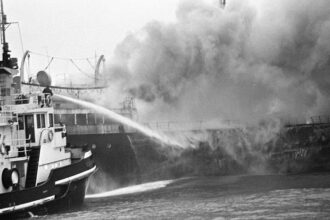
A Transoceanic drilling rig, operating for BP about 50 miles southeast of the Mississippi Delta, exploded on April 20, 2010. The explosion and fire killed 11 people and triggered the largest accidental marine oil spill in history.
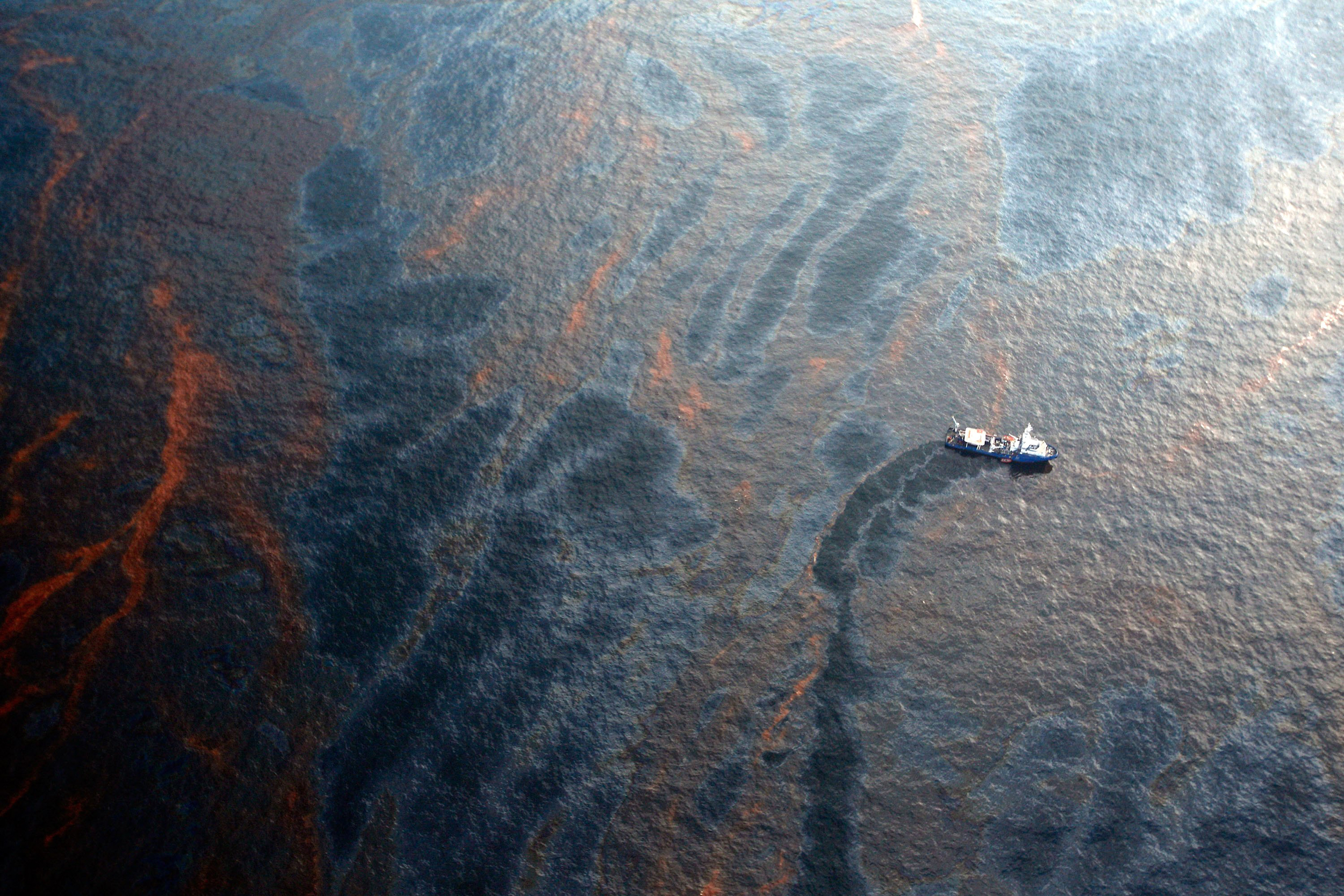
Oil and gas spewed uncontrollably from the broken well nearly a mile deep for 87 days, ejecting 4.9 million barrels of oil at a rate of about 400 tanker trucks per day, enough to fill up 1.2 million cars. The spill also released about 7.7 billion cubic feet of fossil gas into the deep sea at a rate of 88 million cubic feet per day, enough to supply about 820,000 U.S. homes. State and federal agencies, including the EPA, also authorized BP to apply 1.84 million gallons of chemical dispersants to try to reduce the impacts.
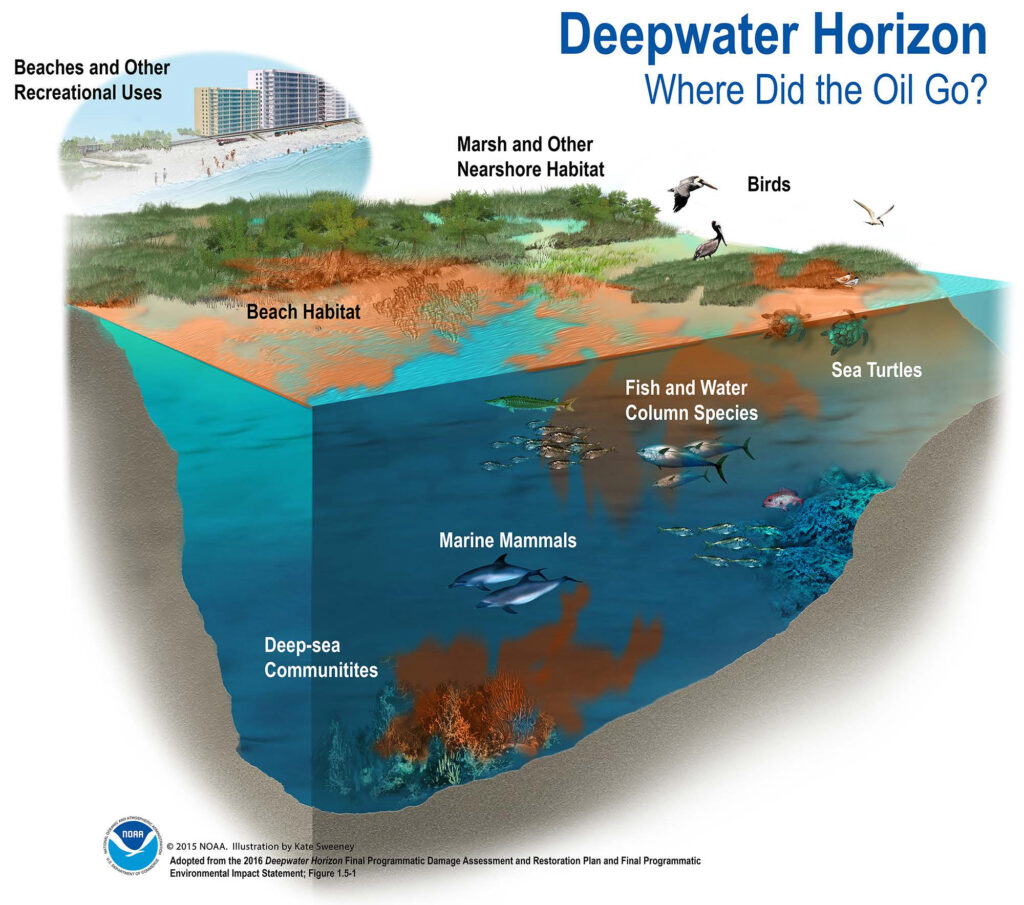
Some of the oil and gas dissipated and was transported out of the deep Gulf of Mexico region. Some coated barrier islands and devastated coastal wetlands and shellfish habitat and some settled onto the ocean floor, where currents can stir it back into the water. But enough hydrocarbon and chemical-dispersant remnants stayed suspended long enough to do almost immeasurable harm.
A series of studies since the spill have shown a wide range of toxic effects on marine organisms, from impaired development and reproduction to increased mortality and lasting health problems in dolphins and whales. The new paper suggests that lingering pollutants may interfere with some species’ ability to find mates in the dark by disrupting their highly developed sense of smell.
Scientists on Slippery Decks
The impacts continue to ripple through the ecosystem, said lead author Tracey Sutton, a professor of marine and environmental sciences at Nova Southeastern University in Florida. A 2024 study found an 80 percent decline in deep-diving toothed whales, he said.
“We used to have a big resident population of sperm whales right off the Mississippi River, but we haven’t seen a sperm whale in 10 years,” he said. Large predators need big, occasional dense patches of prey, and those have disappeared, he added.
Scientists have developed accurate ways to count fish. For this study, they started with a baseline from nine months of sampling in 2011 and compared it with nine subsequent surveys between 2015 and 2023. The researchers sampled deep-pelagic habitat along a large grid around the spill site from about 650 feet below the surface to about a mile down. The deep-pelagic zone accounts for about 90 percent of the Gulf’s total volume.
Across a grid of stations, scientists on slippery decks lowered and hoisted nets that open and close at different depths, with experts from different species groups to identify the catch. They sampled around noon and midnight to account for species that migrate vertically each day. Ship-mounted scientific echosounders provided an independent check, measuring sound reflected by marine life in the water column.
The research is “comprehensive and carefully composed,” marine biologist Bruce Robison, a senior scientist at the Monterey Bay Aquarium Research Institute, said via email. “There is no other study that I know of with such an incredible number of net samples,” added Robison, who did not participate in the new study.
The research focuses on species that are not commercially fished and shows for the first time that human impacts can deplete marine life even in very deep ocean water, he said.
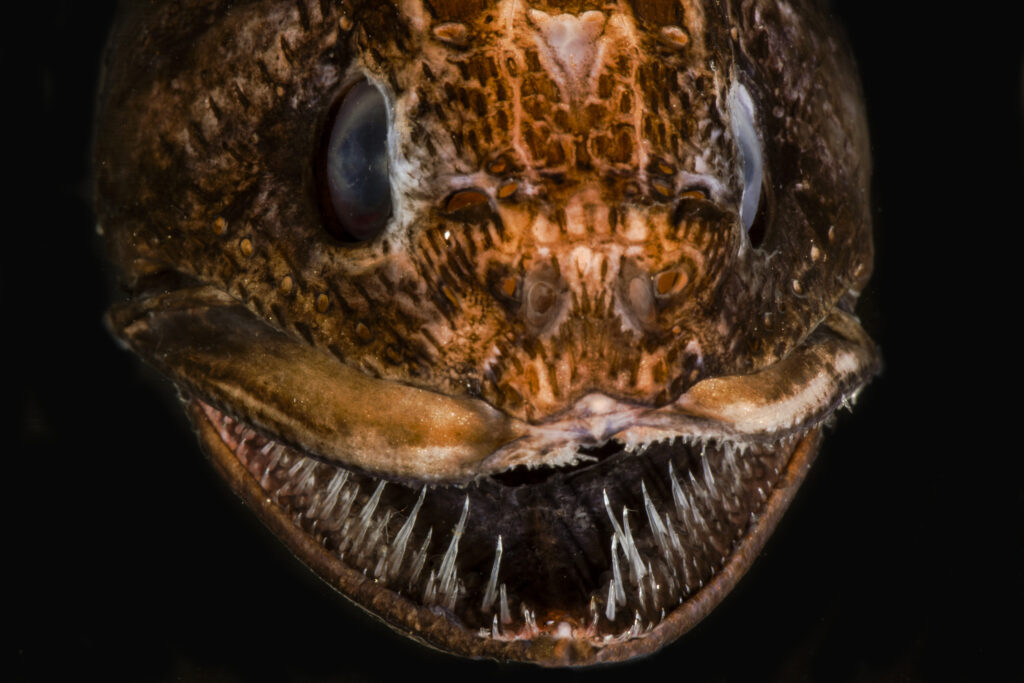
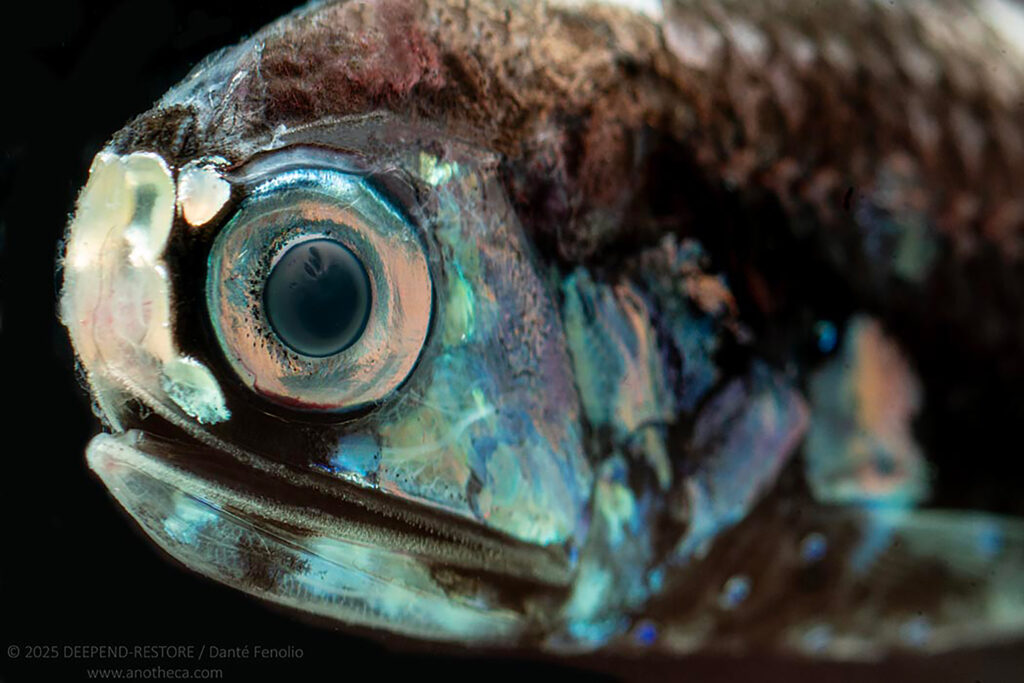
Deep-pelagic snaketooth fish (left) and deep-pelagic lanternfish, displaying headlight organs, collected by the DEEPEND Consortium in the Gulf of Mexico. Credit: DEEPEND/Danté Fenolio
“It is important for the public to understand just how disastrous this oil spill was,” Robison said. “The Gulf has not recovered and it’s been over 15 years.”
Robison said other activities, such as deep-sea mining, could also have severe negative consequences for deep-water pelagic ecosystems by discharging wastewater containing metals or lubricants.
Three lines of evidence—net hauls, acoustic surveys and genetic sampling—corroborate each other, which is “unusually strong evidence to support his conclusions,” said Jeffrey Drazen, a marine ecologist at the University of Hawai’i at Manoa, who did not participate in the new study.
The study examines all possible causes of the decline and shows only one aligns with the scientific evidence, he said.
“Through logical elimination,” he said, “and without actually pointing a finger, they leave no doubt that the oil spill is the cause of the decline.”
About This Story
Perhaps you noticed: This story, like all the news we publish, is free to read. That’s because Inside Climate News is a 501c3 nonprofit organization. We do not charge a subscription fee, lock our news behind a paywall, or clutter our website with ads. We make our news on climate and the environment freely available to you and anyone who wants it.
That’s not all. We also share our news for free with scores of other media organizations around the country. Many of them can’t afford to do environmental journalism of their own. We’ve built bureaus from coast to coast to report local stories, collaborate with local newsrooms and co-publish articles so that this vital work is shared as widely as possible.
Two of us launched ICN in 2007. Six years later we earned a Pulitzer Prize for National Reporting, and now we run the oldest and largest dedicated climate newsroom in the nation. We tell the story in all its complexity. We hold polluters accountable. We expose environmental injustice. We debunk misinformation. We scrutinize solutions and inspire action.
Donations from readers like you fund every aspect of what we do. If you don’t already, will you support our ongoing work, our reporting on the biggest crisis facing our planet, and help us reach even more readers in more places?
Please take a moment to make a tax-deductible donation. Every one of them makes a difference.
Thank you,

Bob Berwyn
Reporter, Austria
Bob Berwyn is an Austria-based reporter who has covered climate science and international climate policy for more than a decade. Previously, he reported on the environment, endangered species and public lands for several Colorado newspapers, and also worked as editor and assistant editor at community newspapers in the Colorado Rockies.