

A decade after world leaders signed the legally binding Paris Agreement to combat climate change, the crisis’ health harms are getting worse and progress is lagging, according to a new report from leading international scientists.
The 10th annual Lancet Countdown report, published Tuesday, is authored by 146 researchers from more than 30 countries, led by University College London and produced in collaboration with the World Health Organization. Following a slew of record-breaking findings in last year’s report, the authors found that heat, famine, disaster and disease are costing millions of lives around the world. Health harms from climate change, they say, have accelerated faster in the decade since the Paris Agreement than they did in the decade prior.
These harms are global, but they fall disproportionately on lower-income nations that have contributed relatively little to the climate crisis.
Meanwhile, rising energy demand, continued fossil fuel reliance and a slow transition to clean energy mean the world is failing to respond to the speed and scale of the hazards.
“Climate change is not only getting worse, but it’s getting worse a lot faster than it used to, and that has to do with the fact that year on year we’re reaching record levels of greenhouse gas emissions,” said Marina Romanello, executive director of the Lancet Countdown. “It’s a stark call to action.”
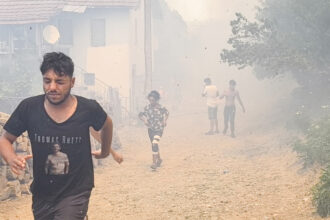
Recent months saw catastrophic floods, wildfires and heat waves, and news that the world is on course to overshoot the key 1.5 degree Celsius warming threshold set in the Paris Agreement within the next few years.
The report’s authors called on the World Health Organization and member states to declare climate change a global health emergency, and for health to be centered in global talks to reduce emissions and transition away from fossil fuels. The next major opportunity is in November at the 31st United Nations Conference of the Parties on climate, known as COP31.
“The evidence is undeniable: climate change is one of the greatest threats to health facing humanity,” said Tedros Adhanom Ghebreyesus, director-general of the World Health Organization, in a statement with the report.
The report’s authors emphasized that global investments in clean energy have brought some relief: From 2016 to 2023, cleaner air avoided an estimated 323,000 annual deaths in a little more than half of countries surveyed, with leading gains in China and the U.S. But globally, that was balanced out by increased deaths in the other 46 percent of countries.
The average number of people dying each year from extreme heat has grown in the last decade. In 2023—the most recent year with complete data—heat was linked to a record 710,000 estimated deaths. That’s more than the lives lost to HIV or malaria in the same year. And more than 70 percent of those deaths are attributable to human-caused climate change, according to the report.
Between 2016 and 2023, climate change is estimated to have caused almost 3 million heat deaths, the authors found.
Heat also has serious impacts on people’s livelihoods, and carved an estimated $1.07 trillion of potential income out of the global economy as high temperatures kept people from work, the report concluded. Southeast Asia and Africa were hit hardest, as were the agriculture and construction sectors.
This story is funded by readers like you.
Our nonprofit newsroom provides award-winning climate coverage free of charge and advertising. We rely on donations from readers like you to keep going. Please donate now to support our work.
Donate NowMore than half of the world’s land was impacted by extreme drought for at least a month last year, the second-highest level on record after 2023, with serious implications for food security and sanitation. In the decade since the Paris Agreement went into effect, incidence of extreme drought has grown more than 700 percent faster than it did in the previous 10 years. Extreme rainfall is also becoming more common, ramping up risks of floods, landslides and waterborne disease.
This year and next, an El Niño supercharged by climate change is likely to bring more death and destruction along the same unequal lines. It’s critical to prioritize early warning systems and make sure health systems around the world are equipped to respond, Romanello added.
“In the upcoming months, we have to be very vigilant,” she said. “We’re talking about very extreme events that could have lethal consequences.”
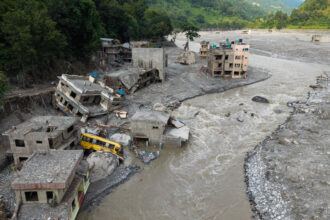
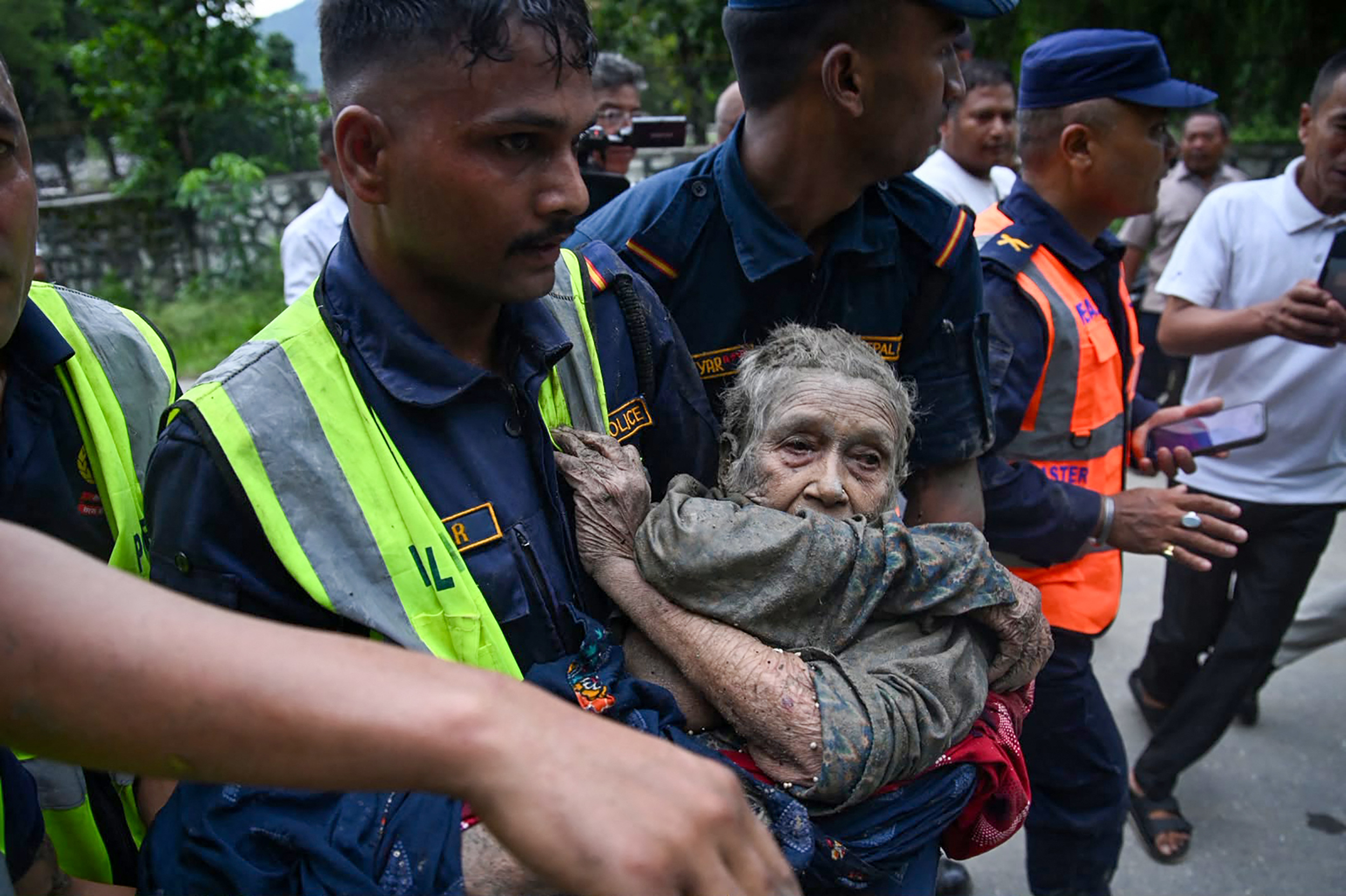
Meanwhile, global efforts to get wealthier nations to support developing ones in mitigating and responding to climate harms, like the U.N. Loss and Damage Fund, have languished. Four years after the fund was created, Nepal became the first country to get approval for an emergency allocation this month following the devastating flood in August that killed at least 1,500 and left thousands more missing. The obligated amount—$20 million—is less than 1 percent of the $2.7 billion Nepal sustained in initial losses.
The report comes out just weeks before COP31, where government, business, science and civil society leaders will gather to review climate goals. That includes those from the Paris Agreement, from which President Donald Trump withdrew the U.S. for the second time at the start of this year.
Diana Picon Manyari, international climate senior director at the global organization Health Care Without Harm, wants health professionals to have a seat at the table at COP31. Manyari would like a focus on both adaptation and mitigation in the healthcare sector, and better financing options for healthcare systems to address climate impacts.
“The commitments are not enough [and] whatever is out there is very difficult to access,” Manyari said of financing.
Jeni Miller, executive director of the Global Climate and Health Alliance, wasn’t surprised by the Lancet Countdown’s results: They match what she’s hearing from her international network of healthcare workers. She emphasized that all the decisions made at COP have an impact on human health. That includes addressing the root cause of climate change—fossil fuels.
“There is no universe in which healthcare systems can become so resilient and so prepared that we would be able to take care of people if we allow for runaway climate change,” Miller said. “Getting a handle on the drivers of climate change is critical.”
COP talks have long been frustrating, Miller said, as emissions continue to rise and progress stagnates.
“It is hard to go there year after year and look around and see climate change ramping up massively … and not have the action coming out of that process meet the urgency of the moment,” she said.
International spaces like COP can’t be the only avenue for climate action, Miller said, but the talks remain an important process to engage with.
“Every country comes into that room and discusses this shared issue that we’re grappling with, this existential issue that we’re grappling with as the human race,” Miller said. “The COP process matters, and it’s not sufficient. We need all of the processes.”
About This Story
Perhaps you noticed: This story, like all the news we publish, is free to read. That’s because Inside Climate News is a 501c3 nonprofit organization. We do not charge a subscription fee, lock our news behind a paywall, or clutter our website with ads. We make our news on climate and the environment freely available to you and anyone who wants it.
That’s not all. We also share our news for free with scores of other media organizations around the country. Many of them can’t afford to do environmental journalism of their own. We’ve built bureaus from coast to coast to report local stories, collaborate with local newsrooms and co-publish articles so that this vital work is shared as widely as possible.
Two of us launched ICN in 2007. Six years later we earned a Pulitzer Prize for National Reporting, and now we run the oldest and largest dedicated climate newsroom in the nation. We tell the story in all its complexity. We hold polluters accountable. We expose environmental injustice. We debunk misinformation. We scrutinize solutions and inspire action.
Donations from readers like you fund every aspect of what we do. If you don’t already, will you support our ongoing work, our reporting on the biggest crisis facing our planet, and help us reach even more readers in more places?
Please take a moment to make a tax-deductible donation. Every one of them makes a difference.
Thank you,

Keerti Gopal
Reporter, Health and Justice
Keerti Gopal covers intersections between climate change, public health and environmental justice at Inside Climate News. Previously, she covered climate activism and movement repression. She is a National Geographic Explorer and has received fellowships from Fulbright, the Solutions Journalism Network, The Lever, and the National Press Foundation.