

Feeding the Beast: Third in a series about lax regulation, corporate influence and the heavily polluting, yet nearly untouchable American meat industry.
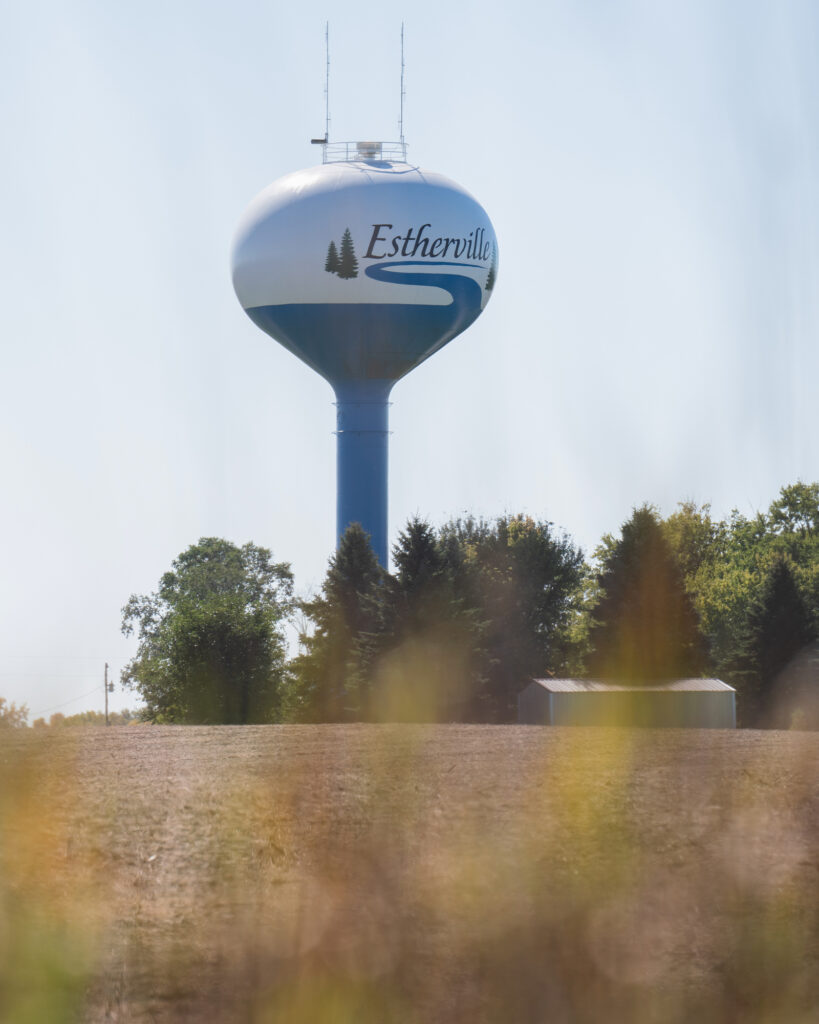
ESTHERVILLE, Iowa—By the time rainwater rolled down the hillside and reached the stream near the edge of Gordon Garrison’s property, it had turned a foul, murky red.
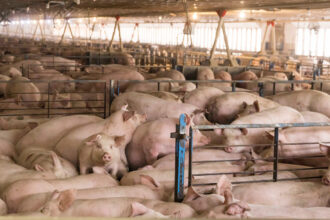
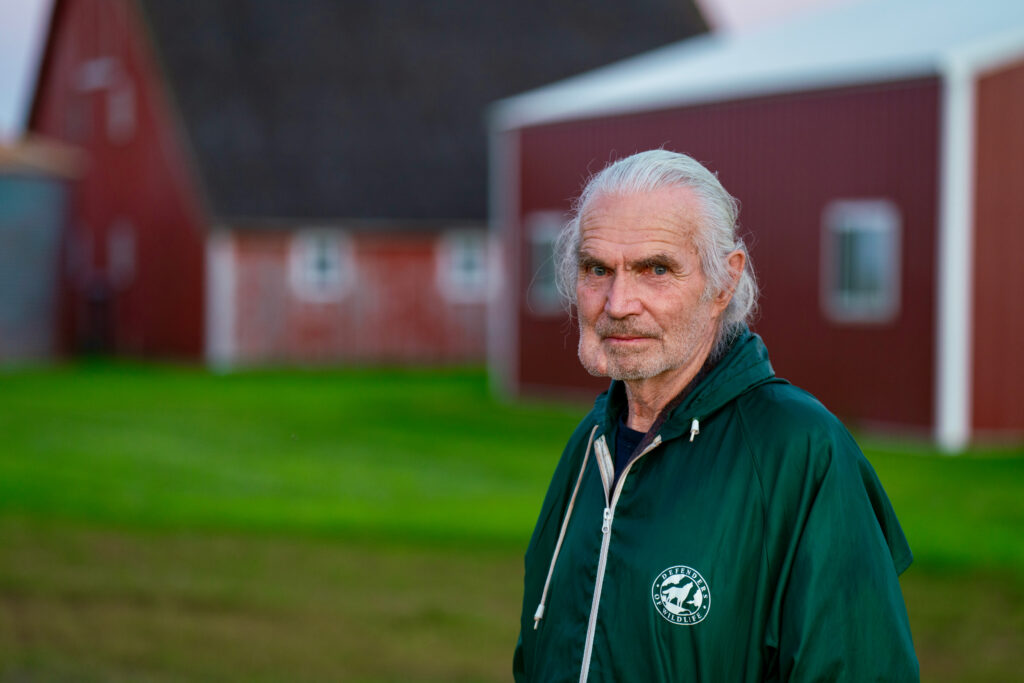
Gravity had acted predictably, Garrison knew. In 2015, New Fashion Pork, a Minnesota-based company with facilities in seven states, built a 4,400-head hog confinement half a mile from his home.
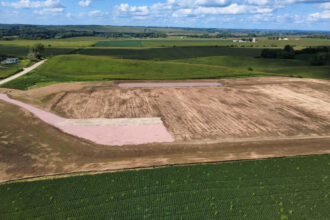
Between the confinement, and Garrison’s 300 acres of restored prairie, oak savanna and wetlands, lay sloping fields owned by a New Fashion Pork subsidiary. When the manure storage pit beneath their facility filled, the company hired contractors to spread the waste on the fields as fertilizer.
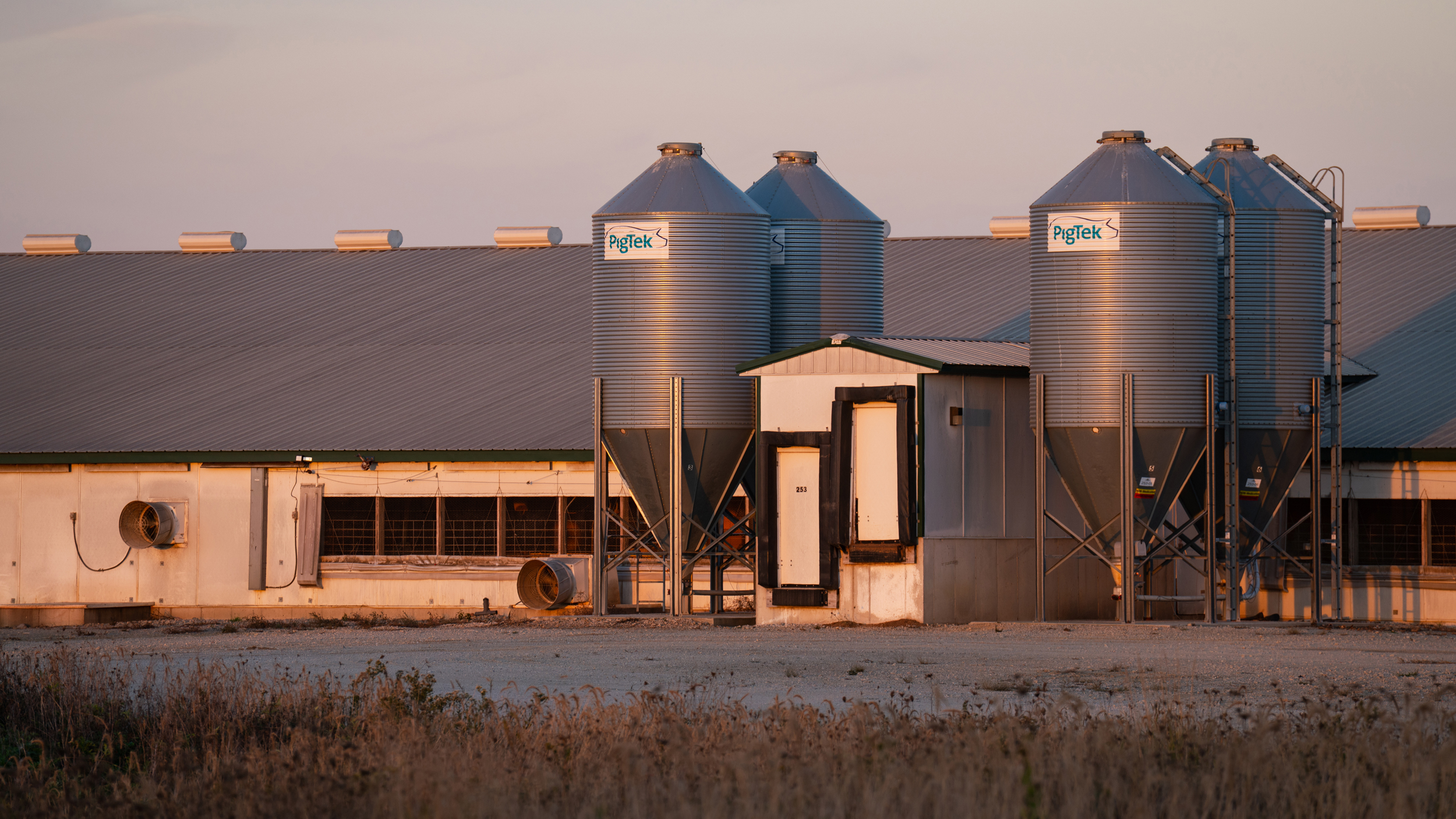
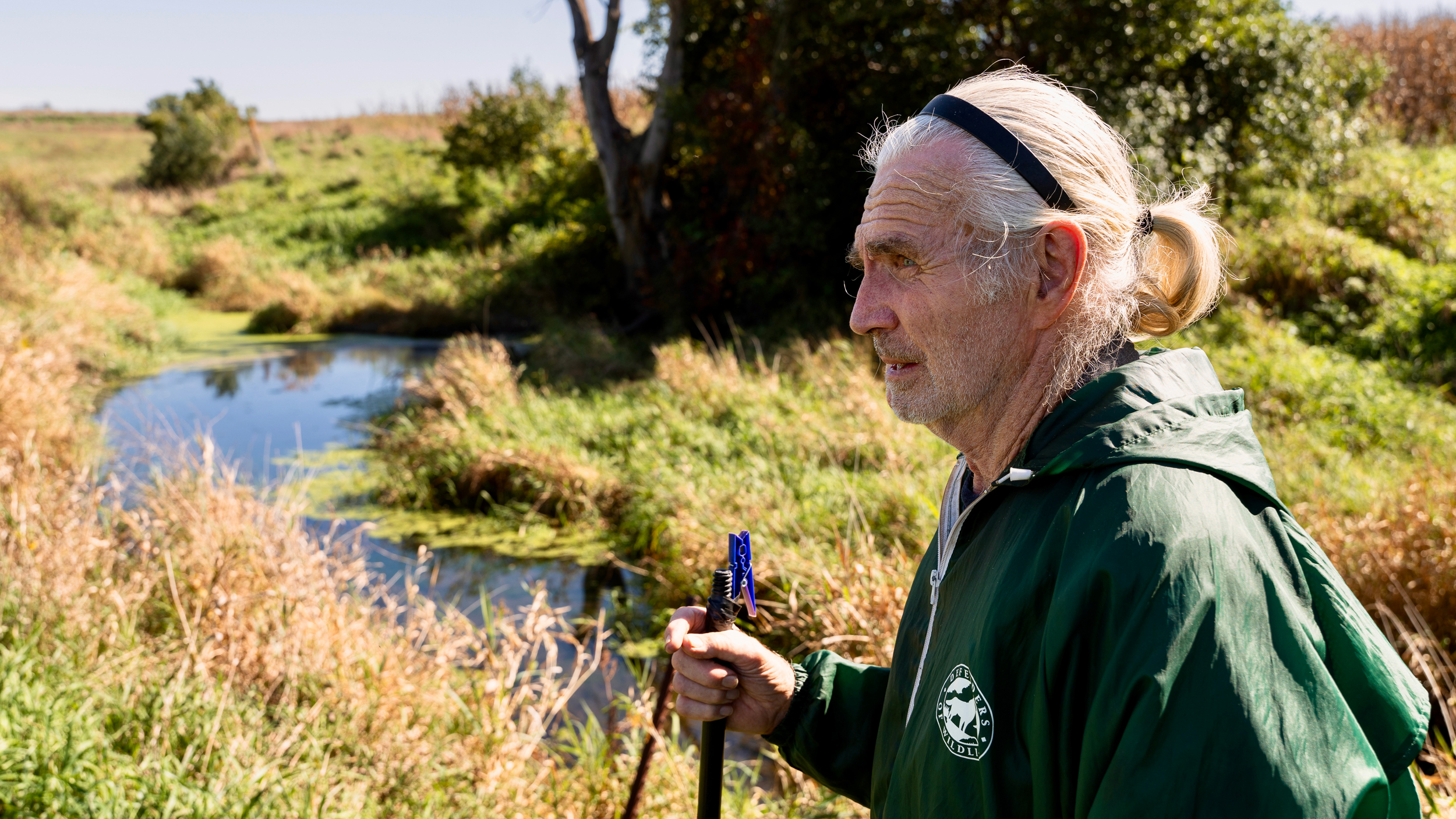
Twice in the facility’s first few years of operation, Garrison alleged, the contractors applied manure on already saturated ground, causing the animal waste to flow downhill into a tributary of the Des Moines River.
In 2018, the facility was fined $4,800 for failing to “properly ensure” that manure spread on the field stayed out of that stream. Some 150 miles downstream, where the Des Moines River winds through Iowa’s state capital, the river provides drinking water for more than 500,000 Iowans.
The federal Clean Water Act of 1972 was designed to protect the nation’s waterways from pollution, including waste discharged by concentrated animal feeding operations. But Iowa has never fully enforced the legislation even as factory farms proliferate and a decades-old water crisis deepens.
Under the act, states are responsible for permitting concentrated animal feeding operations (CAFOs) that discharge pollutants into waterways. These permits, issued under the National Pollutant Discharge Elimination System, or NPDES, impose strict operating, monitoring and reporting requirements designed to prevent pollution.
Iowa, however, has largely sidestepped that authority. The state Department of Natural Resources, which issues NPDES permits, has long embraced a more forgiving philosophy known as “coaching for compliance.” Rather than emphasizing penalties for violations, the approach prioritizes technical assistance and cooperation with regulated facilities.
Across the state, just 4 percent of nearly 4,000 federally-recognized CAFOs have the permits. Thousands more livestock confinements are considered automatically exempt because state law already prohibits them from discharging, the Iowa DNR said.
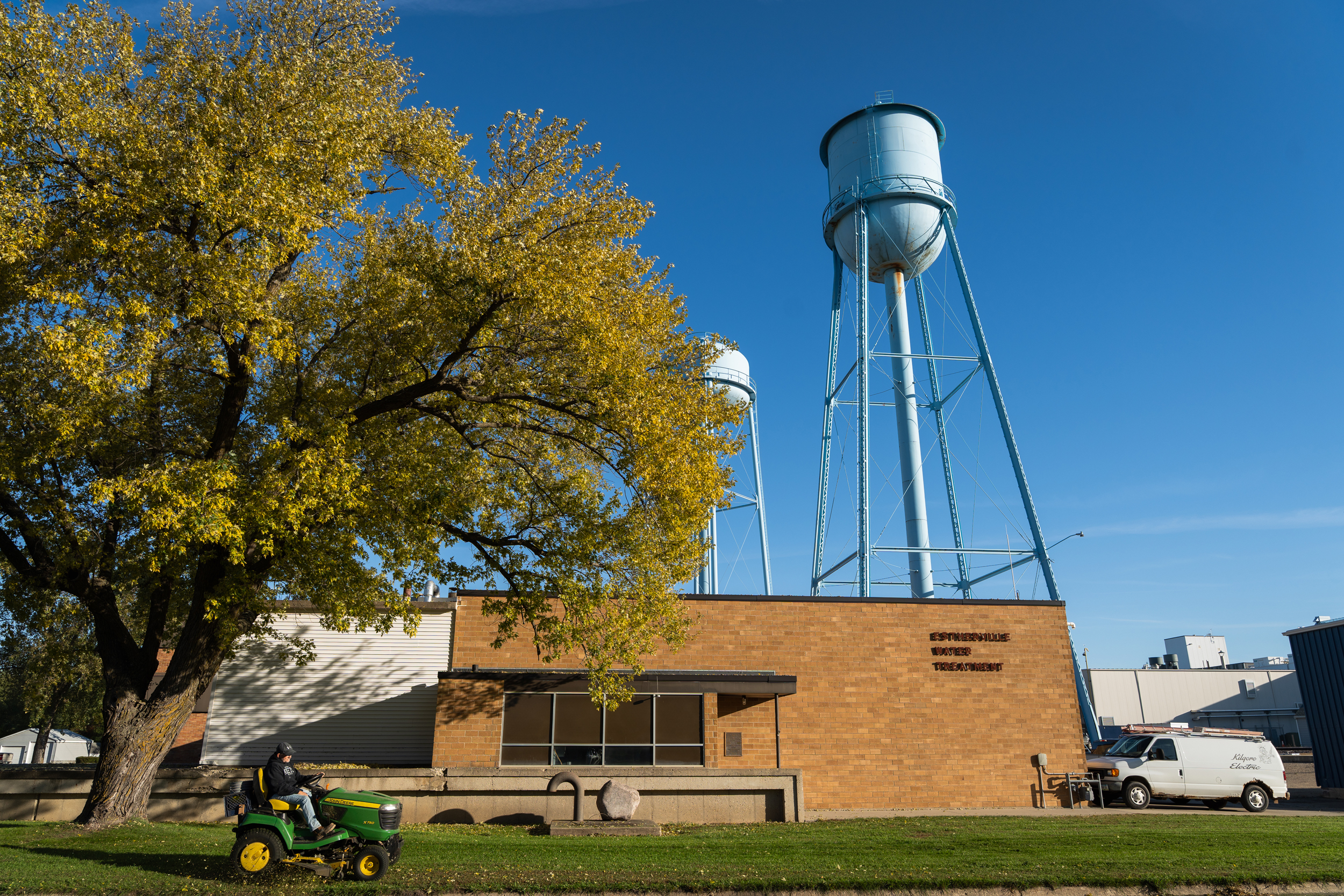
The scale of permitting in Iowa is dwarfed by the environmental impacts of its CAFOs; manure spills and stormwater runoff funnel excess nutrients and bacteria into the state’s vast network of impaired waterways, while nearby facilities foul air quality. Municipal water utilities across the state have invested millions of dollars in treatment systems to keep pace.
Iowa residents have grown increasingly frustrated with the state’s reluctance to protect against the downstream impacts of industrial animal and row crop agriculture.
In early September, Sarah Green, executive director of the Iowa Environmental Council, stood on the banks of the Raccoon River to announce the launch of the council’s “Protect Water, Prevent Cancer” campaign.
“This is a fight against the systems and the inaction that have allowed Iowa to become a sacrifice state,” Green told supporters who gathered for the launch along a major tributary of the Des Moines River.
Repeated criticism from community action groups and environmental organizations over the state’s sparse NPDES permits for CAFOs prompted the regional Environmental Protection Agency office to investigate the Iowa Department of Natural Resources in 2011. The investigation found that the state was failing to adequately enforce its Clean Water Act permitting obligations for polluting factory farms, prompting the agencies to develop a five-year remedial work plan to correct the problem.
During the work plan, DNR employees inspected thousands of facilities, including many with documented discharges, but issued relatively few new NPDES permits.
Little has changed since the work plan ended in 2018. Rather than requiring NPDES permits and the additional oversight they’d require, state regulators have continued giving facilities that pollute Iowa’s waterways second, and even third, chances.
“They’re just doing what the state lets them get away with,” Garrison said.
The state has cited many facilities, including New Fashion Pork, for water pollution but hasn’t told them to obtain Clean Water Act permits.
In response to questions about NPDES permitting, a DNR spokesperson wrote that unauthorized discharges from animal feeding operations trigger enforcement action and must be resolved with a permanent remedy.
The department also provided a list of enforcement priorities that guide its decision-making, including fish kills, serious water quality degradation and discharges not authorized by an NPDES permit.

In late 2018, armed with water samples he collected on his property, Garrison sued New Fashion Pork in the U.S. District Court for the Northern District of Iowa.
When a federal judge granted summary judgement against Garrison on the grounds that he had insufficient evidence or expert testimony to prove ongoing harm from a Clean Water Act violation, he took the case to the state district court, then to the Iowa Supreme Court. First the lower court, then the Supreme Court in a 4-3 split decision in 2022, granted New Fashion Pork a summary judgment on the grounds that Garrison couldn’t prove his case warranted an exemption from Iowa’s Right to Farm Act, which protects agricultural producers in the state from most nuisance cases.
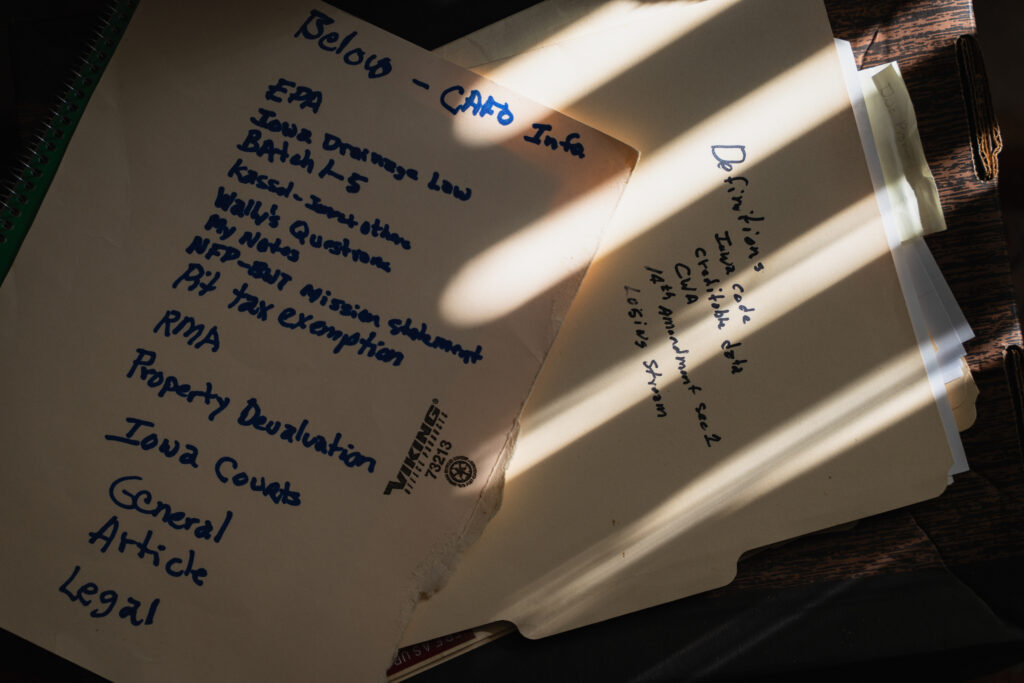
At his farmhouse in Northern Iowa, Garrison still keeps boxes of documents from his years-long legal battle with New Fashion Pork and his efforts to navigate federal and state regulations governing CAFOs.
“I went the whole nine yards with these guys,” he said. “I don’t care what I won or lost. I wanted to show why the system fails.”
Garrison believes the state prioritizes Iowa’s meat industry, an economic engine that generates tens of billions of dollars in annual sales, over enforcing the Clean Water Act.
“This state doesn’t care about the people that live in it,” he said. “They only care about the economics.”
CAFOs Singled Out
When Congress drafted the Clean Water Act of 1972, lawmakers took pains to designate CAFOs as “point-sources” of pollution.
They did not list more heavily regulated industrial polluters, such as manufacturing, quarries and wastewater treatment plants, by name as “discernible, confined, and discrete” sources of discharge to surface waters.
The act required all American factory farms with 1,000 or more animal units—1,000 cattle or approximately 2,500 hogs—to obtain a newly established NPDES permit. Smaller CAFOs were to be evaluated on a case-by-case basis, with permits required if they discharged pollutants through a man-made conveyance, like a culvert or pipe.
“Permits” is a misleading term for the NPDES agreements, which impose strict limits, often complete bans, on pollutant discharges to waterways from CAFOs. The permits also require facility operators to conduct detailed monitoring of animal waste storage, submit quarterly reports, and notify state regulatory bodies in advance of any discharges.
While most states, including Iowa, already prohibit manure discharges into waterways, the permits provide another layer of protection for natural resources—one that could be especially important in regions saturated with CAFOs.
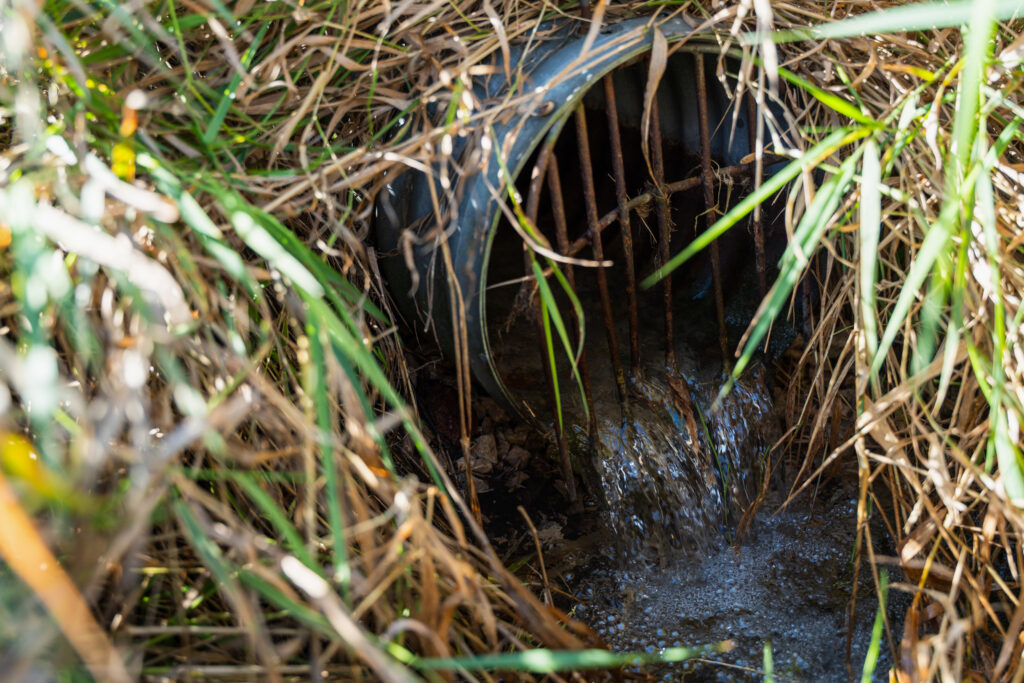
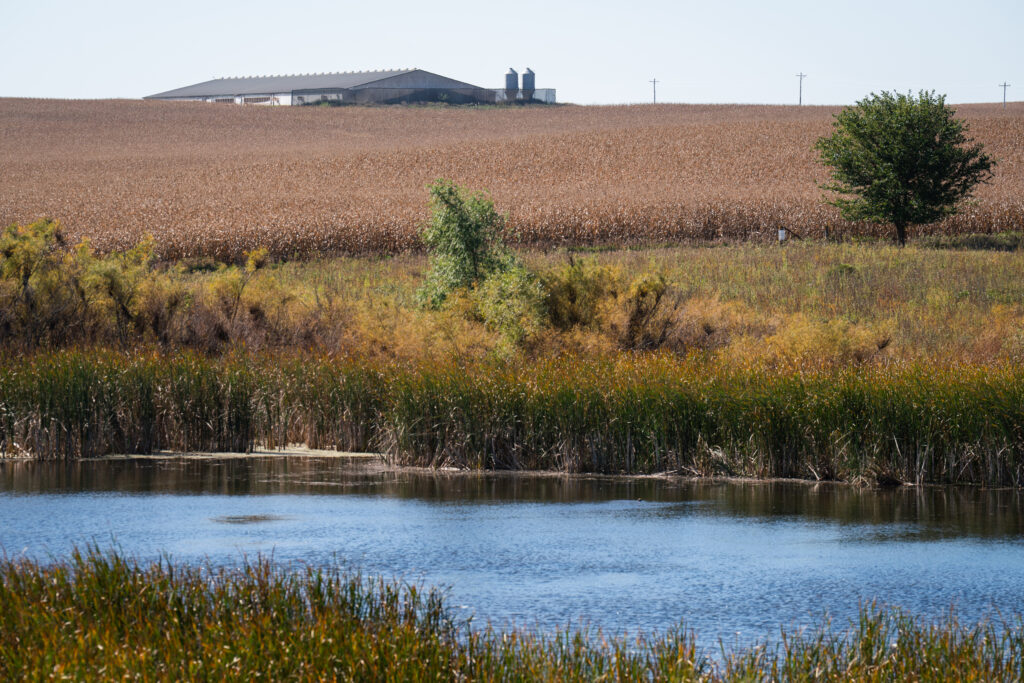
In Iowa, the nation’s hog-industry epicenter, individual counties can host hundreds of large-scale confinement facilities, with environmental consequences that reach far beyond the communities where they operate.
Livestock production is a major source of greenhouse gas emissions, accounting for an estimated 12 to 20 percent of global emissions, and it threatens local air quality. Research has found higher rates of asthma among residents who live within 1.5 miles of CAFOs, while neighbors of livestock facilities, fed up with the airborne stench, have brought countless nuisance cases against producers.
For Iowans confronting widespread fertilizer and manure contamination in the state’s waterways, water pollution is a major concern. CAFOs endanger water quality not only in Iowa but as far downstream as the Gulf of Mexico.
Manure stored in pits beneath CAFOs and in open, earthen lagoons can leach into groundwater and surface water, where excess nitrogen and phosphorus contribute to harmful algal blooms and low-oxygen conditions that create aquatic “dead zones.”
Manure spills from overflowing storage or pumping mishaps shock aquatic ecosystems with toxic levels of ammonia. Animal-waste contamination can push nitrate concentrations in drinking water sources well past the federal limit.
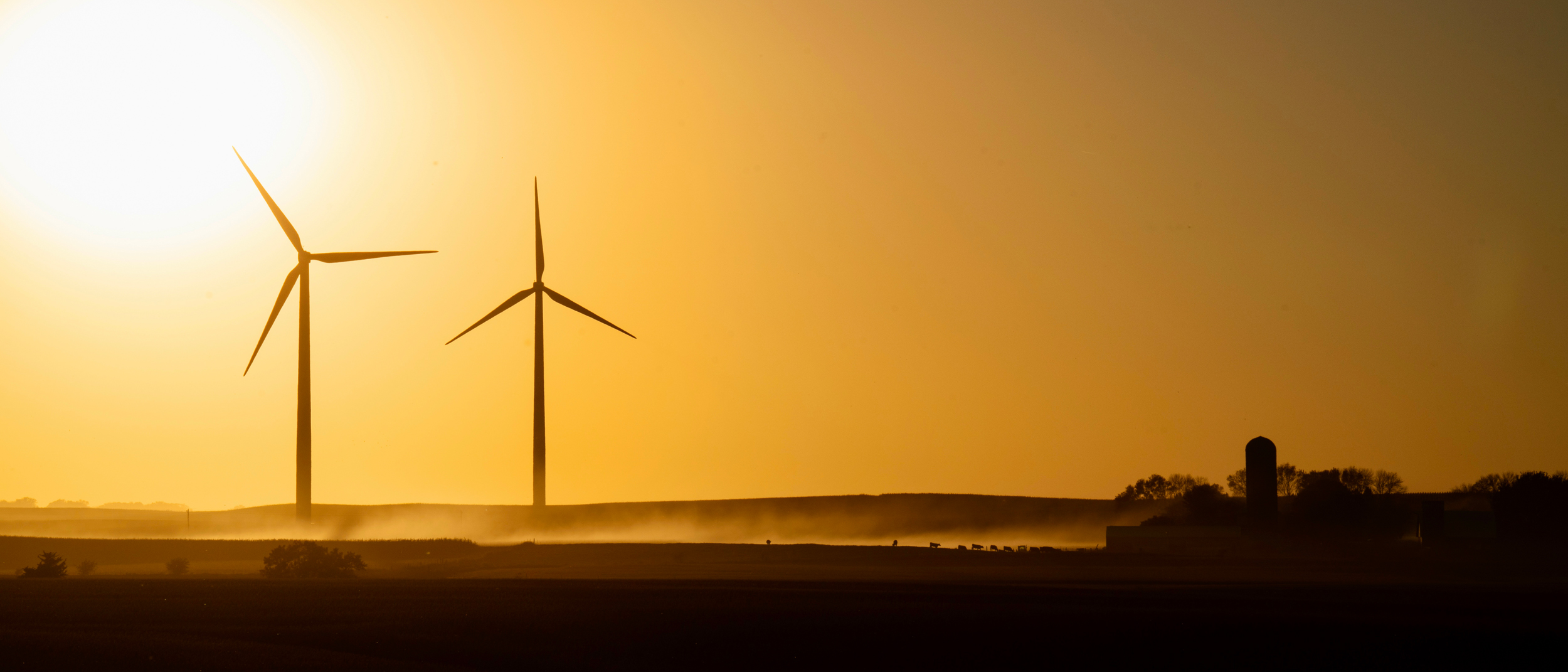
Even when farmers inject or “knife” manure into cropland as organic fertilizer—the fate of most animal waste in Iowa—its nutrients still reach nearby waterways. The U.S. Geological Survey has documented how manure-derived nitrate moves from fields to groundwater over multiple seasons.
In Iowa, that pollution comes with a steep price.
Municipal utilities are legally required to provide residents with water below the EPA’s maximum contaminant level of 10 milligrams per liter for nitrate, a standard established to protect infants from fatal oxygen deprivation.
To meet this standard, Central Iowa Water Works, which serves roughly one-fifth of the state’s population, has operated its nitrate removal facility in Des Moines for nearly 200 days so far in 2026. The regional water authority estimates it costs $10,000 a day to operate the facility at full capacity.
Smaller Iowa communities face similar challenges, sometimes taking on decades-long debt to tap into uncontaminated water sources or build nitrate-removal infrastructure.
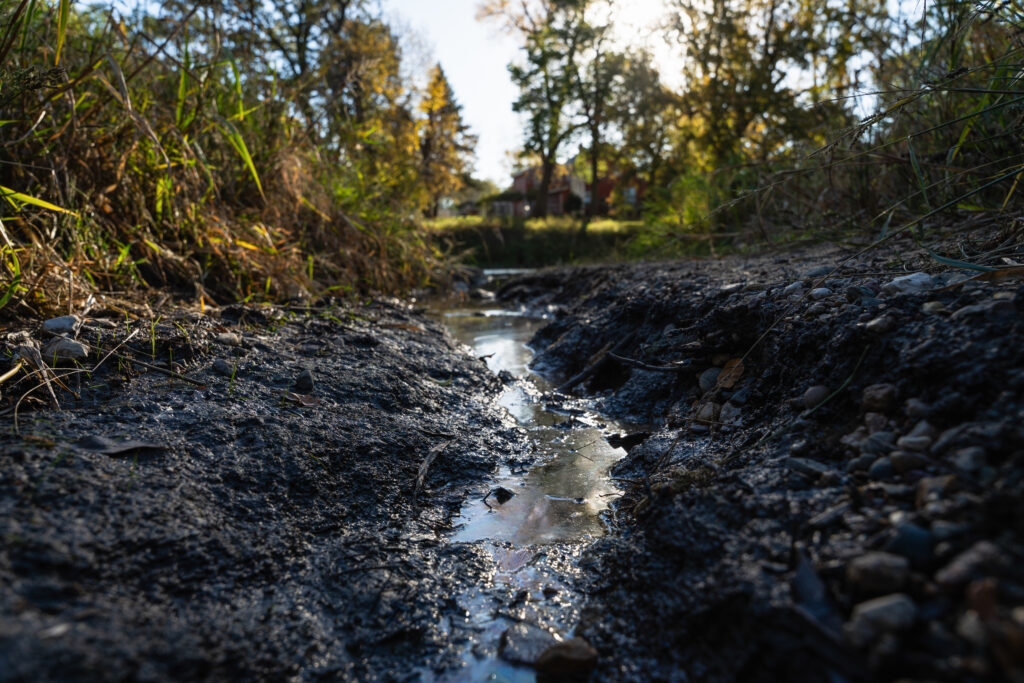
Roughly 300,000 Iowans rely on private wells for drinking water, which are not subject to the same regulations as public water systems.
Even at concentrations below the federal limit, research links long-term exposure to nitrates in drinking water to thyroid disease, reproductive health risks and certain cancers. Nitrate is not classified as a carcinogen, but it can be converted in the digestive tract to potentially cancer-causing nitrite and N-nitroso compounds.
Evidence linking elevated nitrate levels to cancer risk has heightened concerns over the state’s longstanding water-quality challenges. Iowa has the nation’s second-highest rate of new cancer cases and its overall cancer incidence has risen even as rates have declined in other states.
In March, after a yearlong series of “cancer listening sessions” across Iowa, the Iowa Environmental Council and Drake University Harkin Institute released a watershed report that synthesized research on Iowa’s leading environmental risk factors for cancer, including nitrate contamination from manure discharges.
As public concern grows, water quality has emerged as a top priority for voters heading into Iowa’s November midterm elections. Both the Democratic and Republican candidates for governor, Rob Sand and Zach Lahn, have campaigned on promises to address the state’s water-quality problems.
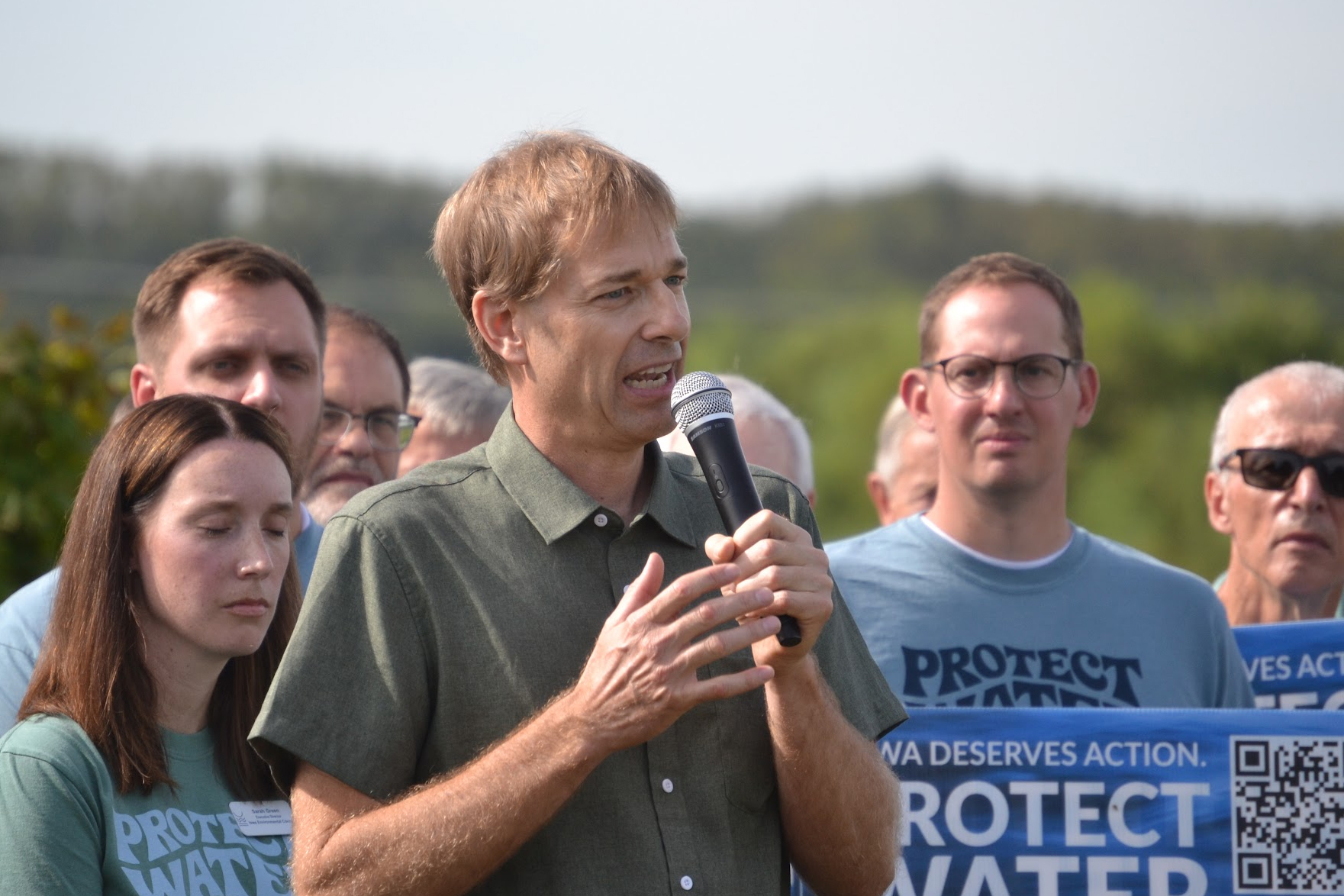
“We’ve had this water quality issue red flag waving for decades, and we have been very slow to acknowledge it and to act,” said Jon Bakehouse, a fifth-generation corn and soybean farmer in Southwest Iowa who was diagnosed with stage-four non-Hodgkin lymphoma in late 2024.
Bakehouse said he’s hesitant to draw a direct line between Iowa’s water and his diagnosis, but believes Iowa has “fallen into the false mindset that we can separate environmental health from human health. Based on our cancer rates, that is very simply a false narrative.”
A Patchwork of Enforcement
Despite the health and environmental risks posed by CAFO pollution, the nationwide rollout of NPDES permits has been uneven.
The EPA tracks animal feeding operations that meet the Clean Water Act definition of a medium or large CAFO. In 2024, more than 21,000 facilities in the U.S. met that definition, but fewer than 7,000 had NPDES permits.
The agency tried twice, in 2003 and 2008, to encourage broader permitting. Rules introduced by the EPA would have required CAFOs to either apply for a NPDES permit or prove they could not possibly discharge into waters of the United States. Both times, the courts sided with meat-industry challengers who argued that the Clean Water Act could not be used to regulate CAFO discharges that hadn’t yet occurred.
This story is funded by readers like you.
Our nonprofit newsroom provides award-winning climate coverage free of charge and advertising. We rely on donations from readers like you to keep going. Please donate now to support our work.
Donate Now“What we’ve been left with is this incredibly unworkable system, where there’s no duty to apply for a permit,” said Tarah Heinzen, a senior attorney with environmental watchdog group Food & Water Watch. In her view, NPDES permits have shifted from the preventative measure envisioned by the Clean Water Act’s original authors to a tool used to monitor facilities with documented discharges.
The evolving definition of “waters of the United States” has worsened uncertainty, said Brigit Rollins, a staff attorney at the National Agricultural Law Center focused on water law issues.
The U.S. Supreme Court’s 2023 decision in Sackett v. EPA narrows the scope of waters protected under the Clean Water Act. The decision was expected to simplify questions about which waters were subject to federal jurisdiction, Rollins said. “But I don’t think it’s been the final word, the final nail in the coffin, so to speak, that people were hoping for.”
Over the years, the EPA has delegated much of its NPDES permitting authority to states, territories and tribes, producing a patchwork of Clean Water Act enforcement across the country.
Some states, like Wisconsin, have taken a blanket approach to permitting CAFOs. That state’s Department of Natural Resources requires all facilities with 1,000 or more animal units to apply for a permit under the Clean Water Act. As a result, 343 of 346 CAFOs in the state had NPDES permits.
Oregon’s rules are even broader. Since state law allows its environmental agency to require an NPDES permit for animal feeding operations of any size, the state has more facilities with NPDES permits than facilities that meet the federal CAFO definition.
Then there’s Iowa.

The state has more livestock confinements than any other in the country, yet only 4 percent of EPA-recognized CAFOs have a Clean Water Act permit: just 162.
Though a handful of states report issuing zero NPDES permits to CAFOs, others with a fraction of Iowa’s livestock operations, places like Pennsylvania, Kansas and Maryland, issue hundreds more permits.
Like many agricultural states, Iowa has a no-more-stringent-than law that prohibits environmental regulations from exceeding federal standards. For CAFOs, that limits NPDES permitting to facilities that meet the federal criteria, including those with documented discharges.
Even among those facilities, many remain unpermitted.
Intervention in Iowa
The dearth of NPDES permits in Iowa, despite the state’s steadily growing number of CAFOs, has long drawn scrutiny from environmental groups and community groups.
In 2007, the Sierra Club, Iowa Citizens for Community Improvement and the Environmental Integrity Project petitioned the EPA to revoke Iowa’s authority to administer and enforce the Clean Water Act, citing what they described as widespread failure to issue and enforce permits. Heinzen, then an attorney with the Environmental Integrity Project, drafted the petition.
Among 31 complaints, the petitioners alleged that the state DNR failed to issue NPDES permits to CAFOs the agency had previously investigated and fined for manure discharges. After several years of inaction and a notice of intent to sue from the petitioners, the regional EPA office eventually investigated the allegations and substantiated the concern.
While reviewing manure discharges originally investigated by the state DNR, staff from the EPA’s Region 7 office identified many instances in which a facility released waste into a waterway but claimed a NPDES permit was not necessary because the owner or operator had “addressed the cause of the discharge.” EPA staff concluded that the DNR’s documentation was rarely “sufficiently comprehensive” to confirm that the cause of a discharge had been permanently remedied.
In other words, the EPA found that the state DNR wasn’t issuing NPDES permits after applicable manure spills and was not adequately justifying its decision to forgo them.
The lack of consistency concerned Karl Brooks, then administrator for the EPA region that covers Iowa, Kansas, Missouri, Nebraska and nine federally recognized tribes. No other EPA region is home to more CAFOs.
“The decision [to permit] is not supposed to be just, ‘Heads, yes. Tails, no.’ Or, ‘Tuesday it’s a discharge. Wednesday it isn’t a discharge,’” Brooks told Inside Climate News. “It is supposed to be on the basis of biological and engineering facts.”
In late 2013, after a year of negotiation that included input from agricultural stakeholders, including the Iowa Farm Bureau, Brooks and Chuck Gipp, then-director of the Iowa DNR, signed a five-year Work Plan Agreement to address the problems identified in the EPA investigation. The goal, Brooks said, was to rehabilitate Iowa’s NPDES permitting process so the state could retain authority over the program.
“They did not want to lose that to the EPA, and we did not want to take it,” Brooks said.
Under the agreement, the state DNR committed to conducting a comprehensive survey of all medium and large CAFOs in the state to determine which facilities required NPDES permits.
Brooks expected EPA’s intervention to produce a “steady increase” in the number of CAFOs in Iowa with Clean Water Act permits. Instead, the number declined.
In 2013, when the five-year work plan began, the EPA reported 186 CAFOs with NPDES permits in the state. By 2018, when the agreement ended, the number had fallen to 167. In that time, the number of EPA-recognized CAFOs in Iowa grew by 700.
More than a decade since the work plan was signed, the number of CAFOs with NPDES permits in Iowa has dropped to 162. During that period, the state has linked illegal discharges of animal waste to over 30 mass fish die-offs that killed more than a million fish. That figure doesn’t include the 866,000 fish killed by a single manure spill at a dairy just weeks before the work plan was finalized.
“Coaching for Compliance”
Brooks left the EPA regional office for a role at the agency headquarters in Washington before the five-year work plan concluded. Looking back, he said he believed that political attitudes, particularly the partisan composition of the governor’s office and the legislative majority, “had a fair bit to do with how the state understood its obligations under the Clean Water Act to run a delegated program.”
Brooks said he noted a shift in “what the DNR thought was politically feasible” around the same time that the EPA began investigating the agency in 2011. That year, Terry Branstad returned to office as Iowa’s governor, defeating the Democratic incumbent, Chet Culver.
During his first 16-year stint as governor, from 1983 to 1999, Branstad had steered the state through the farm crisis. After returning to office in 2011, he continued his staunch support for the state’s agricultural industry, repeatedly pushing back against federal environmental policies he viewed as harmful to farmers.
In 2012, Iowa’s Environmental Protection Commission proposed a new chapter in state administrative rules that would formalize enforcement options the DNR could pursue “prior to, or in lieu of” administrative penalties. Those options included issuing and enforcing new permits and rules and “coaching for compliance.”
The approach was intended to help facilities correct problems and prevent future violations. In practice, it also allowed the state to delay or avoid issuing Clean Water Act permits to CAFOs that had polluted waterways.
The “Permanent Remedy” Loophole
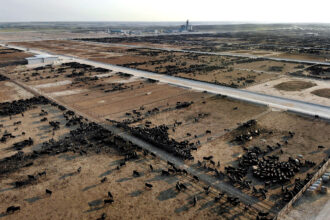
In March 2025, snowmelt carved a channel from Dale Humpal’s fenced-in cattle feedlot to a drainage intake at the edge of his property, carrying liquid manure into a nearby creek, where elevated ammonia levels killed more than 100,000 fish, one of the largest fish kills in the state in years.
When a DNR inspector investigated, he found Humpal’s manure storage basin had exceeded its freeboard, the mandated two feet of clearance at the top of an earthen pit that held waste from 400 dairy cattle.
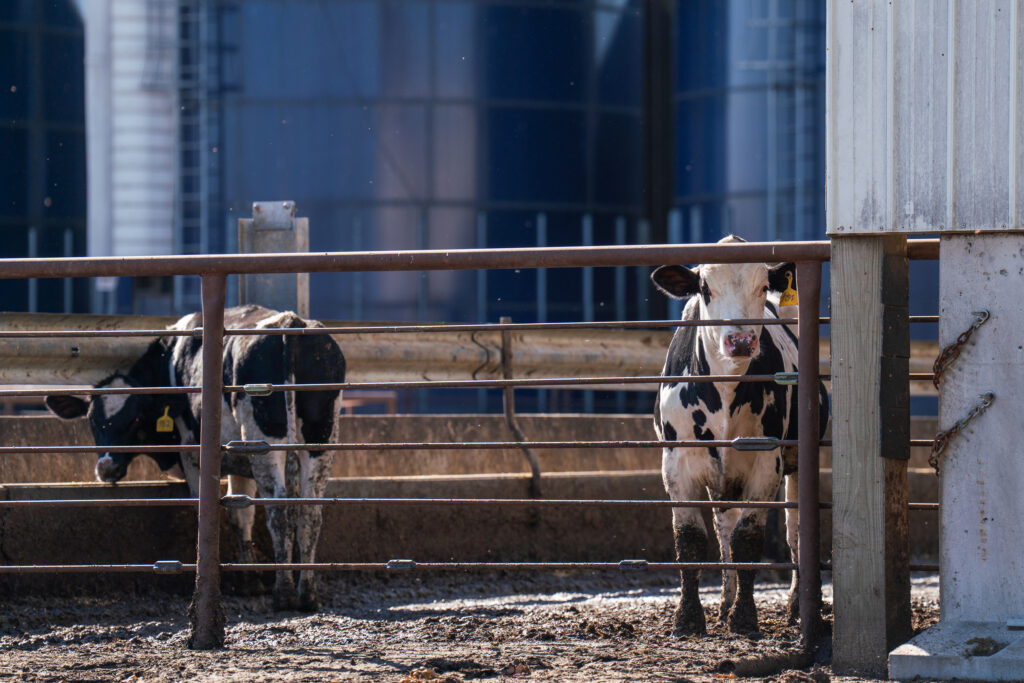
It was not a new problem. Inspectors documented the same violation during three previous visits to Humpal Dairy before the catastrophic 2025 spill.
In a highly publicized agreement with the state of Iowa early this year, Humpal agreed to pay a $5,000 fine and $33,470 in restitution for the fish kill. He also agreed to develop a plan detailing how he would remove and store manure at his facility in the future.
Still, an NPDES permit was never mentioned in official correspondence with Humpal or in internal departmental correspondence related to the facility and accessed by Inside Climate News through a public records request.
Dale Humpal did not respond to requests to discuss permitting changes or improvements at his facility.
Humpal’s case reflects a broader pattern: Iowa CAFOs with documented discharges can avoid Clean Water Act permitting when state regulators determine that a “permanent remedy” has been established.
The state DNR investigates and occasionally fines Iowa producers that discharge manure, but agency records show that those facilities are routinely excused from obtaining an NPDES permit.
Between 2014 and 2018, the DNR conducted and documented thousands of inspections at known medium and large animal feeding operations, in keeping with the EPA work plan. Inspectors recorded “Evidence of Discharge” at more than 50 facilities during that period, but none of those discharging facilities was flagged for permitting or marked as having a NPDES permit pending. Instead, inspectors evaluated them for completion of a “permanent remedy.”
The remedies varied widely. At facilities with evident discharges, state DNR records describe measures ranging from complex groundwater rerouting to recommendations to build dirt berms around feedlots or feed storage areas.
After a 2015 inspection found a manure spill at a hog confinement, DNR staff described the permanent remedy by writing, “Manure spill has been cleaned to site and smell – no further action.”
In other cases, permanent remedies involved removing or relocating manure stockpiles. Those measures could eliminate the threat posed by that particular stockpile, but did not necessarily address the possibility of future runoff from the facility.
And without a Clean Water Act permit, polluting CAFOs face lower financial penalties for manure discharges, if they are fined at all. The Iowa DNR caps its administrative penalties at $10,000, with any fines above and beyond that limit issued by the attorney general. But the EPA can fine CAFO operators up to $27,378 for each day they violate their NPDES permit, with even greater penalties for repeat or knowing offenses.
Hog Confinements Catch a Break
Iowa hog confinements generally get a pass on NPDES permitting, despite being the far more common CAFO type in the state, with hogs outnumbering cattle 13 to one. Of the 162 operations with active NPDES permits in Iowa, all are cattle or combined hog-cattle facilities.
The exclusion of hog confinements is likely due to state law distinguishing between totally roofed confinements, the typical structure of hog facilities, and open lots. In a departure from federal law, Iowa views completely roofed facilities as incapable of discharging manure to surface waters. The state reports finding “no issues with discharges” at confinement facilities, which must capture and store manure beneath their structures until applying it to fields.
Similar rationale regarding roofed confinements could explain why North Carolina, the nation’s other major hog-producing state, also issues a negligible number of NPDES permits to CAFOs: just 14 in 2024.
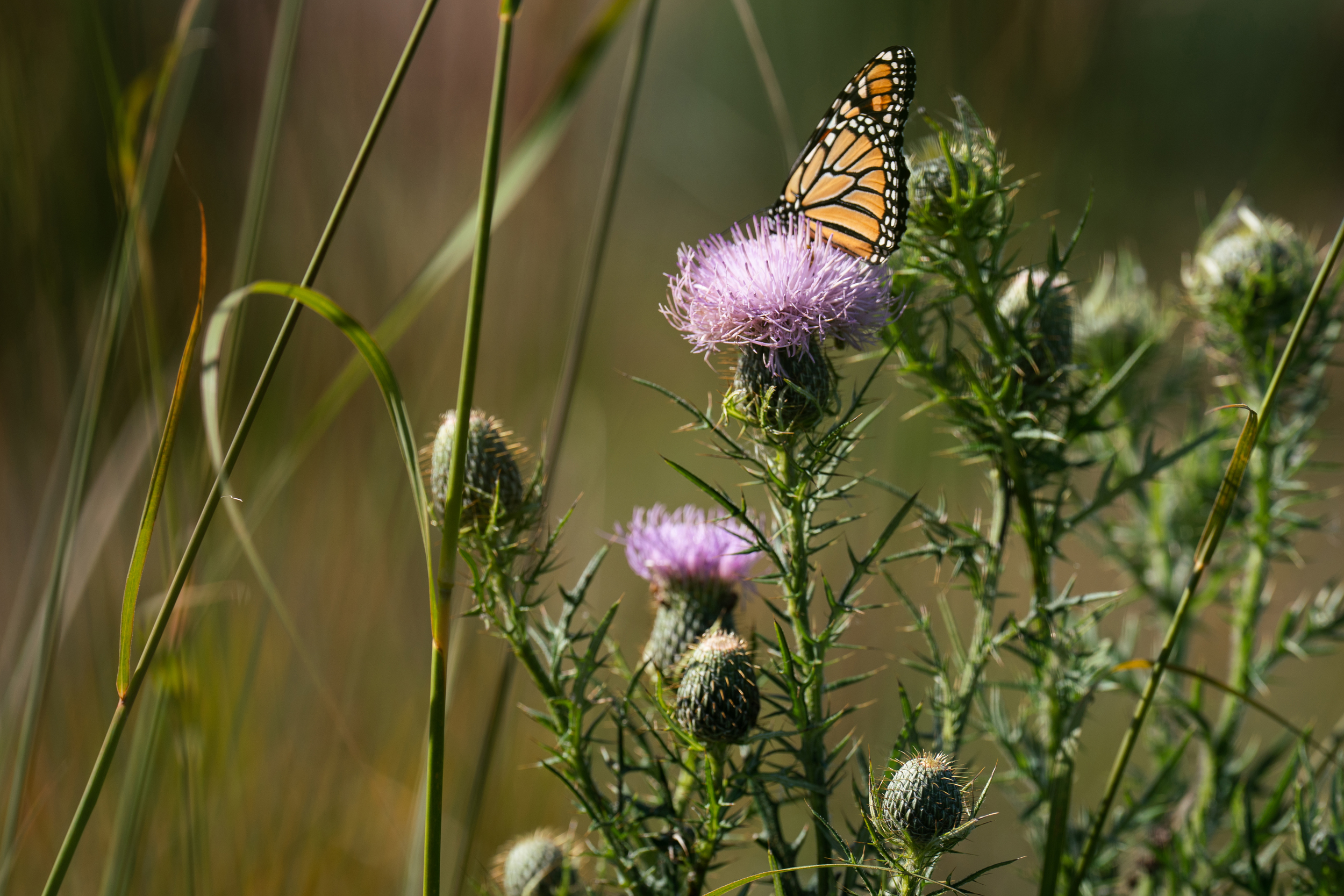
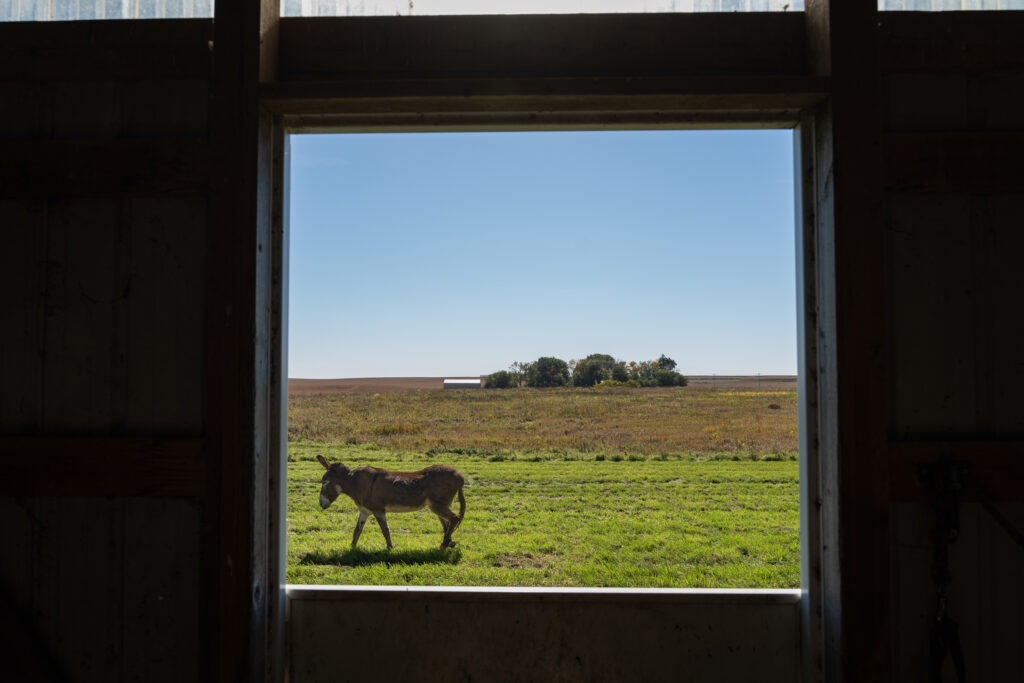
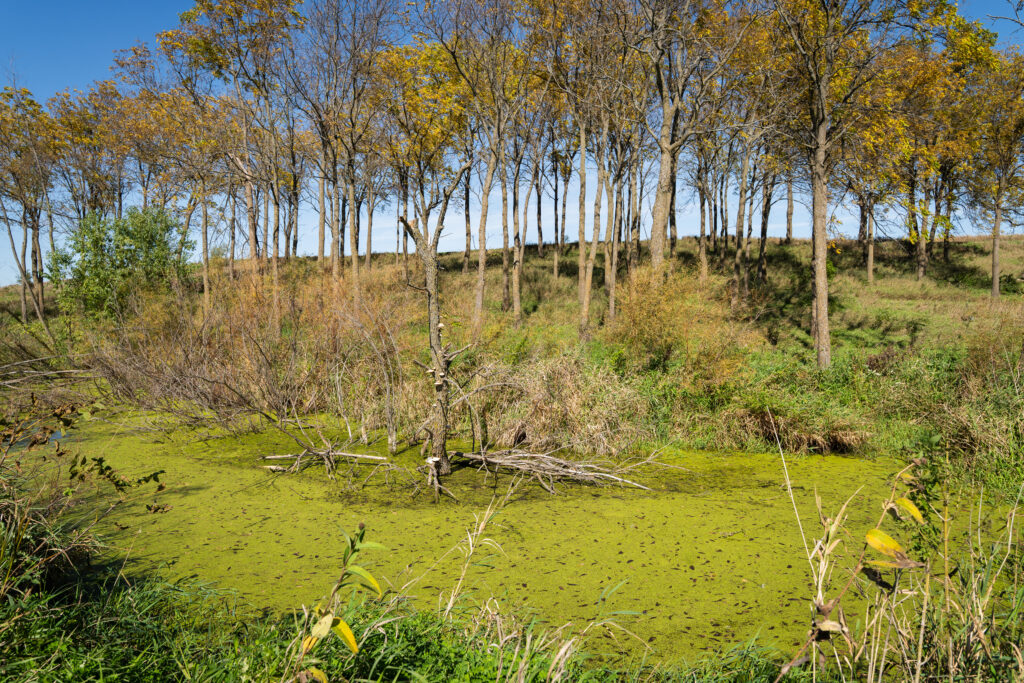
Garrison has spent decades gradually restoring his 300-acre property to prairie and “pothole” wetlands native to northern Iowa.
Gordon Garrison experienced firsthand how the DNR’s permanent-remedy approach and its treatment of hog confinements as an exception played out when he reported manure runoff from neighboring fields in 2018.
The hog CAFO next door, New Fashion Pork, had received emergency DNR approval to spray manure on frozen fields, a practice the state discourages, but rainfall and a late-December thaw sent the manure flowing across the landscape. A grassed waterway in the sloping fields served as an artery for the manure, funneling runoff into the stream on Garrison’s property, recognized as both a Water of Iowa and a Water of the United States.
After DNR staff investigated the spill, the agency fined New Fashion Pork $4,800 and required it to develop a standard operating procedure for land application of manure. If it did so, there would be “no likelihood” of future discharges to any water of the United States, the DNR wrote in its consent order with the facility.
The DNR did not direct New Fashion Pork to obtain an NPDES permit.
An attorney for New Fashion Pork noted that NFP has been faithfully implementing the standard operating plan since 2018 and, since then, has had no manure-related incidents at the Estherville site.
In late 2018, Garrison brought his lawsuit against the CAFO.
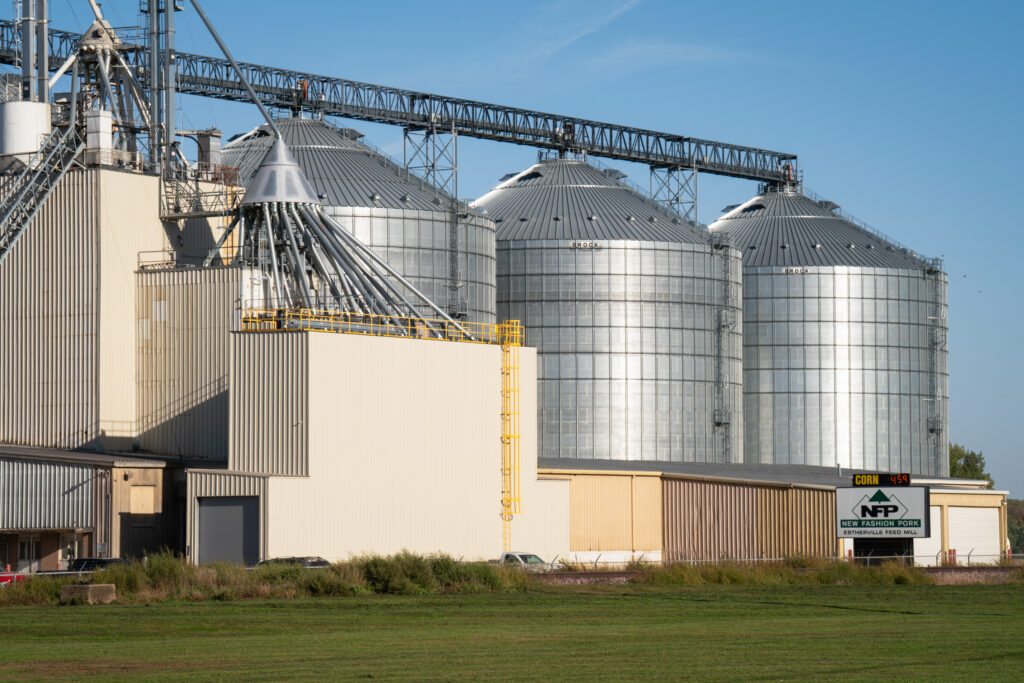
Heinzen, who led the charge for EPA intervention in the late 2000s, looks back on the DNR’s use of permanent remedies as an alternative to issuing permits, and the EPA’s failure to challenge the practice, as “one of the most frustrating things” about the 2013 work plan.
“The lack of permitting is a completely untenable situation for protecting water quality in the state,” she said.
In 2017, Heinzen filed a rulemaking petition on behalf of a coalition of environmental organizations, urging the EPA to strengthen Clean Water Act rules governing CAFOs nationwide. After five years without a formal response, and a lawsuit seeking to compel one, the agency denied the petition in 2022 and instead established a federal advisory subcommittee to study CAFO pollution.
Heinzen served on the committee.
The group met three times before the EPA dismantled it without explanation shortly after President Donald Trump returned to office in 2025.
A Matter of Will
NPDES permits do not guarantee against future pollution by CAFOs. But at a minimum, they’d raise the stakes for facilities that repeatedly violate permit conditions, said Diane Rosenberg, president of Jefferson County Farmers and Neighbors, a Southeast Iowa community organization that opposes factory-farm expansion in the region.
Still, the deterrent effect of fines for Clean Water Act violations would hinge on the state’s willingness to enforce them. Rosenberg is skeptical that it is a priority.
Iowa “absolutely needs” NPDES permits to get a handle on pollution in the state, she said. But the state also needs a DNR and an EPA willing to enforce them.
For too long, complaints about the state’s approach to Clean Water Act permitting have fallen on reluctant ears, said Rosenberg. The EPA investigation fifteen years ago wasn’t the turning point she hoped for.
“It shined a light on the issue. It forced the EPA to take some action in Iowa,” she said. “But I don’t know that it’s really done a whole lot since.”
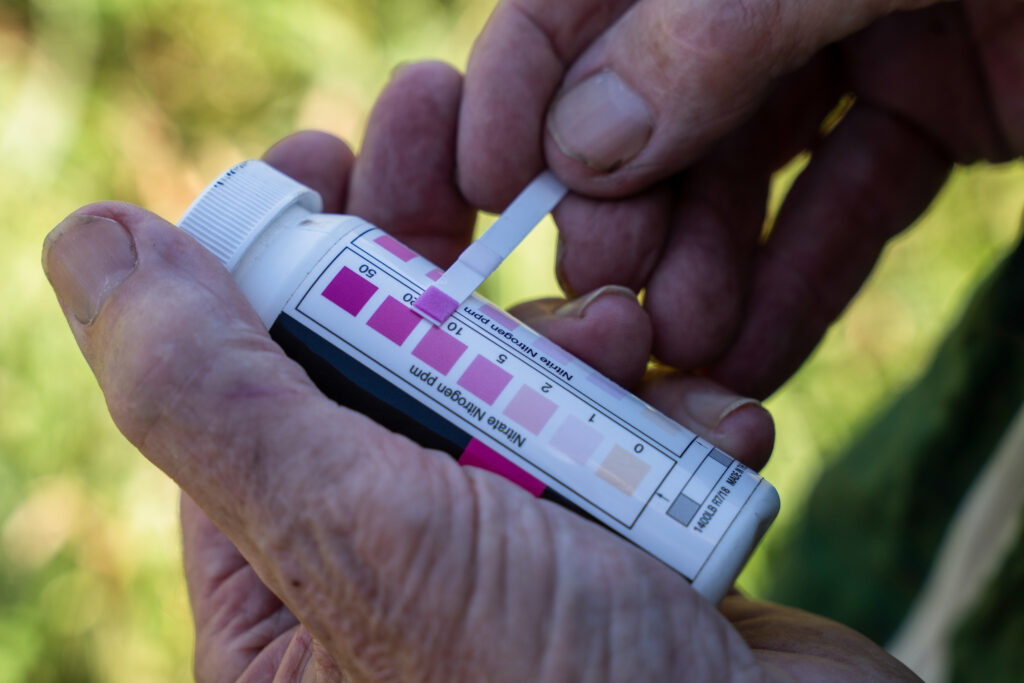
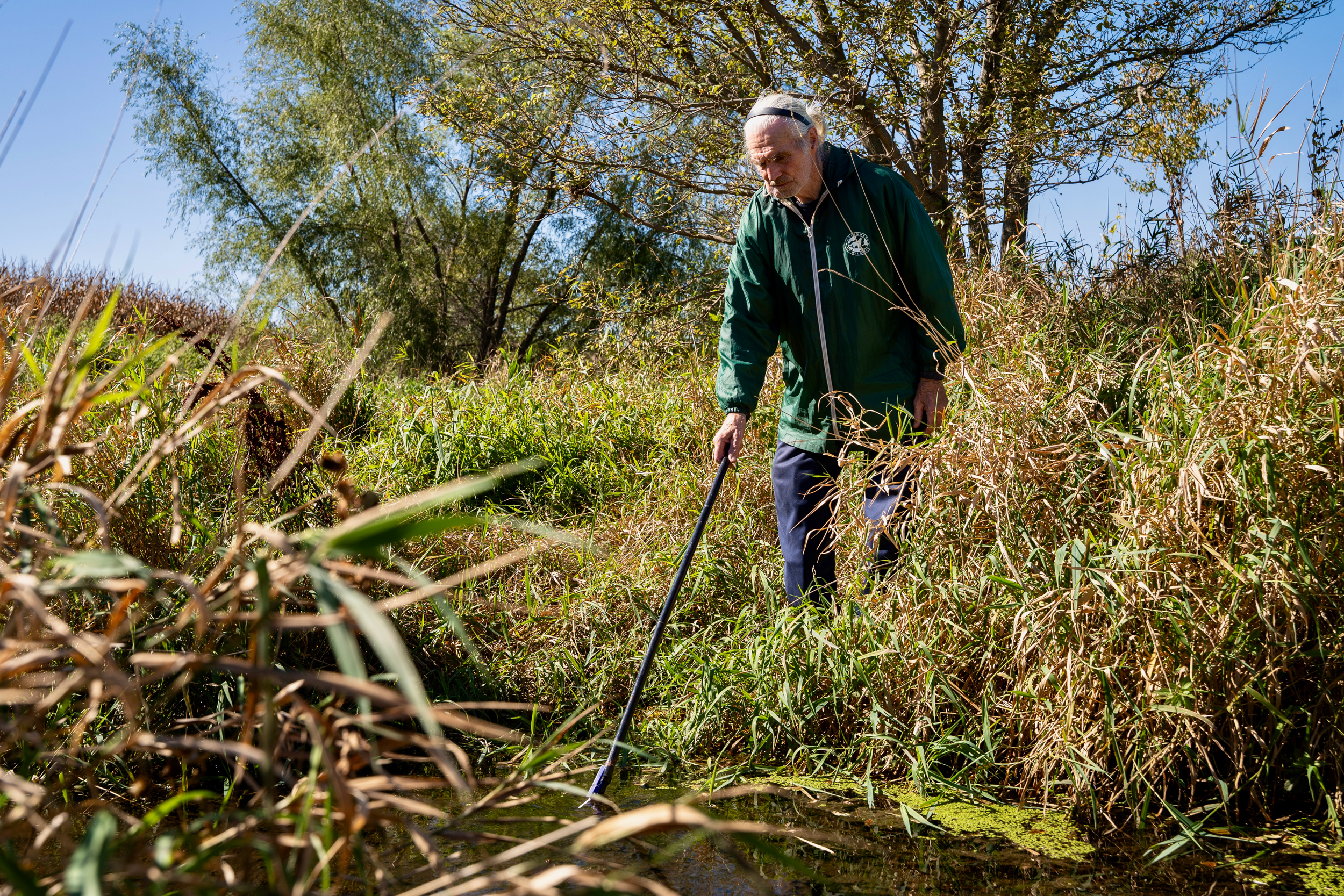
Garrison now volunteers with Nitrate Watch, a citizen-science project led by the Izaak Walton League that monitors water quality. Launched in 2023, the initiative relies on volunteers to test waterways for nitrates and report their findings nationwide. Of the 1,324 sampling sites recorded so far in 2026, over half are in Iowa. More than 50 percent of the surface water samples collected in the state this year had nitrate levels at or above the federal drinking water limit, according to Nitrate Watch.
Residents have been forced to take on the work of environmental protection because the state hasn’t, Garrison said. Though he remains critical of the DNR, he acknowledges that the division responsible for permitting and monitoring CAFOs is limited by stagnating funding. Its budget has remained at $1.32 million since 2016.
“We don’t fund the regulator,” Garrison said. “That’s the best way not to have regulations enforced. Don’t fund them.”
About This Story
Perhaps you noticed: This story, like all the news we publish, is free to read. That’s because Inside Climate News is a 501c3 nonprofit organization. We do not charge a subscription fee, lock our news behind a paywall, or clutter our website with ads. We make our news on climate and the environment freely available to you and anyone who wants it.
That’s not all. We also share our news for free with scores of other media organizations around the country. Many of them can’t afford to do environmental journalism of their own. We’ve built bureaus from coast to coast to report local stories, collaborate with local newsrooms and co-publish articles so that this vital work is shared as widely as possible.
Two of us launched ICN in 2007. Six years later we earned a Pulitzer Prize for National Reporting, and now we run the oldest and largest dedicated climate newsroom in the nation. We tell the story in all its complexity. We hold polluters accountable. We expose environmental injustice. We debunk misinformation. We scrutinize solutions and inspire action.
Donations from readers like you fund every aspect of what we do. If you don’t already, will you support our ongoing work, our reporting on the biggest crisis facing our planet, and help us reach even more readers in more places?
Please take a moment to make a tax-deductible donation. Every one of them makes a difference.
Thank you,

Anika Jane Beamer
Reporter, Iowa
Anika Jane Beamer covers the environment and climate change in Iowa, with a particular focus on water, soil and CAFOs. A lifelong Midwesterner, she writes about changing ecosystems from one of the most transformed landscapes on the continent. She holds a master’s degree in science writing from the Massachusetts Institute of Technology as well as a bachelor’s degree in biology and Spanish from Grinnell College. She is a former Outrider Fellow at Inside Climate News and was named a Taylor-Blakeslee Graduate Fellow by the Council for the Advancement of Science Writing.