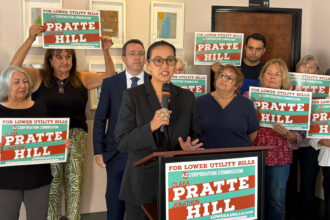



For three decades, Montana voters had not elected a Democrat to the U.S. House of Representatives. That changed earlier this month when Sam Forstag, a former wildland firefighter and union leader, defeated Republican Aaron Flint in Montana’s 1st Congressional District.
During his congressional campaign, Forstag, 32, who as a leader in the National Federation of Federal Employees represented some 800 U.S. Forest Service workers in the Lolo, Bitterroot and Gallatin national forests, promised to strengthen federal land management agencies and improve wildfire preparedness.
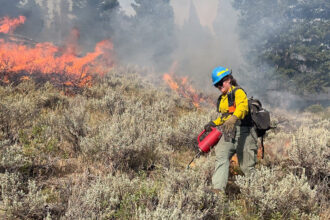
In an interview with The Wild Idea Podcast before the election, Forstag called for simplifying the permitting process for prescribed burns and increasing wildland firefighters’ base pay to reduce their dependence on overtime. He argued that investing in measures such as prescribed burning and forest thinning could reduce the risk of destructive wildfires and save taxpayers money. He also proposed pursuing standalone legislation to fund those efforts.
Forstag has also expressed support for the Protecting the Right to Organize (PRO) Act, which would strengthen workers’ rights to form unions and bargain collectively. Democratic Rep. Bobby Scott of Virginia introduced the bill in the House in March 2025, with a companion bill introduced by independent Sen. Bernie Sanders of Vermont. The legislation remains in committee and has not passed either chamber of Congress.
In a post-election email to supporters, Forstag outlined four priorities for his first term in Congress: affordable housing, healthcare, reducing the cost of living and campaign finance reform. Although wildfire preparedness and Forest Service staffing were central to his campaign, neither appeared among the four priorities listed in that email. But, in a separate message thanking supporters, Forstag reaffirmed his commitment to protecting Montana’s wild places for future generations.
Forstag has already begun challenging the Trump administration’s plans for federal public lands. In a Facebook video posted Nov. 12 from the U.S. Capitol, he criticized a new Interior Department proposal to reduce federal land holdings.
“They’re trying to sell off our public lands, but we won’t let them,” Forstag said. He also said he had reached out to Republican Rep. Ryan Zinke, whom he is replacing, hoping the outgoing congressman would oppose any effort to sell federal lands. Zinke’s office separately confirmed his opposition to federal land sales and transfers.
Forstag has also expressed interest in working with Republican Rep. Troy Downing, who represents eastern Montana. In a Facebook post, on Nov. 11, Forstag identified protecting public lands as an area where the two lawmakers could find common ground, despite their political differences. “”We can get so much more done for Montana when we work together in Congress,” he wrote.
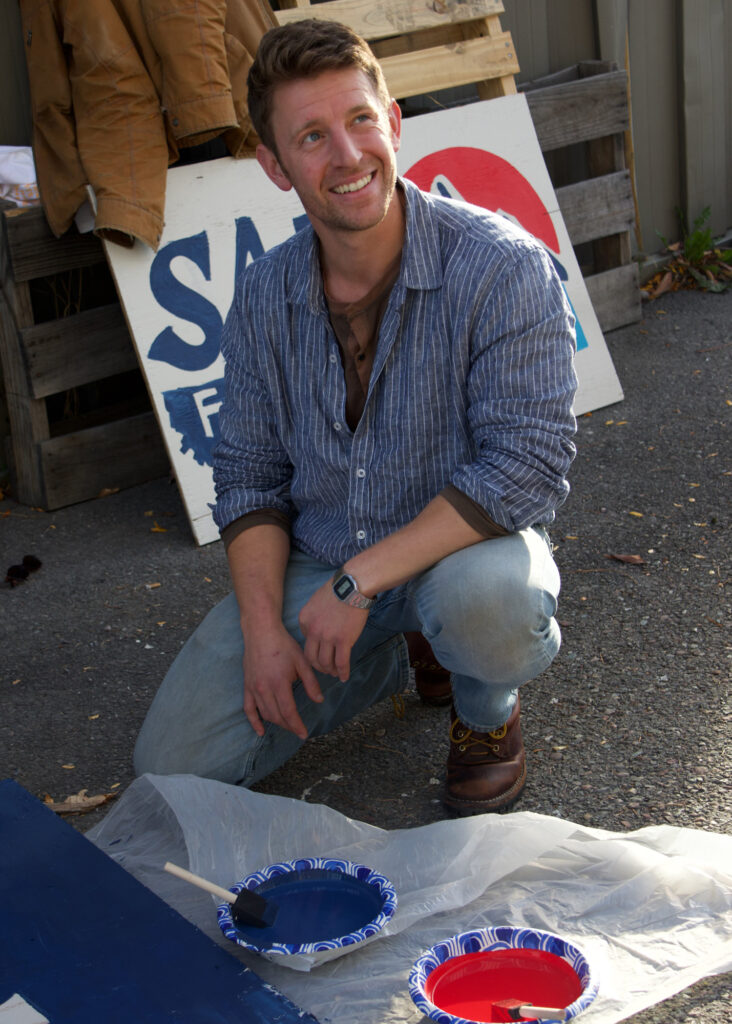
Forstag said he would seek a position on the House Natural Resources Committee after taking office in January, giving him an opportunity to influence federal land policy. The Interior Department’s five-year strategic plan proposes selling some federal lands to states, tribes and local governments, although officials have not identified specific parcels. Whether Forstag can influence the administration’s plans will depend partly on congressional cooperation and the legal limits on such sales.
During freshman orientation in Washington, D.C. last week, Forstag said he was seeking congressional committee assignments that would give western Montana a stronger voice on housing and rebuilding federal public lands agencies. He also said he planned to join both the moderate Blue Dog Coalition and the Congressional Progressive Caucus, hoping to work across different wings of the Democratic Party to advance economic policies that benefit working people.
In a separate Facebook post, Forstag congratulated the newly elected members of Montana’s American Indian Caucus, which will have a record 14 Native American lawmakers into the state’s 2027 legislative session, and expressed support for tribal sovereignty, treaty rights, and Tribal water and land rights. He said the caucus would be an important voice for Native communities in the state Legislature.
Forstag’s victory marks a historic political shift in Montana, where Democrats have not won a U.S. House election since 1994. His win also brings a former firefighter to Washington at a time when federal workforce cuts have raised concerns about wildfire preparedness, Forest Service staffing and public lands management. During his campaign, Forstag pledged to restore staffing at federal land management agencies and expand fuels reduction crews as well as simplify the permitting process for prescribed burns and increase the use of such treatments to prevent costly wildfires.
While supporters hope his experience will help address those challenges, political observers caution that turning campaign promises into federal policy will not be easy for a first-term congressman.
“Forstag by himself cannot do much, of course,” said University of Montana political scientist Abhishek Chatterjee.
His ability to influence federal policy will depend on cooperation with other lawmakers, said Chatterjee. Other newly elected lawmakers may share Forstag’s goals to increase funding for wildfire prevention, he added, but presidential veto power and Senate filibusters could limit such efforts.
Chatterjee also expects Forstag to be a part of increased congressional opposition to certain proposals involving public land swaps or transferring federal lands to state governments.
The Forstag campaign did not respond to multiple requests for comment.
Where Forstag Won
According to unofficial results from the Montana Secretary of State, Forstag received 132,003 votes, or 50.34 percent, compared with Flint’s 122,694 votes, or 46.79 percent. Libertarian Nick Sheedy received 7,522 votes.
Forstag’s victory ends a three-decade absence of Democrats from Montana’s U.S. House delegation. Pat Williams, the last Democrat elected to Montana’s U.S. House delegation, retired in 1996.
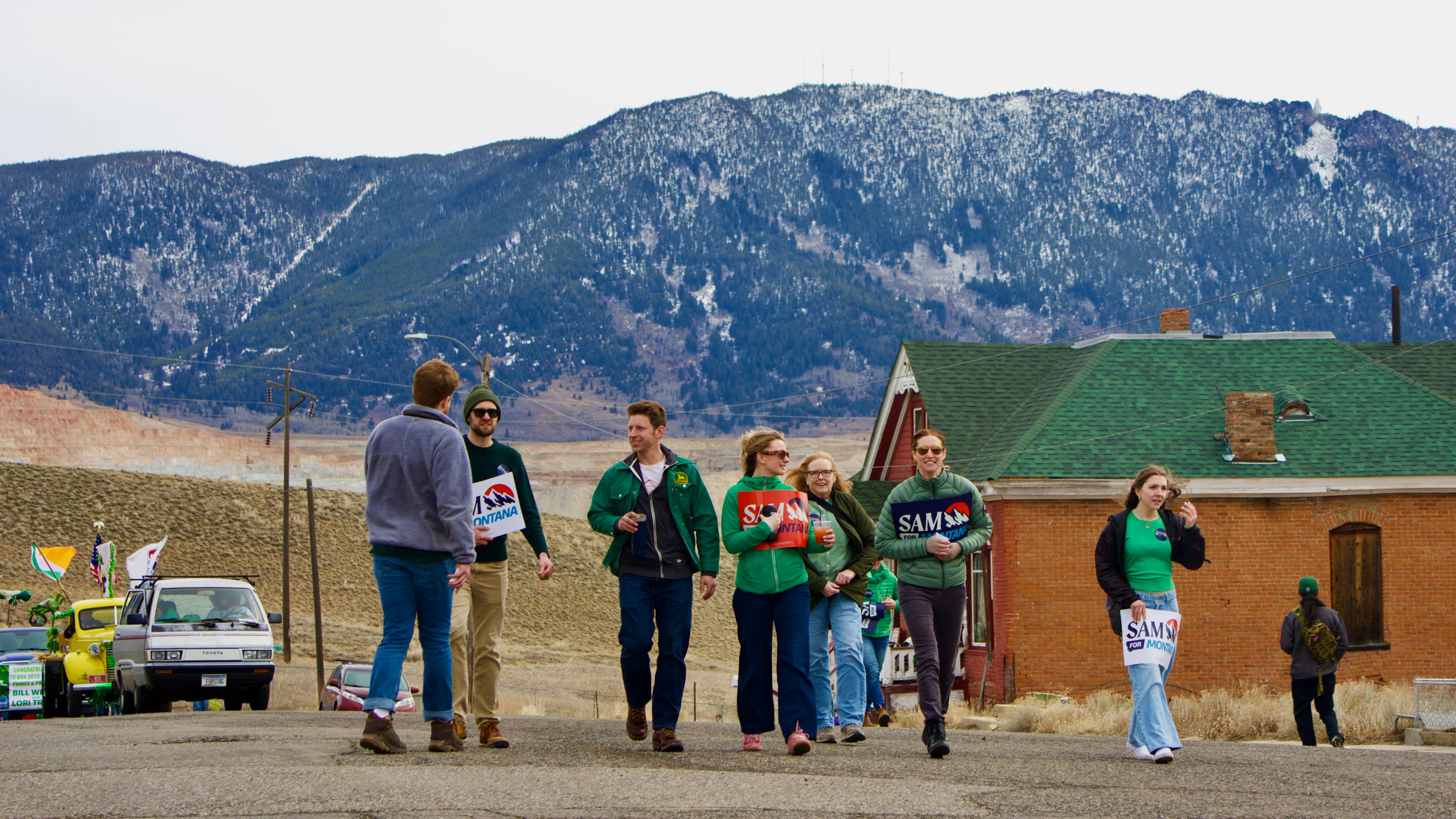
County-level election results show that Forstag received strong support in several of western Montana’s larger population centers.
In Missoula County, he received 41,232 votes, or 68.24 percent; in Gallatin County, which includes Bozeman, he took 59.42 percent: and in Silver Bow County he garnered 61.55 percent.
Together, Missoula and Gallatin counties gave Forstag a combined advantage of 35,226 votes, helping him overcome Flint’s leads in several rural counties of the district.
Forstag’s personality may have contributed to his success, said Bill Hallinan, a member of Montana Conservation Elders and Wild Montana who noted that he was not speaking on behalf of either organization.
Hallinan described Forstag as “sincere and relatable” and suggested that his campaign may have been better organized in larger cities. Forstag may have better addressed economic concerns that influenced voters, he suggested, while Flint presented himself as a loyal supporter of President Donald Trump.
This story is funded by readers like you.
Our nonprofit newsroom provides award-winning climate coverage free of charge and advertising. We rely on donations from readers like you to keep going. Please donate now to support our work.
Donate NowSeveral factors may have contributed to Forstag’s victory, Chatterjee said, including his background as a wildland firefighter and union leader, federal workforce cuts under the Trump administration and broader dissatisfaction with the administration’s policies and economic conditions.
“Gas prices in particular would have played a role,” Chatterjee said in an email to Inside Climate News.
From Fighting Wildfires to Congress
Before entering politics, Forstag worked as a wildland firefighter with the U.S. Forest Service, including as a smokejumper, parachuting into remote areas to fight wildfires. He also represented workers in the National Federation of Federal Employees.
That experience became central to his campaign as it focused on protecting federal employees and challenging workforce reductions under the Trump administration.
Forstag’s victory has raised expectations among environmental advocates who believe his firsthand experience could help bring attention to the challenges facing federal land management agencies.

His campaign platform outlines several proposals to strengthen wildfire protection, protect federal jobs and improve public lands management. He has pledged to expand federal land management agencies, rather than just return them to the staffing levels they had prior to the second Trump administration’s cuts, and increase funding for forest management and operations to reduce loads of vegetation that can fuel severe wildfires, creating more jobs while shifting resources toward wildfire prevention. He also supports responsible timber harvesting and federal grants to modernize Montana’s timber mills, while opposing the use of emergency authorizations and fast-track programs to bypass environmental protections in forest management projects. Forstag’s platform calls for ending the use of emergency authorizations and fast-track programs that bypass environmental protections, while improving the review process for forest management projects.
Amy Cilimburg, executive director of Climate Smart Missoula, a nonprofit organization, said Montana could benefit from having a representative who understands wildfire response and the importance of federal agencies.
“Congress has the power of the purse, and federal agencies, including scientific bodies, need to be consistently staffed and funded,” Cilimburg said in an email. “The needed response to climate risks like reduced snowpack, hotter temperatures, longer fire seasons, and drought is to lean into credible science and rebuild our public agencies and work forces,” she said.
Hallinan also hopes Forstag will support stronger Forest Service staffing and continued federal grants for wildfire preparedness and education.
“More forest service staff means more hands to organize, assist, coordinate and administrate,” Hallinan said.
He emphasized the importance of protecting communities in the wildland-urban interface, where homes and developed areas meet flammable forests and open spaces.
About This Story
Perhaps you noticed: This story, like all the news we publish, is free to read. That’s because Inside Climate News is a 501c3 nonprofit organization. We do not charge a subscription fee, lock our news behind a paywall, or clutter our website with ads. We make our news on climate and the environment freely available to you and anyone who wants it.
That’s not all. We also share our news for free with scores of other media organizations around the country. Many of them can’t afford to do environmental journalism of their own. We’ve built bureaus from coast to coast to report local stories, collaborate with local newsrooms and co-publish articles so that this vital work is shared as widely as possible.
Two of us launched ICN in 2007. Six years later we earned a Pulitzer Prize for National Reporting, and now we run the oldest and largest dedicated climate newsroom in the nation. We tell the story in all its complexity. We hold polluters accountable. We expose environmental injustice. We debunk misinformation. We scrutinize solutions and inspire action.
Donations from readers like you fund every aspect of what we do. If you don’t already, will you support our ongoing work, our reporting on the biggest crisis facing our planet, and help us reach even more readers in more places?
Please take a moment to make a tax-deductible donation. Every one of them makes a difference.
Thank you,

Mosabber Hossain
Fellow
Mosabber Hossain is an Inside Climate News Fellow and an award-winning climate and environmental investigative journalist from Bangladesh. His reporting focuses on climate change, biodiversity, environmental justice, adaptation and corruption. His work with Reuters and other international outlets has been republished globally, and some of his reporting contributed to discussions featured on the agenda of the World Economic Forum. Mosabber is a graduate student at the University of Montana studying environmental science and natural resource journalism. Previously, he was a fellow with the Institute for Journalism and Natural Resources and Investigative Reporters and Editors. He is a recipient of the South Asian Investigative Journalism Award from the Thomson Foundation and was featured among eight journalists during the organization’s 60th anniversary for the impact of his investigative reporting. Mosabber is also a wildlife and nature photographer whose work has been published internationally.