The Defenders of Mexico’s Scorpion Reef
Climate change and illegal fishing are threatening the Gulf of Mexico’s largest coral reef. Inside the battle to protect it.

ABOARD THE MV SHARKWATER—At 5 a.m. on a Sunday in September, crew members aboard the MV Sharkwater, a ship operated by the Sea Shepherd Conservation Society, readied a small inflatable motorboat tied alongside the larger vessel for a pre-dawn mission.
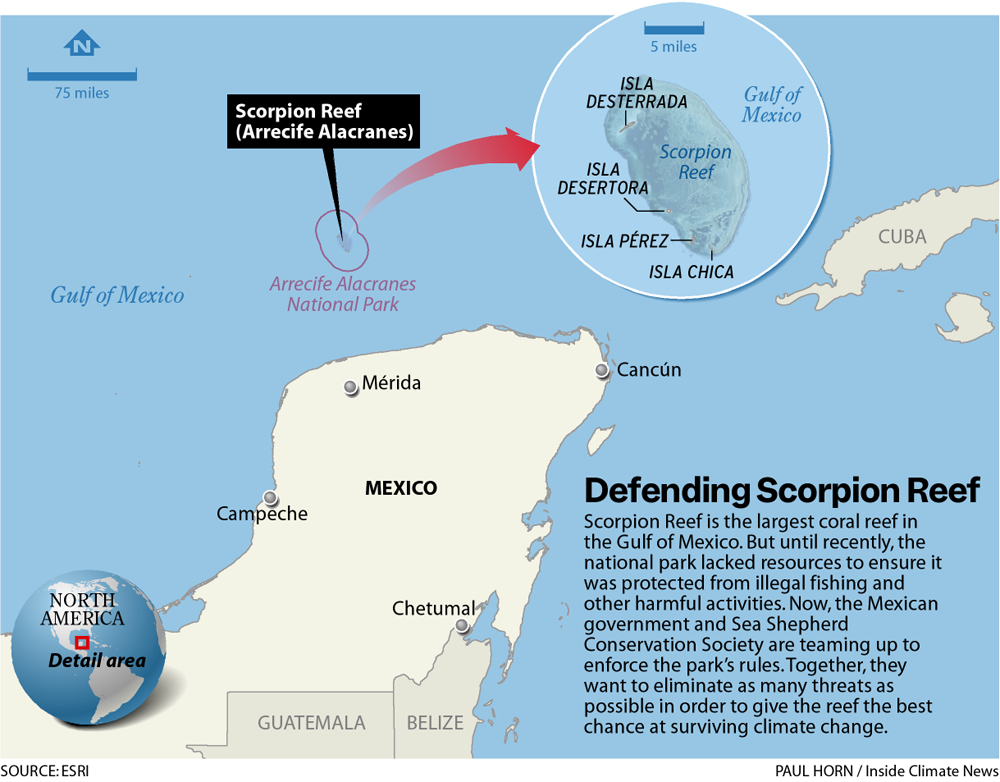
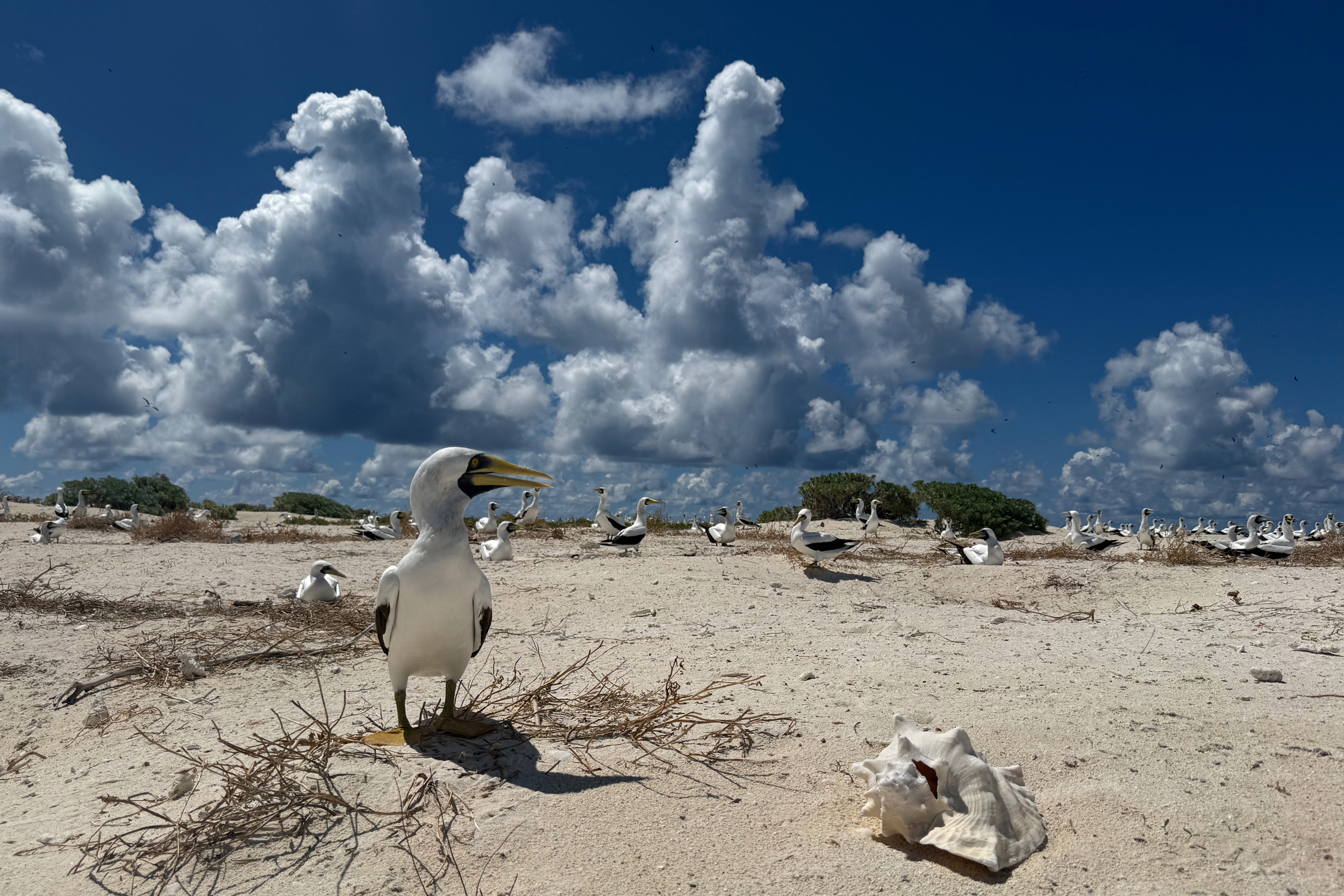
The night before, the crew received a report about an illegal sport fishing boat anchored just off Isla Desterrada, a sandy islet inside the Alacranes Reef National Park, a federally protected area located about 70 miles off the northern coast of the Yucatán peninsula. At more than 1,300 square miles, the park includes the largest coral reef in the Gulf of Mexico.
Images captured by a drone pilot for Sea Shepherd, an international marine conservation nonprofit, showed seven men from the boat setting up camp on the island. The crew was eager to confront them before they headed out to sea.
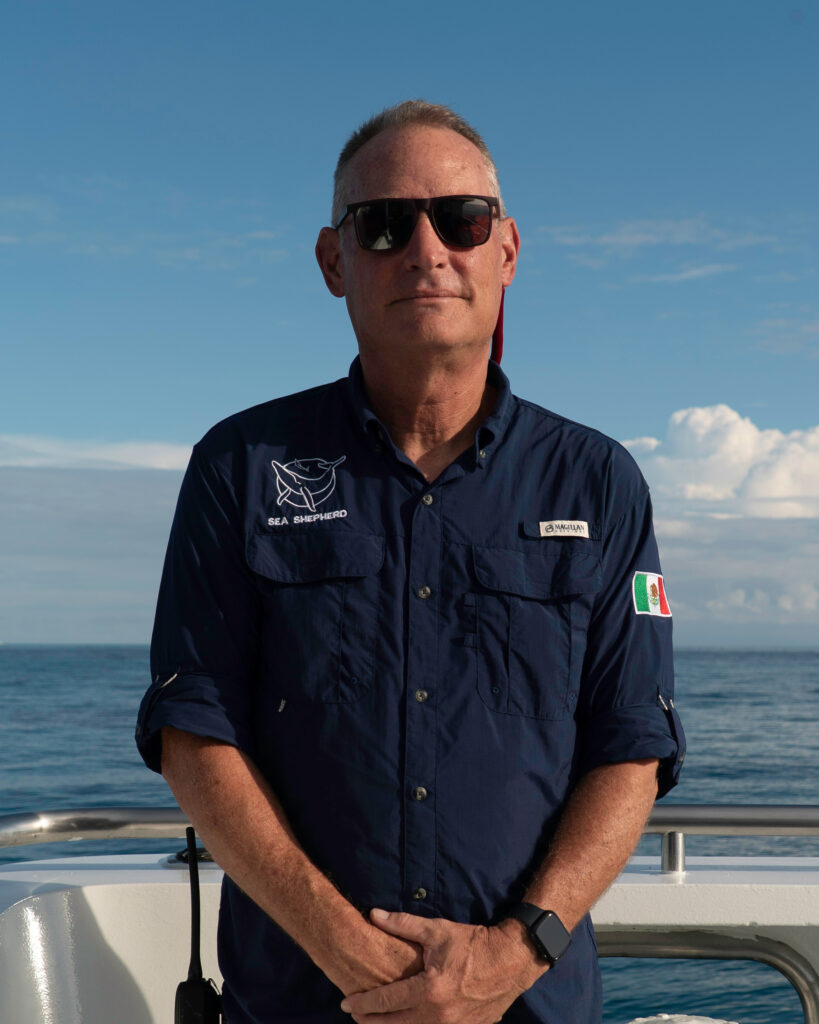
“We want to catch them before they leave to go fishing,” said David Hance, Sea Shepherd’s director of operations, slipping on his lifejacket as he prepared to step onto the smaller vessel rocking in the dark early-morning swells. They would need to move fast, though, he said.
Since the 1970s, Sea Shepherd has dispatched crews around the world to investigate, document and disrupt activities that jeopardize marine life. They run direct-action campaigns to stop industrial krill fishing in Antarctica, mass dolphin hunts in the Faroe Islands and poaching in the Upper Gulf of California.
Combating illegal fishing inside Alacranes Reef National Park—commonly referred to as Scorpion Reef—is one of the organization’s newest initiatives aimed at helping Mexico safeguard some of its most prized marine protected areas where fishing and other potentially harmful activities are banned or highly regulated to safeguard important ecosystems like coral reefs.
Globally, coral reefs provide vital habitat for at least 25 percent of all marine life, including at least 4,000 types of fish. But climate change is jeopardizing their future. Rising ocean temperatures and frequent marine heat waves are driving 96 percent of the world’s shallow reefs towards collapse.
To conserve coral reefs and boost their resilience, many scientists say it is vital to include them in marine protected areas where local pressures like overfishing, illegal fishing and pollution are alleviated.
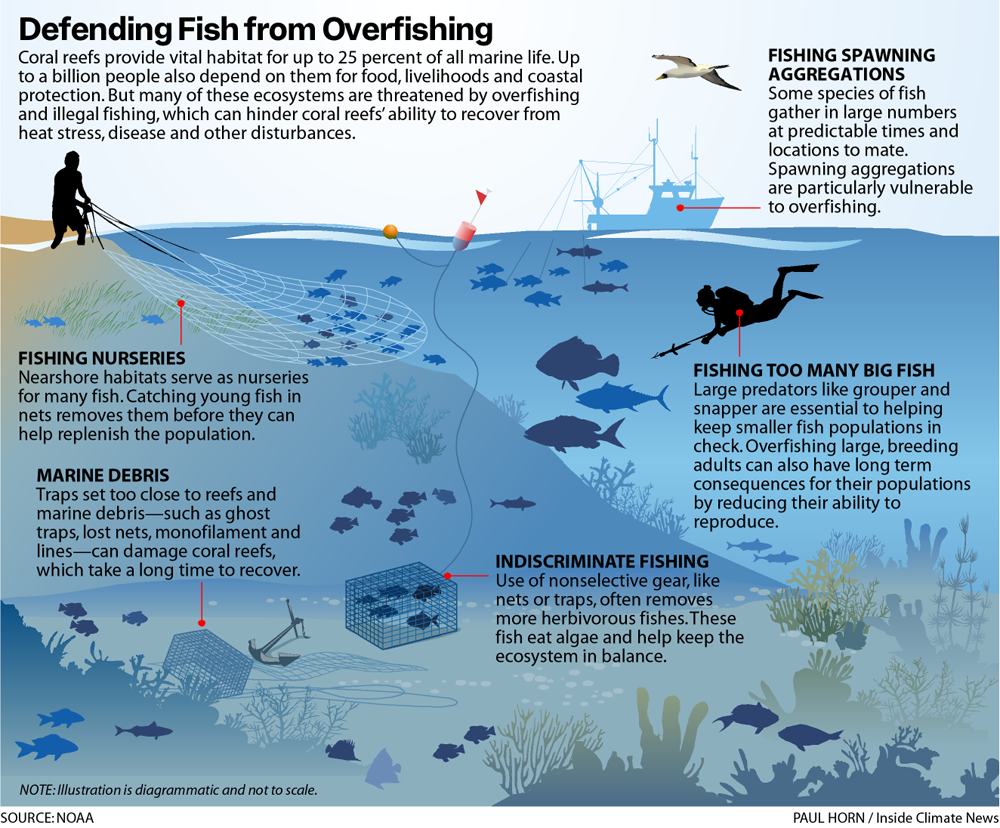
Coral reefs need abundant fish populations to thrive. Herbivorous species like parrotfish feed on algae that can take over a reef, especially when corals are stressed by heat, disease and other disturbances. Predators like grouper and snapper also help keep smaller fish populations in check, maintaining a healthy, balanced ecosystem.
“Effectively managed marine protected areas are one of the strongest tools we have in protecting coral reefs and protecting the biodiversity that they host,” said Mishal Gudka, a coral reef scientist from Kenya who recently spearheaded a global assessment of shallow coral ecosystems for the International Union for Conservation of Nature.
But turning that promise into reality requires more than drawing boundaries on a map. These areas need people to actively defend them.
Flying Drones
The day before Hance set out on the early morning mission to Isla Desterrada, the 141-foot Sharkwater, a former Japanese fishing vessel, had anchored off Isla Perez, the only island inside the park that has a lighthouse and a small Mexican Navy outpost.
Another smaller live-aboard vessel owned by Sea Shepherd called the MV Roger Payne hung closer to Isla Desterrada, which in English means “Exiled Island.”
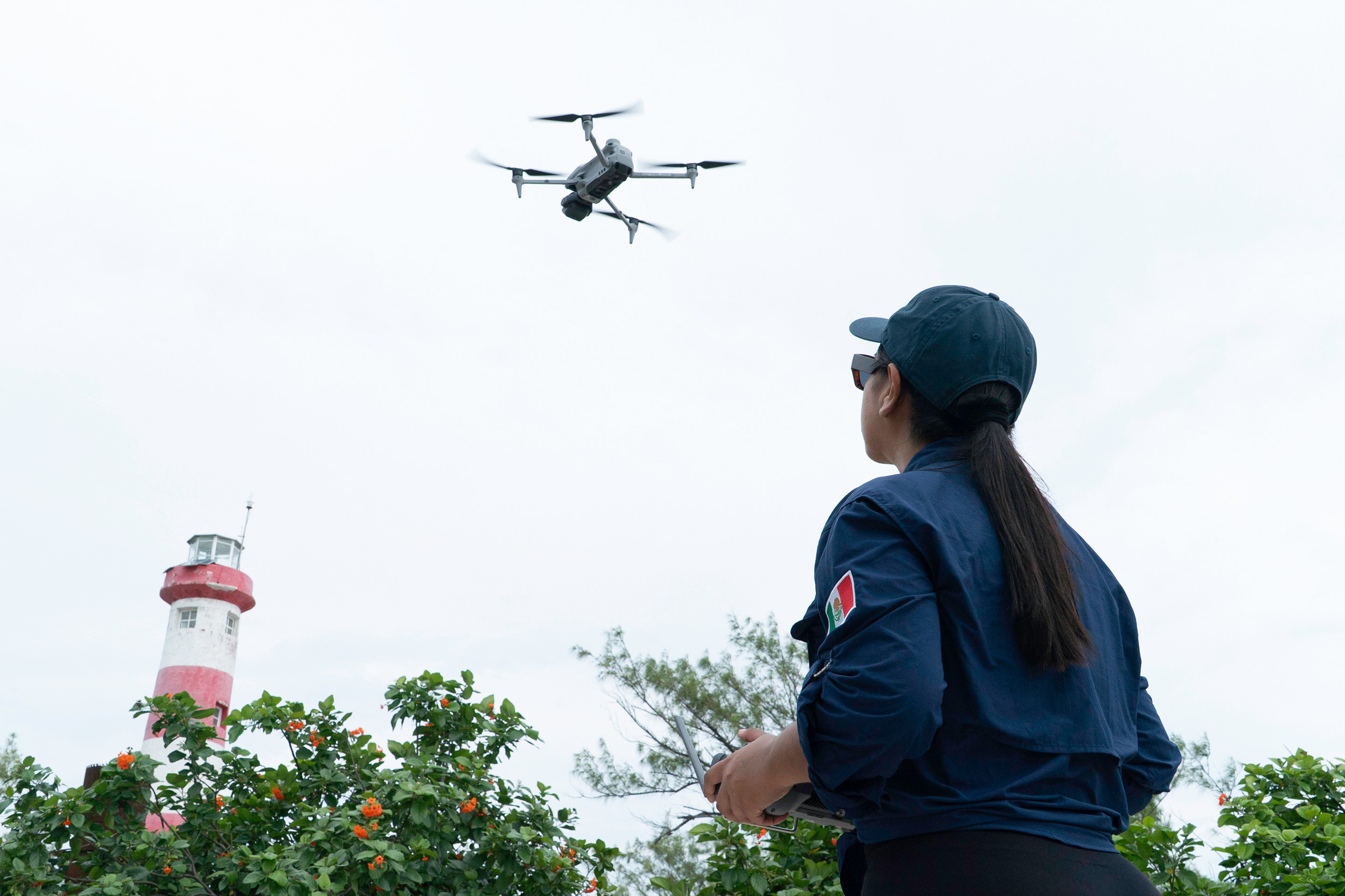
Every few hours the two crews surveyed much of the area with drones. From this viewpoint, they could not only spot other vessels, but also identify their names, registration numbers and how many people they had on board. This information is then cross-referenced with a daily list the National Commission of Natural Protected Areas keeps of vessels they’ve authorized to be in the park. If they’re not on the list, the crew goes to inspect them. And the fishers spotted on Isla Desterrada were not on the list.
From the drone photos, the crew could see several men making a campfire on the beach. Others rested on inflatable sleeping mats or chairs wedged into the sand where sea turtles are known to nest nearby. Hance and the rest of the crew decided the best plan of action would be to surprise the fishers the next morning.
30×30
In 2022, Mexico joined nearly 200 countries in adopting the Kunming-Montreal Biodiversity Framework, a landmark United Nations agreement aimed at halting and reversing the widespread biodiversity loss driven by climate change, pollution and other human activities that alter natural ecosystems.
As part of this agreement, participating countries have committed to conserving 30 percent of Earth’s terrestrial, inland waters and coastal and marine areas by 2030. Since then, Mexico has made significant progress towards achieving that goal, often referred to as 30×30. Around 25 percent of the country’s marine areas are legally protected or conserved—at least in theory.
At least a quarter of ocean areas designated for marine protection around the world lack adequate funding, surveillance and enforcement, clear rules or regulations. As a result, many become what scientists refer to as “paper parks”—areas that are legally recognized on paper, but don’t have the proper safeguards in place to achieve their conservation goals.
For many years, Scorpion Reef had come close to being one of them, said Tomás Camarena, director of the Alacranes Reef National Park and two other marine protected areas managed by Mexico’s National Commission of Natural Protected Areas.
According to the park’s rules, anyone who enters the area must first obtain a permit from the national commission, which sets limits on the number of people and boats allowed inside each day. Fishing in the park requires additional permits and is only allowed in some areas, during certain seasons. Using fishing gear like spearguns and longlines with baited hooks is prohibited.
But the commission didn’t always have access to boats or enough fuel to safely make the journey to the reef—a minimum seven-hour voyage from the closest port of Progreso—to monitor it consistently and enforce its rules.
Until recently, that left the park wide open to actors who did have the means to get there—primarily illegal fishers.
These fishers pay no fees, hold no permits and pay no taxes, said José Luis Carrillo Galaz, president of the Mexican Confederation of Fisheries and Aquaculture. “They operate entirely outside the law.”
Defending Scorpion Reef
In 2024, Camarena’s colleagues approached the team at Sea Shepherd to see if its members would be interested in helping curtail illegal fishing at Scorpion Reef and another even more remote area called Bajos del Norte National Park.
Immediately, they said “yes,” said Julian Escutia, executive director of Sea Shepherd Conservation Society. It was an opportunity, he said, to build on the strong relationship the nonprofit had already forged with the Mexican government.
Since 2015, the nonprofit has worked closely with the national commission and the Mexican Navy to patrol a marine refuge in the Upper Gulf of California dedicated to protecting the world’s last surviving vaquita porpoises, which have been driven to near-extinction by fatal entanglements in illegal fishing gear.
In March 2025, they set out on their first joint patrol of Scorpion Reef.
By the time they arrived, “It was really a bit of a wild west,” said Hance, a former private investigator from Colorado, who has spent more than 15 years working on various Sea Shepherd campaigns around the world.
He has documented the ecological damage of the 2010 Deepwater Horizon oil spill, confronted Japanese whalers in Antarctica, rescued sea turtle eggs from poachers in Honduras and combated illegal fishing in one of Panama’s national marine parks.
He now lives in Mexico and oversees the nonprofit’s campaign to protect Scorpion Reef. “There were just so many vessels out here,” he said, recalling those early days of patrolling the park. And it wasn’t easy to stop them.
Many of them were “caracoleros”—a Spanish word for poachers targeting queen conch.
Fishing the pink-shelled snails, which help maintain a healthy reef by grazing on algae that could otherwise smother corals, hinder their growth or take up space needed for baby corals to settle, has been banned across the Yucatán Peninsula since 2001. Before then, most were wiped out by decades of overharvesting. Even today, after years of efforts to restore their populations, Scorpion Reef is one of the region’s last strongholds for the queen conch.
“Arrecife Alacranes remains one of the few places in the entire Gulf of Mexico where the queen conch is still found in a well-preserved state,” said Diego Paul Talavera Suárez, a young, ever-smiling biologist from the Mexican state of Campeche, located on the western coast of the Yucatán Peninsula.
The poachers knew they could still find queen conch here, said Talavera Suárez, dressed in his daily uniform: navy blue Sea Shepherd shirt, khakis and crocs.
For years, Talavera Suárez said, the poachers had journeyed to the park to collect large quantities of the conch, whose meat is commonly prepared as a type of ceviche in Mexico and across the Caribbean. On rare occasions, pink pearls form inside the snails’ flesh, which can sell for thousands of dollars on Instagram and other online platforms, giving extra incentive to illegal fishers willing to take their chances at seeking them out despite the hefty fines they could face if caught.
“They are fully aware of the risks involved, so, naturally, they sought ways to avoid being caught,” said Alberto Mayo, a former captain of the Sharkwater, who now works as Sea Shepherd’s fleet captain, overseeing several vessels and crew tasked with patrolling Scorpion Reef and Bajos del Norte National Park.
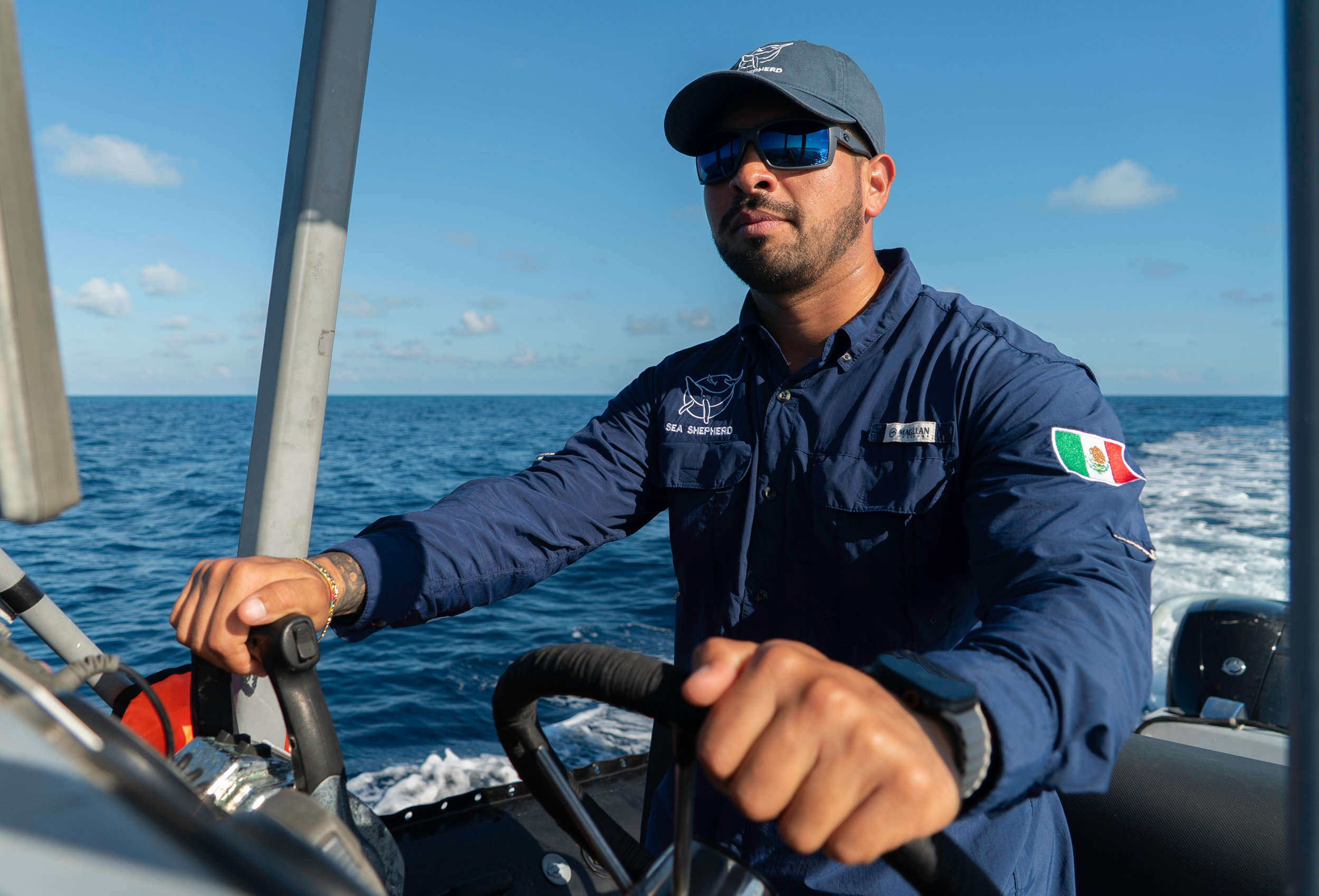
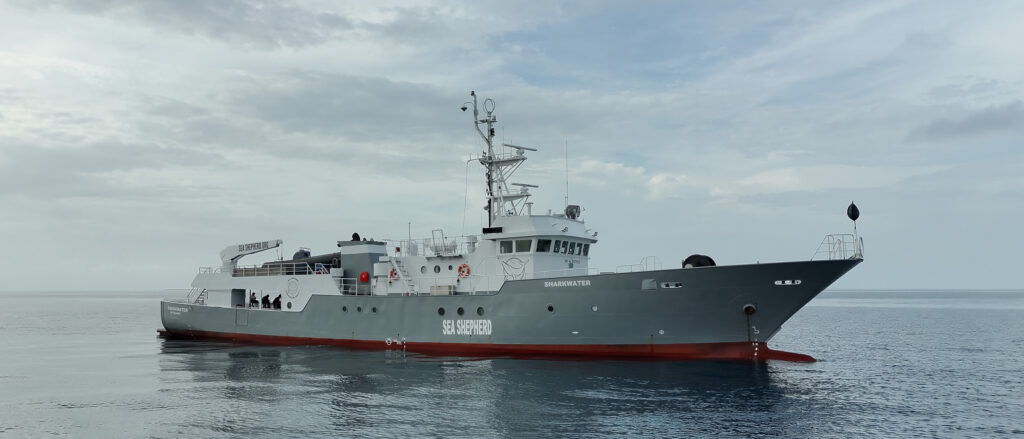
The fishers would flee as soon as they spotted the Sea Shepherd boat, adeptly maneuvering over and around shallow coral heads as Mayo and his crew struggled to keep up without crashing into the reef in their small boat, which, at the time, was slower than many of the fishers’ vessels.
Crew members knew they needed to change their tactics if they wanted to achieve their primary objective, which was to help the Mexican authorities intercept and detain illegal fishers, not just chase them out of the area, Mayo said.
They began mapping the reef and its maze of narrow passages, identifying the routes fishers used to slip in and out of the park’s boundaries and learning when they would have the best chances of pursuing a chase based on rising or falling tides. They got faster boats and started to coordinate more closely with the Mexican Navy to strategize how to best position themselves to intercept fishers trying to escape.
Since then, over the last year and a half, the crew has helped intercept nearly 50 vessels for infractions inside the park ranging from permit violations to illegal fishing or venturing onto one of the park’s five vegetated islands, only one of which allows visitors.
By the time they set out on their 18th patrol that early Sunday morning in September, the waters were noticeably quieter than in their early campaign days. Still, they had to stay vigilant.
A Morning Surprise
After reviewing the drone photos of the men anchored off of Isla Desterrada, Hance and the crew used one of their newer, faster inflatable motorboats to reach them the next morning.
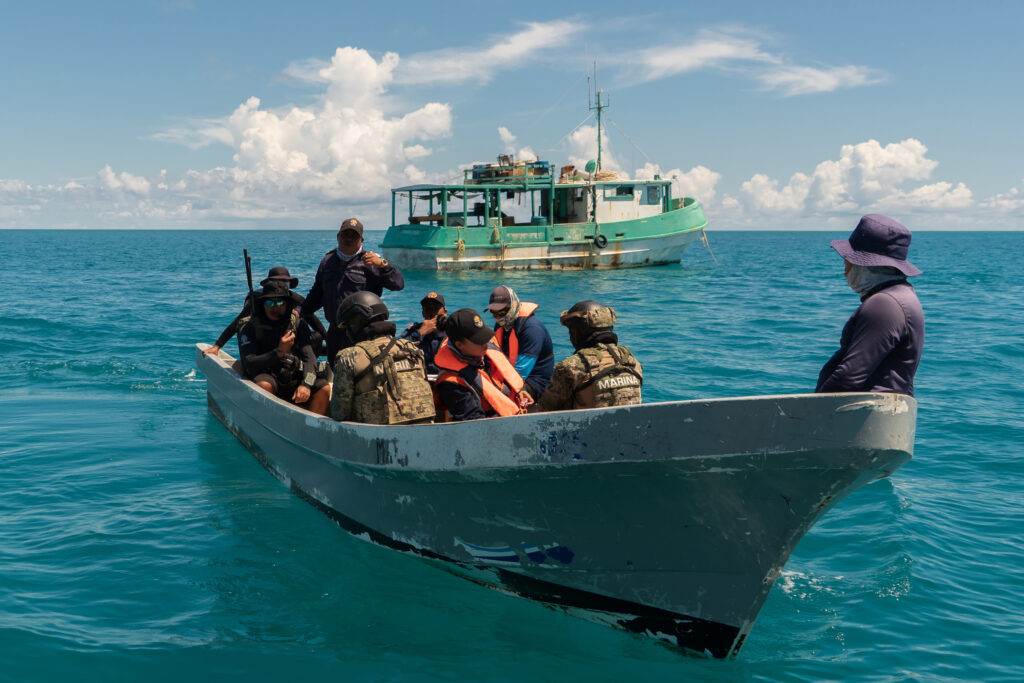
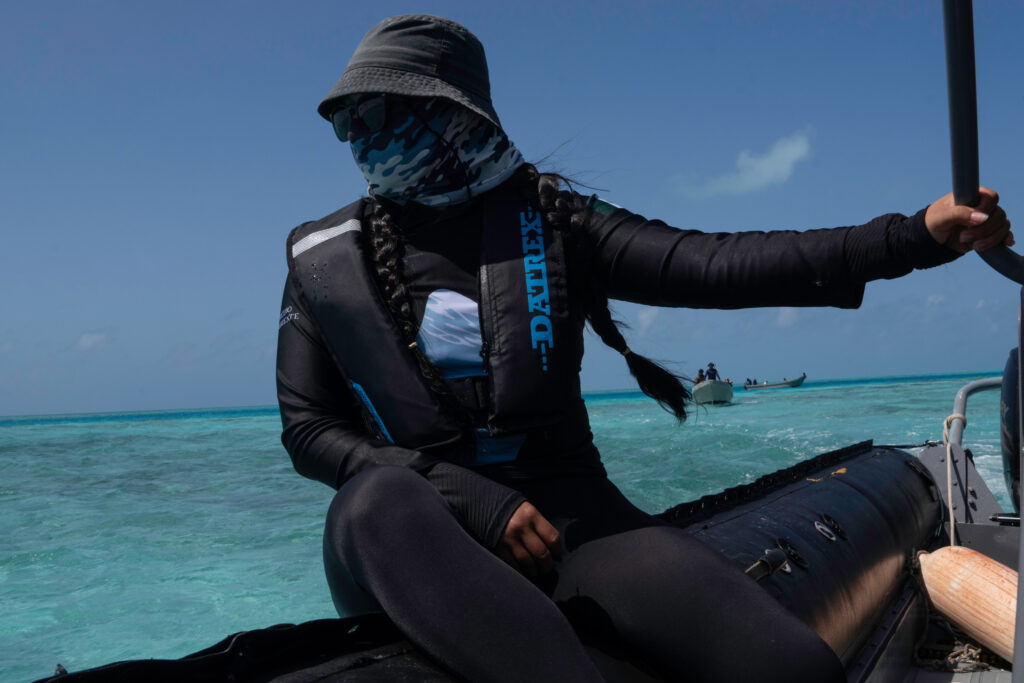
The boat fit about eight people, including several Mexican officials, plus Mayo and Talavera Suárez. Most were unrecognizable beneath their hats, sunglasses and neck gaiters pulled up over their noses, preemptively shielding their faces from the harsh sun they would soon face once it rose over the reef.
Survivors of shipwrecks once likened the strength of the sun here to the sting of the venomous insect the reef was named after, said Mariana Paulina Núñez Pérez, a park ranger, who had been assigned by the National Commission of Natural Protected Areas to join the Sea Shepherd patrol to help inspect vessels in the area and verify they had the correct permits.
Gripping the side of the small boat as it sped towards Isla Desterrada, she scanned the horizon searching for signs they were nearing their destination, her eyes peering between the shade of her gray bucket hat and a blue camouflage face covering. Her hair, woven into two long ebony braids, draped over the front of her lifejacket.
Hance, too, looked ahead, anxiously waiting for the island to come into view, his silver-haired crew cut barely visible beneath his baseball cap. It was getting lighter out, and he worried they might have missed their chance to catch the fishers.
“I figured as soon as daylight came, they would leave the island and go out and go fishing.”
If they did, Hance said, all bets were off.
Once the boat left shore, the Sea Shepherd crew wouldn’t be able to stop them without the Mexican Navy, which is the only entity that can legally board vessels at sea. But that morning they couldn’t join the mission. The authorities who were accompanying the crew wouldn’t be able to take any action unless they caught the fishers physically on the island, where they were prohibited to anchor.
Prepared for Anything
After a 40-minute ride on the water, the island began to take shape in the distance. Standing at the helm, Mayo gunned the engine and steered the boat toward shore, the tentacles of a black ink octopus tattoo curled out from beneath the cuff of his long-sleeve shirt. As he did, the fishers spotted the fast-approaching crew and scrambled to gather their mats and chairs and other items on the beach as they dashed toward their boat.
For a few tense seconds, the captain, Hance, Núñez Pérez and the rest of the patrol team locked eyes on the fishers, unsure how the interaction would unfold. Would they make a quick escape? Would they resist confrontation as others had done in the past?
“Sometimes they can be aggressive or hostile,” said Daniel Ramirez May, an inspector for the Federal Attorney’s Office for Environmental Protection, on board. In this line of work, it was important to be prepared for anything, he said.
Last year, during one of the crew’s first few patrols, some men had aimed spearguns at the crew and members of the Navy chasing them, and the pursuit was called off. “The safety of our crew and authorities has to come first,” Mayo said.
On another occasion, Talavera Suárez said fishers tried to sabotage the crew’s gear. “They’d even throw things at our drones, trying to knock them down.”
This time was different. As Mayo pulled up alongside the fishers preparing to take up their anchor, Ramirez May stood up and started filming them on his phone.
“Buen día,” said the federal inspector, a broad-shouldered man with the presence of an offensive lineman, greeting the fishers with a firm voice. The men paused.
Ramirez May then instructed the owner of the boat to meet him on shore.
As he jumped off the Sea Shepherd boat and waded through the shallows to get to the fishers, a flock of black frigatebirds with bloated crimson throats soared and screeched overhead. Others dove towards the beach, tearing at a sea turtle hatchling in the sand. Núñez Pérez accompanied him to check the fishers’ permits.
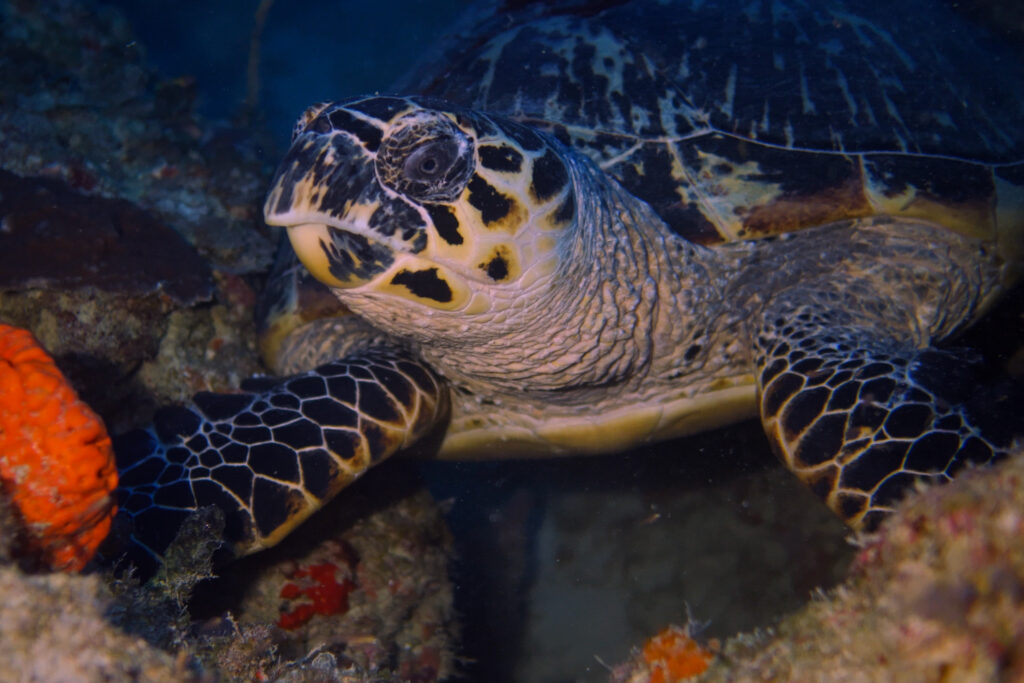
Sea turtles have historically been poached for their eggs and meat in the Yucatán Peninsula, and it is against federal law in Mexico to hunt, capture or disturb them.
By anchoring offshore and camping on the island, Ramirez May told the fishers they were violating park rules and jeopardizing an important nesting ground for green sea turtles. Plus, they did not have the required permit to be in the park at all, let alone fish, which was clearly their intention. Their boat was outfitted with at least seven large fishing rods and other gear. Still, there were no fish on board, which came as a relief to the crew.
Earlier this year, they’d helped the Navy intercept a group of fishers catching grouper without a permit. But by the time the fishers were caught, more than 300 pounds of grouper were already on board buried under ice, Hance said. “I remember thinking at that moment, boy, if only we had caught them two or three days ago, how much less would they have gotten? But imagine if we didn’t catch them for two or three days more, how much more they would have gotten.”
Ramirez May wanted to make sure the fishers at Isla Desterrada wouldn’t be tempted to try their luck again. He told the fishers he had no choice but to issue a type of citation, which alleges a fishing violation and typically triggers an investigation and administrative hearing.
The boat’s owner could challenge it, but if authorities back on land found him guilty based on the evidence, he could be fined for up to a million Mexican pesos, or about $50,000 dollars, Ramirez May said.
When the inspection finished, the sun was scorching and the crew was ready to head back to the Sharkwater, their floating home base for the duration of this two-week patrol. There were no more boats to inspect that day.
The rest of the afternoon would be dedicated to a different type of monitoring. Some threats were invisible from the surface.
An Underwater Census
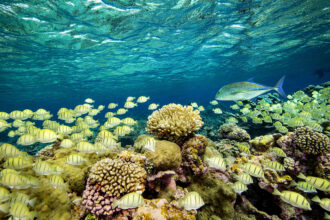
Nearly 100-feet deep, Talavera Suárez, the biologist, breathed through his scuba regulator as he filmed a hermit crab inhabiting a queen conch shell crawl along the reef. Seconds later, he shifted his attention to a large school of bar jacks with blue and black stripes down their spines. The fish stirred up clouds of sand as they corralled and fed on dense swarms of tiny juvenile grouper moving in sync like an underwater tornado funneling in and around natural caverns in attempts to escape their predators.
Nearby, Núñez Pérez, the park ranger, photographed large colonies of brain, star and maze corals being drained of their natural yellow, brown and greenish hues. She noted the temperature of the water on her dive computer. At around 86 degrees Fahrenheit, the water was several degrees warmer than the optimal temperature range for reef-building corals.
When corals get too hot they turn pale, or even bright white as they bleach—a process that occurs when the corals become so stressed they expel the algae living in their tissue that provides them food and color.
Even without a wetsuit, Núñez Pérez felt the stifling weight of the heat underwater, too. But after so many dives recently, she had become accustomed to the sensation. “We got used to it,” she said later after she surfaced. She only hoped the corals she observed on this trip could do the same. Some species had already succumbed to rising temperatures.
Prior to 2023, Scorpion Reef was renowned for its abundant thickets of branching staghorn corals. But that year a severe marine heat wave struck the region and wiped out the species. “All of it died,” said Núñez Pérez.
Today, some of the only proof of the corals’ prior existence and tragic demise lay barely visible on the seafloor, their pale skeletons poking through a thin layer of white sand. “It’s a graveyard,” said Núñez Pérez.
This story is funded by readers like you.
Our nonprofit newsroom provides award-winning climate coverage free of charge and advertising. We rely on donations from readers like you to keep going. Please donate now to support our work.
Donate NowIt was important to know what else might be at risk of being lost before it was too late. Thankfully, she said, there were still many areas of the reef that were teeming with life, but she worried that future generations might not have the opportunity to witness such a rapidly changing ecosystem.
“This is an extremely heartbreaking thought,” she said. “All we can do right now is document what is happening, work to slow down these changes and hopefully prevent the situation from getting worse.”
As part of this effort, Núñez Pérez and Talavera Suárez teamed up in the afternoon, whenever the rest of the Sea Shepherd crew wasn’t inspecting fishing vessels, to explore reef sites throughout the park, as they had on previous trips.
On each of their dives, the scientists aimed to conduct a visual census of these areas, noting which species of corals and other marine life were present, as well as any evident threats. Doing so would allow them to assess the general health of the reef and keep tabs on how they could best protect it above and below the surface.
“This data provides insight into the past and the subsequent changes, helping to protect the site,” Talavera Suárez said. It also could be used to highlight the site’s “inherent beauty,” and inspire people to care about the place most people don’t ever get to experience first hand, he said.
“By revealing that beauty, you inspire people. They become capable of protecting things they might not otherwise have known.”
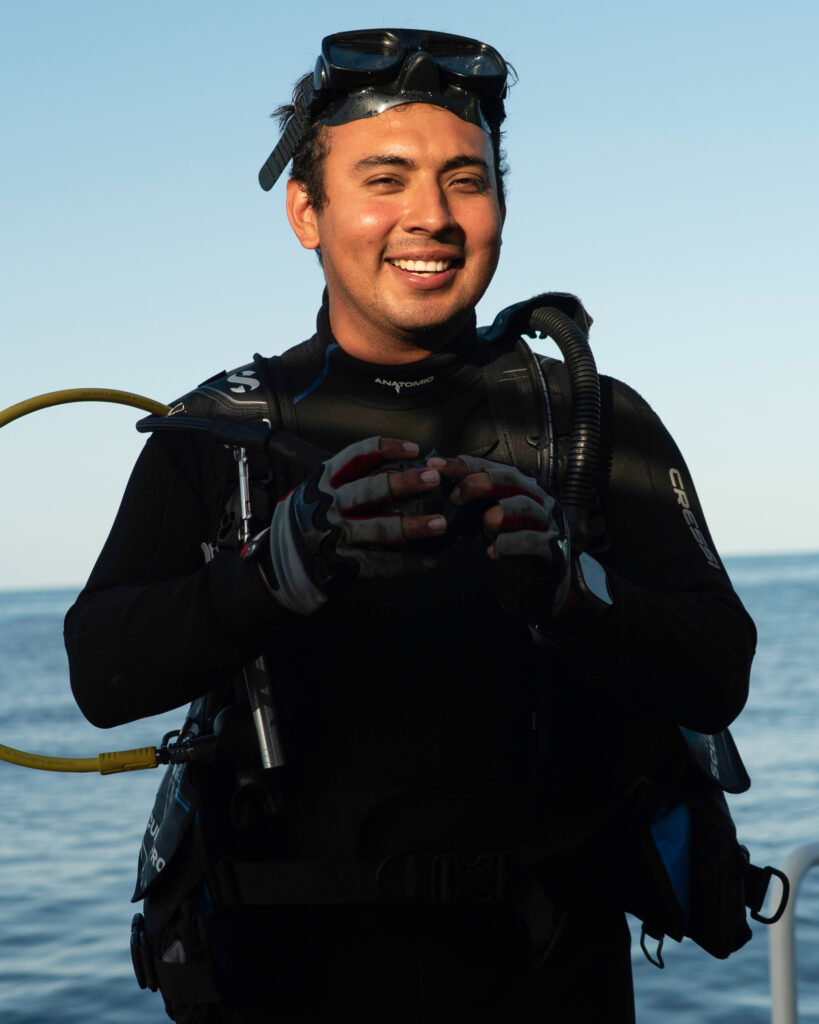
Each site was different. Some featured deep mountainous slopes populated with large mushroom-shaped orbicella corals. “It’s truly impressive that this reef still harbors these types of massive corals, which have been lost in many other locations,” said Talavera Suárez.
Some were likely more than 100 years old.
Other shallow reefs teemed with schools of periwinkle-colored parrotfish swimming in wave-like patterns back and forth across the remains of shipwrecks densely covered in coral. Scorpion Reef remains an important refuge for the species whose populations have plummeted in other parts of Mexico due to overfishing and reef degradation, Talavera Suárez said.
At one site, Núñez Pérez detected an algae-covered fishing line embedded in the reef, which she carefully snipped and reeled in hand over hand to take to the surface. At another, Talavera Suárez inspected a lost lobster trap wedged in the seabed. He tugged at it briefly to see if it could be moved, but it was too buried in the sand to move on his own. He would have to consult with the crew about how to best remove it later.
One trend was common amongst all sites the scientists explored. The majority of corals were abnormally pale. Angela Randazzo—a coral researcher from the National Autonomous University of Mexico—also conducted surveys of the reef in late September, independent of Sea Shepherd. What she saw below the surface was shocking, she said.
Most of the corals she observed appeared to be bleaching.
“It was so sad,” she said. “I have never seen Alacranes bleach like that before.” Everywhere she looked, “you could see the corals white.” Still, she refused to believe that meant they were doomed. “Maybe they can recover,” she said.
Coral bleaching is not a death sentence. If waters cool in time, corals can recuperate if the they aren’t threatened by anything else like fishing, which Talavera Suárez said “places an extra burden on the coral, making recovery unlikely. ”
That made the Sea Shepherd mission to defend the reef against harmful activity all the more urgent. They couldn’t control climate change, Talavera Suárez said, but they would do everything in their power to give the corals the best chance of surviving it.
“By managing the pressures that are within our control, we help the reef better withstand the external pressures that inevitably arrive,” he said.
“Always Watching”
One morning, a Sea Shepherd drone pilot detected a small fishing boat, known as a panga, motoring around a shallow area of the reef. Lobster season was open, so its presence alone wasn’t alarming. But the drone had snapped a photo of a pile of queen conch on board.
Quickly, some of the crew on board the Sharkwater jetted out to inspect the boat, coordinating with the Mexican Navy to meet them at their destination.
But the Navy’s boat needed fuel, and it was slower than Sea Shepherd’s. Could the Sharkwater lend them some fuel? After filling up, they would catch up with the rest of the crew.
As the crew skidded over the crystal clear turquoise waters, sea turtles darted in opposite directions right below the surface. It was a gamble to try and catch the men with conch on board. In the past, Mayo said other conch fishers had thrown their catch overboard to dispose of the illicit evidence as soon as they knew they’d been spotted.
Sure enough, by the time the Sea Shepherd crew pulled up to their target, there was no conch in sight. “Only lobster here,” repeated one of the fishermen several times in Spanish, calmly holding up some of his recent catch for all to see.
They had to have ditched the conch just minutes, maybe seconds before, Mayo said. “No hay producto,” he said into his radio in Spanish, telling his Navy contact there was no “product” on board, referring to the conch.
By the time the Navy reached the boat, there was nothing else to do than warn the fishers that only lobster could be caught at this time of year in this area.
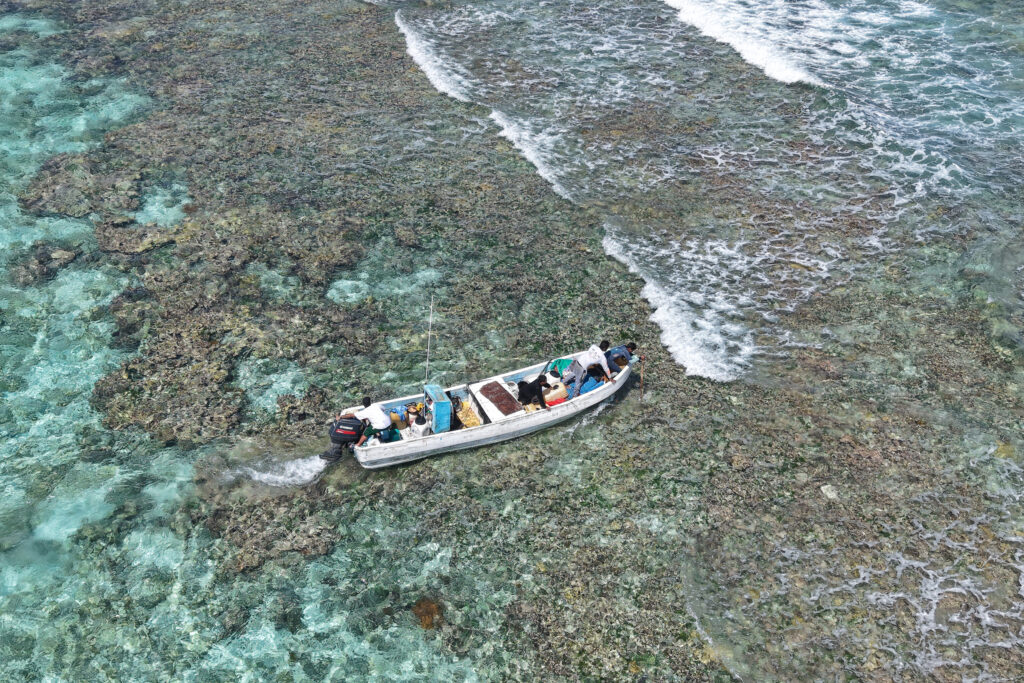
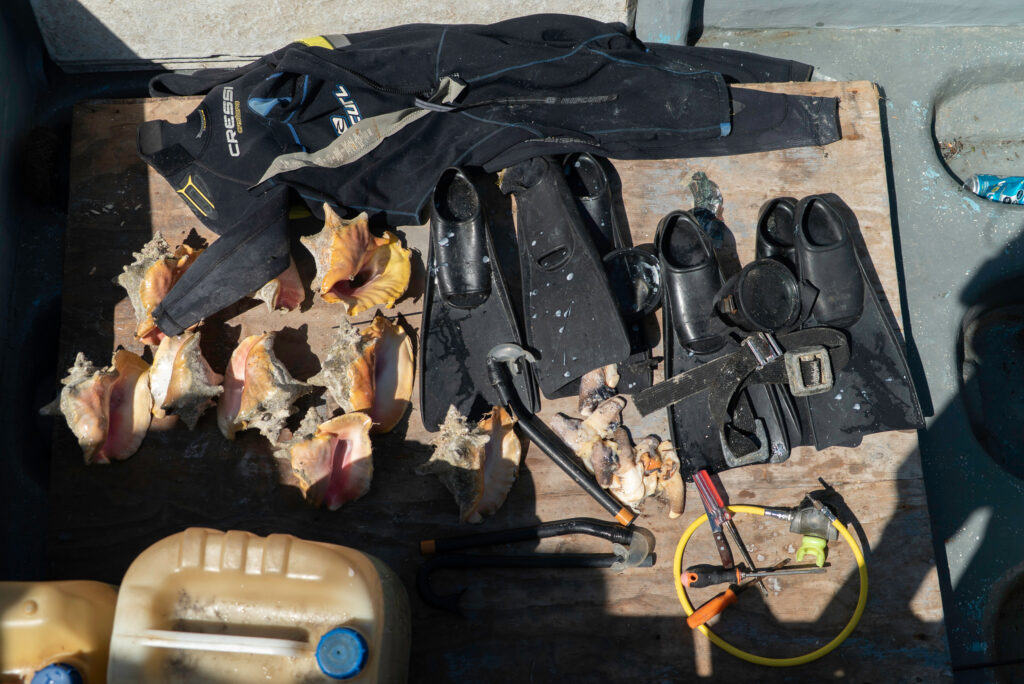
Fishing for queen conch is banned across the Yucatán Peninsula. Poachers can face hefty fines if caught with the pink-shelled snails. Credit: Sofia Castillo/Sea Shepherd Conservation Society
It was a disappointing outcome, but still a worthwhile interaction, Hance said.
Part of the campaign to defend the reef depended on building relationships with local fishers and helping them understand the importance of abiding by park rules.
“We recognize that these individuals are, in one way or another, trying to earn a living and put food on the table for their families,” said Mayo, who comes from a family of fishers himself. “At the same time, we must ensure they understand that by fishing in an unsustainable way, they might catch everything today, and they’ll be left with nothing tomorrow.”
In recent months, Hance and other members of the Sea Shepherd crew had been meeting with different local fishing cooperatives to explain their mission.
“The more we stop the illegal fishing, the more that’s going to benefit the artisanal fishing community, the more fish there’s going to be, the healthier the reef is going to be,” said Hance.
Some fishing leaders like Carrillo Galaz fully support the effort and want to see it expanded to other areas, he said. For others, it’s still a hard sell. Some are concerned the effort may jeopardize their livelihoods. Forming trust will take time, but eventually, Hance said, he hopes more of them will start to see themselves as beneficiaries and even partners in reporting illegal activity.
In the meantime, Sea Shepherd will continue patrolling the reef as often as it can, which is still not as much as Hance would like. Currently, they go out for a week or two at a time, leaving the reef vulnerable when they aren’t there. In the next year, Hance said the organization aims to have crews in both Scorpion Reef and the Bajos del Norte National Park 24/7.
Until then, they would continue letting their presence be known.
A week into their September trip, there was little activity out on the water. Some days passed without any interceptions. But that was the point. “The atmosphere is more relaxed because the work has proven effective,” said Mayo.
The boats the crew did stop, with the Mexican Navy, included a couple private yachts, one of which didn’t have a permit to be in the park and was asked to leave.
The few other vessels they inspected were newly arrived larger lobster boats. They had all the correct paperwork, but still, Hance wanted to keep an eye on them. Over the next few days they’d return to inspect the vessels again to make sure it was only lobster the fishers were catching.
“We’re like the big brother of the reef,” he said. “I want them to know Sea Shepherd and the government of Mexico is always watching.”
About This Story
Perhaps you noticed: This story, like all the news we publish, is free to read. That’s because Inside Climate News is a 501c3 nonprofit organization. We do not charge a subscription fee, lock our news behind a paywall, or clutter our website with ads. We make our news on climate and the environment freely available to you and anyone who wants it.
That’s not all. We also share our news for free with scores of other media organizations around the country. Many of them can’t afford to do environmental journalism of their own. We’ve built bureaus from coast to coast to report local stories, collaborate with local newsrooms and co-publish articles so that this vital work is shared as widely as possible.
Two of us launched ICN in 2007. Six years later we earned a Pulitzer Prize for National Reporting, and now we run the oldest and largest dedicated climate newsroom in the nation. We tell the story in all its complexity. We hold polluters accountable. We expose environmental injustice. We debunk misinformation. We scrutinize solutions and inspire action.
Donations from readers like you fund every aspect of what we do. If you don’t already, will you support our ongoing work, our reporting on the biggest crisis facing our planet, and help us reach even more readers in more places?
Please take a moment to make a tax-deductible donation. Every one of them makes a difference.
Thank you,

Teresa Tomassoni
Oceans Correspondent
Teresa Tomassoni is an environmental journalist covering the intersections between oceans, climate change, coastal communities and wildlife for Inside Climate News. Her previous work has appeared in The Washington Post, NPR, NBC Latino and the Smithsonian American Indian Magazine. Teresa holds a master’s degree in Journalism from the Craig Newmark Graduate School of Journalism at CUNY. She is also a recipient of the Stone & Holt Weeks Social Justice Reporting Fellowship. She has taught journalism for Long Island University and the School of the New York Times. She is an avid scuba diver and spends much of her free time underwater.