

BIRMINGHAM, Ala.—It’s time to act. It’s long past time.
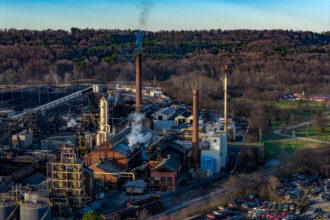
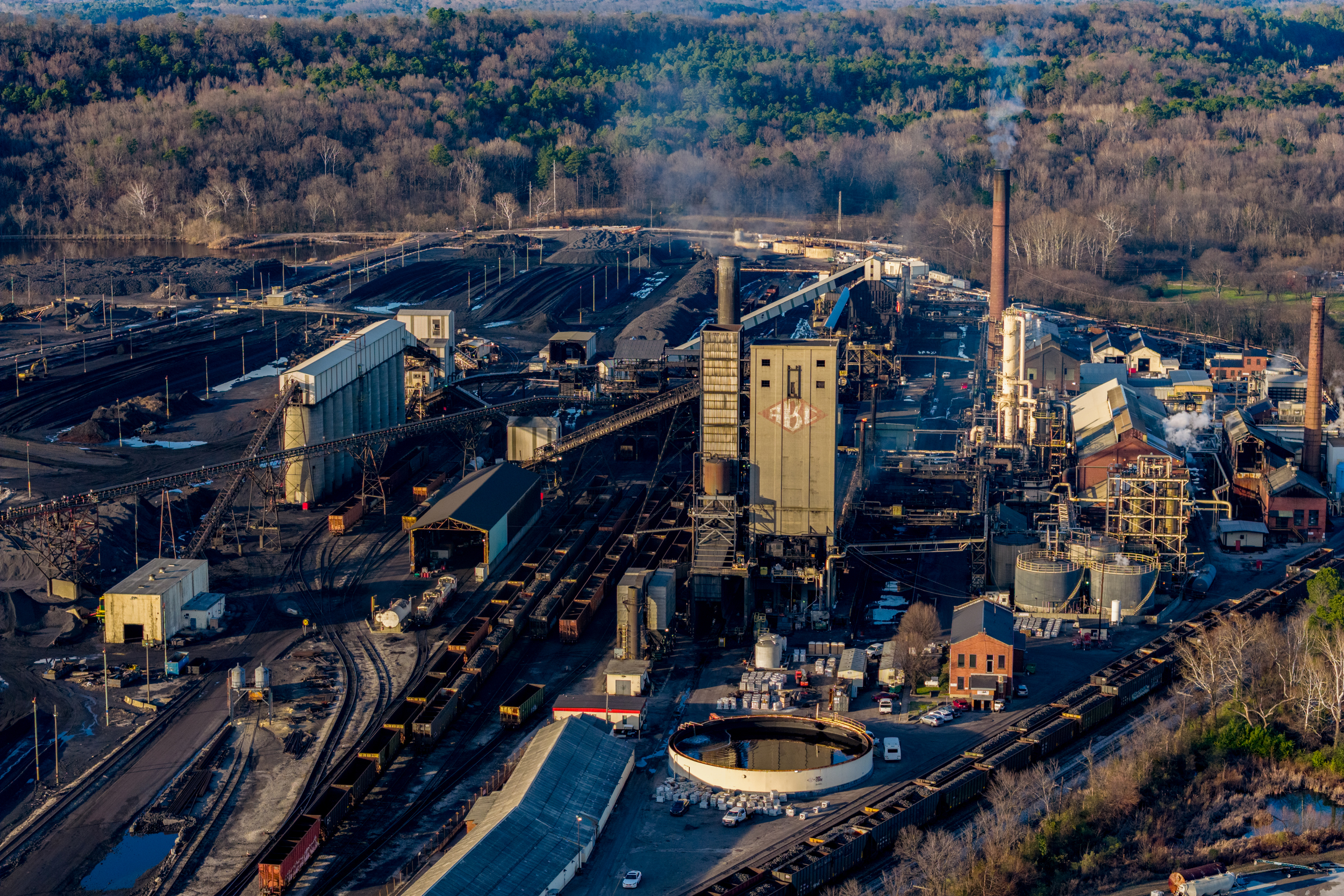
That was the case made by lawyers for the Southern Environmental Law Center, who filed a petition Wednesday in Jefferson County Circuit Court asking a judge to force local health officials to act on a 2023 air permit renewal application for ABC Coke, the nation’s largest producer of foundry coke.
SELC lawyers filed the petition on behalf of the Greater-Birmingham Alliance to Stop Pollution, an environmental nonprofit better known as GASP. The filing argued that Dr. David Hicks, the county’s health officer, has failed his “statutory, nondiscretionary duty to take action” on the renewal application, resulting in the facility legally operating without an up-to-date permit.
“Communities should not have to wait indefinitely for the protections the law requires,” GASP Executive Director Jilisa Milton said. “The people of Tarrant and surrounding communities have lived with ABC Coke’s pollution for generations.”
Foundry coke is a dirty, high-carbon fuel produced by burning coal at extreme temperatures.
By Thursday afternoon, just a day after the court filing, the Jefferson County Department of Health had notified SELC that it was moving forward with the permitting process, according to a representative from the environmental nonprofit.
“It’s unfortunate it took us filing a lawsuit for JCDH to do its job, but at least we’re one step closer to ABC Coke having a renewed permit,” SELC said in a statement. “We’ll continue to watch this process very closely and demand accountability for communities surrounding [the facility].”
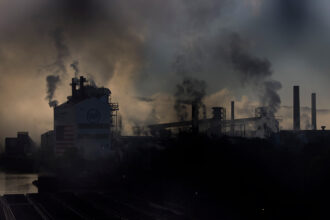
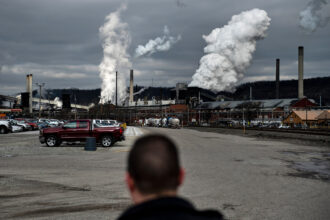
ABC Coke, owned by Drummond Coal, has long polluted the air in Tarrant, a community abutting north Birmingham. The company agreed to pay a $775,000 civil penalty in 2019 over alleged Clean Air Act violations related to the release of benzene, a cancer-causing chemical that can also trigger other health problems.
Representatives for ABC Coke did not respond to a request for comment.
The company applied for a renewal of its air permit in 2023, records show, but health officials did not issue a draft permit until January 2026. Since then, the agency’s public progress has stalled, a delay that SELC and GASP say has prevented residents’ concerns from being addressed.
This story is funded by readers like you.
Our nonprofit newsroom provides award-winning climate coverage free of charge and advertising. We rely on donations from readers like you to keep going. Please donate now to support our work.
Donate Now“Defendant’s failure to timely act has deprived and continues to deprive the public, including GASP and its members, of procedural and substantive rights under the Clean Air Act and Air Rules,” the petition stated.
The Jefferson County Department of Health did not respond to a request for comment, but in a September 2026 letter to SELC, Hicks wrote that his agency “respectfully disagrees with the assertion that it has failed to fulfill its obligations under applicable law.”
The department, he wrote, was waiting on a “regulatory assessment” by the Trump administration’s Environmental Protection Agency before taking action on the application.
“Accordingly, JCDH does not believe litigation is necessary or appropriate at this time,” Hicks wrote. “JCDH remains committed to carrying out its regulatory responsibilities and will continue to keep the permitting process moving forward consistent with those responsibilities.”
A representative for the EPA did not immediately answer questions about the assessment referenced by Hicks.
Lawyers for the SELC have said there is no requirement that EPA conduct such an assessment.
“Unless JCDH moves forward and submits a proposed permit to EPA for its official 45-day review, EPA could sit on the current draft permit indefinitely, depriving GASP and the surrounding communities of the substantive benefits of an updated permit and their procedural rights to challenge said permit, if necessary,” SELC wrote to Hicks on Sept. 30.
The Trump administration has already rolled back initiatives meant to help communities facing industrial air pollution, including in Birmingham and Tarrant. In 2025, for example, the administration announced it would grant a two-year exemption to coke oven operators from a Biden-era federal rule requiring fenceline air quality monitoring and improved workplace practices at coke oven facilities across the country. SELC and GASP are challenging the exemption in court.
That fenceline monitoring has shown elevated levels of benzene at several coke oven facilities. Monitoring programs in Indiana, Pennsylvania and Alabama recorded benzene levels as high as 14 times the occupational exposure limit recommended by the American Conference of Governmental Industrial Hygienists.
At ABC Coke in Alabama, monitoring equipment recorded benzene levels more than 60 percent above that threshold limit, raising cancer risks in the mostly Black areas of north Birmingham and Tarrant by as much as 1.7 cases in every 10,000 people.
Those are risks that should compel local health officials not to delay final action on ABC Coke’s permit, according to GASP’s Milton.
“They deserve action,” she said, “not delay.”
About This Story
Perhaps you noticed: This story, like all the news we publish, is free to read. That’s because Inside Climate News is a 501c3 nonprofit organization. We do not charge a subscription fee, lock our news behind a paywall, or clutter our website with ads. We make our news on climate and the environment freely available to you and anyone who wants it.
That’s not all. We also share our news for free with scores of other media organizations around the country. Many of them can’t afford to do environmental journalism of their own. We’ve built bureaus from coast to coast to report local stories, collaborate with local newsrooms and co-publish articles so that this vital work is shared as widely as possible.
Two of us launched ICN in 2007. Six years later we earned a Pulitzer Prize for National Reporting, and now we run the oldest and largest dedicated climate newsroom in the nation. We tell the story in all its complexity. We hold polluters accountable. We expose environmental injustice. We debunk misinformation. We scrutinize solutions and inspire action.
Donations from readers like you fund every aspect of what we do. If you don’t already, will you support our ongoing work, our reporting on the biggest crisis facing our planet, and help us reach even more readers in more places?
Please take a moment to make a tax-deductible donation. Every one of them makes a difference.
Thank you,

Lee Hedgepeth
Reporter, Alabama
Lee Hedgepeth is Inside Climate News’ Alabama reporter. Raised in Grand Bay, Alabama, a small town on the Gulf Coast, Lee holds master’s degrees in community journalism and political development from the University of Alabama and Tulane University. Lee is the founder of Tread, a newsletter of Southern journalism, and has also worked for news outlets across Alabama, including CBS 42, Alabama Political Reporter and the Anniston Star. His reporting has focused on issues impacting members of marginalized groups, including homelessness, poverty, and the death penalty. His award-winning journalism has appeared in publications across the country and has been cited by the New York Times, the Wall Street Journal and the Washington Post, among others.