

EL PASO, Texas—Border communities voted in overwhelming numbers for Democratic candidates in the midterm elections last Tuesday.
Come January, every U.S. House member representing the U.S.-Mexico border—from San Diego to Brownsville—will be a Democrat. After a three-decade drought, Democrats swept all 18 statewide races in Texas.
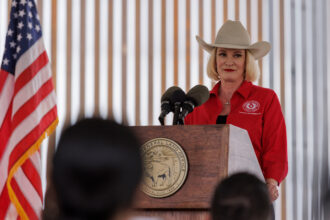
Gov.-elect Gina Hinojosa and Sen.-elect James Talarico were among the Democratic candidates who vowed to fight the border wall in Big Bend. Now comes the challenge of delivering on their campaign promises.
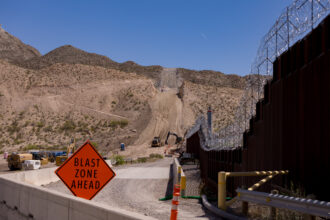
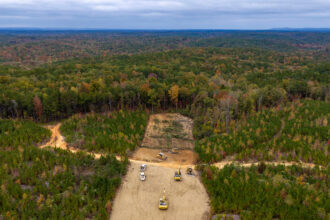
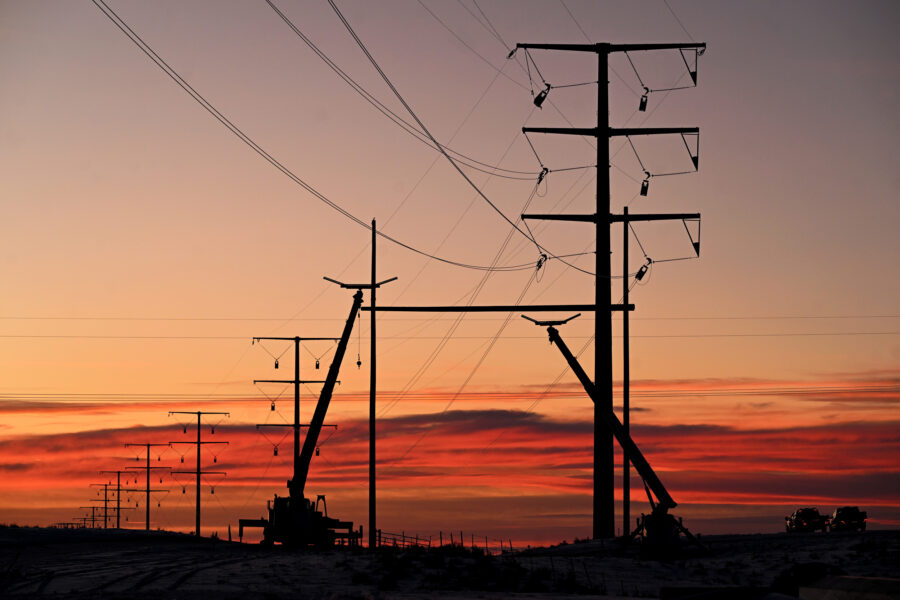
While Democrats chalked up major victories in the election, the Trump administration still has the funding and statutory authority to continue border wall construction through ecologically sensitive areas, including Big Bend. For more than a decade, Donald Trump has vowed to complete border wall construction from the Pacific to the Gulf of Mexico. The One Big Beautiful Bill Act turbocharged these efforts, appropriating $46.5 billion for border barriers.
Advocates on the border said in interviews that Democrats must seize the tools at their disposal to push back on border wall construction.
With majorities in the U.S. House and Senate, Democrats will have the authority to investigate Department of Homeland Security officials and compel them to provide contracts for border wall construction that have been confidential. In Austin, state legislators have already introduced bills for the upcoming session, when Democrats will control the state House for the first time in 24 years, to prohibit border wall construction in state parks. Incoming Texas Land Commissioner Ben Flores, a Democrat, told Inside Climate News he would not grant access to land managed by his office in the Big Bend sector for border wall construction.
“There is a renewed sense of hope and optimism,” said Martin Castro, watershed science director at the Rio Grande International Study Center in Laredo. “We had been telling landowners to please hold out until the midterms to potentially turn the tide against this project.”
Castro is part of a coalition opposing border wall construction in Laredo and surrounding communities, including landowners who are fighting construction on their property. He hopes incoming state officials will help landowners defend their private property rights.
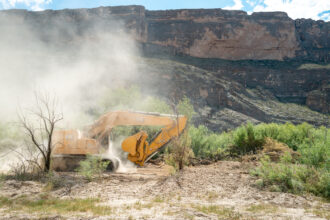
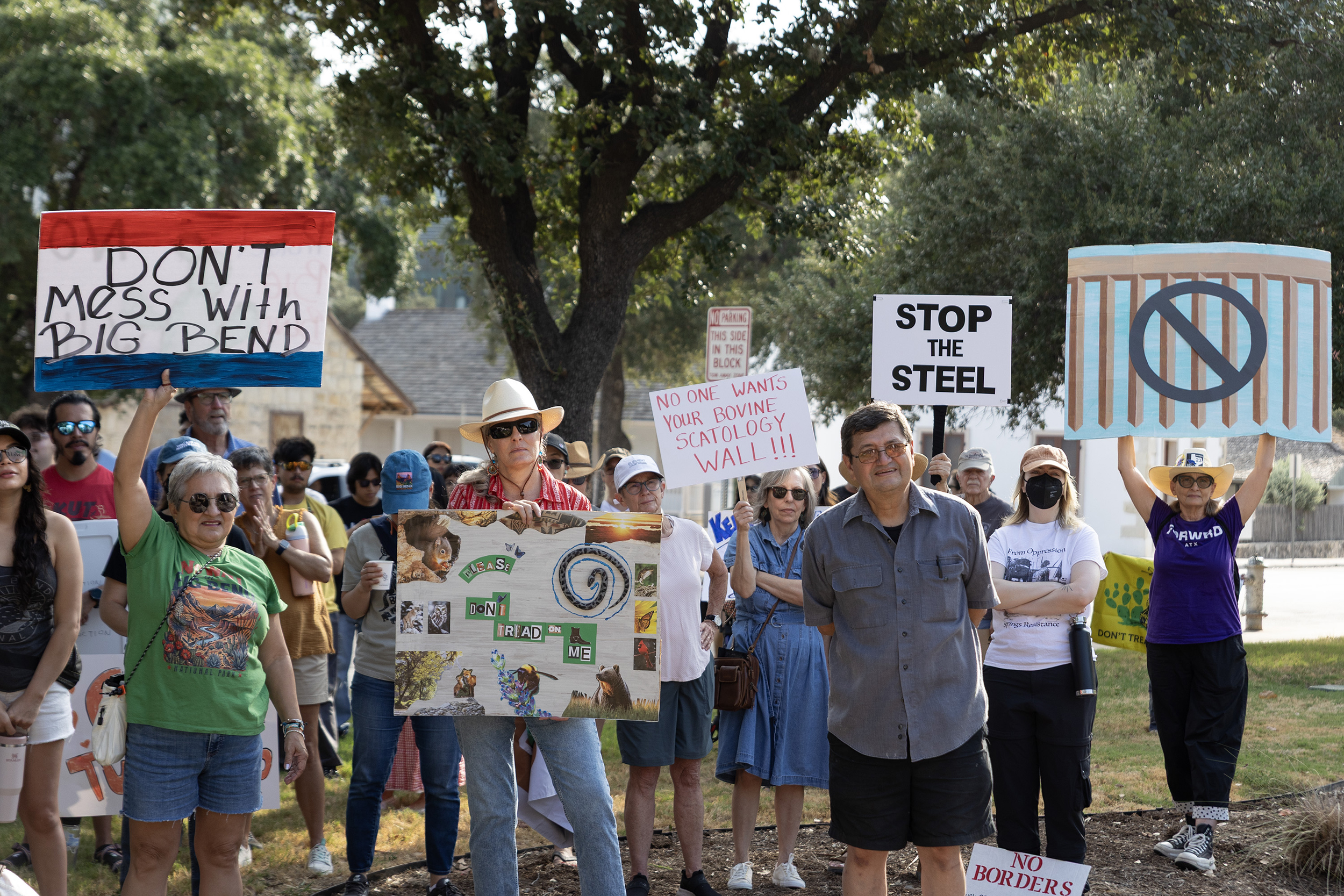
Border wall construction, halted under former President Joe Biden, resumed and expanded to new areas after Trump returned to office last year. In February, DHS waived dozens of federal laws to fast-track construction in the Big Bend region of Texas, setting off a national outcry. Texans have spoken out against construction in the remote region that includes Big Bend National Park, Big Bend Ranch State Park and numerous privately owned tracts.
An injunction temporarily paused construction in the Big Bend sector last month. But the Supreme Court overturned that injunction Monday, allowing construction to resume. Elsewhere in Texas, contractors have continued working in the El Paso area, South Texas and the Rio Grande Valley to close gaps in the wall and line the Rio Grande with buoys.
While Democrats will hold a majority in the Texas House, Republicans will retain control of the Senate. But some Texas Republicans have spoken out against the wall in Big Bend, opening the possibility for bipartisan action.
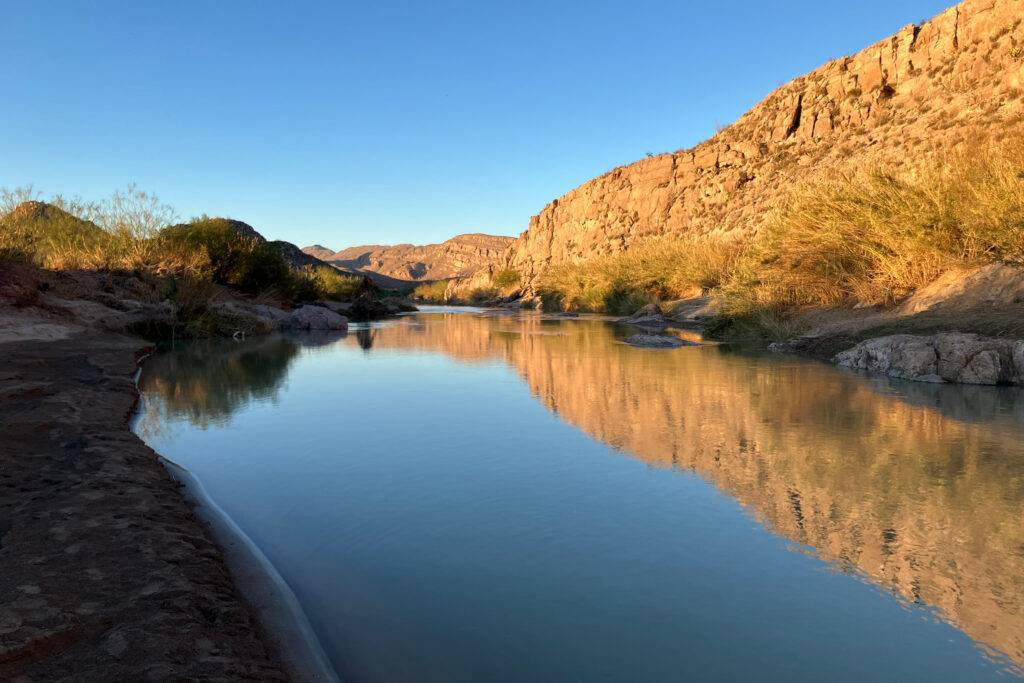
On Monday, the first day to file bills for the upcoming legislative session, state Rep. Eddie Morales (D-Eagle Pass) and Sen. César Blanco (D-El Paso) introduced companion bills that would prohibit border security infrastructure on state park property. They both represent the Big Bend region.
Several Texas state parks are in the planned path of the border wall, including Big Bend Ranch, Seminole Canyon and Bentsen-Rio Grande Valley. Federal officials have already sought access to these parks for the wall, as reported by Inside Climate News.
Outside the parks, the border wall is slated to cross large swaths of land in West Texas managed by the Texas General Land Office. Land Commissioner-elect Flores previously told Inside Climate News that he would not voluntarily authorize border wall construction on GLO land and is “prepared for a prolonged legal battle.”
If Texas were to block construction on state park or GLO land, the federal government would have to condemn the property to proceed with the project. Condemnation would undoubtedly stall any construction plans.
In Washington, Democrats will hold the majority in the House and Senate and have vowed to take on corruption in the Trump administration. Advocates are urging them to weave the border wall into this broader effort. Talarico has called the border wall in Big Bend “a monument to corruption” and questioned billion-dollar no bid contracts.
DHS waived contracting and procurement laws in every border sector, allowing the agency to rapidly issue contracts for billions of dollars without going out for bids.
This story is funded by readers like you.
Our nonprofit newsroom provides award-winning climate coverage free of charge and advertising. We rely on donations from readers like you to keep going. Please donate now to support our work.
Donate NowCastro, of the Rio Grande International Study Center, said that the sweeping authority DHS has to issue waivers under the 2005 Real ID Act must be reexamined.
“The waiver authority is so far-reaching that, until that goes away, the threat to these communities is never going to go away,” he said. “Can we work with a bipartisan delegation on the repeal of the waivers?”
Adam Isacson, an analyst at the Washington Office on Latin America, said that with Democrats leading the House and Senate Committees on Homeland Security come January, they could investigate these contracts.
“Transparency is where the Democrats have the biggest short-term power right now,” Isacson said. “[The contracts] could technically be legal. But they could be very embarrassing.”
Scott Nicol, an artist who has long documented border wall construction in the Rio Grande Valley, said Democrats should investigate why the cost per mile of border wall construction has skyrocketed.
“That speaks to how opaque this administration is,” he said. “Congress should be able to say, ‘We gave you this money, now what have you done with it?’”
The midterms also brought a shakeup to congressional districts on the border. The Big Bend region will now be represented by a Democrat in the House, after Katy Padilla Stout flipped Congressional District 23, which stretches from San Antonio to El Paso. Republican Tony Gonzales held the seat until he stepped down in April.
Padilla Stout, a former teacher and attorney, won an unexpected victory over her Republican opponent, Brandon Herrera, a pro-gun influencer on YouTube. Both candidates had spoken out against the wall.
After news broke on Monday that construction could resume in Big Bend, Padilla Stout vowed to continue fighting the wall.
“This is not a Republican or Democrat issue,” she said in a press release. “This is an example of corrupt Washington politicians refusing to listen to our border communities.”
Laiken Jordahl is a national public lands advocate at the Center for Biological Diversity, which brought the lawsuit challenging the border wall in Big Bend that reached the Supreme Court. He urged Democrats to restrict appropriations funding to prohibit construction in Big Bend.
Without a super-majority, Democrats would either need to get Trump’s signature or tie the restrictions to must-pass legislation. A similar effort failed earlier this year, while Democrats were the minority party.
Congress passed similar restrictions during the first Trump administration, when U.S. Rep. Henry Cuellar (D-Laredo) obtained carveouts prohibiting border wall construction in areas including Santa Ana National Wildlife Refuge. Cuellar was re-elected last week and serves on the powerful House Appropriations Committee.
Jordahl said that advocates will use both the legal system and public pressure to keep the spotlight on the border wall.
“Everyone across the entire Big Bend region will be watching if a single bulldozer moves,” he said. “The people of Texas have spoken so clearly to reject this project.”
About This Story
Perhaps you noticed: This story, like all the news we publish, is free to read. That’s because Inside Climate News is a 501c3 nonprofit organization. We do not charge a subscription fee, lock our news behind a paywall, or clutter our website with ads. We make our news on climate and the environment freely available to you and anyone who wants it.
That’s not all. We also share our news for free with scores of other media organizations around the country. Many of them can’t afford to do environmental journalism of their own. We’ve built bureaus from coast to coast to report local stories, collaborate with local newsrooms and co-publish articles so that this vital work is shared as widely as possible.
Two of us launched ICN in 2007. Six years later we earned a Pulitzer Prize for National Reporting, and now we run the oldest and largest dedicated climate newsroom in the nation. We tell the story in all its complexity. We hold polluters accountable. We expose environmental injustice. We debunk misinformation. We scrutinize solutions and inspire action.
Donations from readers like you fund every aspect of what we do. If you don’t already, will you support our ongoing work, our reporting on the biggest crisis facing our planet, and help us reach even more readers in more places?
Please take a moment to make a tax-deductible donation. Every one of them makes a difference.
Thank you,

Martha Pskowski
Reporter, El Paso, Texas
Martha Pskowski covers climate change and the environment in Texas from her base in El Paso. She was previously an environmental reporter at the El Paso Times. She began her career as a freelance journalist in Mexico, reporting for outlets including The Guardian and Yale E360. Martha has a B.A. in Environmental Studies from Hampshire College and a master’s degree in Journalism and Latin American Studies from New York University. She is a former Fulbright research fellow in Mexico. Martha can be reached on Signal at psskow.33.