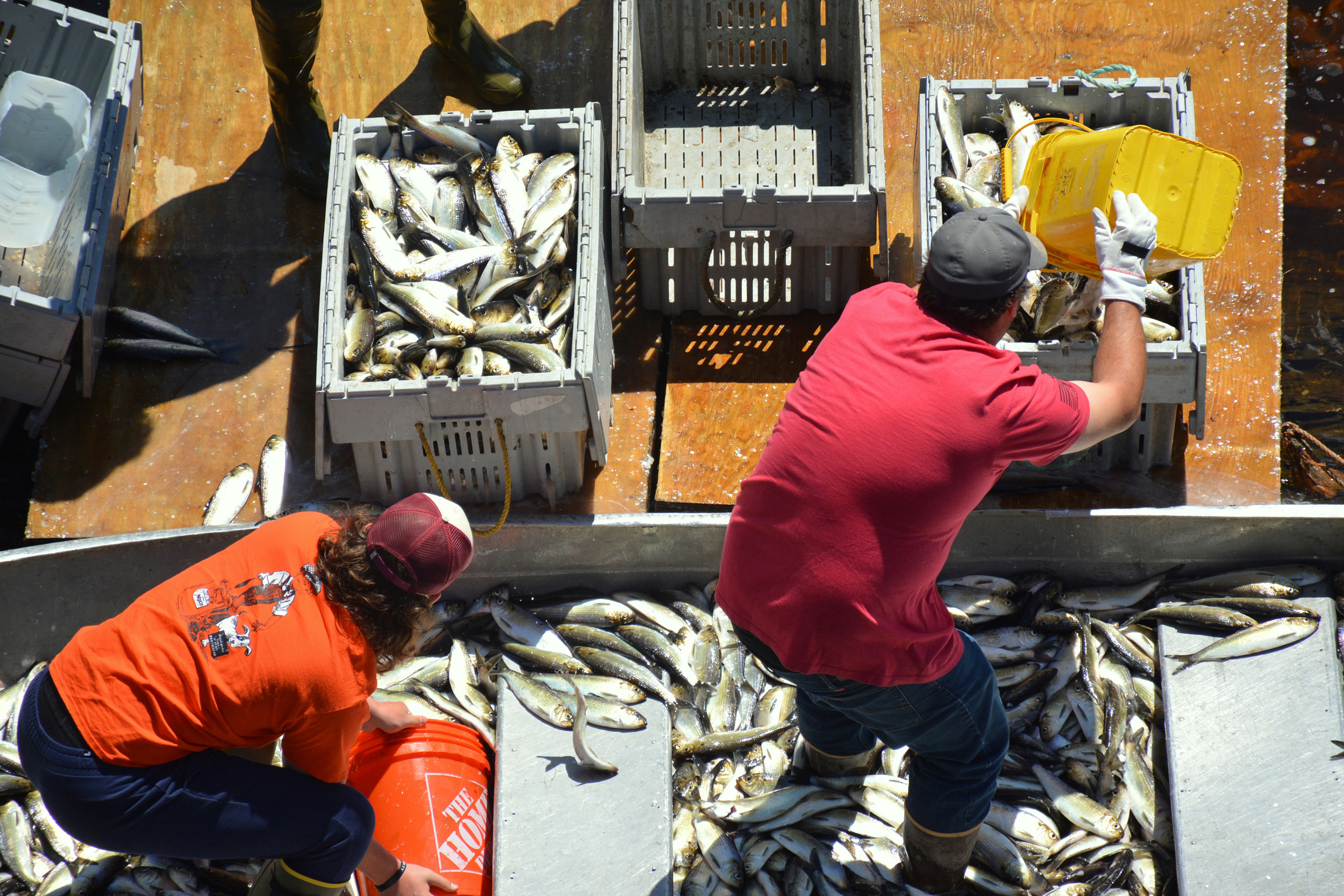


For a few weeks each summer, the Sebasticook River in Benton, Maine, is paved with flashing silver scales, so thick it seems you could almost walk across. The alewives have returned for their annual migration.
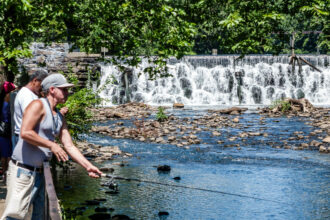
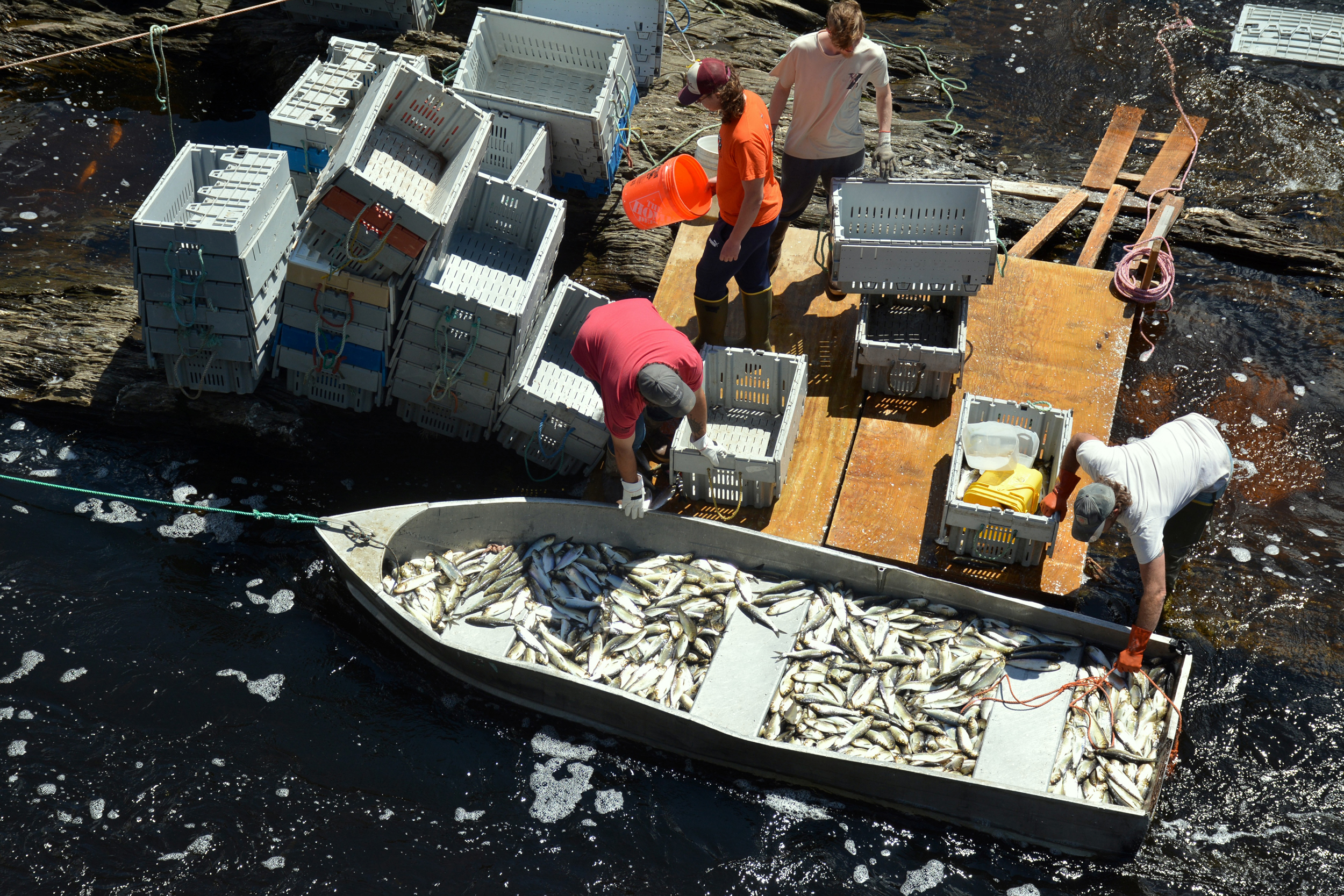
On a mid-May weekend, Benton held its annual Alewife Festival on the riverbank. With the tunes of a local steel drum band in the background, families made fish-themed crafts, sampled smoked alewives and watched the migration in progress. Below Benton Falls Dam, fishermen hauled alewives into their boats one full net at a time.
Looking at this scene, it’s hard to believe that 35 years ago, fewer than 800 alewives were making this trip upriver. Last year, they numbered 9 million.
The story of Maine’s alewives is a conservation success decades in the making—and unmatched on the rest of the Atlantic coast.
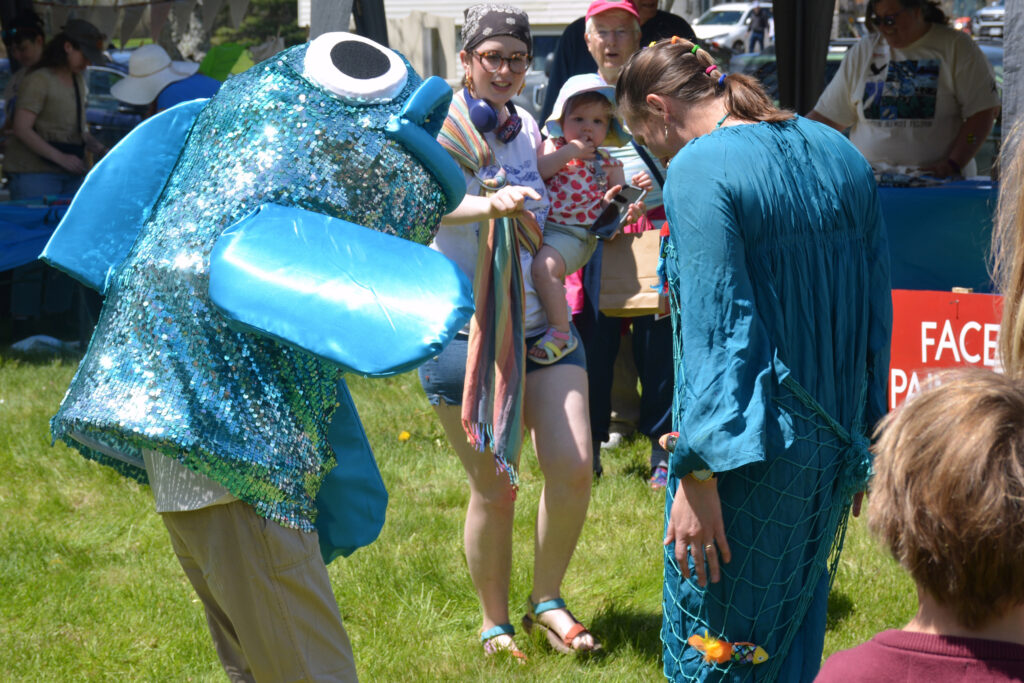
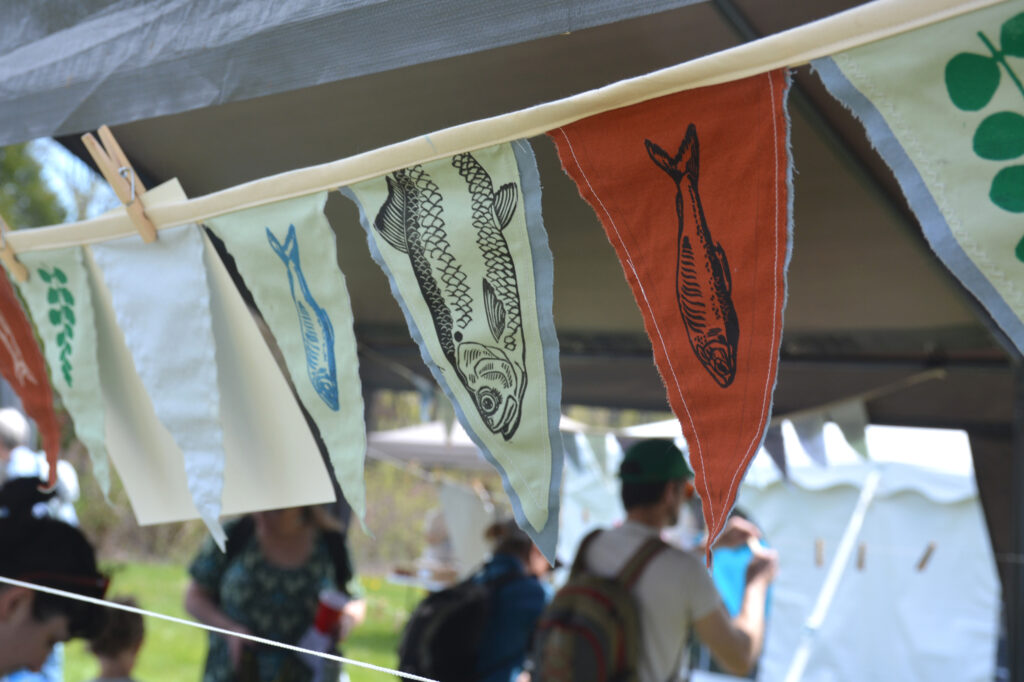
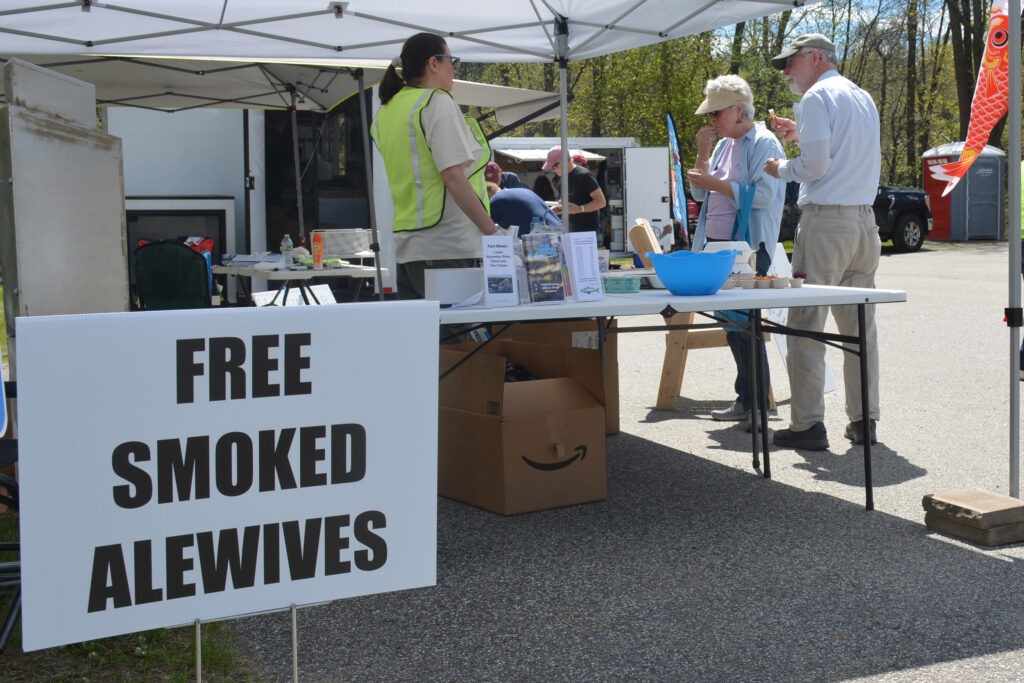
The town of Benton held its annual Alewife Festival to celebrate the fish’s migration. The festival includes fish-themed crafts, education booths and samples of the fish. Credit: Sydney Cromwell/Inside Climate News
A Fish Worth Celebrating
Like Benton, several Maine towns hold spring festivals or 5K runs to celebrate the alewives’ return. In the coastal town of Penobscot, it’s the biggest event of the year, according to Bailey Bowden, who heads the local alewife committee.
Bowden, age 60, is a ninth-generation resident of Penobscot, population 1,100. He first learned about alewives from older relatives when he was around five years old. There’s something special about this fish, he said.
“It’s pretty impressive to see a brook full of fish, thousands and thousands of these fish that you can just reach down into the water and catch them with your hands,” said Bowden, who sports a dark ponytail and a gray beard under his Alewife Harvesters of Maine cap.
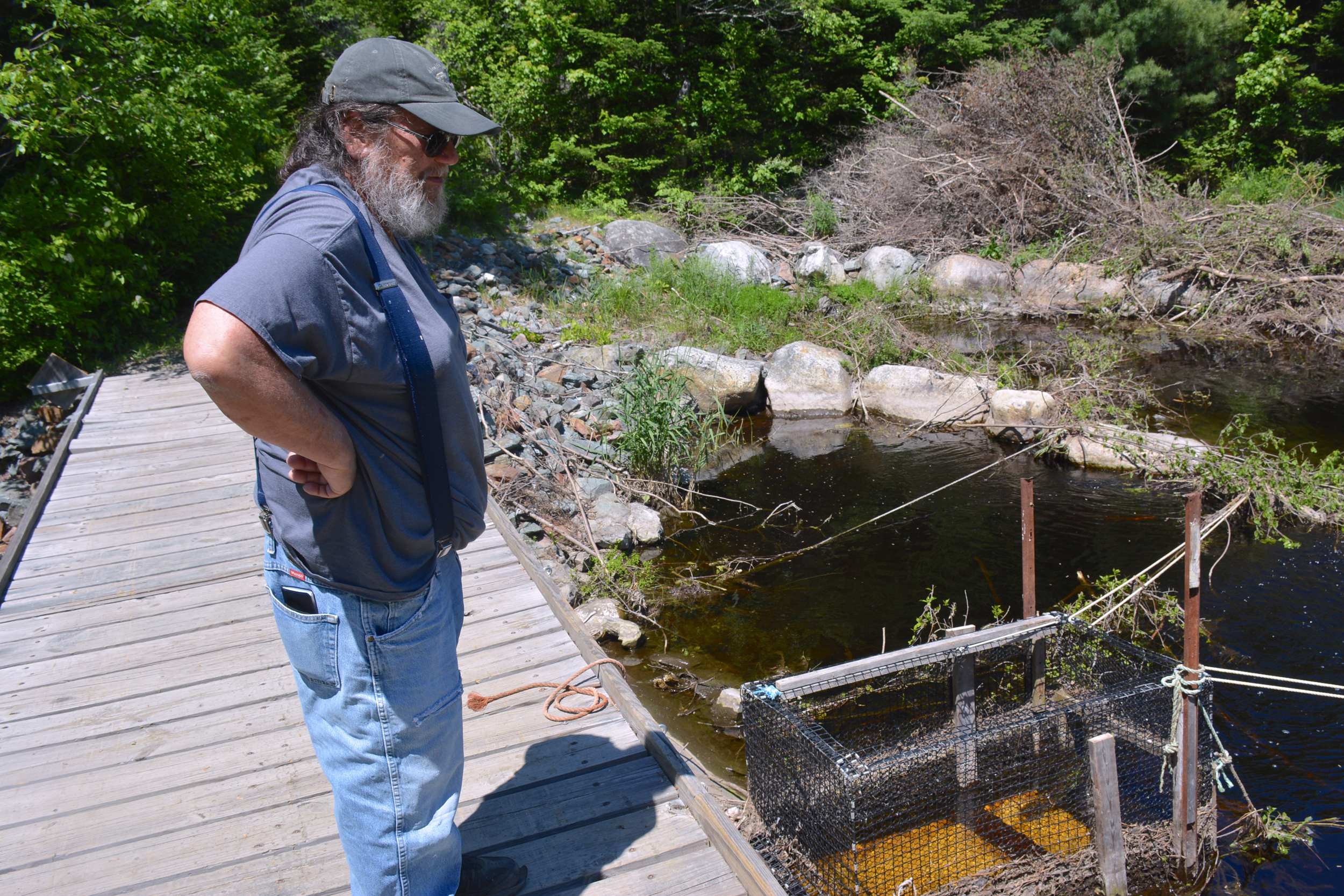
The alewife, or river herring, doesn’t sound like a source of such enthusiasm. The name supposedly comes from the fish’s rotund silver bellies, an unflattering comparison to female tavernkeepers.
The species lives mostly in the Atlantic Ocean, from Newfoundland to South Carolina, but in early summer the adults migrate as far as 100 miles inland to spawn in ponds and lakes.
Alewives aren’t considered a game fish, though some people do catch and smoke them. But they are a linchpin for Maine’s river ecosystems—one that basically disappeared from many of those rivers for decades.
They act as a “biological conveyor belt” of nutrients between the ocean and inland waters, said Rustin Taylor, the executive director of the Alewife Harvesters of Maine.
Seals, otters, bald eagles, ospreys, pollock, trout and other carnivores eat alewives. The fish fed generations of Native communities and colonial and industrial American towns. The Passamaquoddy tribe’s name for the species, siqonomeq, translates to “the fish that feeds all.”
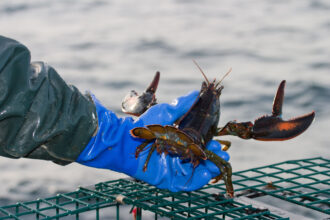
Today, lobster boats use alewives as a favorite and affordable bait, said Taylor, 47, who spent 12 years as part of a lobstering crew.
“Maine fishermen are very lucky to have that resource,” said Taylor, whose home in Somesville, near Acadia National Park, overlooks the local alewife run, which he helps to steward.
Part of the alewives’ charm is that “they swim up right into the heart of your town,” said 32-year-old Anne Zegers, the sea-run fisheries monitoring coordinator for Manomet Conservation Sciences, and a coordinator of the Gulf of Maine River Herring Network.
Alewife festivals, Zegers said, are a chance to celebrate alewives’ role in local ecosystems and economies and to talk about conservation. Plus, their migration coincides with returning warm weather, which after a long Maine winter is reason enough to hold a party, she said.
Dammed Up
Taylor recalls seeing alewives in childhood, “before they disappeared in Somesville” during his teenage years.
“I remember being mesmerized,” he said.
But even then, he was only seeing a remnant of the tens of millions of fish that once made the annual trip up Maine’s rivers.
Beginning in the 1700s, dams created a series of aquatic roadblocks. Alewives can wriggle their way through shallows and rocky water, but they can’t make the giant leaps required to cross significant gaps.
Instead, they get trapped downstream as easy pickings for predators, Zegers said.
As far back as colonial Maine, some dams were built with chutes or other methods to allow migration, but not all were well designed or maintained. It wasn’t enough to sustain the fish’s population. Dams downstream of Benton, for instance, decimated the town’s alewife harvest by the 1840s.
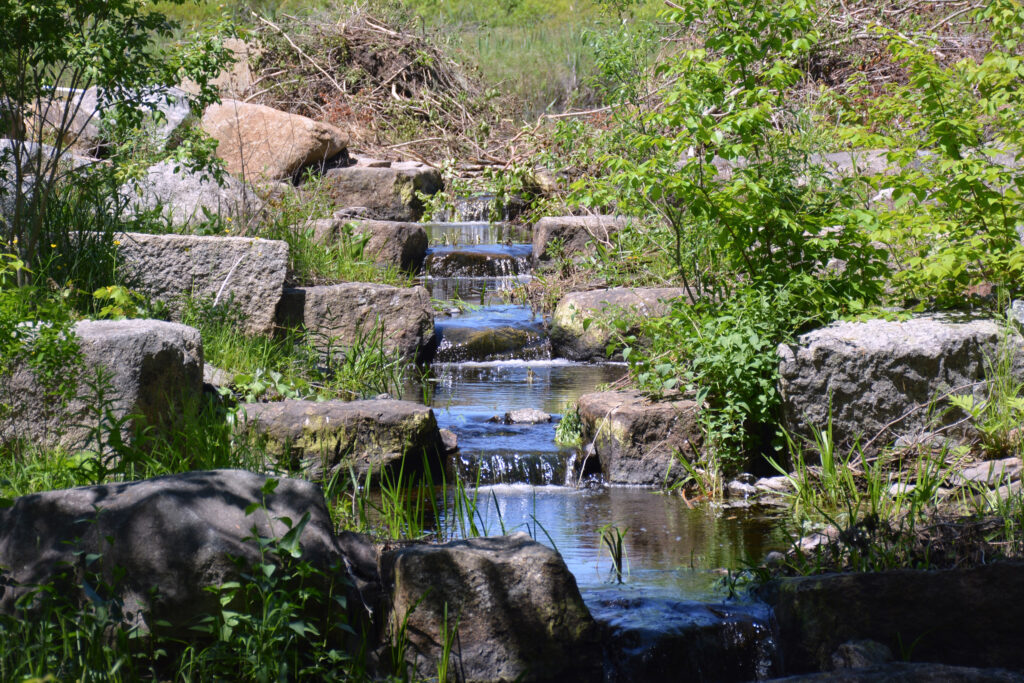
Even some modern dams had the same issues. In the town of Phippsburg, a fish channel from the 1980s sat more than 2 feet above the water at low tide, blocking migration for more than half of every day, said Troy Wallace, the town’s alewife committee chair.
Overharvesting also hit alewife populations. In the 1950s, at the height of fisheries activity, Maine’s town harvests and offshore commercial fishing contributed to a nationwide catch that averaged about 170 million pounds per year, according to the Atlantic States Marine Fisheries Commission (ASMFC).
Alewife populations spiraled downward. Several rivers that had once supported millions of fish dwindled to fewer than a thousand.
Some communities took a hands-on approach to try to keep their alewife runs going. Bowden remembers scooping buckets of fish and depositing them upstream of Penobscot’s dams as a teenager.
Maine progressively placed more limits on commercial harvests from the 1960s through the 1990s, hoping to counter the downward trend. More and more harvests closed or became infrequent.
At their lowest in 1994, Maine’s town harvests caught only 150,000 pounds of alewives, down from more than 3 million at their peak.
In 2012, the ASMFC instituted a moratorium on all commercial alewife fishing on the Atlantic coast until states could demonstrate sustainable management plans. Local harvests also had to prove their sustainability before they could resume.
“This is a right that towns have had forever,” Bowden said. “It was a pretty big slap in the face to lose the right to harvest this fish.”
“Incredible Restorations”
Since the 1990s, dam removals and fish channel construction have gradually reopened sections of the state’s rivers to migration.
“Some of those dam removals have led to incredible restorations of alewife migrations much faster than anticipated,” Taylor said.
Ecologically speaking, dam removal is the best method for reviving alewife migration. Taylor described removal of two dams on Maine’s Penobscot River as “probably one of the premier success stories of our time” for fish conservation. The effort started in 1999 and was completed in 2016.
When removal isn’t an option, bypasses are the go-to solutions.
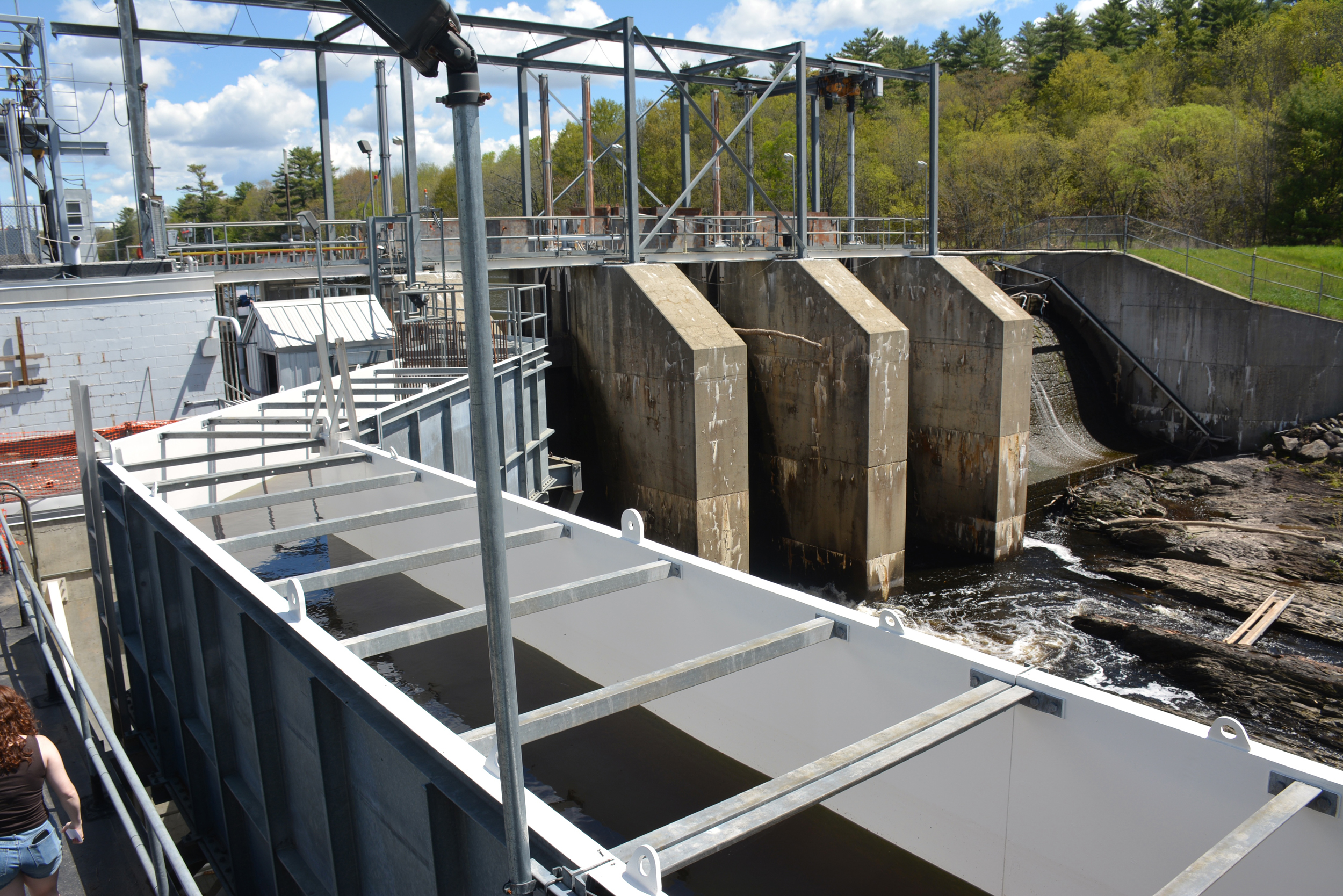
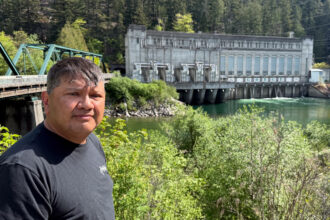
In Benton, engineers built the fish equivalent of an elevator on the local hydroelectric dam in 2006. A large bucket dips into the downstream side of the river and attracts alewives with an artificial current. Every five minutes, the bucket closes and lifts to meet a chute at the top of the dam, where the fish are dumped out to continue upstream.
During the Alewife Festival in May, attendees got to observe buckets of alewives being lifted past the once-impenetrable barrier.
Towns with smaller dams can often get by with less-sophisticated solutions. In Penobscot, the fishway is a series of rocky pools that gradually change the elevation. Phippsburg replaced its inefficient 1980s channel with a similar rock-pool solution in 2025, said Wallace, a 54-year-old father of two who has been on his town’s alewife committee for 14 years.
To Build a Fishway
Designing an alewife highway comes with challenges. Downstream access is critical, since alewives don’t die after spawning, unlike salmon.
Both adults and juveniles can get trapped if a channel is poorly designed or if a drought lowers water levels, said Theo Willis, the Department of Marine Resources (DMR) sea-run fish restoration coordinator.
Last summer’s drought in Maine led to mass die-offs of alewife spawn, Zegers said.
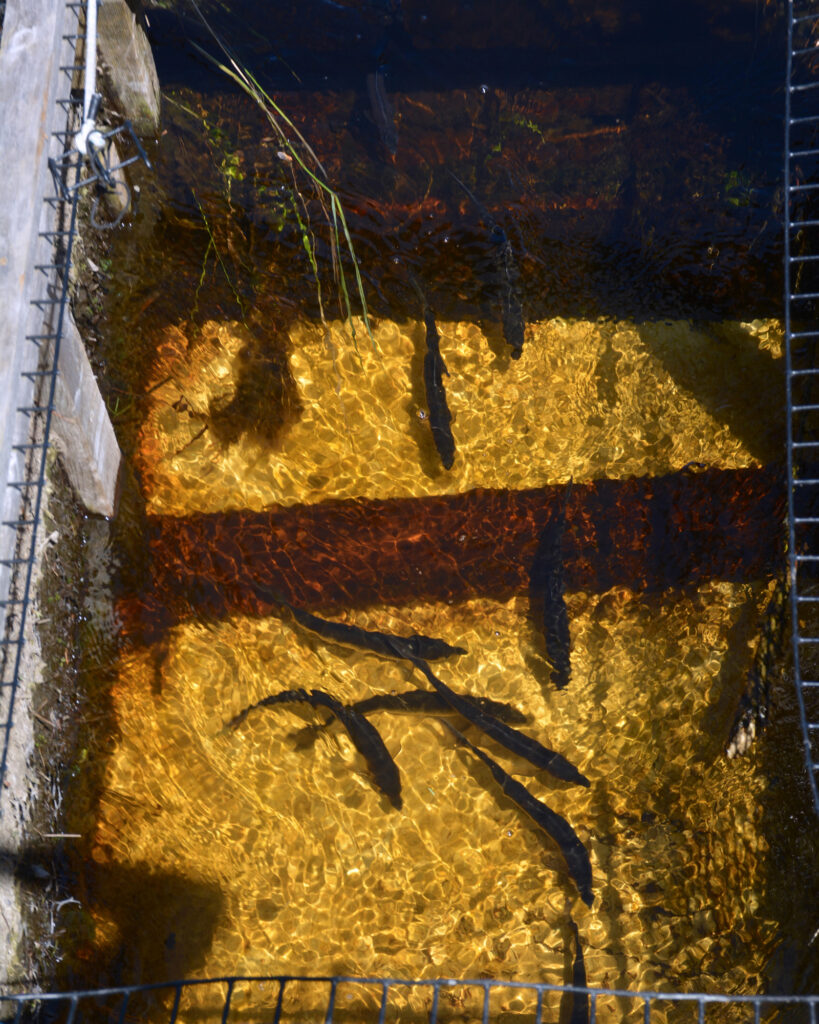
About five years in advance of a fish-access project, the DMR must stock alewives in the pond or lake so the next generation will return to spawn. Willis described it as the “secret sauce” of successful alewife conservation. The state stocks more than 3 million fish annually.
Sometimes, the challenges come from people, not fish. Businesses and private landowners can be resistant to modifying or removing their dams, requiring years of lobbying and negotiations. Citizens who have spent decades enjoying an artificial lake may not want to see it disappear.
“Getting people to realize that a different landscape, a flowing river landscape, is not the wrong landscape is probably one of the biggest challenges we face,” Willis said.
Zegers said removal has become “much more palatable to a lot of communities” as dams age and upkeep becomes more expensive.
A fish channel also requires ongoing maintenance. Every spring, people like Bowden, Taylor and Wallace are out in the streams resetting rocks, replacing worn infrastructure, cleaning debris, clearing beaver dams and filling cracks in concrete.
“It takes a village to help the fish,” Taylor said.
Plus, there’s the cost, which can outstrip municipal budgets.
In Phippsburg, Wallace said the original plan to replace the fish channel in the mid-2010s would have cost more than $1 million, beyond what the 2,000-person town could afford. The rock pools installed last year instead cost about $200,000, half of which was covered by donations. Penobscot’s fishways and related projects have cost at least $6 million in grants and donations, Bowden said.
Nonprofits like the Nature Conservancy have funded some of these projects, including in Phippsburg. The state budget, federal grants and congressional discretionary spending usually cover most of the costs for major projects, according to the DMR. The 2022 Bipartisan Infrastructure Law and Inflation Reduction Act were windfalls for Maine’s migratory fish, with more than $60 million to fund 23 public-private projects.
The DMR still has a laundry list of dam removal and fish access projects for the near future, Willis said.
Ripple Effects
Today, Maine’s alewife population is looking better than it has in decades—and better than populations on most of the Atlantic coast.
“We’ve gone from losing the fish completely in a lot of river systems due to damming and pollution, and now we have some of the largest populations in the globe,” Taylor said.
In 2025, more than 20 million alewives were counted migrating in Maine, Zegers estimated from River Herring Network data. Benton Falls Dam, at 9 million fish, was the largest run in the state and one of a handful of sites with more than a million fish. Most runs range in the tens or hundreds of thousands.
Penobscot had 169,000 alewives enter its two ponds to spawn last year, according to the River Herring Network.
“It was definitely a cool thing to see these fish swimming where I watched them thirty years ago,” Bowden said.
This story is funded by readers like you.
Our nonprofit newsroom provides award-winning climate coverage free of charge and advertising. We rely on donations from readers like you to keep going. Please donate now to support our work.
Donate NowIn their wake come the eagles, seals and other creatures searching for a meal. When alewives are running, the river downstream of Benton Falls Dam has the largest number of bald eagle sightings anywhere in New England, according to the DMR. In Penobscot, Bowden once counted 42 eagles in a half-mile area.
“Growing up, it was rare to see an eagle,” he said. “It’s just incredible how many eagles there are now.”
South of Maine, states aren’t seeing the same positive trend, and in some cases their populations are declining, according to the ASMFC. The commission still considers alewives to be significantly depleted.
Zegers said scientists aren’t sure of the cause, since other states are also pursuing dam removal and fish access. It may be because of differences in ocean fishing activity, she said, so fewer Maine alewives are caught at sea. Warmer oceans may be driving the fish north, away from their spawning grounds.
Or, it could just be that Maine’s alewife runs were bigger to begin with, so even a diminished population was still large enough to recover, she said.
Restoring Harvests
With alewives on the rebound in most of Maine, the state is now expanding towns’ harvesting rights. It is one of only five states that have gotten federal approval for sustainable river herring fisheries.
As of last year, 25 Maine municipalities have been granted the ability to commercially harvest alewives, according to Maine DMR data.
In 2024, 2.5 million pounds of alewives were commercially harvested in Maine, all through local catches. Most former fisheries off the coast, which were historically the largest harvesters, remain closed, according to the DMR.
While harvesting alewives may seem contradictory to conservation, Taylor said they actually work in tandem. Harvesters’ knowledge of their rivers makes them the “canary in the coal mine” when something’s amiss in the migration, he said.
They also are active in cleanup and maintenance of their local fish channels, since that improves their future catch.
“There needs to be an incentive to have this stewardship take place, and either that comes from the profit of an alewife harvest or it’s going to have to come out of local taxes,” Bowden said.
Today, the Maine DMR and ASMFC maintain more control over harvests than in the 1950s. Towns manage their own harvests, but the state sets limits on when, where and how much they can catch to make sure enough fish are reaching spawning grounds.
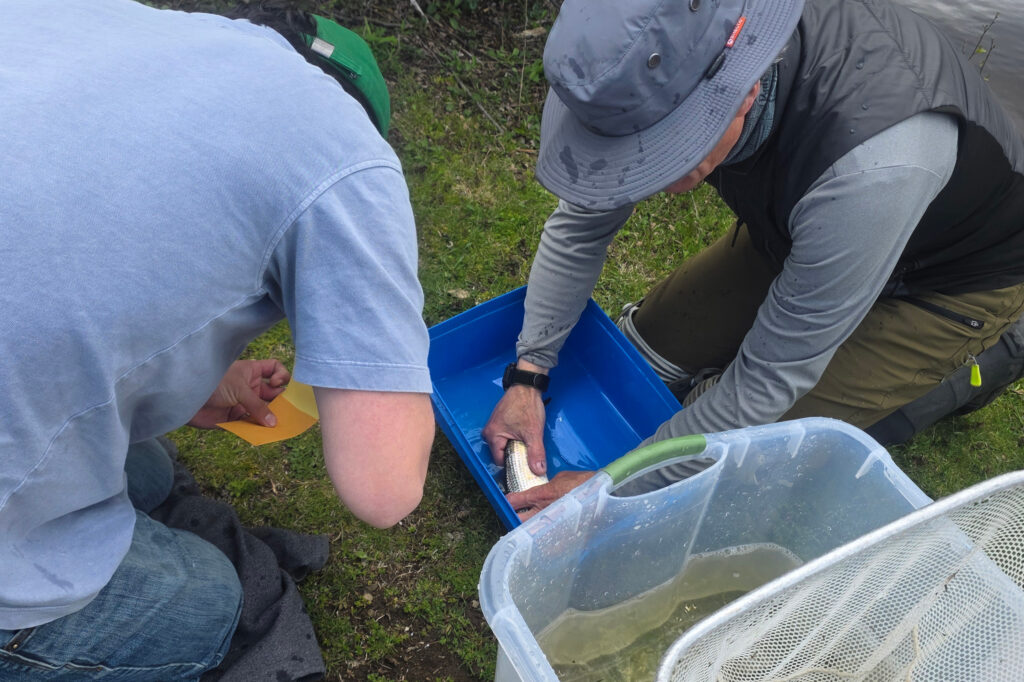
A town must track populations for 10 years to show at least 235 fish per acre in its spawning pool before getting approval to harvest. The DMR also studies scale samples to estimate the age, size and gender ratio at each run.
Six municipalities are actively collecting data to reach that 10-year benchmark, including Phippsburg.
Wallace said Phippsburg’s run has been unpredictable. The town saw peak migrations of 50,000 to 60,000 fish each year in 2018 and 2019, followed by three years where fewer than 10,000 were counted.
“We just never had what they [the DMR] wanted to see for a fishery,” Wallace said.
Bowden, who is Penobscot’s contracted harvester, believes requiring a decade of data is too much, and that towns should be allowed incremental quotas as they continue to track populations.
“Counting fish for 10 years is a drag, for sure,” he said.
When he first started working on restoring his local harvest, Bowden only needed five years of data. As the state gradually increased that threshold, he felt like the goalposts kept moving even though Penobscot’s run had reached healthy numbers.
“The whole point was I want to catch a fish. That was where this all started. It was just ridiculous government red tape that I couldn’t, because the fish were there,” he said.
Taylor said some towns lost interest in their alewife work when the requirements changed.
Penobscot was allowed a small pilot harvest program in advance of the 10-year threshold, but last year was the town’s first full commercial harvest in more than 50 years.
“It was a great feeling knowing that we were finally able to reclaim our rights to the fishery,” Bowden said.
Lost and Regained
Even as Maine’s alewife population trends upward, Zegers said their future is complex.
The fish still contend with declining numbers in other states, plus threats like fishing on the open ocean and climate change–driven droughts. This summer, Zegers said several towns have reported lower-than-usual migration numbers. It will take time to figure out why.
There are “so many things to keep you up at night,” she said.
Meanwhile, Taylor said he feels reasonably optimistic. Since many harvesters grew up during the days when alewives had all but disappeared from their hometown rivers, he thinks this generation is likely to avoid the errors of the past.
“We have seen enough abuses of over-harvests that the awareness is strong enough now that that’s not going to work out well,” Taylor said.
Community awareness seems to be heading in the same direction, he said. After all, what other fish inspires so many parties in its honor?
“Maybe people take care of things once it’s been lost and regained a little bit,” he said.
About This Story
Perhaps you noticed: This story, like all the news we publish, is free to read. That’s because Inside Climate News is a 501c3 nonprofit organization. We do not charge a subscription fee, lock our news behind a paywall, or clutter our website with ads. We make our news on climate and the environment freely available to you and anyone who wants it.
That’s not all. We also share our news for free with scores of other media organizations around the country. Many of them can’t afford to do environmental journalism of their own. We’ve built bureaus from coast to coast to report local stories, collaborate with local newsrooms and co-publish articles so that this vital work is shared as widely as possible.
Two of us launched ICN in 2007. Six years later we earned a Pulitzer Prize for National Reporting, and now we run the oldest and largest dedicated climate newsroom in the nation. We tell the story in all its complexity. We hold polluters accountable. We expose environmental injustice. We debunk misinformation. We scrutinize solutions and inspire action.
Donations from readers like you fund every aspect of what we do. If you don’t already, will you support our ongoing work, our reporting on the biggest crisis facing our planet, and help us reach even more readers in more places?
Please take a moment to make a tax-deductible donation. Every one of them makes a difference.
Thank you,

Sydney Cromwell
Contributor
Sydney Cromwell is a freelance journalist based in Maine. She has a bachelor’s in journalism and mass communication from Samford University. Sydney previously founded Southern Science, which covers environmental issues in Alabama. Her work has appeared in The New York Times and in local publications around Birmingham, Ala.