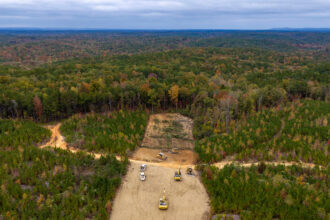


FAYETTEVILLE, N.C.— North Carolina environmental regulators this week sent a scathing critique to Chemours, which is responsible for contaminating at least 10 counties with toxic “forever chemicals,” arguing that the company’s cleanup proposal violates the terms of a consent order.
The state Department of Environmental Quality detailed multiple inadequacies in the company’s plan to remediate widespread, decades-old groundwater and soil contamination from PFAS chemicals in southeastern North Carolina.
“Today’s direction to the company makes clear that DEQ expects Chemours to clean up all the areas they have polluted,” said DEQ Secretary Reid Wilson in a prepared statement. “DEQ will hold Chemours accountable no matter how long it takes.”
The company’s predecessor, DuPont, is responsible for some of the contamination emanating from the Fayetteville Works plant, but it shielded itself from liability when it spun off Chemours in 2015. An international company, Chemours manufactures chemicals used to make Teflon cookware, data center coolants and grease-, water- and stain-resistant consumer products.
DEQ’s letter said the agency also determined the company could not justify how it assessed the public health and environmental risk of PFAS exposure. The letter cited numerous instances of what DEQ described as missing data, substandard sampling methods and flawed analyses in Chemours’ reports. In some cases, these errors led the company to reach conclusions that lacked a factual, scientific or legal basis, according to the letter.
The groundwater and soil remediation must be detailed in a corrective action plan, a key component of a 2019 consent order between the company, DEQ and the nonprofit Cape Fear River Watch. The agency rejected the company’s draft corrective action plan in 2020, calling it “inadequate” and lacking a “thorough technical basis.”
Progress on the plan stalled for six years until September, when the state announced it had reached a half-billion dollar settlement with Chemours that included a provision accelerating progress on its completion. The settlement required DEQ to provide written feedback to Chemours.
A Chemours spokesperson told Inside Climate News that with DEQ’s formal feedback to its 2019 corrective action plan, risk assessment and other studies “now in hand, we can move forward. We are reviewing the comments in detail and will respond through the established process.”
Because of shortcomings in Chemours’ data and analysis, DEQ wrote, neither the company nor the agency knows the full extent of the PFAS contamination in the Lower Cape Fear River Basin, nearly 10 years after the public first learned of it through media reports.
Over 36 pages, DEQ rebutted the company’s conclusions about the extent of the contamination and the public health and ecological risks.
Chemours told DEQ that current concentrations of the PFAS chemical GenX near the Fayetteville Works plant were unlikely to harm human health even without treating the groundwater. However, the state said, Chemours failed to evaluate all PFAS originating from the plant, as legally required. DEQ said the company also used outdated toxicological data for GenX, one of 15,000 types of PFAS compounds.
What Are Forever Chemicals?
There are more than 15,000 types of PFAS—per- and polyfluoroalkyl substances, the so-called “forever chemicals.” They are found in many consumer products, such as microwave popcorn bags, pizza boxes, stain- and water-resistant clothing and furniture, and lithium-ion batteries, including those used in electric vehicles.
They’ve been linked to many serious health conditions, including several types of cancer.
PFAS also disrupt the ocean’s ability to sequester carbon, a driver of climate change. PFAS manufacturers emit thousands of tons of greenhouse gases into the atmosphere each year.
In 2022, the Chemours Fayetteville plant emitted 52,000 tons of greenhouse gases, according to EPA data.
Chemours’ health risk assessment excluded people who regularly fish in the Cape Fear River for food, and the company didn’t account for other ways people could become exposed, such as eating contaminated vegetables, touching water or soil that contains PFAS or inhaling the compounds, the state added.
DEQ also requested that Chemours complete its investigation about biosolids—sewage sludge—that could have originated from the plant and have been applied to farm fields. The agency requested comprehensive information about where and when the biosolids were shipped offsite and their quantities.
Sewage sludge is often used to fertilize farm fields. When the sludge is contaminated, the PFAS can seep into the soil, groundwater and drinking water wells.
“The agency is asking the company to look into how their contamination is truly going to harm communities,” said Jean Zhuang, senior attorney for the Southern Environmental Law Center, which represents Cape Fear River Watch. “It demands much more of Chemours than the company has ever done so far.”
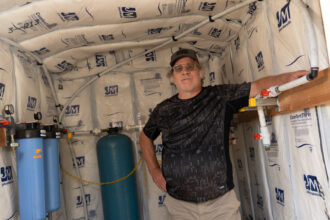
Over the past six years Chemours has spent about $1.2 billion on complying with some provisions of the consent order. The company installed a thermal oxidizer to remove 99.9 percent of all PFAS emissions from the air, offered free water filtration systems to more than 10,000 homes with contaminated wells and built a mile-long underground barrier wall to prevent contaminated groundwater seeping from the site and into the Cape Fear River.
These projects have reduced, although not eliminated, the amount of PFAS entering the environment. Contaminated groundwater continues to seep from the Fayetteville Works plant into the river and other surface waters; PFAS are still entering the air.
The magnitude of the contamination is so vast that Chemours has previously told DEQ it is “technologically and economically infeasible” to comply as closely as possible with the state’s groundwater rules.
This story is funded by readers like you.
Our nonprofit newsroom provides award-winning climate coverage free of charge and advertising. We rely on donations from readers like you to keep going. Please donate now to support our work.
Donate NowHowever, DEQ told Chemours in the letter that the company has not provided sufficient evidence to support that conclusion. “While DEQ recognizes that the geographic scope of the contamination caused by Chemours is enormous and unprecedented in this state,” DEQ Deputy Secretary Sushma Masemore wrote, “the vast scope does not release Chemours of its obligation to thoroughly evaluate all remedial alternatives.”
Chemours’ sampling methods to determine health and ecological effects were also flawed, according to the letter. For example, contractors sampled soil along roadways, which is often trucked in from other areas. And instead of collecting earthworms to assess exposure risks in the soil, contractors evaluated grasshoppers, crickets and dragonflies—which don’t live in the dirt.
Contractors also wiped loose dirt off leaves before collecting them, which likely removed PFAS bound to the dust that was deposited through the air, the state said.
Chemours failed to sample aquatic plants and organisms and excluded animals from its studies due to time constraints, which DEQ called “an inadequate justification.”
Questions About Air Emissions
Chemours has also failed to identify all of the PFAS compounds it is emitting into the air from the Fayetteville Works plant, which is continuing to contaminate the groundwater, Michael Abraczinskas, director of the state’s Division of Air Quality, wrote in a separate letter.
Nor do the company’s sampling and reporting methods meet quality control standards, Abraczinskas wrote, adding that “the issues identified in this letter require immediate attention and corrective actions.”
There is a direct link between air emissions that contain PFAS and contaminated groundwater. After the compounds enter the air, they can travel on the wind and fall to the earth, where they seep into soil and groundwater. PFAS traced to the Fayetteville plant, such as PFMOAA and GenX, have been detected in private drinking water wells as far as 25 miles away.
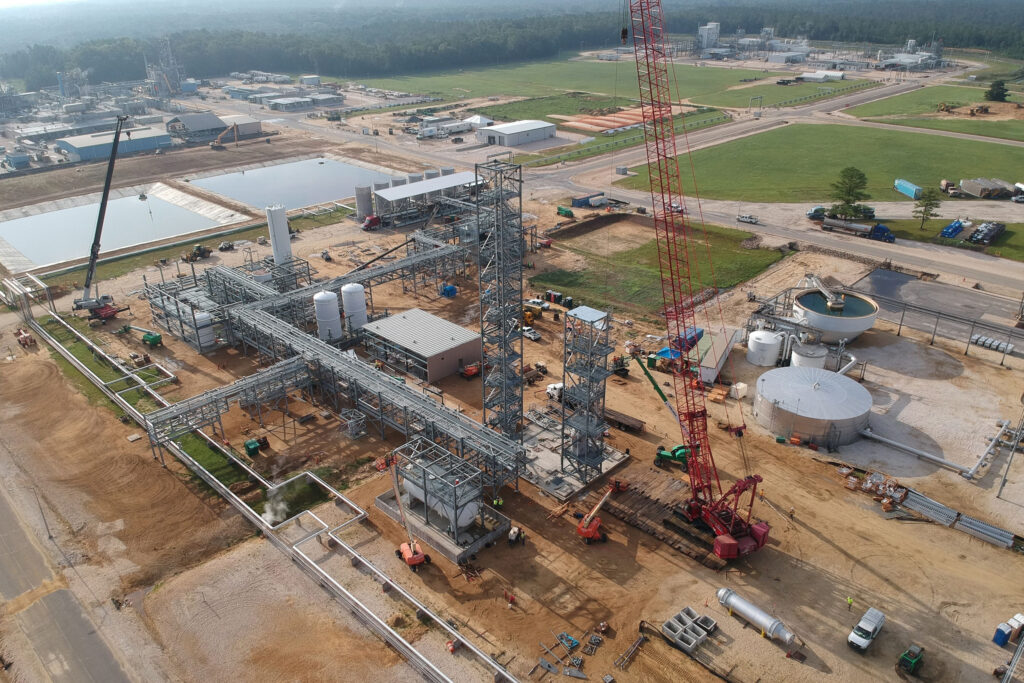
“Chemours has acted like it’s done everything it needs to do on air emissions, and even asked to expand its facility,” Zhuang said, “and DEQ is saying, ‘No, they are continuing to be an issue, and we’re going to take this really seriously.’”
Chemours has underestimated its air emissions at least twice before, DEQ records show. In 2018, state regulators found Chemours was emitting 2,700 pounds of GenX into the air—amounts 40 times higher than the company had originally reported in early 2017, and four times higher than the company’s revised estimates.
In 2021, the company again underreported its GenX emissions by 40 percent. The next year, DEQ fined Chemours $305,000 for failing to maintain air pollution control equipment, which allowed excessive amounts of GenX to enter the air.
Chemours plans to expand its Fayetteville Works plant, which DuPont opened in the early 1980s. The company filed an air permit application with the state in 2022 and revised it last year. However, environmental advocates, including the Southern Environmental Law Center, objected to the application because it redacted key information that Chemours claimed was confidential, including emission rates from stack testing, hours of operation and production figures.
DEQ notified Chemours nearly a year ago that the application was on hold until the company could submit revised emission calculations necessary for the Division of Air Quality to conduct review. Chemours has yet to submit this information, an agency spokesman said.
Based on the new deficiencies identified in its letter, the division could request additional data.
Chemours has until February to file a plan to address the state’s air concerns listed in the letter. As for the groundwater and soil cleanup plan under the consent order, DEQ has asked Chemours to respond to the state’s critique within 60 days.
There still is no timeline for the work to be completed. Given the scope of the contamination, it could take decades.
About This Story
Perhaps you noticed: This story, like all the news we publish, is free to read. That’s because Inside Climate News is a 501c3 nonprofit organization. We do not charge a subscription fee, lock our news behind a paywall, or clutter our website with ads. We make our news on climate and the environment freely available to you and anyone who wants it.
That’s not all. We also share our news for free with scores of other media organizations around the country. Many of them can’t afford to do environmental journalism of their own. We’ve built bureaus from coast to coast to report local stories, collaborate with local newsrooms and co-publish articles so that this vital work is shared as widely as possible.
Two of us launched ICN in 2007. Six years later we earned a Pulitzer Prize for National Reporting, and now we run the oldest and largest dedicated climate newsroom in the nation. We tell the story in all its complexity. We hold polluters accountable. We expose environmental injustice. We debunk misinformation. We scrutinize solutions and inspire action.
Donations from readers like you fund every aspect of what we do. If you don’t already, will you support our ongoing work, our reporting on the biggest crisis facing our planet, and help us reach even more readers in more places?
Please take a moment to make a tax-deductible donation. Every one of them makes a difference.
Thank you,

Lisa Sorg
Reporter, North Carolina
Lisa Sorg is the North Carolina reporter for Inside Climate News. A journalist for 30 years, Sorg covers energy, climate environment and agriculture, as well as the social justice impacts of pollution and corporate malfeasance.
She has won dozens of awards for her news, public service and investigative reporting. In 2022, she received the Stokes Award from the National Press Foundation for her two-part story about the environmental damage from a former missile plant on a Black and Latinx neighborhood in Burlington. Sorg was previously an environmental investigative reporter at NC Newsline, a nonprofit media outlet based in Raleigh. She has also worked at alt-weeklies, dailies and magazines. Originally from rural Indiana, she lives in Durham, N.C.