

The U.S. Department of the Interior could transfer swaths of public lands to state, local and tribal governments through sales or land swaps, according to the agency’s new strategic plan.
Critics are concerned that many states, cities and counties can’t afford to maintain the lands, and would sell them to private interests—the first step toward a wholesale privatization of lands that have belonged to Americans for more than 150 years.
“This is the biggest attack we’ve ever seen on public lands,” said Kate Groetzinger, communications director for the nonprofit Center for Western Priorities.
The Interior Department did not respond to requests for comment.
The agency manages more than 500 million acres of land in addition to 3.2 billion acres of offshore resources and 700 million acres of underground minerals. All told, the department manages 20 percent of the country’s lands, from national parks to wildlife refuges.
Data center developers, mining firms and energy companies—all favored industries of the Trump administration—could seize the opportunity to acquire vast tracts for their environmentally harmful operations, critics say.
The plan says Interior “will work to decrease the size of the federal estate” through the sales. That will allow the department to “focus its resources on primary federal responsibilities and nationally significant federal lands,” according to the plan, with some of the sales proceeds going back to “the purchasing entities to use for conservation purposes.”
The plan also says the agency will “consolidate its workforce to advance operational efficiencies.” Interior has already lost more than 17 percent of its workforce under the second Trump administration.
In the plan’s introduction, Interior Secretary Doug Burgum wrote that the agency will streamline environmental reviews and expedite leasing and permitting for energy companies. Nowhere in the plan does the agency mention wind or solar power. The first goal outlined in the plan is “Increase American Prosperity,” and the opening pages feature pictures of an oil rig and an offshore oil operation.
“Together, we can simplify processes and remove red tape that creates drudgery for our team members and impedes progress,” Burgum wrote. “We can bring forward new ideas and better ways of working. For the first time in human history, we can turn electricity into intelligence.”
Burgum has made millions of dollars off investments in artificial intelligence, powered by data centers, ProPublica reported Nov. 6.
The plan doesn’t specifically identify data centers as potential customers to purchase federal property, but the White House previously asked Bureau of Land Management state offices to identify lands that would be appropriate for these uses.
Last June, BLM approved an AI data center on 81 acres of public land near Boulder City, Nevada. The builder had received federal approval in 2023 to construct a solar farm, but amended its application to include a data center.
A federal judge has halted the project because BLM did not conduct a new environmental analysis but rather used the previous one for the solar project, a likely violation of the National Environmental Policy Act.
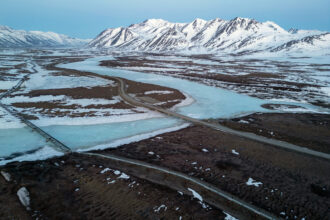
Energy and mining interests have long sought—and received—access to the oil, gas and minerals beneath public lands via leases. The new Interior plan would allow BLM to sell or transfer those properties outright to agencies that could then resell them.
The plan runs from fiscal year 2026 to 2030. However, the Trump administration has already begun planning to offload some public lands in particular.
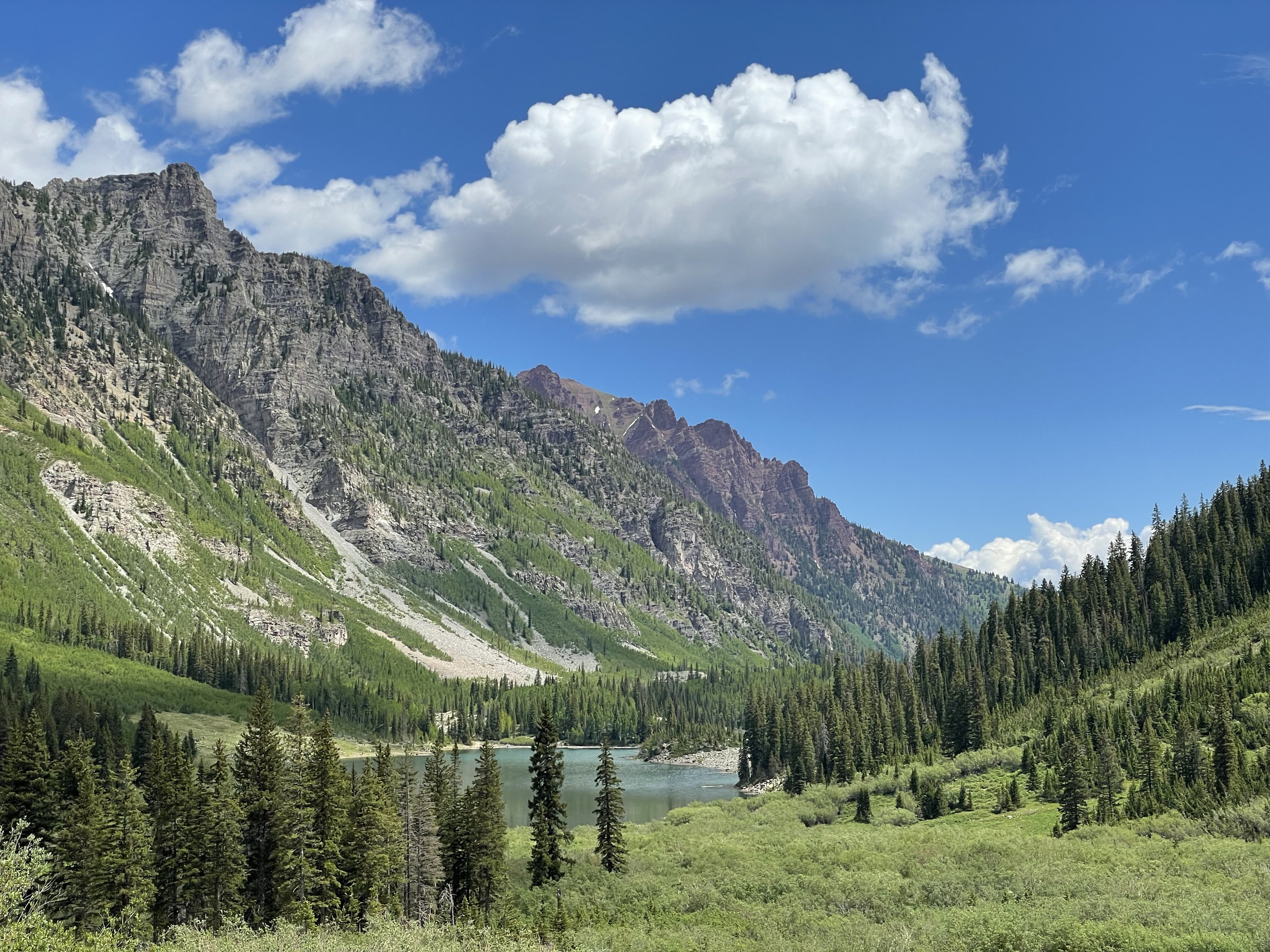
This September, the Forest Service, which is under the U.S. Department of Agriculture, issued a permit to Pitkin County in Colorado to manage a section of the White River National Forest that contains the Maroon Bells Scenic Area, the gateway to stunning burgundy peaks where hundreds of thousands of recreators visit annually. Critics see this move as a trial run for public land transfers.
In Alaska, the federal government is expected to soon open 28 million acres to new development and land ownership, according to the Juneau Independent.
Last March the Forest Service officially transferred a sacred indigenous site to Resolution Copper, a mining company.
BLM needs congressional approval to sell public parcels over 2,500 acres. However, federal law contains loopholes, Groetzinger said. The sales, for example, must serve the national interest, which can be broadly interpreted. The plan lays the foundation for that claim by repeatedly justifying future sales on national security grounds.
This story is funded by readers like you.
Our nonprofit newsroom provides award-winning climate coverage free of charge and advertising. We rely on donations from readers like you to keep going. Please donate now to support our work.
Donate NowNot only does the Interior Department propose shrinking its current inventory of public lands, but the plan also forecloses the possibility of buying more. Instead of using the Land and Water Conservation Fund to purchase additional acreage, the agency says it will “shift its investment focus” to buying recreational and conservation easements on privately owned lands.
The Land and Water Conservation Fund protects thousands of parks, natural areas, historic sites and other projects nationwide from private development. “That’s an important function of the fund,” Groetzinger said. “For them to not use any of those funds to buy new land is just unprecedented.”
Jayson O’Neill is a spokesman for Save Our Parks and lives in Montana, where recreation and tourism driven by access to public lands and waters is critical for the local economy. “We need somebody that actually understands how important this is to the economic viability of our communities and also our way of life,” O’Neill said. “Instead they’re literally calling to give away federal public lands and public resources to industry.”
Inside Climate News reporter Jake Bolster contributed reporting.
About This Story
Perhaps you noticed: This story, like all the news we publish, is free to read. That’s because Inside Climate News is a 501c3 nonprofit organization. We do not charge a subscription fee, lock our news behind a paywall, or clutter our website with ads. We make our news on climate and the environment freely available to you and anyone who wants it.
That’s not all. We also share our news for free with scores of other media organizations around the country. Many of them can’t afford to do environmental journalism of their own. We’ve built bureaus from coast to coast to report local stories, collaborate with local newsrooms and co-publish articles so that this vital work is shared as widely as possible.
Two of us launched ICN in 2007. Six years later we earned a Pulitzer Prize for National Reporting, and now we run the oldest and largest dedicated climate newsroom in the nation. We tell the story in all its complexity. We hold polluters accountable. We expose environmental injustice. We debunk misinformation. We scrutinize solutions and inspire action.
Donations from readers like you fund every aspect of what we do. If you don’t already, will you support our ongoing work, our reporting on the biggest crisis facing our planet, and help us reach even more readers in more places?
Please take a moment to make a tax-deductible donation. Every one of them makes a difference.
Thank you,

Lisa Sorg
Reporter, North Carolina
Lisa Sorg is the North Carolina reporter for Inside Climate News. A journalist for 30 years, Sorg covers energy, climate environment and agriculture, as well as the social justice impacts of pollution and corporate malfeasance.
She has won dozens of awards for her news, public service and investigative reporting. In 2022, she received the Stokes Award from the National Press Foundation for her two-part story about the environmental damage from a former missile plant on a Black and Latinx neighborhood in Burlington. Sorg was previously an environmental investigative reporter at NC Newsline, a nonprofit media outlet based in Raleigh. She has also worked at alt-weeklies, dailies and magazines. Originally from rural Indiana, she lives in Durham, N.C.