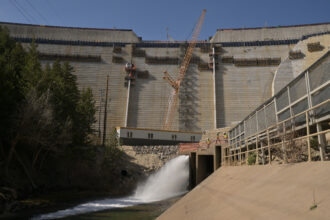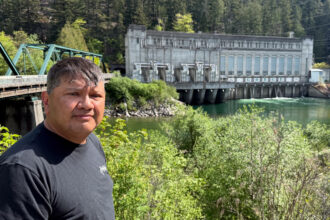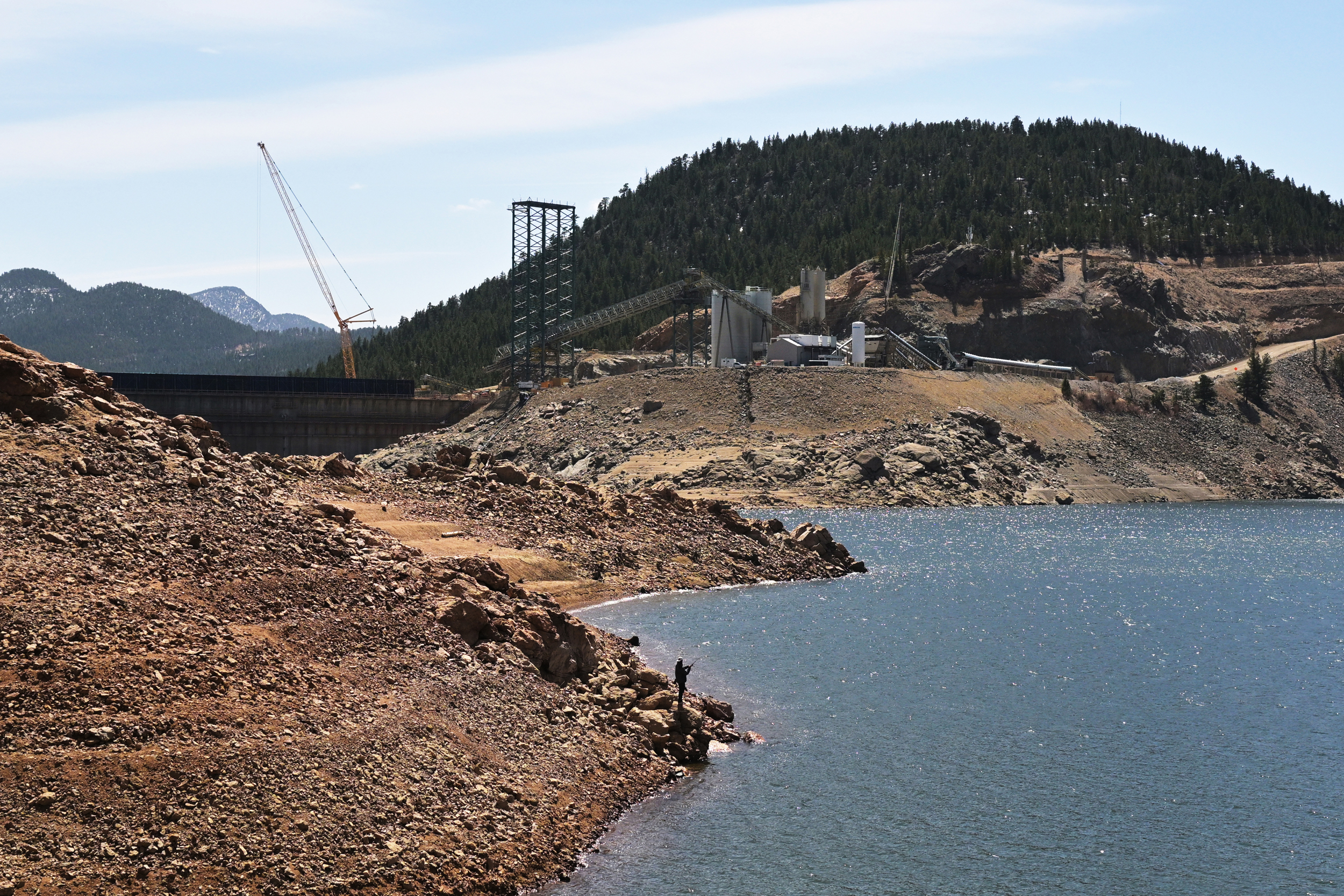


The unfinished expansion of Gross Reservoir near Denver can proceed after three judges ruled Tuesday in favor of the federal government and a water utility’s challenge to a lower court opinion halting construction.
The U.S. Army Corps of Engineers and Denver Water defended the dam expansion before the 10th Circuit Court of Appeals against a challenge from the environmental group Save The Colorado. The organization sued the agency in part on the grounds that the Corps did not fully account for the dam’s impacts on the Colorado River system that is already stressed by climate change.
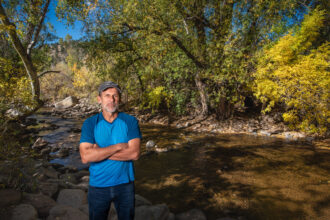
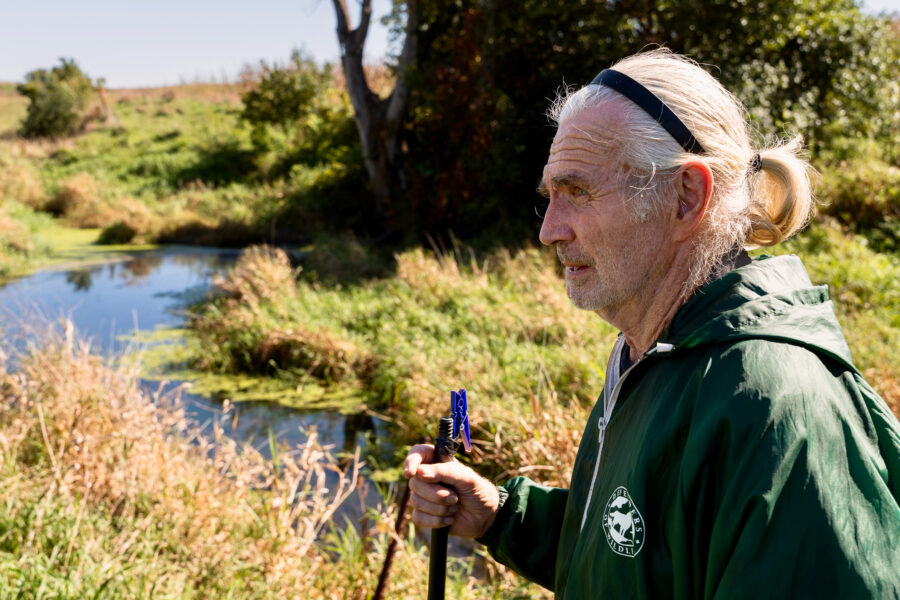
“It’s nonsensical to be putting more straws in, and further draining, the Colorado River at this point in history,” said Gary Wockner, director of Save The Colorado, in a statement released after the judges’ ruling.
The expansion of Denver Water’s Gross Reservoir would hold an additional 77,000 acre feet of water diverted from the declining Colorado River, enough to supply roughly 150,000 homes.
“That the law allows it to happen doesn’t make it right, it just makes it legal. I saw something wrong, I stood up, spoke out, and took action. It was the right thing to do, and I would do it all over again,” Wockner said.
Save The Colorado won’t appeal the decision.
The Gross Reservoir expansion began as Denver Water navigated severe drought in 2002. The utility and the Corps decided that the best way to ensure a reliable supply of water would be to raise the dam 131 feet, tripling the reservoir’s capacity. But construction did not begin until April 2022, and by then, Denver Water had survived the intervening droughts by investing in water efficiency.
But now, the utility has exhausted those options, it says, and the Gross Reservoir expansion is the only way it can reduce its drought risk.
“We’re pleased to see the 10th Circuit Court of Appeals confirm that the Gross Reservoir Expansion Project was lawfully permitted by the U.S. Army Corps of Engineers and that Denver Water can proceed with the final stages of this critical project to ensure a safe, secure water supply for the 1.5 million people we serve,” said Denver Water, in a statement provided by a spokesperson. “An expanded Gross Reservoir is vital to the future of the Denver region, giving Denver Water far greater ability to flexibly manage constrained water supplies amid the growing risks of catastrophic wildfire and weather extremes that accompany the challenges of drought and climate change already upon us.”
At issue for environmental groups was the fact that the additional capacity in the reservoir would allow Denver Water to pull more water from the severely stressed Colorado River, which supplies 40 million people across seven Western states and Mexico. Climate change and overuse have caused river flows and reservoir levels to drop precipitously in the last two decades, and residents of the basin have watched as negotiators from Arizona, California, Colorado, Nevada, New Mexico, Utah and Wyoming have failed to reach an agreement over how to share the dwindling flows.
The Corps, according to Save The Colorado, failed to fully account for climate change when issuing its construction permit. The justices Tuesday disagreed. “The Corps’s determinations on cost and climate change were reasonable and supported by the record,” the justices wrote in their decision.
Reservoir expansions in Colorado and other northerly states in the basin have been a point of contention for Arizona, California and Nevada, who say there is no more water to go around. The Colorado River Basin is already under litigation after Nevada sued the Bureau of Reclamation in August over its plan for managing the Colorado River.
“It is impossible to know how this [uncertainty] will play out,” said Mark Squillace, a natural resources law professor at the University of Colorado in Boulder, in an email to Inside Climate News. “But this is a critical issue, and the court should have required the Corps to prepare a more robust analysis of the possible impacts on the project from climate change in the environmental impact statement.” Squillace was part of a group of academics who filed an amicus brief in support of Save The Colorado’s position.
Wockner believes the ruling is narrow enough that it wouldn’t likely affect potential basin-wide litigation centering on climate change. But he said it compounds the “increasingly difficult” work of protecting rivers.
“Not only are the current laws on the books weak, but of course the Supreme Court and the Trump administration are both diluting the effectiveness of the Clean Water Act and the National Environmental Policy Act,” Wockner said.
With this ruling in hand, Denver Water expects to finish raising the dam by 2028, after which it can begin filling the expanded reservoir. The utility previously told Inside Climate News it would fill the new reservoir in stages, pulling from the Colorado River only in wet years.
About This Story
Perhaps you noticed: This story, like all the news we publish, is free to read. That’s because Inside Climate News is a 501c3 nonprofit organization. We do not charge a subscription fee, lock our news behind a paywall, or clutter our website with ads. We make our news on climate and the environment freely available to you and anyone who wants it.
That’s not all. We also share our news for free with scores of other media organizations around the country. Many of them can’t afford to do environmental journalism of their own. We’ve built bureaus from coast to coast to report local stories, collaborate with local newsrooms and co-publish articles so that this vital work is shared as widely as possible.
Two of us launched ICN in 2007. Six years later we earned a Pulitzer Prize for National Reporting, and now we run the oldest and largest dedicated climate newsroom in the nation. We tell the story in all its complexity. We hold polluters accountable. We expose environmental injustice. We debunk misinformation. We scrutinize solutions and inspire action.
Donations from readers like you fund every aspect of what we do. If you don’t already, will you support our ongoing work, our reporting on the biggest crisis facing our planet, and help us reach even more readers in more places?
Please take a moment to make a tax-deductible donation. Every one of them makes a difference.
Thank you,

Jake Bolster
Reporter, Wyoming and the West
Jake Bolster reports on Wyoming and the West for Inside Climate News. Previously, he worked as a freelancer, covering climate change, energy, and the environment across the United States. He holds a Masters in Journalism from Columbia University.

Wyatt Myskow
Reporter, Phoenix
Wyatt Myskow covers drought, biodiversity and the renewable energy transition throughout the Western U.S. Based in Phoenix, he previously reported for The Arizona Republic and The Chronicle of Higher Education. Wyatt has lived in the Southwest since birth and graduated from Arizona State University with his bachelor’s degree in journalism.