

A federal judge has declared that the Trump administration unlawfully terminated $7 billion in grant funding for clean energy programs in disadvantaged communities.
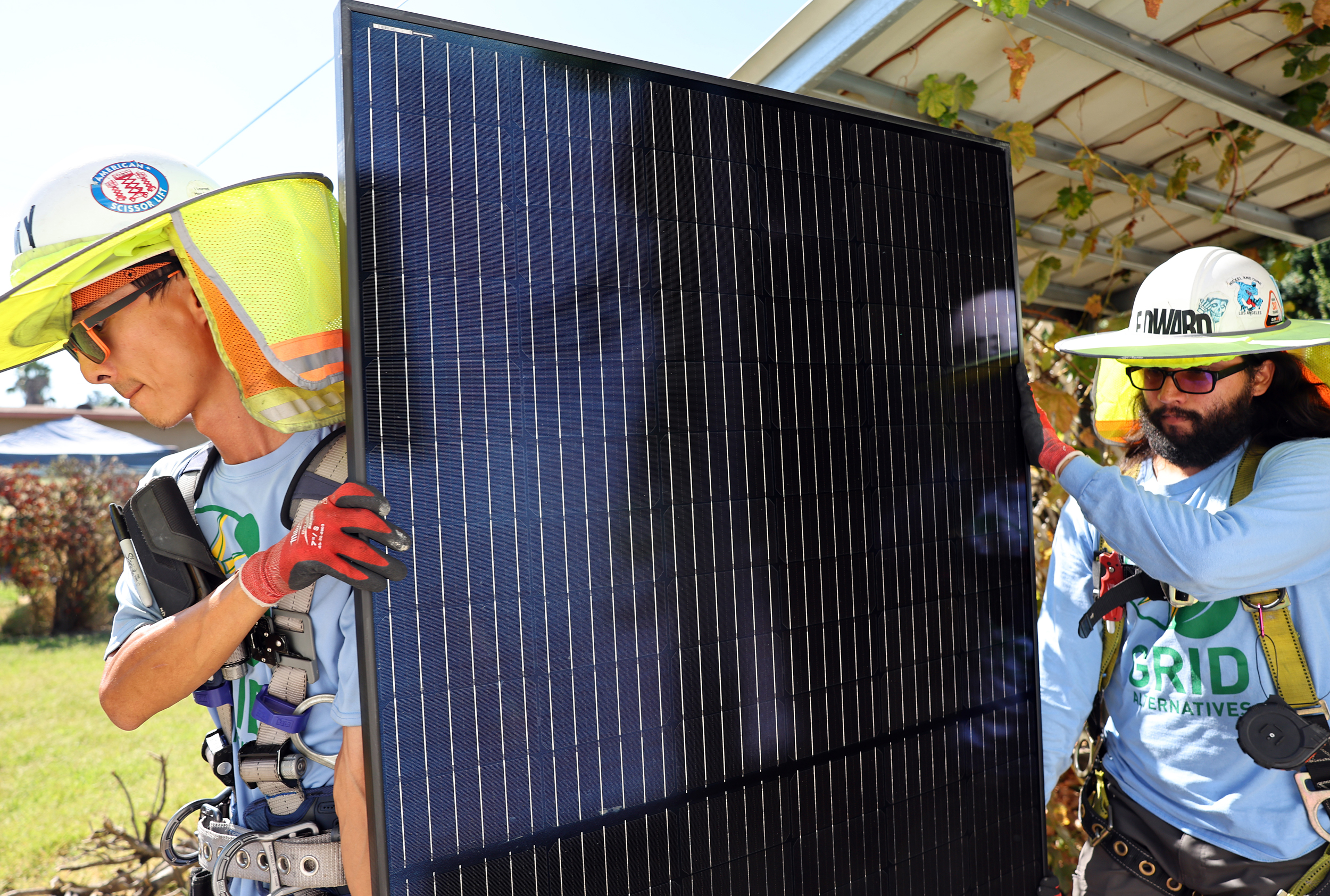
The Solar for All program, established during the Biden administration as part of the Inflation Reduction Act, provided dozens of grants for states, municipalities, tribes and nonprofits designed to reduce electric bills, create jobs and address the greenhouse gas emissions warming the global climate.
The Environmental Protection Agency canceled the program after President Donald Trump’s inauguration in 2025. The Conservation Law Foundation, Southern Environmental Law Center, Lawyers for Good Government and Lawyers’ Committee for Rhode Island sued in the U.S. District Court for the District of Rhode Island on behalf of workers, businesses, nonprofits and individuals harmed by the withdrawal of funding.
“Congress’s clear intent was that EPA continue to administer the already obligated SFA grants,” Judge Mary S. McElroy, a Trump appointee, wrote in her ruling, issued Friday. “Defendants acted contrary to this intent, and with no other statutory authority, when they terminated the SFA program.”
The ruling means the EPA will have to release the funding, said Nick Torrey, senior attorney at the Southern Environmental Law Center.
“We have seen this administration try to resist and appeal and fight,” Torrey said. “They don’t have any excuse for sitting on this money anymore. They have to get this money out.”
The EPA argued the court lacked jurisdiction over the plaintiffs’ claims and that the claims were meritless. The federal agency told Inside Climate News it is “reviewing the decision and considering options for appeal.”
The EPA awarded the grants in 2024 and said at the time the program would save families $350 million a year on electricity bills and support 200,000 jobs and workforce training opportunities. Among the recipients was a coalition of nonprofits in Florida, which received $156.1 million to create new and expand existing solar programs for low-income communities in the state.
The program was canceled before much of the funding could reach communities, according to the groups involved in the litigation. In 2025 Congress approved the One Big Beautiful Bill Act, which repealed unobligated funding aimed at greenhouse gas emissions. The groups argued the program’s termination was unlawful because the funding was already obligated.
The lawsuit was filed on behalf not of grant recipients but what the litigation described as “downstream beneficiaries.” Among them were solar companies that invested in personnel and equipment based on funding awarded to the states of Georgia and Pennsylvania, a labor union that helped develop an implementation plan in Rhode Island and a nonprofit that received a sub-award from a grant to the state of Indiana.
Grant recipients filed two subsequent lawsuits against the EPA. State grant recipients also filed challenges in the Court of Federal Claims.
About This Story
Perhaps you noticed: This story, like all the news we publish, is free to read. That’s because Inside Climate News is a 501c3 nonprofit organization. We do not charge a subscription fee, lock our news behind a paywall, or clutter our website with ads. We make our news on climate and the environment freely available to you and anyone who wants it.
That’s not all. We also share our news for free with scores of other media organizations around the country. Many of them can’t afford to do environmental journalism of their own. We’ve built bureaus from coast to coast to report local stories, collaborate with local newsrooms and co-publish articles so that this vital work is shared as widely as possible.
Two of us launched ICN in 2007. Six years later we earned a Pulitzer Prize for National Reporting, and now we run the oldest and largest dedicated climate newsroom in the nation. We tell the story in all its complexity. We hold polluters accountable. We expose environmental injustice. We debunk misinformation. We scrutinize solutions and inspire action.
Donations from readers like you fund every aspect of what we do. If you don’t already, will you support our ongoing work, our reporting on the biggest crisis facing our planet, and help us reach even more readers in more places?
Please take a moment to make a tax-deductible donation. Every one of them makes a difference.
Thank you,

Amy Green
Reporter, Florida
Amy Green covers the environment and climate change from Orlando, Florida. She is a mid-career journalist and author whose extensive reporting on the Everglades is featured in the book MOVING WATER, published by Johns Hopkins University Press, and podcast DRAINED, available wherever you get your podcasts. Amy’s work has been recognized with many awards, including a prestigious Edward R. Murrow Award and Public Media Journalists Association award.