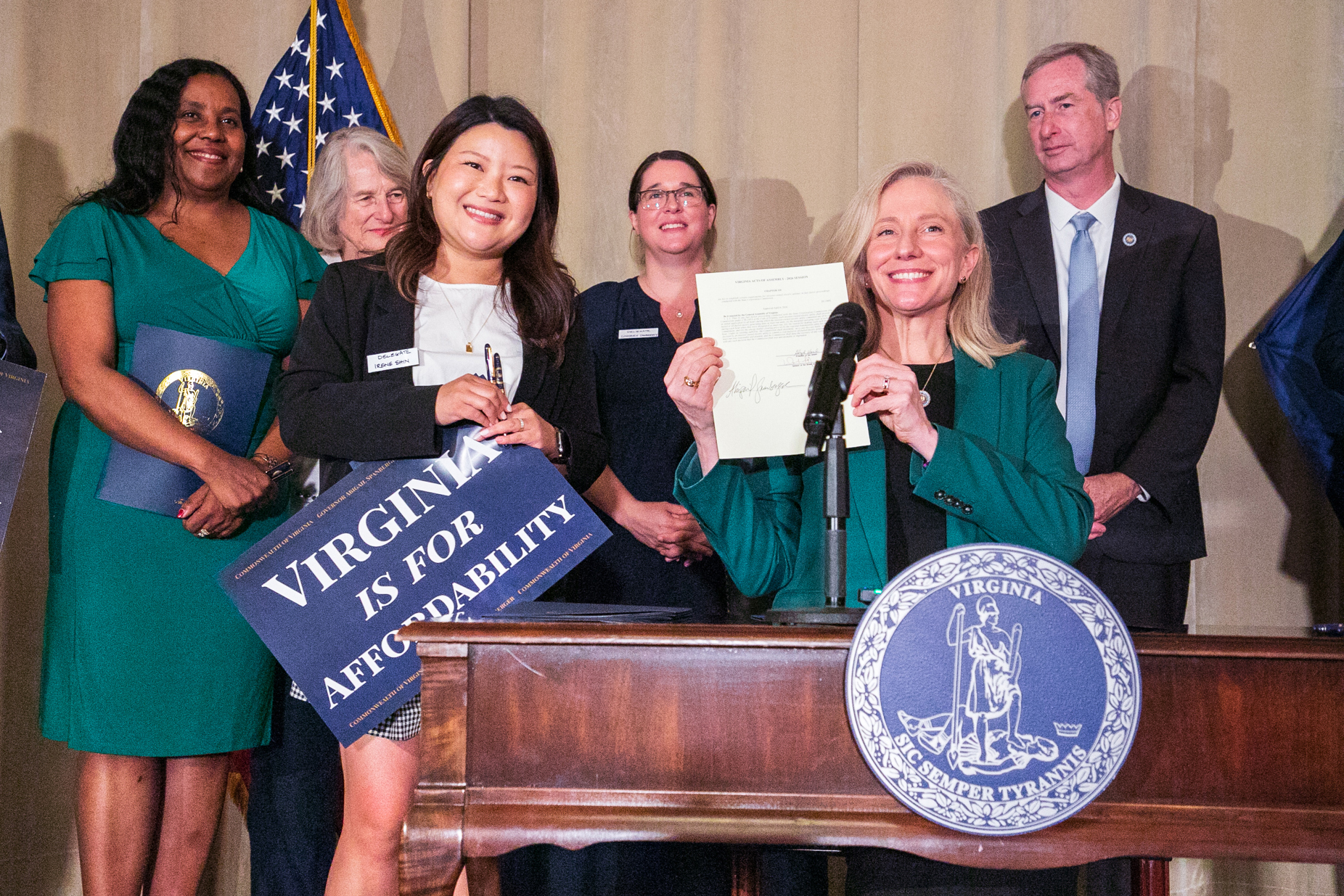


Virginia is back in the carbon market known as the Regional Greenhouse Gas Initiative, or RGGI.
By way of an amendment to last year’s budget, Virginia rejoined RGGI on July 1 after a hiatus of more than two years.
Environmentalists cheered the news, but Virginia’s return to the multi-state cooperative for carbon emissions comes with new challenges, including rising energy demand from data centers and emissions from the electricity generation to power them.
There are also changes to the requirements that govern what Virginia does with the hundreds of millions in revenue the state receives through the market.
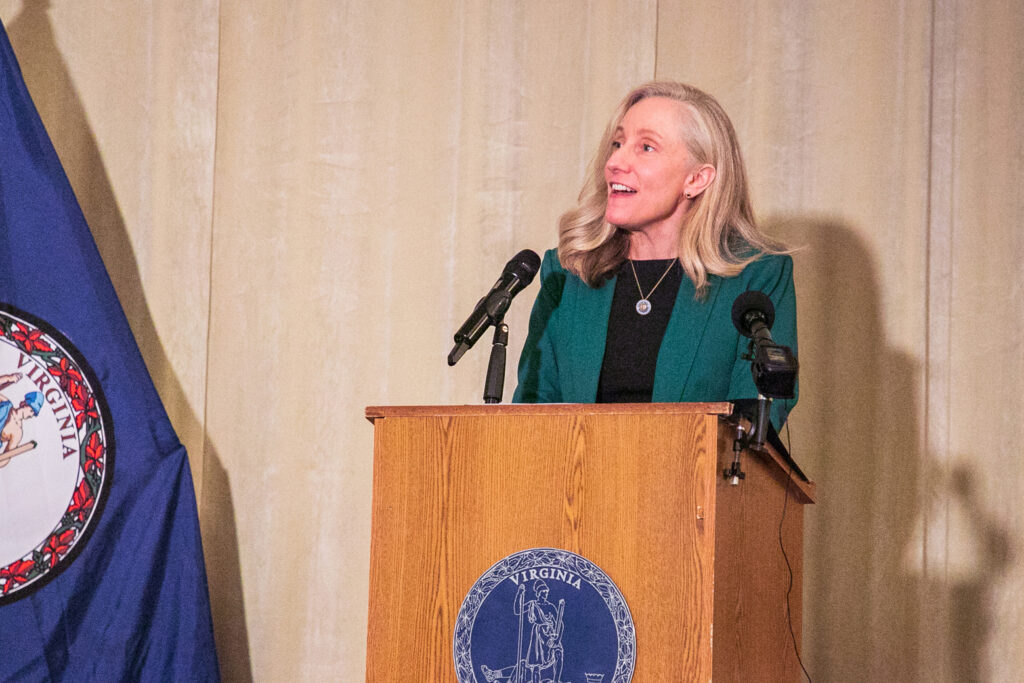
“Today is a good day,” said Gov. Abigail Spanberger, in a news release. “Virginia is moving forward—for our environment, for our families, and for the Commonwealth we are building together.”
RGGI is a carbon market that Virginia and 11 other northeastern states participate in. It requires electricity producers to bid to purchase allowances for each ton of carbon they emit.
The allowances add to the cost of electricity generation, creating an incentive to use zero-carbon sources that don’t emit pollution. The number of allowances will decrease to zero by 2050 to speed the adoption of a cleaner electric grid.
Virginia joined RGGI in 2021 when Democrats controlled the state government but withdrew at the request of former Republican Gov. Glenn Youngkin in 2023. A judge found the withdrawal illegal in 2025 but suspended Virginia’s return during an appeal process that the newly elected Attorney General Jay Jones ended earlier this year.
Virginia didn’t return to RGGI until this month because of a need for the Virginia Department of Environmental Quality to put the old regulation governing the state’s participation back on the books. The rule reduces the compliance period for this year down to the six months that remain.
While the Trump administration strips away environmental safeguards and works to accelerate fossil fuel development, Virginia’s return to RGGI marks a critical move from Spanberger, a moderate Democrat.
Immediately following the election, Spanberger was tight-lipped about delaying the deadlines to retire carbon emitting generation sources in a separate state law, the Virginia Clean Economy Act, which seeks to decarbonize the grid by mid-century.
Returning to RGGI, which increases the costs of electricity from fossil-fueled sources, creates a conflict with abandoning the retirement deadlines in the VCEA. Continuing fossil fuel use within RGGI would make electricity more costly.
More gas plants, like those planned to accommodate data centers’ needs, “will drive electricity bills even higher, put our financial security at risk, and threaten the health of Virginia communities,” Nate Benforado, a senior attorney with the Southern Environmental Law Center, in a statement. “We have the tools, including RGGI, to put Virginia communities first while improving affordability.”
Republicans in Virginia decry the costs RGGI adds to customer bills and resist the transition to renewables because of concerns over reliability, though that can increase with battery storage. In Virginia, Dominion and Appalachian Power Company are allowed to recover the costs of their allowance purchases from their ratepayers. The monthly fee for a typical residential customer was about $2.39 in 2022, but is now expected to be about $13.
Virginia is ranked 27th in the nation for renewable energy consumption, at 7.8 percent. Other RGGI states, like Vermont and New Hampshire, are ranked much higher.
That RGGI cost increase comes as the demand for electricity increases alongside data center development, and the demand for allowances also increases.
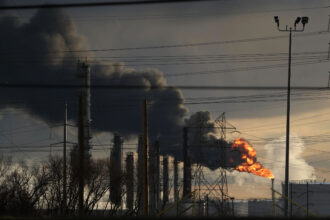
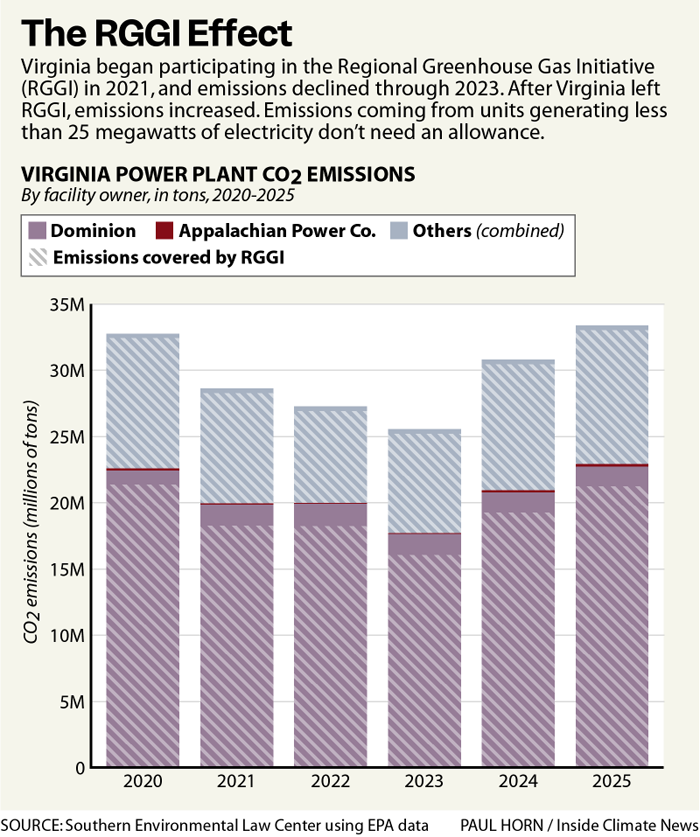
More power is needed, and utilities have been cranking up fossil-fueled power plants to provide it. According to the Virginia Department of Environmental Quality, emissions from the power sector in Virginia fell from about 32.7 million tons of carbon dioxide in 2020 to 25.5 million tons in 2023, the year the state left the consortium.
By 2025, emissions had increased to 33.3 million tons.
This story is funded by readers like you.
Our nonprofit newsroom provides award-winning climate coverage free of charge and advertising. We rely on donations from readers like you to keep going. Please donate now to support our work.
Donate NowThe effects of RGGI membership can be seen in Dominion’s emissions activity.
When Virginia was not part of RGGI, Dominion increased its carbon emissions from about 16 million tons two years ago to about 21.2 million tons last year, according to the EPA. Now, Dominion said it will create over 10 million tons of emissions needing RGGI allowances in 2026, for only half the year.
Modeling from Dominion showed that adding the RGGI allowance costs led to less running of its own resources and more purchasing of cheaper electricity from the market and other states. That means less emissions from Virginian sources and electricity possibly coming from either emission-heavy coal plants from non-RGGI states, or cleaner sources out of state.
“The math is pretty complicated,” said Grayson Holmes, a staff attorney and colleague of Benforado’s at the SELC. Without knowledge of average emission intensities from units within the regional grid Virginia is a member of, PJM Interconnection, it’s hard to determine the effect of importing electricity. And with increased electricity needs from data centers, Holmes added, “RGGI isn’t to blame.”
Revenues from the sale of allowances are returned to the states. In Virginia, 50 percent of the revenues had gone toward energy efficiency programs to help homes use less electricity. The other 45 percent went toward flood resiliency projects, and five percent to administer the programs. Before Virginia left RGGI, the state received nearly $830 million from the program.
Up to $50 million is expected to be uncommitted to projects by the end of a next round of flood resiliency grants, which will be announced in August, according to Darryl Glover, deputy director for water resources at the Virginia Department of Conservation and Recreation. The Department of Housing and Community Development told Inside Climate News that of $474.4 million in RGGI funds meant for energy efficiency programs about $341.6 million was unspent.
Lena Lewis, energy and climate policy manager at the Nature Conservancy, said “the need is really high,” for the funding, pointing to a study from Virginia Commonwealth University that her group commissioned. Chase Counts, executive director of the Association of Energy Conservation Professionals, wants more transparency on how much funding remains. His members have years-long waitlists for weatherization programs that make homes more energy efficient. Homes using funds from RGGI could save an average of $676 a year on energy bills, the VCU study found.
In 2026, Virginians are most concerned about rising electricity bills and the costs of compliance with RGGI. To counter those fears, Spanberger passed another amendment in the new budget to direct 45 percent of revenues received from RGGI to be refunded to residential and small business customers, before the funding is disbursed to the energy efficiency and flood resiliency programs.
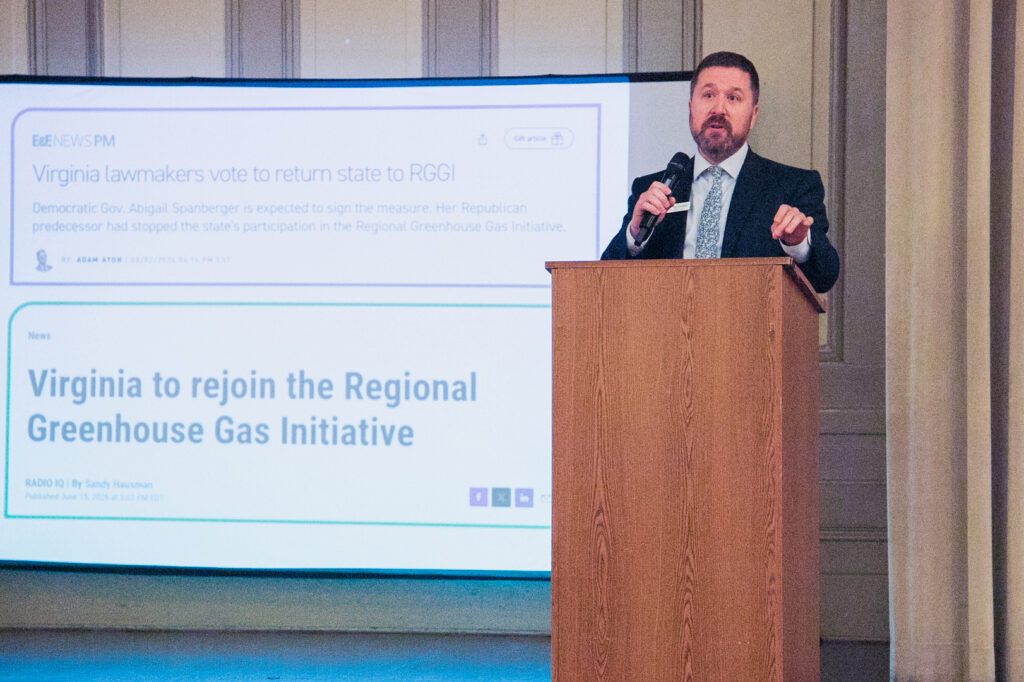
Shobe said that as allowances dwindle and costs increase, large energy users like data centers will be the ones on the hook for payments.
“Instead of having greater costs, residential and small commercial ratepayers will actually have their total electricity bill go down,” Shobe said. “A jump up in RGGI price would actually lower the electricity bill for residential and small commercial ratepayers. That’s a huge difference from the way it was before.”
The credits are supported by the Natural Resource Defense Council, an environmental advocacy group, but the group noted that as emissions from the grid go away, so will revenues for those credits. Jay Ford, Virginia policy manager with the Chesapeake Bay Foundation, understands the need to help with utility bills, but he pushed for a cap on how much of the allowances can be recovered from ratepayers before shareholders need to cover those costs. That would put more pressure on Dominion to use carbon-free electricity. It’s important, he said, to maintain investments in flood resiliency and energy efficiency to provide long-term protections from storm damage and lower electricity demand.
“Rebates are good, they’re a good pressure release valve, and they’re something that ultimately should be part of a permanent solution to ratepayer concerns and protections, [but] they’re not the silver bullet,” Ford said. “They are not the permanent, durable solution.”
This article was updated on July 28, 2026 to include new information from Virginia’s Department of Housing and Community Development.
About This Story
Perhaps you noticed: This story, like all the news we publish, is free to read. That’s because Inside Climate News is a 501c3 nonprofit organization. We do not charge a subscription fee, lock our news behind a paywall, or clutter our website with ads. We make our news on climate and the environment freely available to you and anyone who wants it.
That’s not all. We also share our news for free with scores of other media organizations around the country. Many of them can’t afford to do environmental journalism of their own. We’ve built bureaus from coast to coast to report local stories, collaborate with local newsrooms and co-publish articles so that this vital work is shared as widely as possible.
Two of us launched ICN in 2007. Six years later we earned a Pulitzer Prize for National Reporting, and now we run the oldest and largest dedicated climate newsroom in the nation. We tell the story in all its complexity. We hold polluters accountable. We expose environmental injustice. We debunk misinformation. We scrutinize solutions and inspire action.
Donations from readers like you fund every aspect of what we do. If you don’t already, will you support our ongoing work, our reporting on the biggest crisis facing our planet, and help us reach even more readers in more places?
Please take a moment to make a tax-deductible donation. Every one of them makes a difference.
Thank you,

Charles Paullin
Charles Paullin is a Richmond, Virginia-based reporter focusing on energy and environment issues. He’s won several awards for his previous work covering state policy with the Virginia Mercury and local news with the Northern Virginia Daily in the Northern Shenandoah Valley. His first reporting gig was with the New Britain Herald in Connecticut, a couple years after attending the University of Hartford, where he first studied sports journalism.